The Whispering Bones: Folklore as the Psyche’s First Language
The Somatic Echo
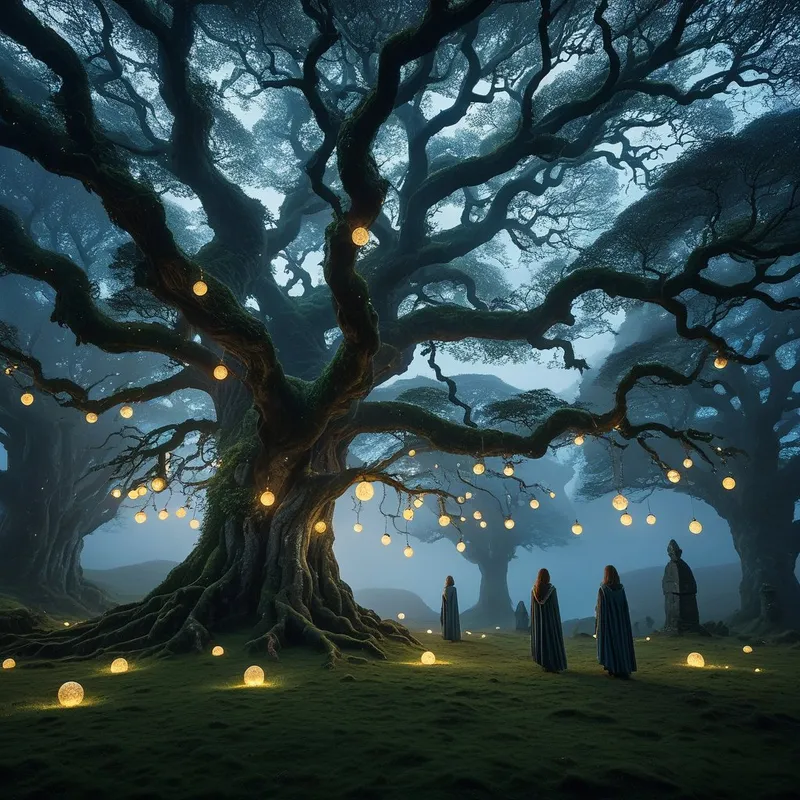
Before the story forms, you feel it. It is a pressure in the marrow, a hum in the teeth, a sense of gravity pulling from a place older than memory. It is not fear, but a profound and eerie familiarity, as if the landscape of your own body remembers a path your mind has forgotten. The air in the dream-space tastes of damp earth and woodsmoke. Your skin prickles not with alarm, but with recognition—the kind felt when a half-remembered lullaby surfaces from the deep past. This is the somatic ground from which folklore grows; it is the body’s archive, the pre-verbal knowing that something ancient and patterned is stirring in the cellar of the self. It is the echo of the communal hearth, the ghost of the village circle, now resonating within the private cathedral of your skull.
The Dreamer’s Log
I am in a vast, silent library that feels more like a root cellar or a barrow. The shelves are made of living wood and polished stone. I am drawn to one particular book, bound in tarnished silver and frayed velvet. As I open it, the pages are blank, but the moment my shadow falls upon them, intricate illustrations and a flowing script I cannot read bloom into being, telling a story I somehow already know in my bones.
Alchemical Interpretation: The dreamer is not finding a story, but is being found by the story that already writes them, the personal myth waiting to be illuminated by the shadow of their conscious attention.

The False Lead
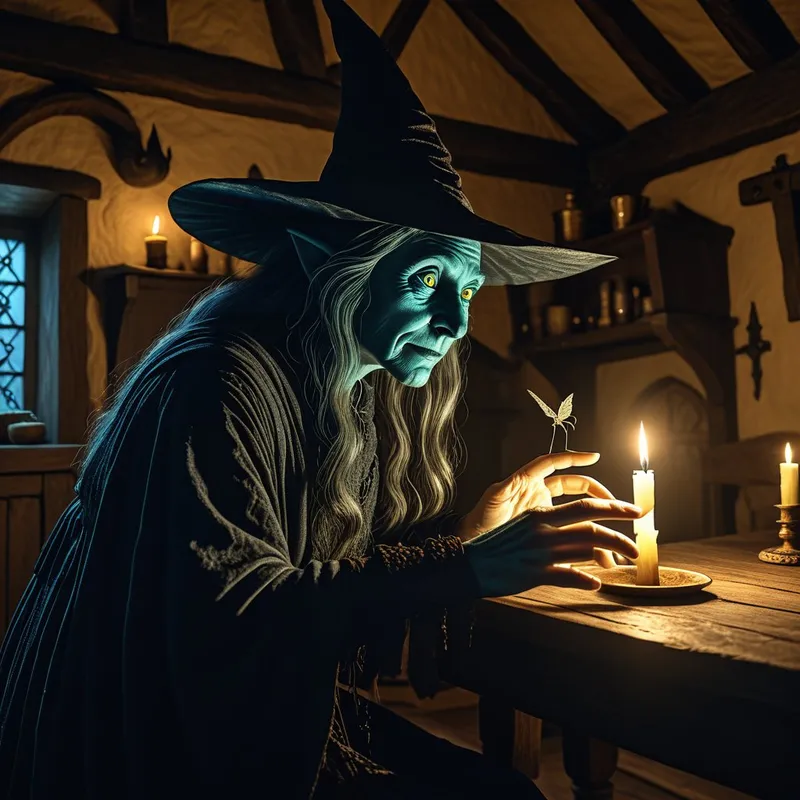
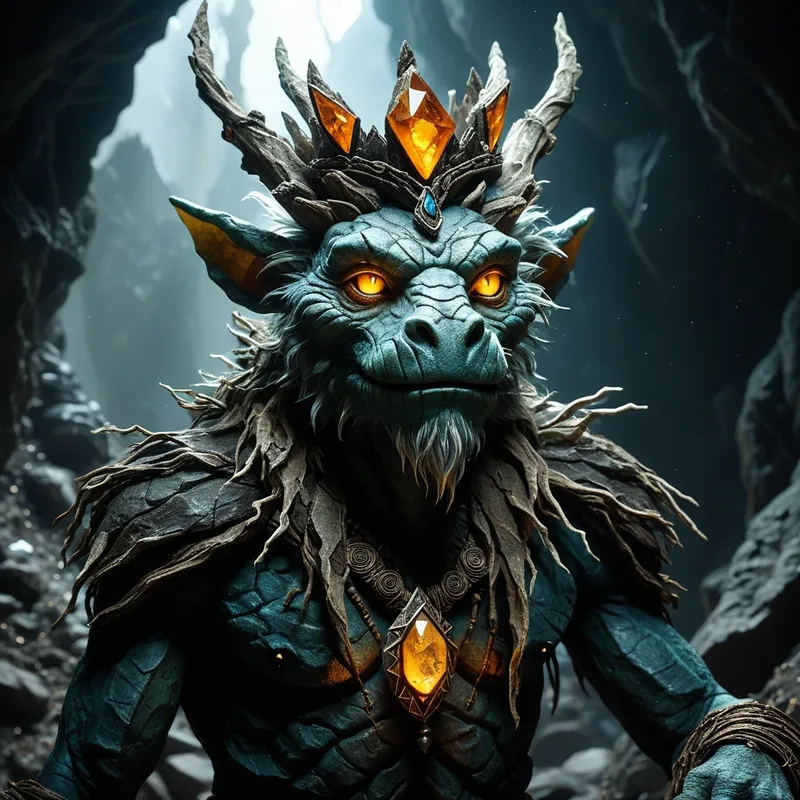
This theme is not a simple nostalgia for fairy tales or a regression to childish fantasy. To interpret it as mere escapism is to commit a profound error. The folklore that visits in dreams is not an escape from reality, but a confrontation with a deeper, more structural reality—the living substrate of human experience. It is not about believing in literal witches or goblins, but about recognizing the witch and the goblin as psychic facts, as personified forces of nature, shadow, and transformation that operate within your own internal ecosystem. This is the opposite of superstition; it is the psyche’s most sophisticated code for transmitting survival data, ethical dilemmas, and maps of the soul’s terrain across generations.
Psychological Architecture
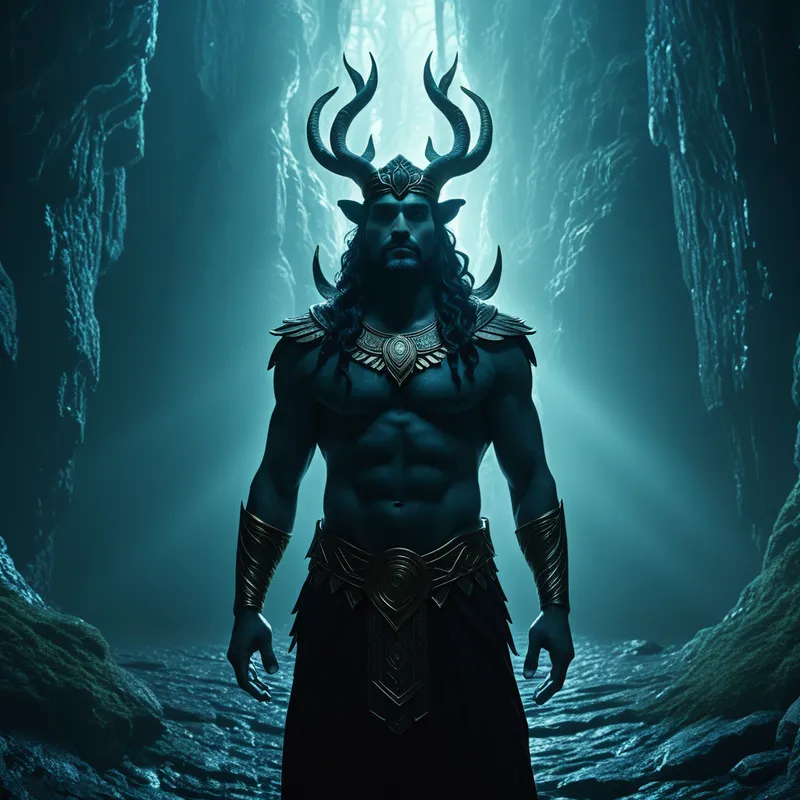
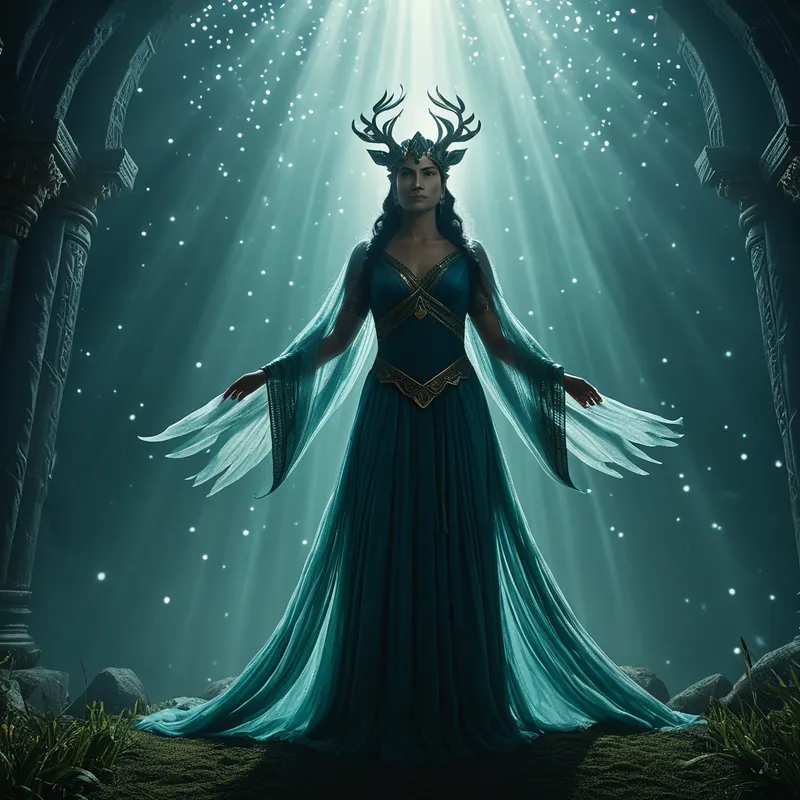
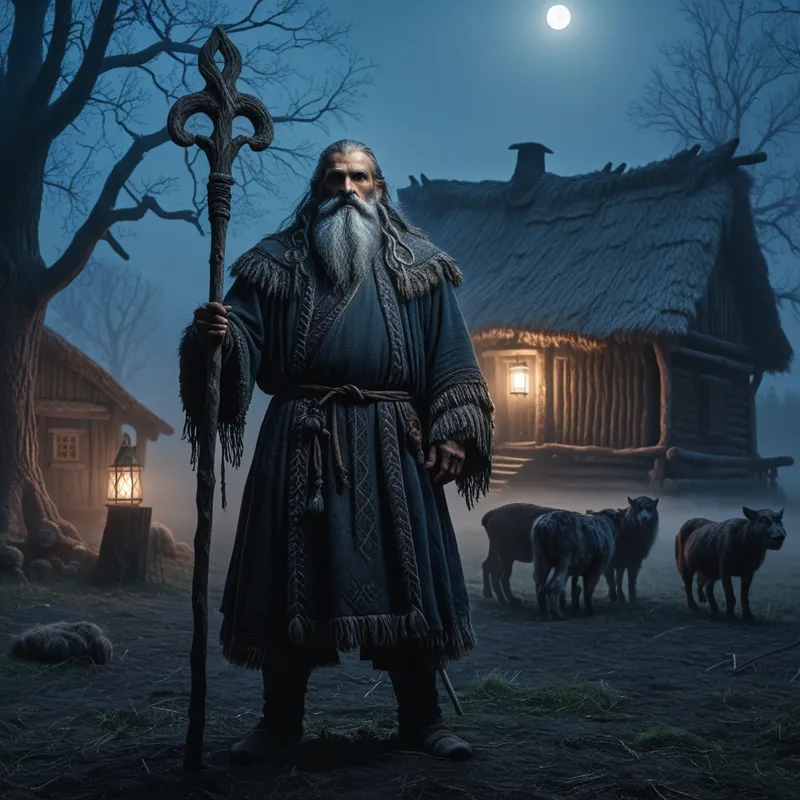
When folklore emerges in dreams, it signals that the personal psyche is seeking alignment with the transpersonal ground. It is an act of Shadow work conducted not through modern therapy-speak, but through the archaic, symbolic language of the collective. The figures that appear—the wise crone, the trickster animal, the hidden guardian, the hungry ghost—are not random. They are emissaries from disowned parts of the self, internal family members exiled to the forest of the unconscious, now returning in culturally recognizable disguises to deliver a message or demand a reckoning.
The process of Individuation here is one of re-mythologization. You are not just analyzing a dream; you are being invited to become the protagonist, the bard, and the terrain of your own foundational myth. The old, handed-down story becomes the crucible in which your unique, modern consciousness is tested and transformed. To engage with this folklore is to enter a negotiation between the ancestral script and your sovereign authorship, to discover where you must follow the old path and where you must, like the hero of any true tale, deviate into the untracked wood to find your own way.
Mythic Resonance
Consider the global motif of the Spindle, the Needle, and the Thread. In tales from the Greeks’ Fates to the Slavic Baba Yaga, and in the dream of the Norns weaving destiny at the foot of Yggdrasil, this image speaks of connection, causality, and craft. In your dream, the tangled thread, the dropped spindle, or the impossible stitch is your psyche showing you the precise point of tension or rupture in the narrative of your life. It is a direct image of your agency within a larger weave.
Or witness the story of Sedna, the Inuit sea goddess. Cast into the ocean by her father, her fingers, chopped away as she clings to the boat, become the seals, whales, and creatures of the deep. This is not merely an “origin myth” for hunting; it is a profound map of trauma, betrayal, and the alchemical transformation of severed parts into sources of profound nourishment. When such imagery surfaces, it asks: What have you been cast out from? And what life-sustaining power is waiting to be born from the very parts of you that feel sacrificed?
Symbolic Nodes
- The Forgotten Path or Overgrown Trail: The call to remember a destiny or talent left unexplored.
- The Talking Animal or Plant: The instinctual or vegetative intelligence of the body and unconscious breaking into speech.
- The Crumbling Cottage or Hidden Well: A neglected source of wisdom, simplicity, or emotional sustenance.
- The Unspoken Rule or Geas (Taboo): A self-imposed or inherited limitation that governs behavior from the shadows.
- The Gift That is Also a Curse (and vice versa): The ambiguous blessing, representing integrated power where light and shadow are inseparable.
Archetypal Resonance
The Magician Archetype is the prime mover in the folklore dreamscape. This is not the stage illusionist, but the deep forest magician, the cunning woman, the shaman who knows the hidden names of things and the secret connections between them. The somatic echo—that hum of latent knowing—is the Magician’s power stirring in your belly. The entire process is alchemical: taking the raw, often frightening material of the old stories (the base metals of human experience) and, through the heat of conscious engagement, transmuting them into the gold of personal wisdom and sovereign agency. The Shadow Magician appears when this power is used for manipulation—of oneself or others—or when one becomes lost in the illusion, mistaking the symbolic map for the territory of lived reality.
The Alchemical Process
The transmutation here is one of Translation and Embodiment. The intense psychological heat is generated by the friction between the ancient, symbolic language of the folklore and the modern, literal mind that tries to interpret it. The pressure comes from the demand to hold the paradox: this story is both universally human and intimately, exclusively yours.
The process requires you to become a bilingualist of the soul. First, you must let the image, the tale, the character affect you viscerally—feel the fear of the dark forest, the longing for the magical gift, the grief of the transformation. This is the solutio, the dissolving of rigid ego-boundaries in the waters of the symbolic. Then, you must perform the coagulatio: pulling that raw experience back into your specific life. What “witch” in your life have you feared or rejected? What “enchanted object” have you been seeking outside yourself? The gold is forged when the universal myth becomes a precise key that unlocks a door in your personal history, granting you not just insight, but a new way of being that is both timeless and utterly contemporary.

The Integration Protocol
Question 1: Which character or creature from the folklore in my dream feels most alien to me, and if I were to speak from its perspective for one moment, what one sentence would it say about my current life?
Question 2: What is the one unspoken “rule” or “taboo” that seems to govern the landscape of this dream? How does this rule manifest as a silent law in my waking decisions or relationships?
Question 3: If the gift or curse presented in the dream were a medicine, what specific, outdated part of my psyche is it meant to cure or transform?
Action 1 (Somatic Anchoring): For one week, each morning upon waking, place your hand over your heart or solar plexus. Recall one image from the folklore dream. Do not analyze it. Simply feel its texture, weight, and temperature in your body for three full breaths. This grounds the symbol in the somatic archive where it belongs.
Action 2 (Mythic Re-authoring): Take the core sequence from your dream and rewrite it as a four-sentence folktale in the classic style (“Once there was…”, “But one day…”, “And so it happened that…”, “And from that day forth…”). Use this structure to bypass the analytical mind and let the story reveal its own logic.
Action 3 (Ritual Offering): Find a small, natural object—a stone, a leaf, a feather. Holding it, consciously “give” to it the quality of the most challenging figure from your dream (the monster’s rage, the trickster’s chaos, the ghost’s sorrow). Then, go to a crossroads—a literal path intersection, a stream, or even a gutter—and leave the object there. This is a ritual act of releasing the identification with that energy, while acknowledging its existence in the wider field of your being.
Final Validation
It is a vulnerable and disorienting thing, to have the old bones of the world rattle beneath the floorboards of your modern life. To feel the pull of the tale when you are trained for data, to hear the chorus of ancestors when you are striving for individuality. This tension is not a sign of breakdown, but of breakthrough. The folklore is rising not to bury you in the past, but to provide you with the oldest, most durable tools for navigating a future that has forgotten its own soul. You are not dreaming of myths. The myth, through you, is dreaming itself awake. Your conscious life is the next, most crucial verse.