Qamar al-Zaman and Princess Budur Myth Meaning & Symbolism
A prince and princess, separated by fate, search for their mirrored soul across continents, guided by dreams and a magical talisman, until destiny reunites them.
The Tale of Qamar al-Zaman and Princess Budur
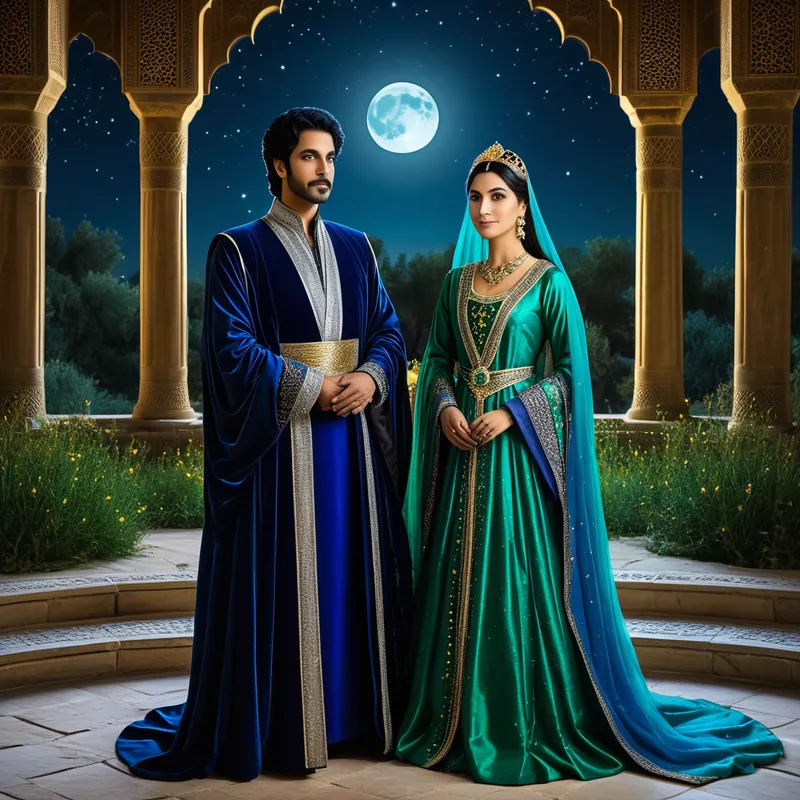
Listen, and let the night wind carry you to a time when the world was vaster, and destiny wrote its letters in the stars. In the kingdom of Khurasan, there lived a king whose grief was as deep as his treasury was full, for he had but one son. This son, Qamar al-Zaman, was beauty incarnate—his face shone like the full moon, casting a gentle light that made the palace gardens bloom with envy. Yet, the prince spurned all talk of marriage, wishing only for the solitude of his own company. In his fury and despair, the king imprisoned his son in an ancient tower.
That same night, far across the Red Sea, in the Isles of China, a mirror of this drama unfolded. The mighty King Ghayur had a daughter whose radiance outshone the sun. Princess Budur was her name, and like her celestial counterpart, she refused every suitor, declaring none worthy. She, too, was confined to a secluded pavilion.
Here, fate’s loom began to weave. In his tower, Qamar al-Zaman was visited in his sleep. A figure of breathtaking beauty descended from the moonlight, offering him a drink from a cup. He awoke with his heart aflame for a vision he could not name. At that very hour, Princess Budur dreamed of a moon-faced youth who placed a ring upon her finger. She awoke clutching empty air, her soul torn in two.
By a twist of fate and the cunning of a jinn, the two dreamers were brought together while sleeping. Waking to find each other, they saw not a stranger, but the living embodiment of their own dream. It was a recognition deeper than sight—a reunion of sundered halves. They pledged their love and exchanged tokens: he gave her his seal ring; she gave him a carnelian talisman from her necklace, which he broke in two, each keeping a half.
But fate is a cruel seamstress. The jealous jinn snatched Qamar al-Zaman away, carrying him across deserts and depositing him in a distant land. Budur, upon waking alone, believed her love a phantom. Driven by a courage born of despair, she cut her hair, donned armor, and took the name King al-Ma’mun. She ruled a city with wisdom and strength, a king in all but secret truth.
Meanwhile, Qamar al-Zaman wandered the earth, a ghost of his former self, guided only by the memory of a face and the half-stone in his palm. His journey led him through kingdoms and perils, each step a prayer toward an unknown destination. Destiny, that inscrutable guide, finally led him to the very city where Budur reigned in disguise. He entered her court, a weary traveler seeking service.
They sat across from one another, sovereign and subject, veiled by roles and grief. They spoke of lost love and broken talismans, each holding their piece of the puzzle, blind to the whole. It was only in the quiet of the night, as they recounted their identical dreams, that the veil tore. The sealed letters were compared, the broken carnelian made whole. The mirror shattered, and there stood the reflection. The king was the princess, the servant was the prince. The moon had found its equal light. In that moment of shattering recognition, two exiled souls returned home, not to a place, but to each other.
Cultural Origins & Context
This exquisite tale is woven into the grand tapestry of the One Thousand and One Nights. While the Nights are a layered compilation with Indian, Persian, and Mesopotamian threads, the story of Qamar al-Zaman and Budur is considered one of its core, original Arabic romances. It was not merely entertainment for the night; it was a narrative compass.
Told in the majlis and whispered in harems, it served a profound societal function. In a world of arranged political marriages, it championed the revolutionary idea of a love so destined it defies parental decree and geographical impossibility. It gave voice to the inner life—the power of dreams as guides, the legitimacy of longing. The story validated the experience of the individual soul seeking its counterpart, a concept that resonated deeply within the mystical (Sufi) traditions of the time, where the soul’s yearning for the divine was often expressed through metaphors of passionate, earthly love.
Symbolic Architecture
At its [heart](/symbols/heart “Symbol: The heart symbolizes love, emotion, and the core of one’s existence, representing deep connections with others and self.”/), this is not a [story](/symbols/story “Symbol: The symbol of ‘Story’ represents the narrative woven through our lives, embodying experiences, lessons, and emotions that shape our identities.”/) about finding another person, but about recognizing the missing part of one’s own self. Qamar al-Zaman and Budur are not just lovers; they are psychic twins, two halves of a single [soul](/symbols/soul “Symbol: The soul represents the essence of a person, encompassing their spirit, identity, and connection to the universe.”/)-[symbol](/symbols/symbol “Symbol: A symbol can represent an idea, concept, or belief, serving as a powerful tool for communication and understanding.”/).
The most profound mirror is not made of glass, but of another consciousness in which we see our own completeness reflected back to us.
The [journey](/symbols/journey “Symbol: A journey in dreams typically signifies adventure, growth, or a significant life transition.”/) of [separation](/symbols/separation “Symbol: A spiritual or mythic division between realms, states of being, or consciousness, often marking a transition or loss of connection.”/) is essential. It is only through [exile](/symbols/exile “Symbol: Forced separation from one’s homeland or community, representing loss of belonging, punishment, or profound isolation.”/)—Qamar’s wanderings, Budur’s disguised rule—that they develop into whole individuals. Budur’s transformation into [King](/symbols/king “Symbol: A symbol of ultimate authority, leadership, and societal order, often representing the dreamer’s inner power or external control figures.”/) al-Ma’mun is particularly potent. She integrates the masculine aspects of [authority](/symbols/authority “Symbol: A symbol representing power structures, rules, and control, often reflecting one’s relationship with societal or personal governance.”/), [action](/symbols/action “Symbol: Action in dreams represents the drive for agency, motivation, and the ability to take control of situations in waking life.”/), and rulership (order) that her culture typically assigned to men. She [doesn](/symbols/doesn “Symbol: The word ‘doesn’ typically points to a lack or feeling of uncertainty regarding action or inactivity in one’s life.”/)’t just wait; she creates her own [destiny](/symbols/destiny “Symbol: A predetermined course of events or ultimate purpose, often linked to spiritual forces or cosmic order, representing life’s inherent direction.”/), becoming a sovereign in her own right. This is not a disguise, but an actualization. Similarly, Qamar’s trials humble his princely pride, forcing him to earn his way back through service and perseverance.
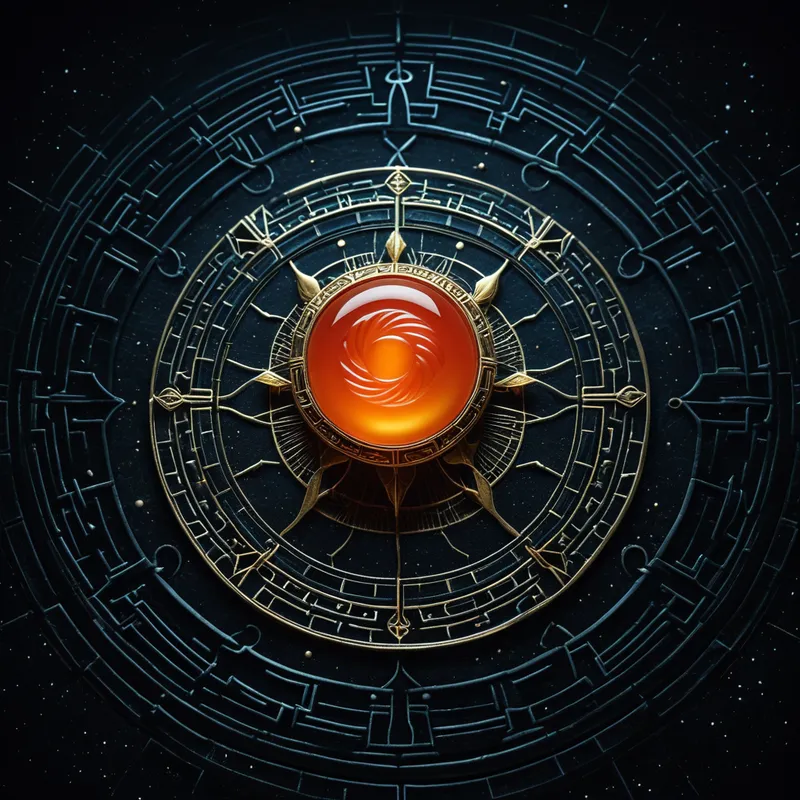
The broken carnelian is the perfect symbol of this dynamic. It represents the original, primordial unity of the soul, which must be fractured for the [drama](/symbols/drama “Symbol: Drama signifies narratives, emotional expression, and the exploration of human experiences.”/) of [life](/symbols/life “Symbol: The symbol of ‘Life’ represents a journey of growth, interconnectedness, and existential meaning, encompassing both the joys and challenges that define human experience.”/) and individuation to unfold. The [quest](/symbols/quest “Symbol: A quest symbolizes a journey or search for purpose, fulfillment, or knowledge, often representing life’s challenges and adventures.”/) is to make the symbol whole again, not by returning to a naive state, but by reuniting with the other half that has undergone its own separate, necessary transformation.
The Dreamer’s Resonance
When this mythic pattern stirs in the modern dream</abscape, it signals a profound somatic and psychological process: the ache of soul-separation and the pull toward soul-recognition. One might dream of a mysterious, intensely familiar stranger; of losing or finding a precious, broken object; or of ruling a kingdom while feeling like an impostor.
These dreams often surface during life transitions—after a relationship ends, at the start of a new career, or in midlife—when the question “Who am I, truly?” becomes urgent. The somatic feeling is one of yearning, a literal heart-ache, coupled with a restless energy. It is the psyche’s signal that a deeper, more authentic connection is calling: perhaps to a literal partner, but more universally, to an unlived aspect of the self (the inner “other”) that feels distant and yearned for. The dreamer is in the “Budur-as-King” or “Wandering Qamar” phase, performing a role while secretly longing for a wholeness that feels just out of reach.
Alchemical Translation
The myth models the alchemical process of coniunctio, the sacred marriage, which in depth psychology symbolizes the integration of opposites within the psyche. This is the pinnacle of individuation.
The goal is not to find your missing half, but to become whole enough to recognize it in another, creating a third, transcendent reality—the relationship itself.
The first stage is separation (imprisonment in the tower). The conscious ego, identified with one pole (the stubborn prince/princess), rejects the other (relationship, the unknown). The unconscious then forces the issue through the dream, introducing the image of the soulmate. This creates the divine discontent that launches the journey.
The long middle passage—disguise, wandering, ruling—is the nigredo, the dark night of the soul. Here, one must live out the opposite. The feminine (Budur) must master the world of order and power. The masculine (Qamar) must endure passivity, service, and longing. This is the crucible where the gold of the personality is tested and refined.
The final recognition is the albedo and rubedo—the whitening and reddening. The moment of revelation in the court is not a simple happy ending. It is a psychic explosion where projected images collapse, and two complex, individuated beings see each other in full daylight, with all their history and earned wisdom. The reunited talisman is no longer the same stone; it is a new creation, sealed with the scars of its breaking. The individual is made whole not by regression to a childlike state, but by the conscious, hard-won reunion of the self with its lost counterpart, creating a new, more complete entity: the integrated psyche, capable of a love that is both mirror and sanctuary.
Associated Symbols
Explore related symbols from the CaleaDream lexicon:
- Moon — The central symbol for both protagonists, representing cyclical destiny, reflected beauty, the unconscious, and the guiding light in the darkness of separation.
- Mirror — Represents the perfect reflection and recognition between Qamar and Budur, the moment the soul sees itself in another, revealing ultimate truth.
- Journey — The essential, arduous path of exile and seeking that transforms the naive prince and princess into individuated beings worthy of reunion.
- Dream — The divine messenger and catalyst; the shared dream is the initial spark and the final proof, guiding the soul toward its destiny from the unconscious realm.
- Prince — The archetypal masculine principle of conscious identity and quest, who must be humbled and tested to become a true partner.
- Princess — The archetypal feminine principle of soul and value, who must actively shape her own world and wield power to claim her destiny.
- Key — The talismanic carnelian seal, the literal key to recognition and the symbolic key to unlocking the prison of self and reuniting the divided soul.
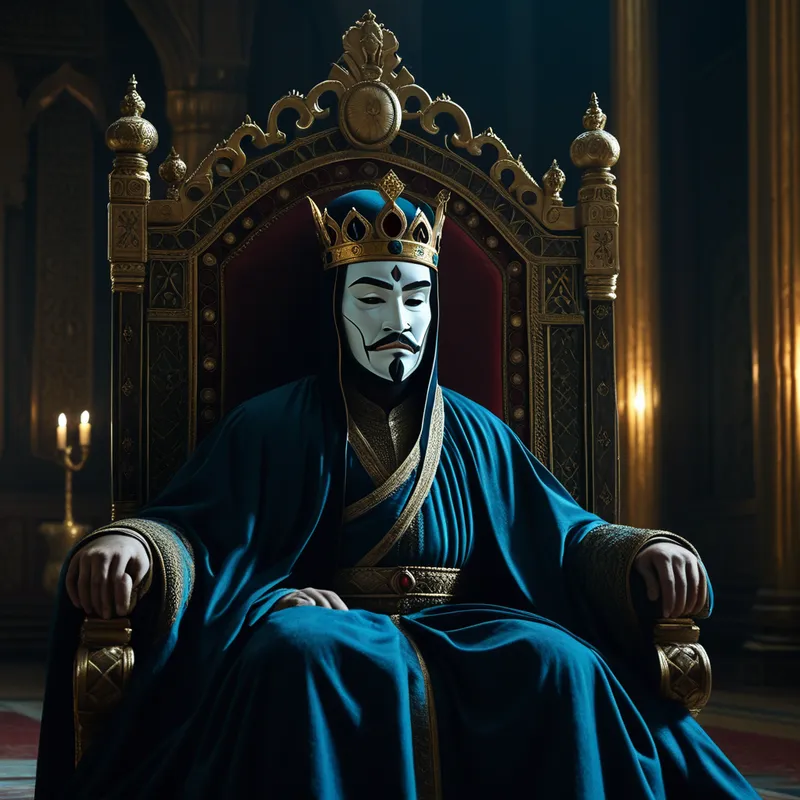
- Mask — Princess Budur’s disguise as King al-Ma’mun, representing the persona we wear to navigate the world, which can both hide and ultimately reveal our true nature.
- Love — The ultimate force and goal, depicted not as simple affection but as a fated, magnetic pull that reunites sundered halves of a primordial whole.
- Destiny — The inescapable pattern woven by fate (and the jinn), which uses hardship and separation to orchestrate a reunion of greater depth and meaning.
- Order — The structure and kingship that Budur masters during her disguise, representing the integration of logos and conscious governance into the psyche.
- Recognition — The climactic moment of seeing and being seen, which is the psychological triumph of the myth, dissolving projection and achieving conscious connection.