The Dream of Reconciliation: An Inner Treaty of Wholeness
The Somatic Echo
Before the mind conjures the image of a long-lost friend or a silent parent, the body knows. Reconciliation announces itself not as a thought, but as a somatic echo. It is a peculiar, hollow ache behind the sternum—a chamber that feels both empty and overcrowded. It’s a tightness in the jaw that has forgotten how to unclench, paired with a strange, softening fatigue in the shoulders, as if an invisible weight is being gently, reluctantly, lowered. There is a metallic taste of old grief at the back of the throat, yet beneath it, a subterranean hum, a low-frequency vibration of potential. This is the body’s intelligence registering a ceasefire in a civil war you may not have fully acknowledged was raging. It is the physical prelude to an internal armistice.
The Dreamer's Log (Case Vignette)
I am in a vast, deserted train station made of polished black stone. Across the empty tracks, I see my father, who passed years ago, sitting alone on a wooden bench. He looks at his hands. I feel an overwhelming urge to call out, but my voice is gone. Instead, I find a small, tarnished locket in my own pocket—one I thought was lost. The dream ends in that silent, charged space of almost-meeting.
Alchemical Interpretation: The dream stages not a reunion with the departed, but a summons to reconcile with the internalized father—the complex archetype of authority, judgment, and legacy that lives on within the dreamer’s own psychic architecture.

The False Lead
Do not mistake the dream of reconciliation for a simple fantasy of apology or external resolution. This is not the psyche scripting a feel-good movie where past hurts are neatly wrapped with a bow. The false lead is to project the entire process onto the other—the ex-lover, the estranged sibling, the critical boss. While these figures are potent symbols, the true locus of reconciliation is always internal. It is not about changing the past, but about changing your relationship to the echoes of that past which reside within you. It is the difference between seeking forgiveness from a ghost and granting sovereignty to the part of you that still haunts itself.
Psychological Architecture
Beneath the dream narrative lies the profound Shadow work of re-internalization. We fracture. It is a survival mechanism. The angry child, the betrayed lover, the humiliated striver—these experiences are often exiled, cast into the inner shadowlands because their pain or their rage threatens the fragile cohesion of the conscious self. We disown them. But the psyche’s drive is toward wholeness, toward individuation.
Reconciliation dreams are the diplomatic envoys from the central self to these exiled nations. They signal that the ego has grown strong enough to no longer require such rigid borders. The process is one of terrifying hospitality: inviting the banished part back into the sitting room of your awareness, not as a master or a slave, but as a constituent member of your internal family. You listen to its grievances—which are your grievances. You feel its sorrow—which is your sorrow. This is not a merger that erases, but a federation that honors autonomy within unity. The war ends not with surrender, but with a negotiated peace treaty written in the language of felt experience.
Mythic Resonance
This process echoes in the myth of Psyche and Eros. Psyche, through her own doubt and disobedience, loses her divine lover. Her subsequent trials are not about finding Eros again in the outer world, but about undertaking the impossible tasks set by a vengeful Aphrodite—sorting seeds, gathering golden wool, fetching water from the Styx. These are metaphors for the meticulous inner work of sorting confusion, gathering courage from dangerous places, and confronting the depths of her own soul. Only by accomplishing this internal reconciliation—integrating her own power, wisdom, and perseverance—does she become immortal, reuniting with Eros as an equal. The external reunion is the prize, but the alchemy happens within.
Symbolic Nodes
- Meeting in Neutral, Liminal Spaces: Train stations, empty airports, shorelines, bridges, waiting rooms. Spaces of transition and potential.
- Silent Communication: Exchanging objects (a key, a letter, a locket), meaningful glances, or shared tasks without words. The communication bypasses the faulty circuitry of old dialogue.
- Ruins Being Repaired: Gently rebuilding a collapsed wall, cleaning a dusty, abandoned room, or tending a neglected garden together.
- The Presence of the Long-Gone: Deceased loved ones appearing, not as ghosts, but as solid, contemplative presences available for a new kind of encounter.
Archetypal Resonance
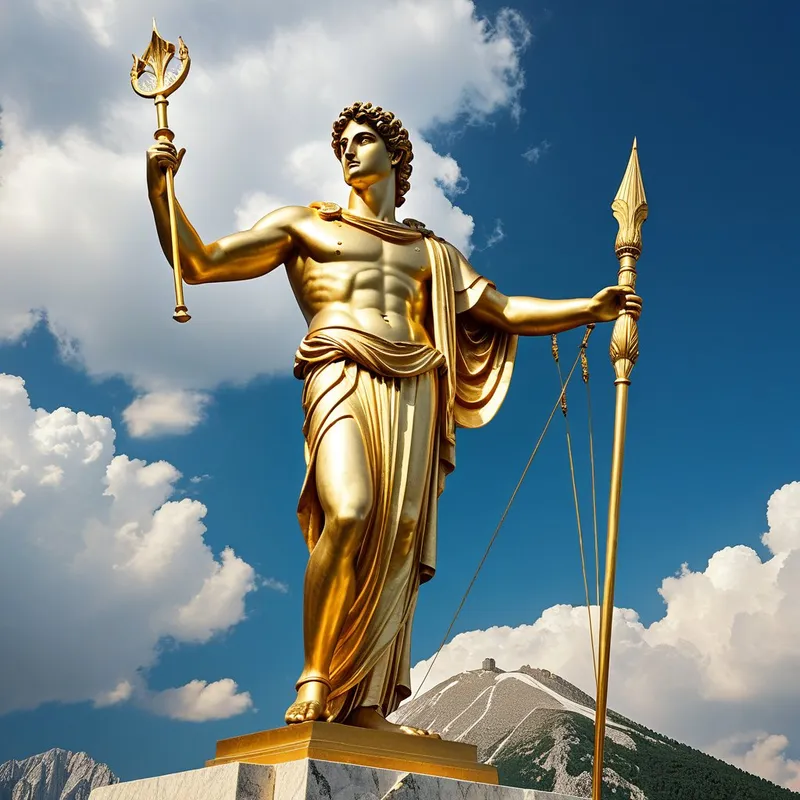
The energy of reconciliation is most intimately aligned with The Sovereign Ruler Archetype. Not the Shadow Ruler who demands control through tyranny and division, but the mature Sovereign whose power arises from the ability to bring order to chaos, to establish justice, and to harmonize disparate territories into a thriving, peaceful kingdom.
The somatic echo—the hollow ache giving way to a grounded fatigue—is the feeling of a fragmented internal kingdom yearning for coherent governance. The Ruler’s core task is to listen to all subjects, to integrate competing claims, and to establish a lawful peace where every part has a voice and a place. The alchemical potential here is the transformation of inner civil war into inner commonwealth. The Ruler does not eliminate the rebel, the orphan, or the jester; it gives them a legitimate seat at the round table, transforming chaotic rebellion into creative counsel, victimhood into resilient citizenship, and cruel mockery into truthful wit. Reconciliation is the ultimate act of internal statesmanship.
The Alchemical Process
The alchemical stage for reconciliation is Mortificatio, followed by Separatio, not to divide further, but to discern with clarity. The initial matter—the raw pain of the split—must first "die." This is the heat: the courageous descent into the felt memory of the wound, allowing the old grief and rage to be fully experienced in the body, not just remembered by the mind. This death is not destruction, but dissolution.
Then, under the pressure of conscious attention, the Separatio occurs. This is where you learn to distinguish the historical event from the eternal echo, the actual other person from the archetypal complex they activated within you. You separate the gold of your core vulnerability from the leaden story of blame and victimhood. The transmutation happens in the liminal space between these separated elements. As you hold the distinction, a third thing emerges: understanding. Not intellectual understanding, but an embodied knowing that you and your "opponent" (internal or external) were both actors in a shared drama of pain. This understanding is the Philosopher's Stone for this work—it doesn't change the past, but it changes everything about how you carry the past forward, transforming poisoned lead into neutral, malleable material for a newly integrated self.

The Integration Protocol
Question 1: In the dream, what was exchanged, or what needed to be said but wasn’t? What does that object or unspoken word represent as a quality or truth you have disowned?
Question 2: If the figure you are reconciling with in the dream were a part of your own psyche (a protector, a wounded child, a critical judge), what is its primary function? What is it trying to achieve, however clumsily, by remaining separate?
Question 3: Where in your body do you feel the "border" or "no-man's-land" between you and this dream figure? Describe the sensation as a landscape—is it a wall, a chasm, a cold mist?
Action 1 (Somatic Cartography): For one week, when you feel the somatic echo of this split (the chest hollowness, the jaw tension), stop. Place your hand there. Breathe into that space for two minutes. Do not analyze, just feel the geography of the sensation and let it be, as you would observe the weather.
Action 2 (Unsent Diplomacy): Write two letters. First, write from the perspective of the exiled part of you (the one represented by the dream figure) to your conscious self. Let it state its case, its grief, its anger. Then, write a response from your conscious, present-day self to that exile. Acknowledge its pain. Offer it terms for coexistence.
Action 3 (Ritual of Neutral Ground): Create a small, physical "neutral zone" in your home—a shelf, a corner of a table. Place upon it one object that represents you now, and one that represents the energy of the dream figure (e.g., a smooth stone for peace, a rusted nail for old pain). Simply let them share the space. Your only task is to dust it once a week, a quiet practice of maintaining the territory of truce.
Final Validation
This work is not graceful. It is messy, painful, and often feels like a betrayal of the very walls that have kept you safe. To feel the pull of reconciliation is to feel the terrifying vulnerability of the diplomat walking into a room of old enemies, including the enemy within. Honor that fear; it is the guardian of a sacred boundary. And then, remember: the dream itself is evidence that a deeper, sovereign part of you is already drafting the peace accords. It is calling the congress of your soul to order. Your task is not to force a happy ending, but to have the courage to show up at the negotiating table, to listen to the long-silenced voices of your own inner nation, and to begin the slow, unglamorous, and profoundly heroic work of building a lasting peace.