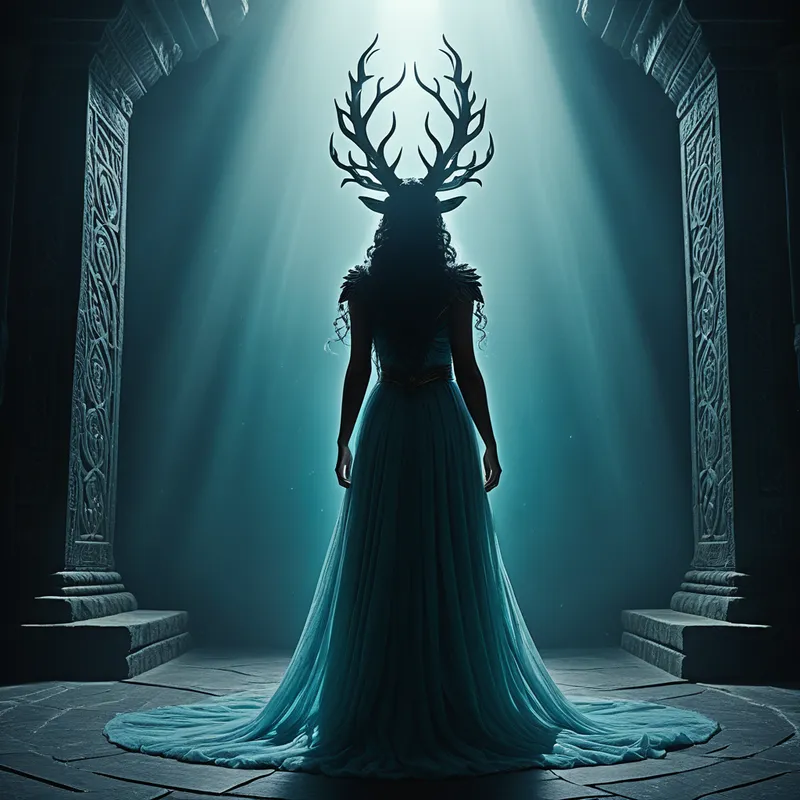
Kether the Crown
The supreme sephirah in Kabbalah, Kether symbolizes divine unity, the primordial source, and the gateway between the infinite and creation.
The Tale of Kether the Crown
Before the beginning, there was only [Ain Sof](/myths/ain-sof “Myth from Kabbalistic culture.”/), the boundless, endless No-[Thing](/myths/thing “Myth from Norse culture.”/). It was a plenitude so absolute it contained no other, a light so pure it cast no shadow, a thought so complete it had no word. From this profound unity, a yearning arose—not a lack, but an overflowing desire to be known, to give. This was the first contraction, the [Tzimtzum](/myths/tzimtzum “Myth from Kabbalistic culture.”/), where the Infinite made space for the possibility of an Other.
Into that primordial vacuum, a single point of ineffable light emerged. This was [Kether](/myths/kether “Myth from Kabbalistic culture.”/), [the Crown](/myths/the-crown “Myth from Various culture.”/). It was not the Infinite, but its first and most subtle expression, a shimmering interface between the unknowable and the knowable. Imagine a flawless diamond suspended in absolute darkness, its single facet reflecting the entirety of the source, yet itself being a distinct [emanation](/myths/emanation “Myth from Neoplatonic/Gnostic culture.”/). It is called “Ratzon,” the Divine Will, the first “Yes” that answers the eternal silence. It is “The Point,” from which all dimensions will unfold, and “The Primordial [Ether](/myths/ether “Myth from Western Esoteric culture.”/),” the subtle substance of first being.
No story can be told of Kether, for it precedes narrative. It is the silent breath before the first note of creation’s song, the white page before the first glyph. It is the archetype of unity, where all opposites—mercy and judgment, force and form, male and female—are fused in a state of non-differentiated potential. To speak of it is to already descend from it, for language is born of distinction, and in Kether, all is One.
Cultural Origins & Context
Kether is the supreme sephirah of the [Tree of Life](/myths/tree-of-life “Myth from Kabbalistic culture.”/), the foundational glyph of Jewish esoteric tradition known as Kabbalah. While Kabbalistic thought crystallized in medieval Europe, its roots tap into earlier Jewish mystical currents concerned with the mysteries of the Divine Chariot ([Merkabah](/myths/merkabah “Myth from Hebrew culture.”/)) and the act of creation (Ma’aseh Bereshit).
[The Tree of Life](/myths/the-tree-of-life “Myth from Kabbalistic culture.”/) is not a static diagram but a dynamic map of divine emanation (atzilut) and the architecture of consciousness. Kether, positioned at [the summit](/myths/the-summit “Myth from Taoist culture.”/), represents the initial flash of directed being that proceeds from the unknowable Godhead (Ain Sof). It is the bridge between transcendence and immanence. In [the Zohar](/myths/the-zohar “Myth from Kabbalistic culture.”/), the central text of Kabbalah, Kether is often referred to as “The Ancient of Days” (Atik Yomin), suggesting a face of divinity that is both primordial and eternally concealed. Its position establishes the fundamental Kabbalistic principle that the manifest universe is not a creation ex nihilo from a distant God, but a cascading revelation of God’s own hidden interiority, with Kether as the first veil.
Symbolic Architecture
[Kether](/symbols/kether “Symbol: In Kabbalah, the first Sephirah of the Tree of Life, representing the divine crown, pure consciousness, and the source of all creation.”/)’s [architecture](/symbols/architecture “Symbol: Architecture in dreams often signifies structure, stability, and the framing of personal identity or life’s journey.”/) is one of sublime [paradox](/symbols/paradox “Symbol: A contradictory yet true concept that challenges logic and perception, often representing unresolved tensions or profound truths.”/). It is the point that contains the line, the circle whose center is everywhere and circumference nowhere. It is pure potential, the divine will-to-be that has not yet chosen a specific [direction](/symbols/direction “Symbol: Direction in dreams often relates to life choices, guidance, and the path one is following, emphasizing the importance of navigation in personal journeys.”/). Its color is pure white, containing all colors, or brilliant white light. It is associated with the [crown](/symbols/crown “Symbol: A crown symbolizes authority, power, and achievement, often representing an individual’s aspirations, leadership, or societal role.”/) of the head, the point of [connection](/symbols/connection “Symbol: Connection symbolizes relationships, communication, and bonds among individuals.”/) to the beyond, and the [breath](/symbols/breath “Symbol: Breath symbolizes life, vitality, and the connection between the physical and spiritual realms.”/)—the [Ruach Elohim](/myths/ruach-elohim “Myth from Abrahamic culture.”/) that hovered over the face of the deep.
Kether is the divine question to which the rest of the Tree is the elaborate, beautiful answer. It is the unformulated intent behind every act of creation.
It has no form, yet it is the [source](/symbols/source “Symbol: The origin point of something, often representing beginnings, nourishment, or the fundamental cause behind phenomena.”/) of all form. It is often called “The Hidden Intelligence,” for it is the intelligence of unity that precedes the intelligence of [analysis](/symbols/analysis “Symbol: The process of examining something methodically to understand its components or meaning. In dreams, it represents the mind’s attempt to break down complex experiences.”/). Its connection to the other sephiroth is via the three “Veils of Negative Existence” that precede it—Ain ([Nothingness](/symbols/nothingness “Symbol: A profound emptiness or void, often representing existential anxiety, spiritual seeking, or emotional numbness in dreams.”/)), Ain Sof (Limitlessness), and Ain Sof Aur (Limitless Light)—and the [path](/symbols/path “Symbol: The ‘path’ symbolizes a journey, choices, and the direction one’s life is taking, often representing individual growth and exploration.”/) that descends directly to [Chokmah](/symbols/chokmah “Symbol: In Kabbalah, Chokmah is the second Sefirah, representing divine wisdom, the primordial masculine principle, and the flash of creative insight.”/), the first flash of active force. Kether is the silent, still [king](/symbols/king “Symbol: A symbol of ultimate authority, leadership, and societal order, often representing the dreamer’s inner power or external control figures.”/) upon the [throne](/symbols/throne “Symbol: A seat of authority, power, and sovereignty, representing leadership, divine right, or social hierarchy.”/), whose mere existence empowers the entire [kingdom](/symbols/kingdom “Symbol: A kingdom symbolizes authority, belonging, and a sense of identity within a larger context or community.”/) below.
The Dreamer’s Resonance
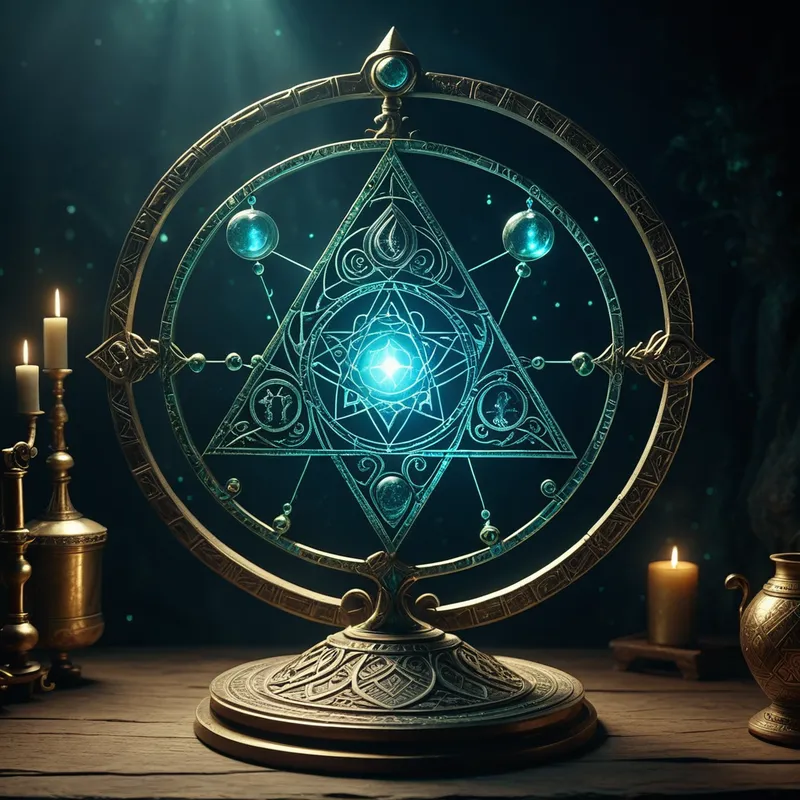
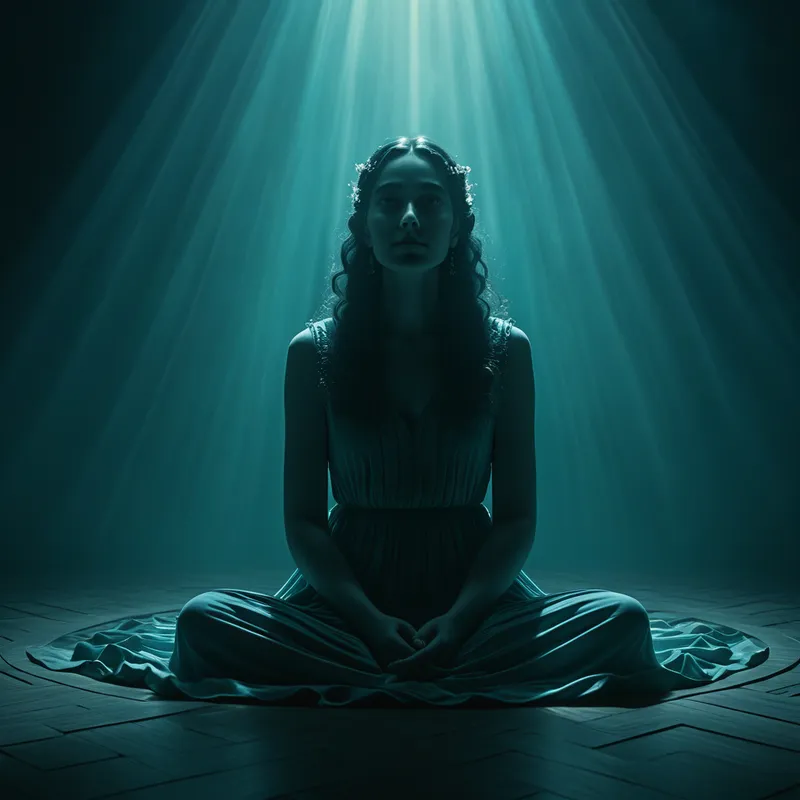
To the depth psychologist, Kether represents the core, ineffable Self—not [the ego](/myths/the-ego “Myth from Jungian culture.”/), but the transcendent center of the [psyche](/myths/psyche “Myth from Greek culture.”/) that C.G. Jung termed [the Self](/myths/the-self “Myth from Jungian culture.”/) archetype. It is the point of origin of individual consciousness, the “I am” that exists before any specific thought, feeling, or memory. It is the experience of pure being, of unity with the totality of one’s own soul, which can momentarily flash in states of deep meditation, profound peace, or in the numinous awe of a truly unitive experience.
This is the psychological “Crown,” the integrating principle that orders the [chaos](/myths/chaos “Myth from Greek culture.”/) of the psyche into a coherent whole. The longing for Kether is the soul’s longing for home, for a state before conflict and fragmentation. In dreams, it may appear as a blinding light, a silent, majestic figure, a transcendent landscape of perfect peace, or simply as the overwhelming feeling of sacred wholeness. It is the source of the individuation impulse, the call from this highest point to become who one essentially is.
Alchemical Translation
In the alchemical opus, Kether corresponds to the [prima materia](/myths/prima-materia “Myth from Alchemical culture.”/)—not the gross physical substance, but the original, divine matter at the beginning of the Work. It is the “One Thing” from which [the alchemist](/myths/the-alchemist “Myth from Various culture.”/) begins, which contains within it the seed of the Philosopher’s Stone. The alchemical stage is the [Nigredo](/myths/nigredo “Myth from Alchemical culture.”/), but at its most profound level: the initial, dark, unitary chaos that holds all opposites in solution before the first separation.
The alchemist seeks to return to the Kether-state within the soul: to find that original, uncorrupted point of divine spark, the scintilla, and nurture it through the trials of transformation until it illuminates the entire being.
The process is one of distillation and sublimation, aiming to refine the base consciousness back to this crown-like purity. The goal of the [Rubedo](/myths/rubedo “Myth from Alchemical culture.”/), the red stage of completion, is not to create something new, but to fully manifest this primordial gold that was latent from the beginning. Kether is both the origin and the destination of [the Great Work](/myths/the-great-work “Myth from Alchemical culture.”/).
Associated Symbols
Explore related symbols from the CaleaDream lexicon:
- Crown — The emblem of supreme authority and spiritual sovereignty, representing the connection between the human and the divine, the attainment of the highest state of consciousness.
- Light — The first emanation from the source, representing pure consciousness, divine revelation, and the illuminating power of truth that dispels the darkness of ignorance.
- Ether — The primordial, subtle substance of first manifestation, the medium through which spirit begins to condense into form, the air of the highest heaven.
- Point — The dimensionless origin of all dimension, the concentrated essence from which all complexity unfolds, symbolizing the seed of creation and the focused will.
- Circle — The symbol of unity, wholeness, and eternity, with no beginning or end, reflecting Kether’s nature as the encompassing source from which all emanates.
- God — The transcendent, unknowable source as it first becomes conceivable, the face of divinity turned toward creation, representing absolute unity and primordial cause.
- Mirror — A surface that perfectly reflects without altering, symbolizing Kether’s role as the pure, undistorted reflection of the Ain Sof into the realm of emanation.
- Sky — The limitless expanse and highest heaven, representing transcendence, vast potential, and the domain of pure spirit and divine will before it touches [the earth](/myths/the-earth “Myth from Hindu culture.”/) of manifestation.
- Mountain — The ultimate height and pinnacle, a place of revelation and proximity to the divine, symbolizing the arduous ascent toward the summit of spiritual understanding.
- Kether — The supreme sephirah itself, the Crown of the Tree of Life, embodying divine unity, the primordial source, and the ineffable gateway between the infinite and creation.