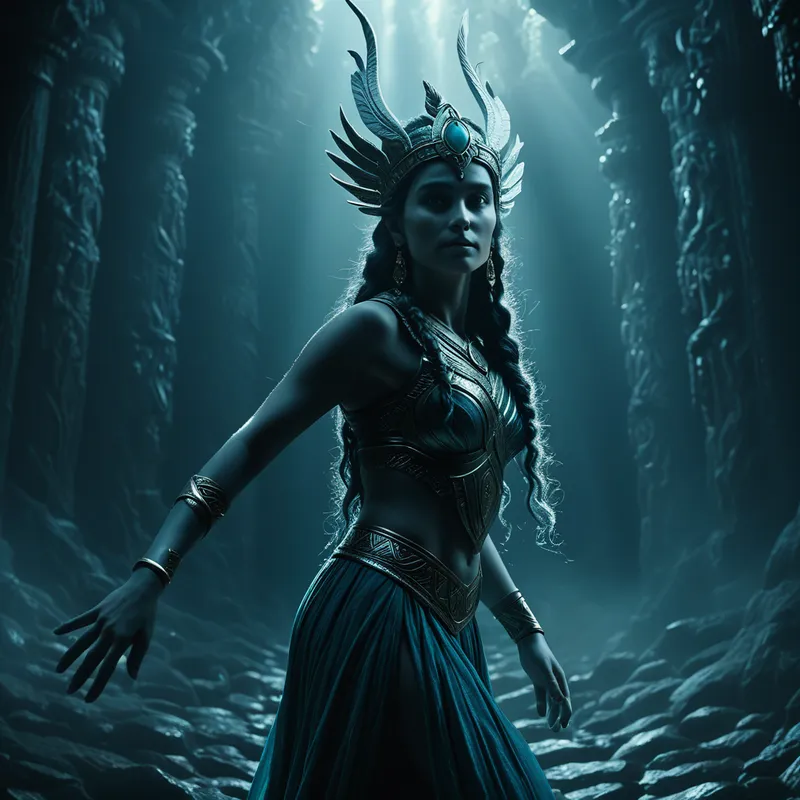
Hunahpu and Xbalanque
Heroic Maya twin brothers who descend into the underworld, defeat death gods through cunning, and transform into celestial bodies.
The Tale of Hunahpu and Xbalanque
In the time before the dawning of the true sun, the world was a place of shadows and unfinished creation. The story begins not with the twins, but with their father and uncle, Hun Hunahpu and Vucub Hunahpu, great ballplayers whose thunderous game disturbed the lords of the dark realm, Xibalba. Lured below by a challenge, the brothers were swiftly defeated by the death gods’ cruel tricks—the Razor House, the Cold House, the Jaguar House. Their fate was decapitation; the head of Hun Hunahpu was placed in the fork of a barren calabash tree, which miraculously bore fruit. From this tree, a maiden of Xibalba, Xquic, reached for the fruit. The skull spat into her hand, and she was impregnated with the essence of the hero.
Cast out from the underworld, Xquic ascended to the surface world and gave birth to the twins, Hunahpu and Xbalanque. From their earliest days, they were marked by destiny and prodigious skill, yet they lived under the jealous eye of their half-brothers, Hun Batz and Hun Chouen, who treated them as servants. Through a series of brilliant ruses—transforming their half-brothers into monkeys for their arrogance—the twins established their cleverness and rightful place.
Their true ordeal began when they took up their father’s ballgame, again disturbing the Lords of Xibalba. Summoned to the underworld, they entered not as naive victims but as conscious tricksters. On the dread path, they sent a mosquito ahead to learn the true names of the lords, stripping them of their anonymous terror. In Xibalba, they faced the same deadly houses but survived through wit and magical aid: they shared a glowing cigar without consuming it, endured the freezing cold by kindling a secret fire, and pacified the ravenous jaguars with bones.
The final test was the great ballgame itself, played with a blade-lined ball of obsidian. Knowing they could not win a contest rigged by death, they allowed themselves to be defeated and sacrificed. Grinding their bones were cast into a river, they performed the ultimate trick: from the waters, they resurrected first as catfish, then as ragged, wandering performers. In this guise, they returned to the courts of Xibalba, performing miraculous dances—sacrificing and restoring each other to life. Captivated, the lords demanded to be part of the spectacle. “Sacrifice us!” they cried. The twins obliged, but this time, they left the lords of death dismembered and unrevived, breaking their power forever.
Before ascending, the twins sought their father’s remains, restoring him not to life, but to a new, honored form as the Maize God, the source of sustenance. Their work complete, they rose into the heavens, becoming the sun and the moon, eternal lights in the sky born from the conquest of darkness.
Cultural Origins & Context
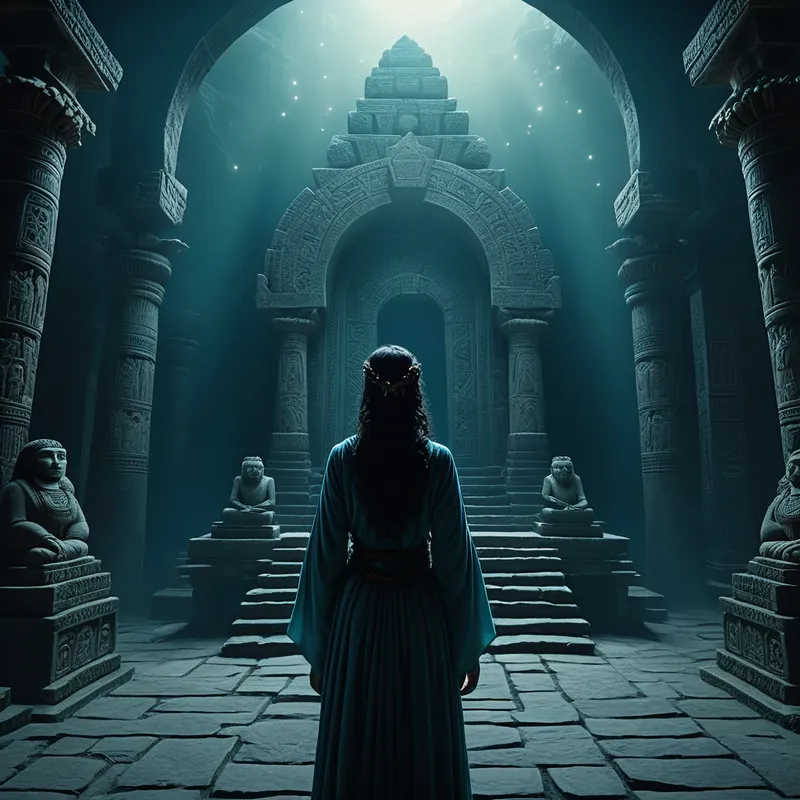
This epic is the heart of the K’iche’ Maya Popol Vuh, a post-conquest text transcribed in the 16th century that preserves pre-Columbian cosmology. The narrative is not mere folklore but a foundational myth encoding the Maya understanding of cosmic order, agricultural cycles, and royal legitimacy. The Hero Twins are the archetypal ancestors; their story validates the ruling lineages, who claimed descent from these divinities who mastered life, death, and celestial transformation.
The myth is deeply embedded in the ritual ballgame (pitz), a sport reenacting cosmic struggle where the court represented the world and the ball the sun’s perilous journey. Their descent into Xibalba mirrors the sun’s nightly journey through the underworld, and their victory symbolizes the dawn’s inevitable triumph. This is a mythology of resilience, where the human condition—frail, mortal, and subject to capricious powers—is confronted not with brute force, but with intelligence, patience, and sacred play.
Symbolic Architecture
The myth constructs a psychic map where the underworld is not a place of punishment, but of initiation. Xibalba is the realm of the unrealized, the fragmented, and the ancestral. The twins’ journey is a process of making the unconscious conscious, of naming the faceless fears that rule from the shadows.
The trick is the sacred weapon of the powerless against the rigidity of established, deathly power. It represents the fluid intelligence of consciousness itself, which can reframe reality and expose the vulnerabilities of a system built on fear and illusion.
Their transformation into performers is key. The mask of the vagabond allows them to move unseen by the expectations of the lords, just as the psyche must sometimes disguise its integrating work in acceptable forms to bypass the censors of the conscious mind. Their final act—refusing to restore the lords—is the ultimate psychological revolution: the internalized authorities of fear and lack are not reformed, but permanently deposed.
The Dreamer's Resonance
To dream of Hunahpu and Xbalanque is to encounter the twin forces within the psyche that engage with life’s deepest ordeals. One twin may represent strategic intellect (Hunahpu, often associated with the sun and the blowgun), the other embodied instinct and connection to the animal world (Xbalanque, the jaguar-sun, or moon). Their synergy is essential; neither alone can navigate the House of Gloom.
This myth speaks to anyone facing a “descent”—a period of depression, grief, or profound disorientation. The twins do not avoid the fall; they consent to it, turning the ordeal into the theater of their transformation. Their story suggests that the way through a crushing challenge is not to meet its stated terms, but to change the game entirely, to die to the old identity and be reborn in a form the challenge cannot recognize or control. The resurrection as performers hints that healing often requires a capacity for play, for storytelling, for reframing our trauma into a dance that can be shared and, ultimately, transcended.
Alchemical Translation
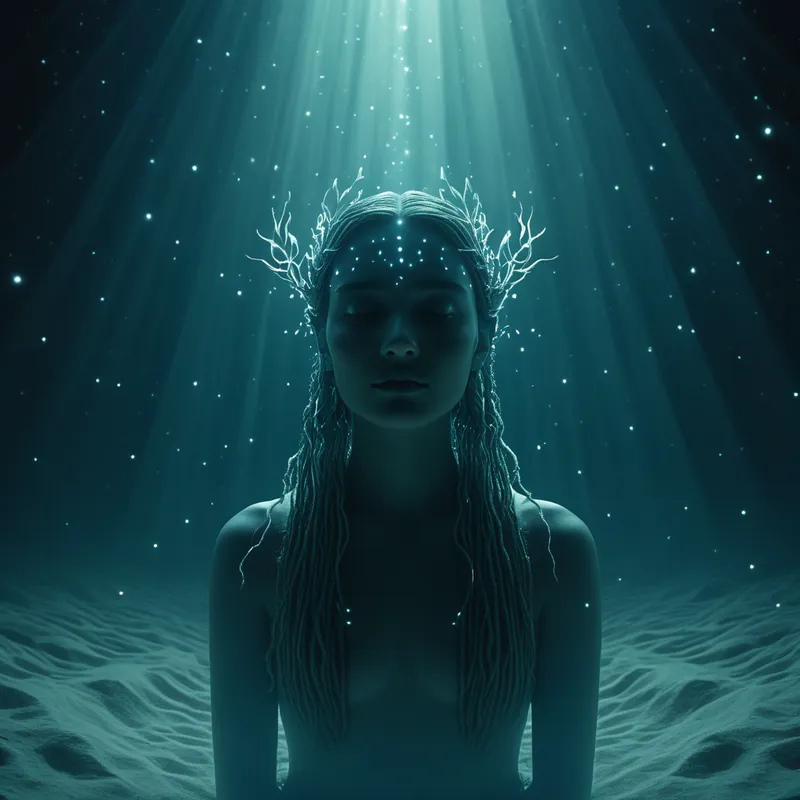
In the alchemy of the soul, the myth describes the nigredo and albedo processes. The nigredo is the blackening: the crushing defeat in the ballcourt, the grinding of bones in the river, the utter dissolution of the heroic ego. This is a necessary putrefaction. The albedo, the whitening, is the glorious resurrection from the waters—not as they were, but transformed. They return not as heroes, but as humble, miraculous healers.
The calabash tree, flowering from a severed head, is the ultimate symbol of the coniunctio oppositorum—the union of opposites. Death (the skull) and life (the tree) are joined, and from this impossible union springs the possibility of new consciousness, embodied in the twins. It is the psyche’s innate ability to generate meaning and new life from the most traumatic severance.
Their ascent as sun and moon completes the work, fixing the transformation into a permanent, cycling reality within the cosmos of the self. The personal victory becomes a structural feature of one’s inner universe, providing enduring light and rhythm.
Associated Symbols
Explore related symbols from the CaleaDream lexicon:
- Underworld — The realm of initiation, where conscious identity is dissolved and tested by shadowy powers, necessary for profound transformation.
- Trickster — The archetypal force of cunning and subversion that uses humor, guile, and intelligence to overthrow rigid or oppressive orders.
- Transformation Cocoon — The state of dissolution and hidden reorganization, like the twins’ bones in the river, from which a new, more potent form emerges.
- Ballgame — The ritualized struggle representing the cosmic battle between life and death, order and chaos, played out on the court of the world.
- Sacrifice — The voluntary surrender of a former state of being, which becomes the essential fuel for rebirth and apotheosis.
- Rebirth — The core promise of the myth; emergence from a death-like state into a new, empowered, and often elevated form of existence.
- Sun — The celestial embodiment of conscious clarity, heroic triumph, and cyclical renewal born from a victory over darkness.
- Moon — The companion light, representing reflective wisdom, cyclical change, and the intuitive, instinctual power that complements solar consciousness.
- Dance — The performative, embodied ritual of transformation; a sacred act that can enact healing, tell stories of power, and disguise profound work.
- Mask — The tool of deception and transformation, allowing the true self to operate unseen, to perform, and to navigate hostile realms.
- Father — The ancestral legacy, both as a burden of fate and as a dismembered potential awaiting restoration and integration.
- River — The flowing, cleansing, and transformative medium that carries the fragments of the old self toward the possibility of recombination and new life.