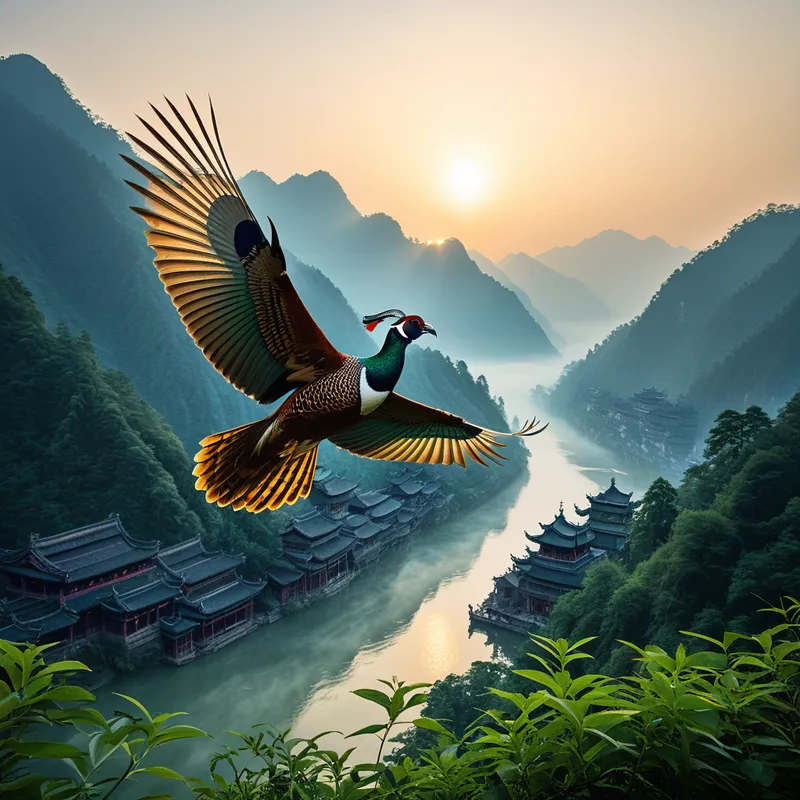
Fenghuang Myth Meaning & Symbolism
A celestial bird of perfect virtue, the Fenghuang embodies the union of yin and yang, appearing in times of peace to herald renewal and cosmic harmony.
The Tale of Fenghuang
Listen, and let the mists of time part. In the age when the world was young and the Hundun had just settled, the heavens held their breath. The earth was a canvas of raw potential, its rivers singing new songs, its mountains still whispering secrets of their formation. It was a time after great tumult, a fragile dawn.
From the direction of the sun’s birth, from the Zhuque's own fiery domain, a sound began—a sound that was not a song, but the very essence of melody given form. It was the sound of celestial strings being plucked, of wind through sacred bamboo, of water over ancient stone. The air itself grew heavy with the scent of orchid and cassia, and a light, gentle and all-encompassing as mother-of-pearl, began to suffuse the sky.
Then, she descended. Not with the fury of a storm, but with the inevitable, graceful settling of a feather upon still water. She was the Fenghuang. Her head was the sky, crowned with the character for virtue. Her eyes were the sun and the moon, holding infinite compassion and wisdom. Her back bore the weight of heaven’s own principles; her breast, the humility of the earth. Her wings were the four seasons, and her tail, the five sacred colors—black, white, red, yellow, and blue—streamed behind her like the banners of a perfect kingdom. Her voice, when she called, was the harmony of the pentatonic scale, a vibration that made the wheat ripen and the sick well.
She did not come to conquer, but to witness. She circled the Middle Kingdom, her shadow blessing the fields. Where she passed, discord ceased. Quarrelling brothers fell silent, their anger cooled. Wilted flowers straightened, their petals regaining luster. The very air, once thick with the residual dust of chaos, became crystalline and easy to breathe. She sought no nest but the highest branch of the Wutong tree, and her only sustenance was the seeds of the bamboo, food of the purest intent.
Her arrival was not an event, but a state of being. It was the resolution itself. The conflict was the world’s forgetfulness of harmony; her presence was its breathtaking remembrance. She was the living proof that the warring halves of existence—the fiery yang and the gentle yin, the sun and the moon, the emperor and the people—could not only coexist but create a beauty so profound it defied mortal language. She perched, and in that simple act, the world was resolved. Peace was not made; it was revealed, as if it had been waiting beneath the surface all along. Then, when her work of reflection was complete, she would lift into the sky, a fading chord of color and light, leaving behind a world forever touched by the memory of perfection.
Cultural Origins & Context
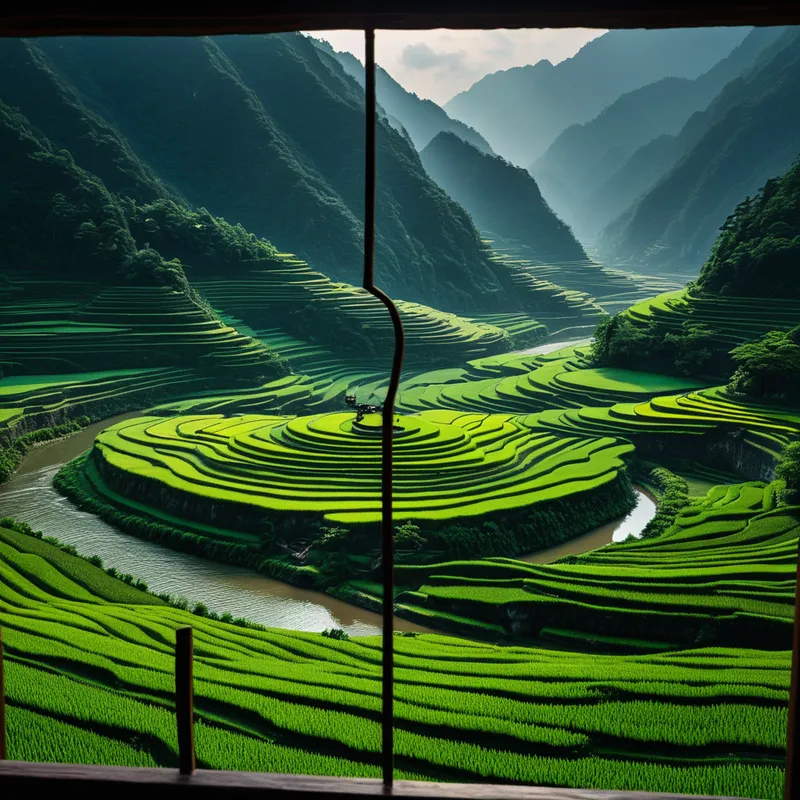
The Fenghuang’s origins are as layered as its plumage. Its earliest depictions appear on neolithic jade and pottery, often alongside the Long, suggesting a primordial pairing of celestial forces. It was not merely a bird but a composite deity, an emperor of all winged creatures, absorbing the features of the most esteemed animals: the head of a golden pheasant, the body of a mandarin duck, the tail of a peacock, the legs of a crane, the mouth of a parrot, and the wings of a swallow.
Throughout the Shang and Zhou dynasties, the Fenghuang was a potent emblem of divine mandate and virtuous rule. Its appearance in omens and oracle bone inscriptions signaled heaven’s favor. It functioned as a societal mirror and compass. Philosophers like Confucius lamented its absence in times of strife, yearning for the “Phoenix Bird” as a symbol of the return to benevolent governance and ritual propriety (Li). It was passed down not as a single, canonical epic, but as a pervasive cultural motif—in the hymns of the Shijing, the allegories of Daoist sages, the intricate patterns on imperial robes, and the rooftops of palaces, where it stood opposite the dragon, representing the empress and the perfect balance of imperial power.
Symbolic Architecture
The Fenghuang is perhaps the ultimate symbol of psychic and cosmic integration. It is not a monster to be slain nor a hero on a quest; it is the embodied result of the quest. It represents the Self, in the Jungian sense, as the complete, unified totality of the psyche.
The Fenghuang does not seek harmony; it is harmony incarnate. Its very body is a map of reconciled opposites.
Its composite nature symbolizes the conscious integration of diverse, often conflicting, aspects of one’s being. The snake’s neck speaks to wisdom and connection with the earth; the fish’s tail to abundance and depth; the pheasant’s head to solar awareness. The five colors correspond to the five elements (Wuxing) and the five virtues (Ren, Yi, Li, Zhi, Xin), charting a complete moral and cosmological system. Most critically, the Fenghuang is the union of the Yin (Feng, the male phoenix) and the Yang (Huang, the female phoenix), a single entity representing the sacred marriage (Hieros Gamos) of the inner masculine and feminine. It is the end of inner civil war, the state where one’s energies are not spent in conflict but are channeled into a serene, creative, and benevolent presence in the world.
The Dreamer's Resonance
To dream of the Fenghuang is to encounter the psyche’s own announcement of a coming integration. It rarely appears during periods of frantic struggle or deep despair. Instead, it graces the liminal space after the storm, when exhaustion gives way to a strange, quiet clarity.
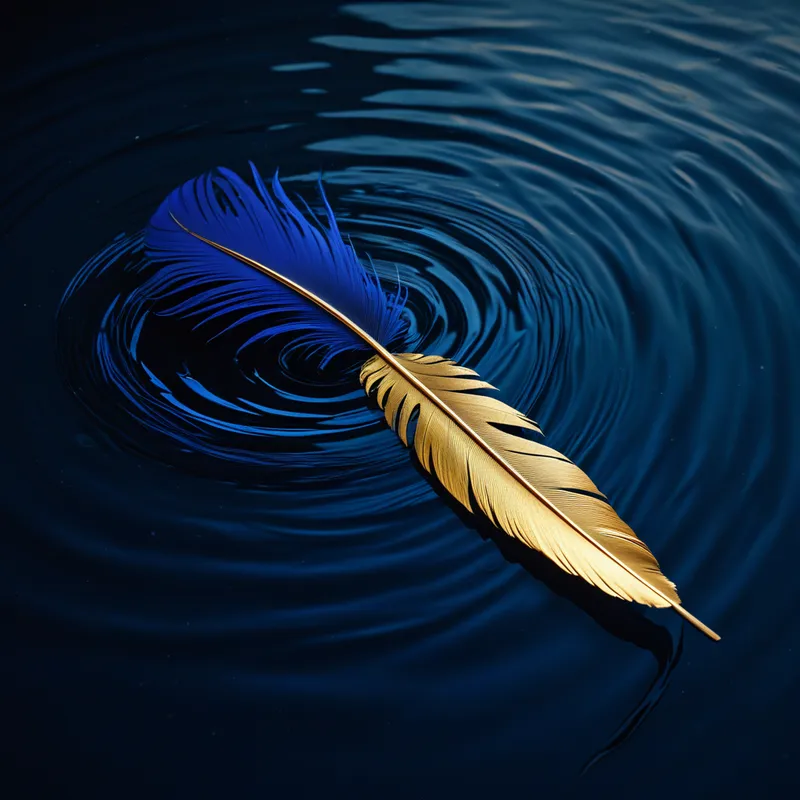
The dream image may be subtle: a single, impossibly beautiful feather found on a windowsill; the distant, echoing call that stops all dream-action; or the overwhelming feeling of being watched by a benevolent, majestic presence just outside the dream’s frame. Somatically, the dreamer might report a sensation of profound warmth, lightness, or a deep, rhythmic calm in the chest, as if the heart itself has found its true tempo. Psychologically, this signals a reconciliation. Perhaps a long-held inner conflict between duty and desire (the dragon and phoenix) is resolving. Perhaps a period of burning away old identities (a personal “fire”) is culminating not in ashes, but in the emergence of a more authentic, composed self. The Fenghuang dream is the unconscious confirming: The pieces are fitting together. You are becoming whole.
Alchemical Translation
The individuation process modeled by the Fenghuang is not one of violent overthrow, but of elegant synthesis and emergence. The “fire” here is not destructive but purifying and illuminating. The modern individual’s journey toward wholeness often involves confronting and integrating their own “composite” nature—the various roles, masks, and sub-personalities they have adopted.
The alchemy of the Fenghuang is the patient work of arranging the scattered, colored fragments of one’s experience into a coherent, radiant mosaic of the Self.
First, one must recognize the disparate elements within: the soaring ambition (the crane), the need for connection (the mandarin duck), the showier aspects of personality (the peacock’s tail). The conflict arises when these parts are at odds. The alchemical work is to hold them in consciousness without judgment, to see how the strength of one compensates for the vulnerability of another. This is the creation of the inner Hieros Gamos. The disciplined, structuring principle (yang) must court and wed the intuitive, nurturing principle (yin). Only from this union does the “virtuous voice” emerge—a mode of being and acting that is both effective and compassionate, strong and gentle, individual and connected to the collective. The triumphant “appearance” of the Fenghuang in one’s life is the moment when this synthesized self becomes the operative identity, leading not to grandiosity, but to a serene and potent authenticity that naturally brings order and beauty to its surroundings.
Associated Symbols
Explore related symbols from the CaleaDream lexicon:
- Bird — The Fenghuang is the sovereign of all birds, representing the ascension of spirit, higher consciousness, and the soul's connection to the celestial realm.
- Fire — Symbolizes the purifying and transformative element that precedes the Fenghuang's appearance, not as destruction, but as the alchemical flame of renewal.
- Sun — Represents the yang aspect of the Fenghuang, embodying active virtue, clarity, conscious awareness, and imperial authority.
- Moon — Represents the yin aspect of the Fenghuang, embodying receptive wisdom, intuition, cyclical renewal, and empathic grace.
- Harmony — The core essence of the myth; the Fenghuang is the living manifestation of cosmic and psychic balance, where all opposites are reconciled.
- Rebirth — The Fenghuang heralds not a resurrection from death, but a renaissance of peace, virtue, and prosperous order within a society or individual.
- Dragon — The Fenghuang's eternal counterpart; together they symbolize the perfect union of yin and yang, empress and emperor, and the balanced governance of self.
- Tree — Specifically the Wutong, the only perch worthy of the Fenghuang, representing stability, growth, and the connection between heaven and earth.
- Light — The radiant aura and plumage of the Fenghuang, symbolizing enlightenment, divine favor, and the illumination that follows inner integration.
- Order — The Fenghuang's arrival establishes cosmic and social Li (propriety), representing the inner state where the psyche's elements are correctly arranged and functional.
- Healing — The Fenghuang's call and presence are said to cure illness, symbolizing the profound psychological healing that occurs when inner conflict is resolved.
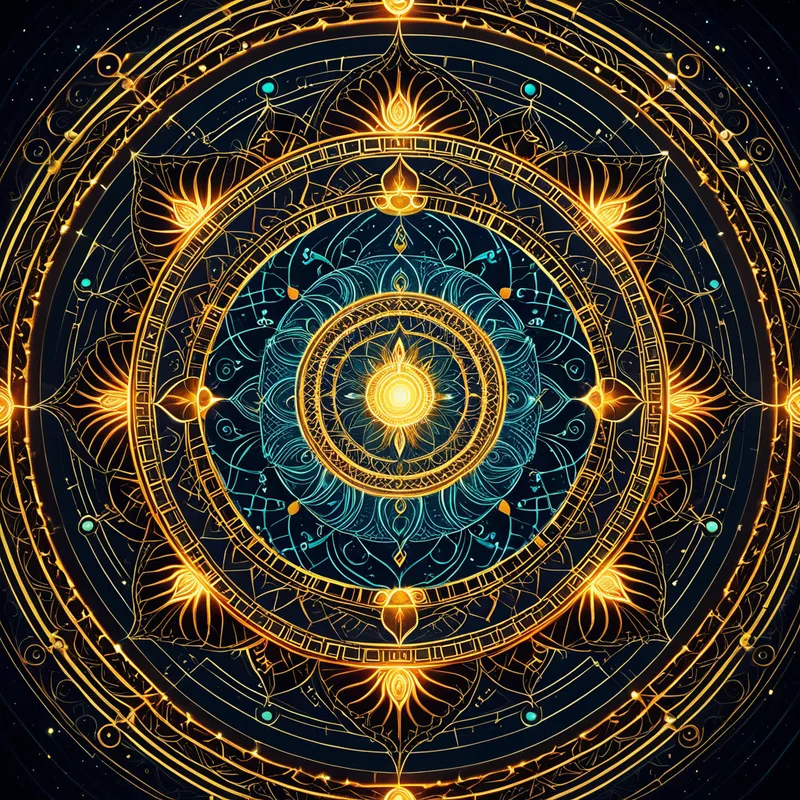
- Circle — Represents the completeness, perfection, and cyclical nature of the harmony embodied by the Fenghuang, a mandala of the integrated Self.
- Phoenix Feather
- Hushed Pheasant
- Phoenix-Feather Brush
- Phoenix Rebirth