
Feather Cloaks Myth Meaning & Symbolism
A sacred tale of divine artisans, celestial birds, and the creation of a cloak of mana, weaving identity, sacrifice, and transcendent power.
The Tale of Feather Cloaks
Listen. The wind does not just blow; it carries the whispers of the ancestors. The sea does not just crash; it chants the rhythms of creation. And in the high, silent forests of Hawaiʻi, where the mist clings to the leaves of the kukui, there walked not just birds, but winged fragments of the gods.
These were the mamo and the ʻōʻō, cloaked in feathers of sun-gold and shadow-black, with flashes of crimson like the first blood of dawn. To see one was to witness a darting prayer. Their feathers were not mere plumage; they were solidified light, condensed mana. And it was known that to gather them was a task of profound kapu.
The work began not with a needle, but with a breath of intention. Master artisans, the kāhili, would first weave the nae, a mesh of fine olonā cord. This net was not a prison, but a waiting sky, a structured emptiness yearning for stars. Then, the silent hunt. The bird-catcher, a figure of immense patience and ritual precision, would venture into the sacred forests. He used sticky paste and gentle snares, never killing wantonly, often releasing the bird after taking a few precious feathers. Each acquisition was a treaty, a delicate transfer of essence from the wild, divine realm to the human world.
Years would pass. Decades. A lifetime. Hundreds of thousands of feathers, each one knotted individually onto the nae with a surgeon’s care and a priest’s devotion. The cloak grew, not as a garment, but as a topography. It became a moving landscape of power, a tapestry of captured sky and forest. When finally completed, it was not "put on" by an aliʻi nui. It was invested. In the moment it settled upon the chief’s shoulders, a alchemy occurred. The mana of the birds, the skill of the artisans, the lineage of the chief, and the blessing of the gods—all fused. The wearer was transformed. He was no longer merely a man leading men; he was the living apex of a sacred covenant, a walking constellation of ancestral authority. The cloak was his second skin, his visible soul, and the weight of it was the weight of the people’s trust and the gods’ gaze.
Cultural Origins & Context
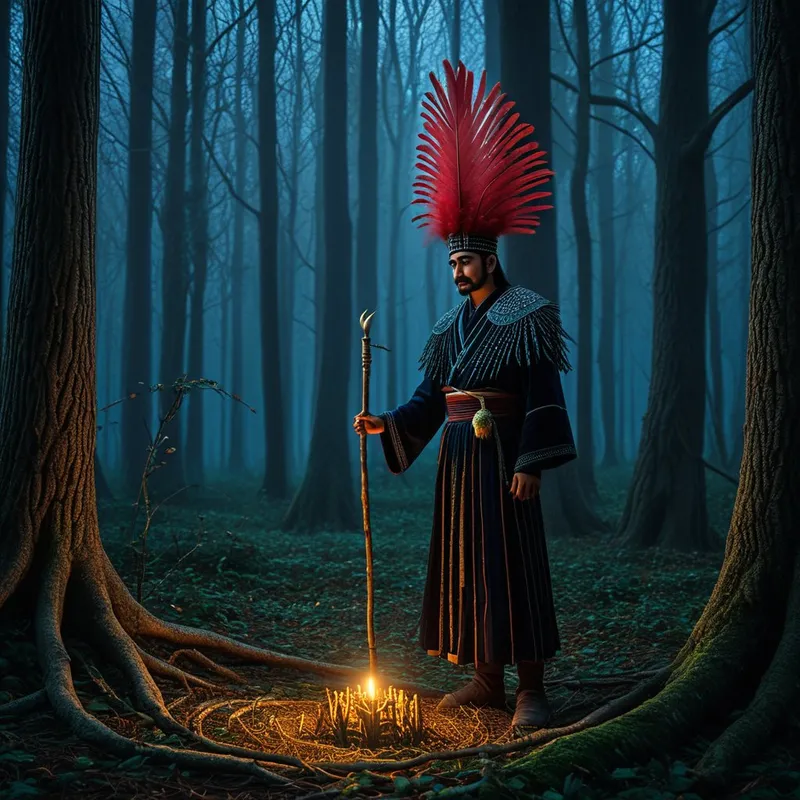
The feather cloak, or ʻahu ʻula, was the pinnacle of material and spiritual culture in pre-contact Hawaiʻi. This myth is not a single narrative with a named hero, but a living process myth embedded in the very act of creation. It was passed down not merely through chants (oli), but through the tactile, generational knowledge of the kāhili guilds. A father’s hands teaching a son’s the exact tension of the knot, the proper chant to appease the forest ʻaumākua before taking a feather.
Its societal function was multifaceted. On a political level, it was the ultimate symbol of aliʻi status. The rarity and labor-intensity made it a perfect symbol of concentrated wealth and power. In war, the bright red cloak served as a beacon and a statement of inviolability. On a spiritual level, it was a battery of mana. It connected the chief to the divine realm of the birds (akua like Kūkaʻilimoku), to the skill of the human realm, and to the land itself. It was a cosmological anchor, visually asserting the chief’s role as the conduit between heaven and earth.
Symbolic Architecture
At its core, the myth of the feather cloak is a profound allegory for the construction of a sovereign Self.
The net (nae) is the foundational structure of consciousness—the ego, the personal history, the accrued experiences that provide a matrix for identity. It is the necessary, but empty, framework.
The feathers represent the disparate, brilliant, and often elusive aspects of the psyche: insights, talents, moments of beauty, hard-won truths, and even the painful "pluckings" of experience. They are the raw, divine material of life, scattered and wild like the birds in the forest. Each feather is a unit of value, of meaning, of life-energy.
The act of gathering is the long, patient, often solitary work of introspection and living. It requires respect (the kapu), skill, and the willingness to engage with the untamed parts of one’s own nature without destroying them. The knotting is the act of integration. It is the slow, deliberate process of weaving each experience, each lesson, each fragment of beauty or pain, into the fabric of who we are. This is not automatic; it is conscious craftsmanship.
The completed cloak, then, is the individuated personality—not a collection of parts, but a new, transcendent whole where the sum is infinitely greater than its parts. It is a garment of one’s own authority, worn not to hide, but to fully manifest.
The Dreamer's Resonance
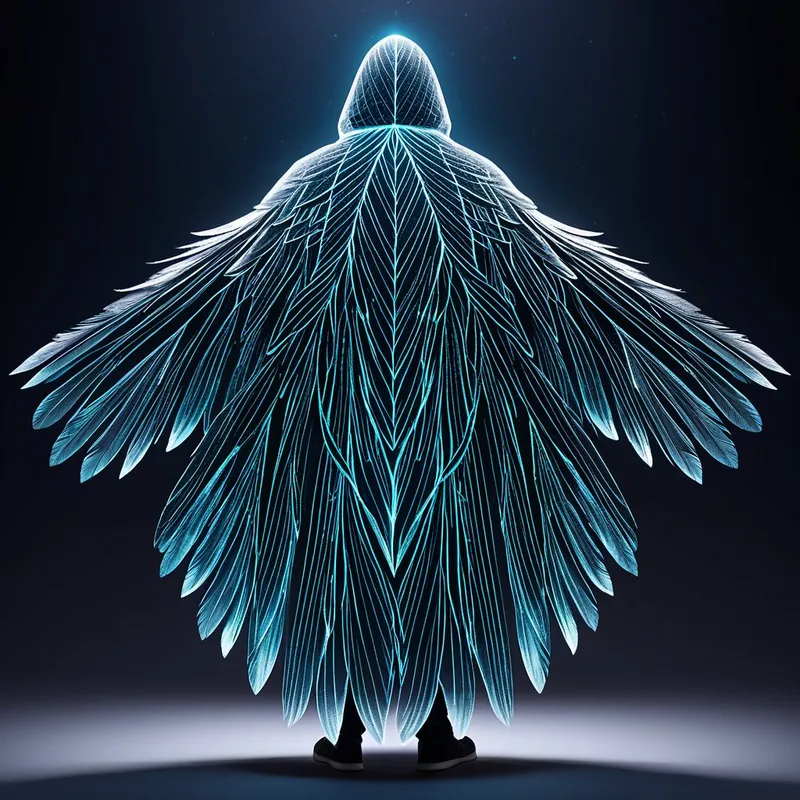
When this mythic pattern stirs in the modern dreamer, it often signals a profound phase of psychic integration or a crisis of sovereignty. To dream of gathering feathers may reflect a conscious or unconscious collecting of one’s scattered energies—recovering from burnout, reclaiming lost passions, or seeking meaning in fragmented experiences. There is a somatic sense of searching, of careful attention.
Dreaming of weaving or knotting speaks to an active, often arduous, process of making sense of one’s life. The dreamer may feel they are in the middle of a long, meticulous project of self-creation—therapy, artistic endeavor, rebuilding after loss. It can feel slow and frustrating, a knotting of one tiny insight at a time.
To dream of wearing a magnificent feather cloak is a powerful symbol of achieved self-possession and embodied authority. The dreamer feels the weight and the brilliance of their own hard-won identity. Conversely, dreaming of a tattered cloak, or feathers falling out, can indicate a perceived loss of this integrated self—a feeling that one’s authority, dignity, or hard-built identity is unraveling under stress or betrayal.

Alchemical Translation
The alchemy modeled here is the transmutation of the prima materia of raw experience (the wild birds, the forest) into the lapis philosophorum of the sovereign self (the completed cloak). For the modern individual, the myth maps the path of Individuation with stunning clarity.
First, one must acknowledge and craft the nae—the conscious ego structure. This is the work of adulthood: building competence, establishing boundaries, understanding one’s history. But this structure alone is empty, a net waiting to be filled.
Then begins the Nigredo, the black work: the long, often shadowy labor of venturing into the interior forest to gather the feathers. This is the engagement with the unconscious—with dreams, with repressed emotions, with forgotten talents, with the painful but valuable lessons of failure. Each feather gathered is a piece of the Self reclaimed from chaos or ignorance. It requires patience, reverence, and the courage to engage with what is wild within.
The Albedo, the whitening, is the meticulous process of knotting—of reflection, synthesis, and narrative-making. "Why did that event happen? What did that relationship teach me? How does this talent serve my purpose?" This is where analysis becomes integration, where memory becomes meaning.
The final Rubedo, the reddening, is the moment of investiture. It is not an end, but a glorious beginning. It is the moment the integrated Self is "worn"—when one acts in the world from a place of authentic, consolidated power. The cloak’ weight is the responsibility of this wholeness; its brilliance is the unique expression of a life consciously crafted. One becomes, like the aliʻi, a living bridge—no longer ruled by internal fragments or external pressures, but governing one’s own life with the hard-earned mana of a creator who has woven a universe from a thousand scattered fragments of light.
Associated Symbols
Explore related symbols from the CaleaDream lexicon: