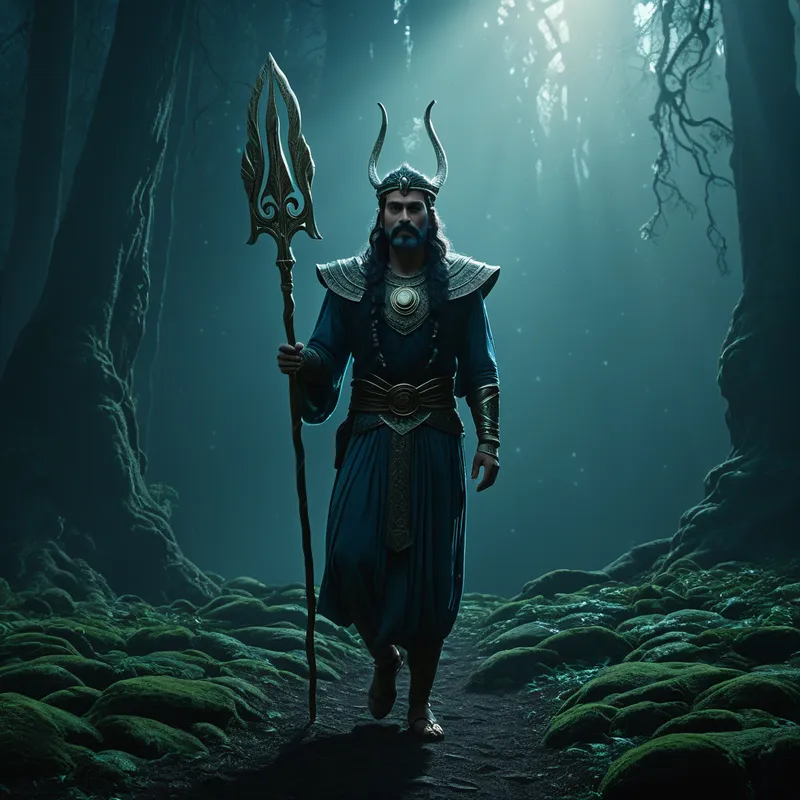
Atziluth the World of Emanation
The highest of the four worlds in Kabbalistic cosmology, Atziluth represents the realm of divine emanation where pure spirit flows directly from the infinite source.
The Tale of Atziluth the World of Emanation
In the beginning, before the beginning that can be spoken, there was only the Ein Sof. A boundless, undifferentiated sea of pure potential, a light so absolute it concealed itself in its own perfection. There was no “where” for it to be, and no “other” to behold it. It was the silent, eternal breath before the first word.
Then, not in time but in the first stirring of divine will, a contraction occurred—the Tzimtzum. The Infinite withdrew, not in absence, but to make space for presence. Into this primordial vacuum, this holy void, the Ein Sof directed a single, focused ray of its own essence. This was not a creation, but an outpouring; not a making from without, but a revealing from within. This ray was the birth of Atziluth, the World of Emanation.
Imagine a fountain whose source is hidden in the sun, whose water is liquid light. This is Atziluth. Here, divine reality flows without intermediary, without vessel. It is the realm of pure names, where the ten Sefirot exist not as separate entities but as the very attributes of the Divine, shining in their primal, unified state. Keter is the ineffable crown of will, the first whisper of intent. Chokhmah is the flash of infinite wisdom, a point of pure insight. Binah is the great womb of understanding that receives that point and expands it into the concept of all that could be.
In Atziluth, the light does not fill vessels; it is the vessels. The blueprint of all existence hangs here, not as a drawing, but as the living idea of the drawing. The divine breath, the Ruach Elohim, moves upon these waters of pure spirit. There is no distinction between the emanator and the emanated, between the singer and the song. It is a world of absolute unity, where “I am that I am” is not a statement but the fundamental condition of being. From this realm of undiluted spirit, the other worlds—Beriah, Yetzirah, and Assiyah—will cascade forth like echoes, each step a further condensation of this primordial light into the forms of creation. But here, in Atziluth, all remains in the state of divine intimacy, a secret too profound for separation.
Cultural Origins & Context
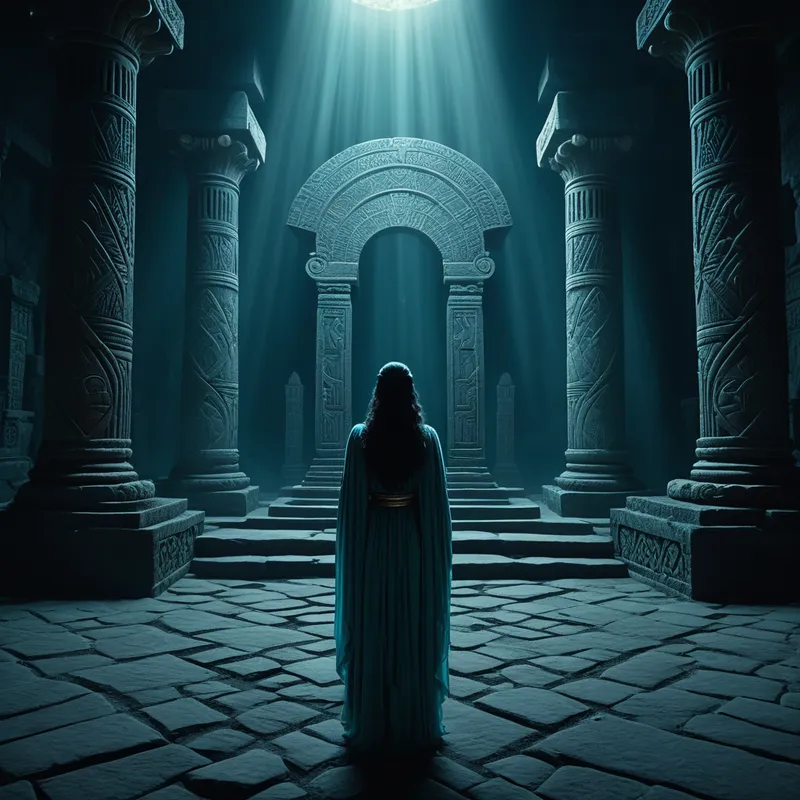
Atziluth finds its home in the esoteric heart of Judaism, within the mystical tradition known as Kabbalah. While its roots intertwine with earlier Jewish mystical thought, its systematic articulation flourished from the 12th century onward, most famously in the Zohar and the later works of the 16th-century Safed school, particularly those of Rabbi Isaac Luria (the Ari).
The concept of Atziluth is central to the Kabbalistic model of the Four Worlds (Olamot), a hierarchical cosmology describing the process of creation from the infinite to the finite. Atziluth is the first and highest of these worlds. It is crucial to understand that this schema is not a map of physical places, but of spiritual states and modes of divine revelation. It answers the profound theological question: How does the transcendent, unknowable Ein Sof relate to a finite, manifested universe? Atziluth is the first “answer”—the interface where infinity begins to express itself in articulate, though still utterly spiritual, form.
This doctrine emerged from a deep need to reconcile absolute divine unity with the experienced multiplicity of creation, and to provide a path for the human soul to journey back toward its source. Atziluth represents the ideal state of unity to which all mystical aspiration is directed, the realm where the human will, in its highest aspect, can touch the divine will.
Symbolic Architecture
The architecture of Atziluth is one of luminous transparency. Its primary structures are the ten Sefirot, but here they are conceived as orot (lights) rather than kelim (vessels). They are not containers for divinity; they are its direct radiance. The classic glyph of the Sefirot, the Tree of Life, is in Atziluth a map of divine interiority, each “sphere” a facet of the divine personality: Will, Wisdom, Understanding, Love, Judgment, Harmony, and so on.
The dominant metaphor is light—specifically, a direct, unfiltered, and colorless light. It is the “clear glass” as opposed to the stained glass of lower worlds. Another key symbol is the divine name YHVH (the Tetragrammaton), which is assigned specifically to the world of Atziluth. This name, considered the most essential and unpronounceable, signifies pure being and timelessness, perfectly aligning with Atziluth’s nature as the realm of emanated essence.
In Atziluth, the divine breath (Ruach) and the divine speech (Dibbur) are identical. A thought is instantly its own perfect expression. This is the symbolic meaning of the creative utterance “Let there be light” in its most primordial sense—not a command spoken into void, but the self-revelation of light from light.
The structure is also one of dynamic flow, often described as a lightning flash or a flame clinging to a coal. This represents the continuous, dependent emanation from the Ein Sof. Atziluth has no independent existence; it is the first “garment” of the Infinite, utterly attached to its source.
The Dreamer's Resonance
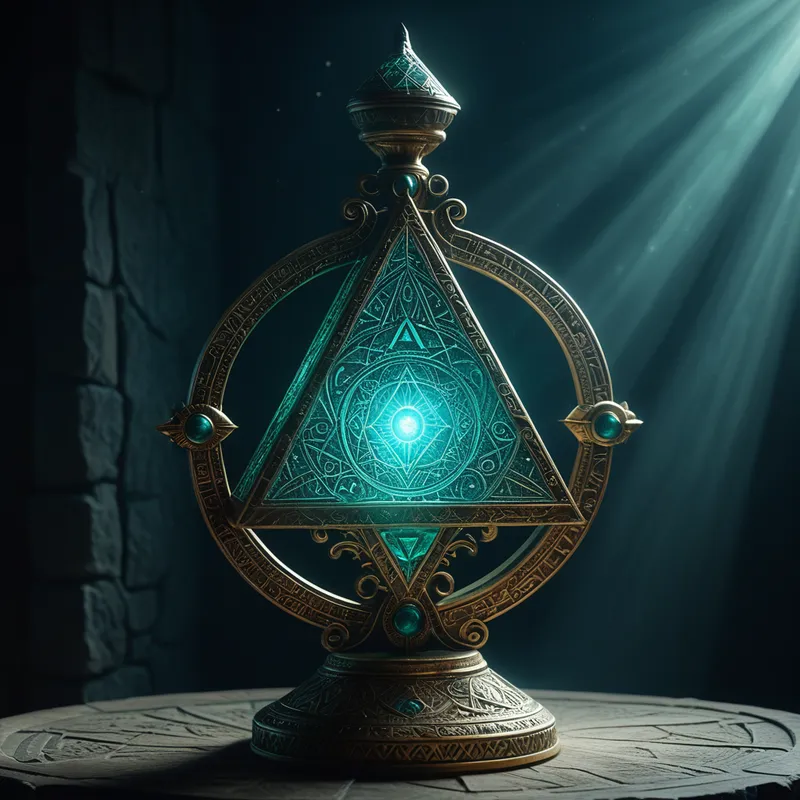
To the psyche, Atziluth represents the realm of pure archetype and unmediated spiritual impulse. It is the source level of consciousness, prior to the formation of specific images, words, or emotions. In the language of depth psychology, it correlates with the most unified layer of the Self, the point of contact with the transpersonal or the collective unconscious in its most essential, non-imaged form.
When we experience a moment of profound, wordless insight—a flash of understanding that feels given, not earned—we brush against the atmosphere of Atziluth. It is the “aha!” moment before it gets clothed in logic. It is the origin of a creative vision before the artist’s hand moves. It is the ground of intuition and the source of unconditional love, both existing as potential forces before they are directed toward any object.
Psychologically, the journey toward integrating Atziluth is the journey toward inner unity. It is the struggle to perceive the single, coherent intention behind our fragmented thoughts and conflicting emotions. Neurosis and fragmentation occur in the lower worlds of formation and action; healing involves tracing those fragments back to their origin in the unified light of the emanated world, recognizing the core Self beneath the persona.
Alchemical Translation
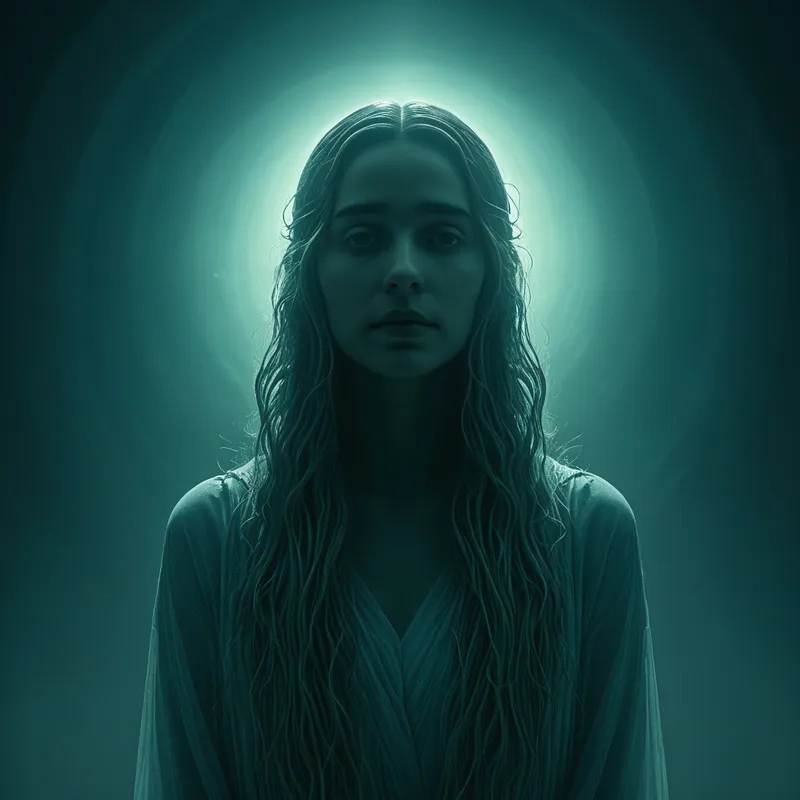
In the alchemical opus, Atziluth corresponds to the initial, ineffable stage of the Work: the Nigredo in its most spiritual sense, not as putrefaction but as the profound, dark unity of the prima materia before differentiation. It is the divine Anima Mundi (World Soul) in its pure state. The alchemist’s quest for the Lapis Philosophorum (Philosopher’s Stone) begins here, in the recognition of the one primordial substance that underlies all of reality.
The process in Atziluth is one of emanation, not transformation. In alchemical terms, it is the “first distillation,” where spirit separates from itself only to know itself, producing the mercurial waters of life in their most subtle, volatile state.
The alchemical maxim “As above, so below” finds its foundational truth in Atziluth. The “above” here is not a distant heaven, but this world of pure archetypal emanation. The successful alchemical operation requires the operator’s mind to first attain a state analogous to Atziluth—a unified, focused will aligned with the creative principles of the cosmos—before it can effect change in the “below” of the material realm.
Thus, the laboratory is first within. The furnace is divine love, the alembic is the intellect purified of dross, and the first matter is the seeker’s own soul, perceived as a direct emanation of the divine source.
Associated Symbols
Explore related symbols from the CaleaDream lexicon:
- Emanation — The process of flowing forth from a source without separation, the fundamental principle of Atziluth where divine attributes radiate like light from a sun.
- Light — The pure, undifferentiated radiance of the divine source, representing unmediated truth, consciousness, and the primal substance of creation.
- Spirit — The essence of being prior to form, the breath of life that moves in the world of pure divine attributes.
- God — The articulated, knowable aspect of the divine as expressed through the Sefirot in Atziluth, distinct from the unknowable Ein Sof.
- Source — The ultimate origin point, the Ein Sof from which the river of Atziluth eternally flows without diminishing its wellspring.
- Crown — Symbolizing Keter, the first Sefirah of Atziluth, representing the divine will and the ineffable point where the infinite touches the finite.
- Sun — The celestial body whose light is a direct analogue for emanation, pouring forth its essence continuously to give life without becoming depleted.
- Fire — Not a consuming blaze, but the pure flame that clings to its source, representing the passionate, clinging unity of the emanated with the emanator.
- Dream — The realm of pure potential and archetypal forms, analogous to Atziluth where all possibilities exist in a unified, pre-conscious state.
- Unity — The state of perfect, undifferentiated oneness that characterizes the internal relationships within the world of Atziluth.
- Sky — The boundless, ethereal expanse that suggests infinity and the domain of pure spirit, the "location" of the highest world.
- Circle — A symbol of perfection, wholeness, and the eternal, cyclical flow of emanation from and back to the source.