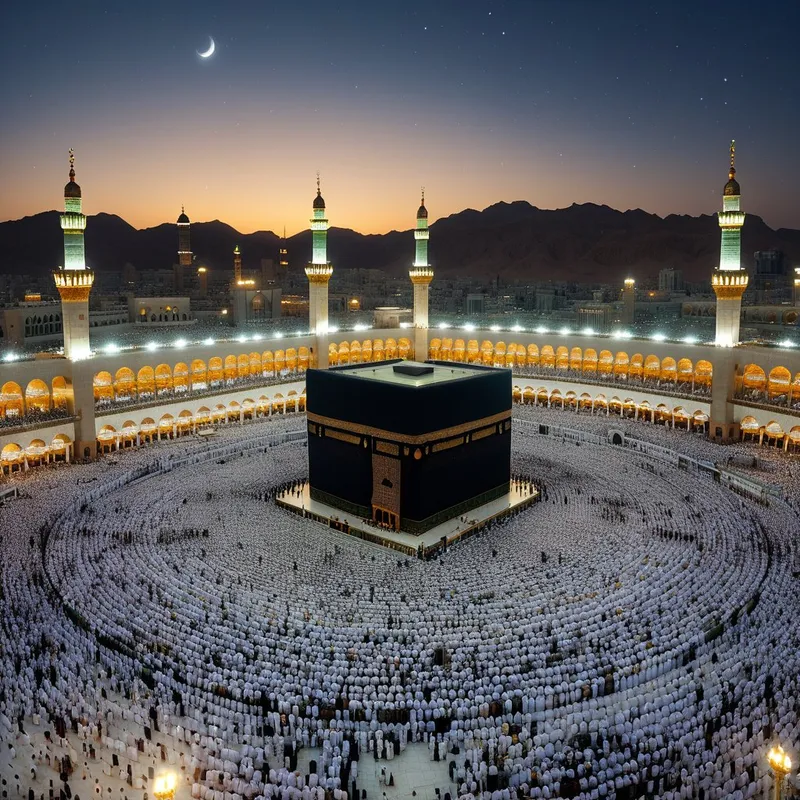
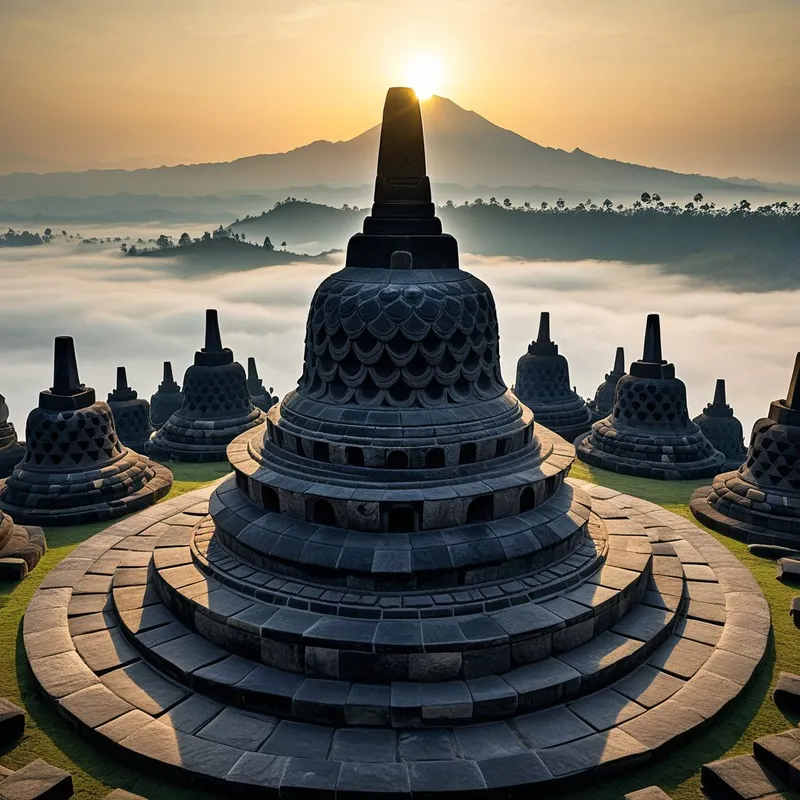
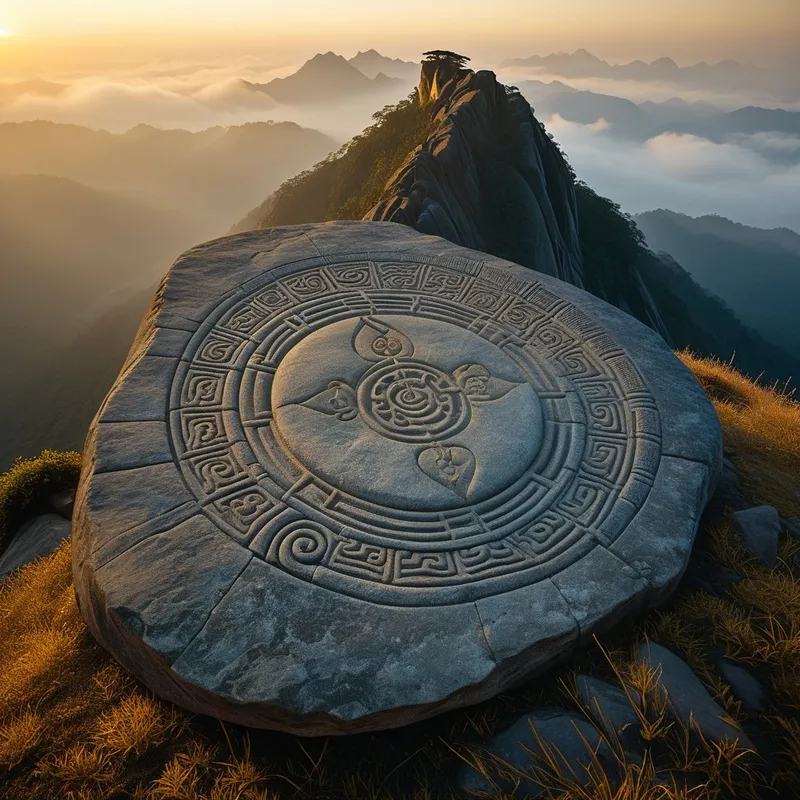
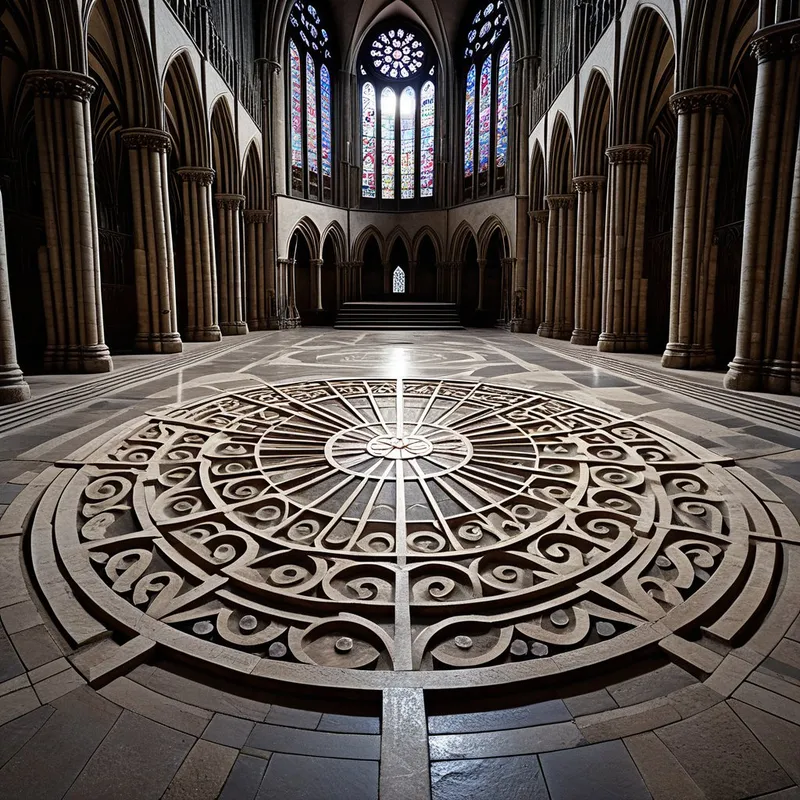
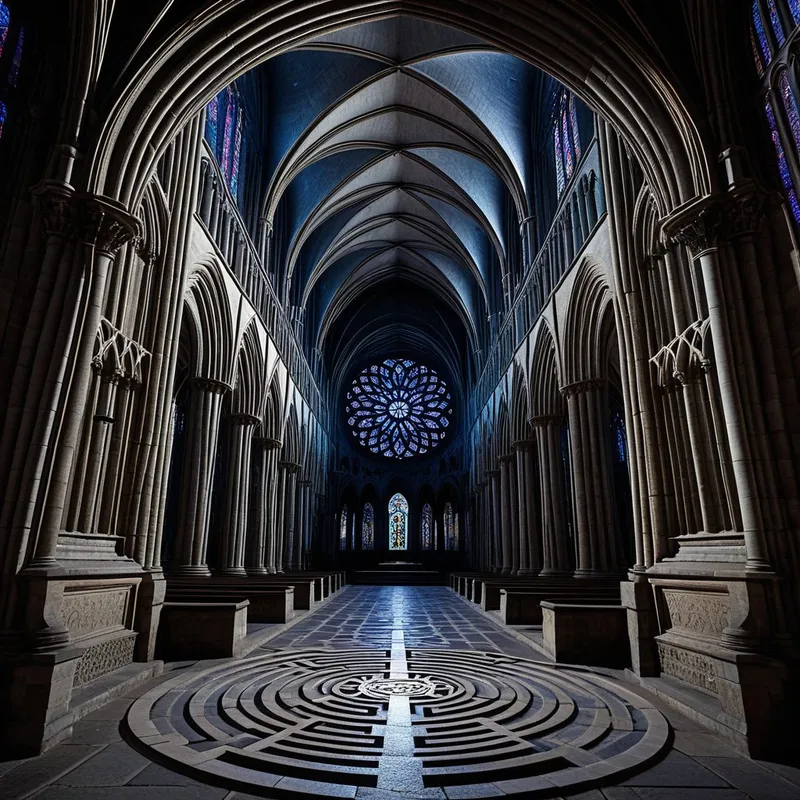
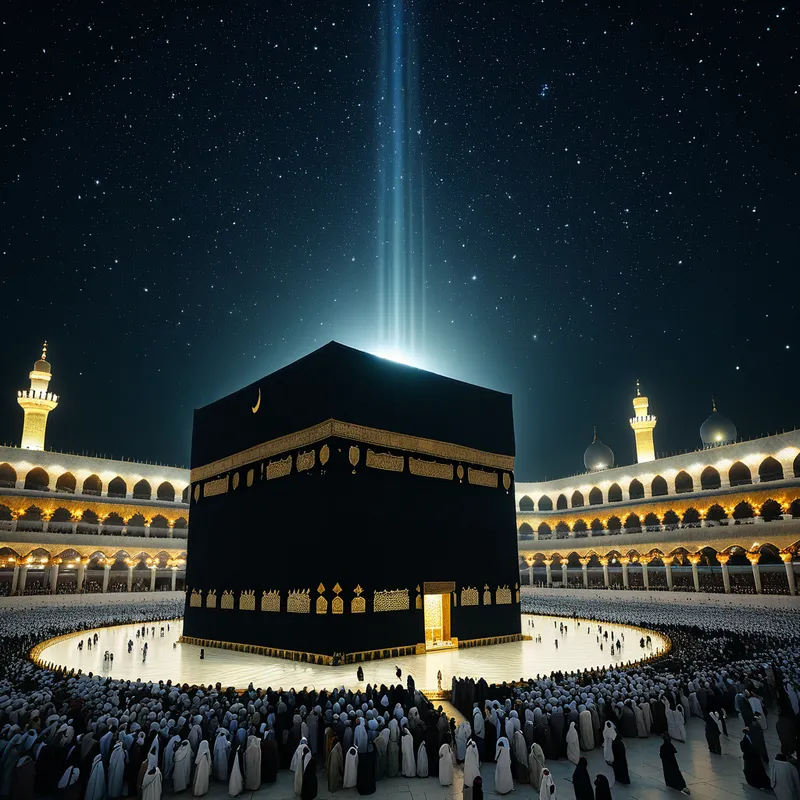
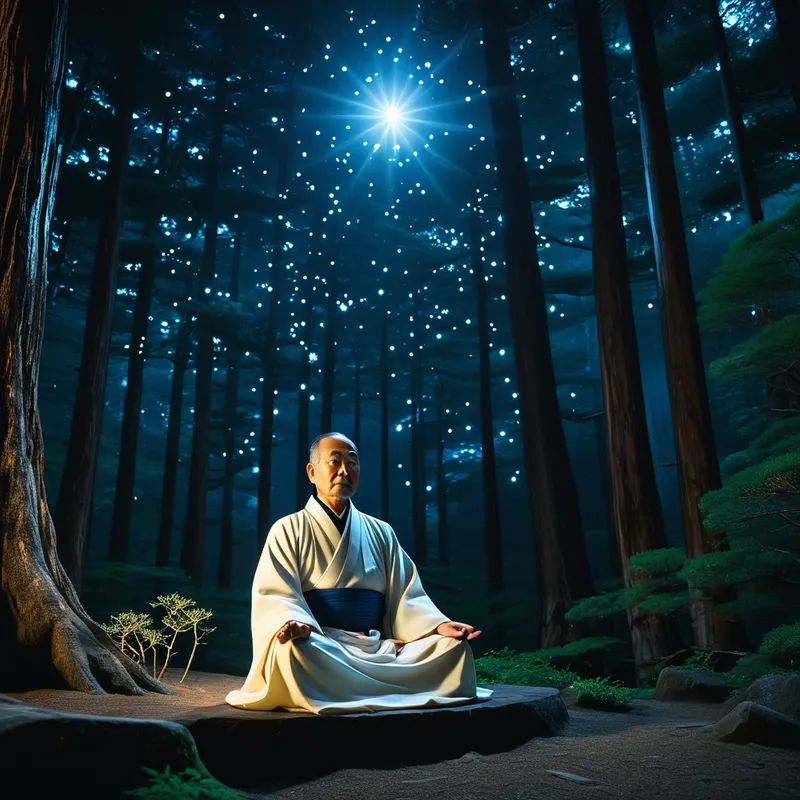
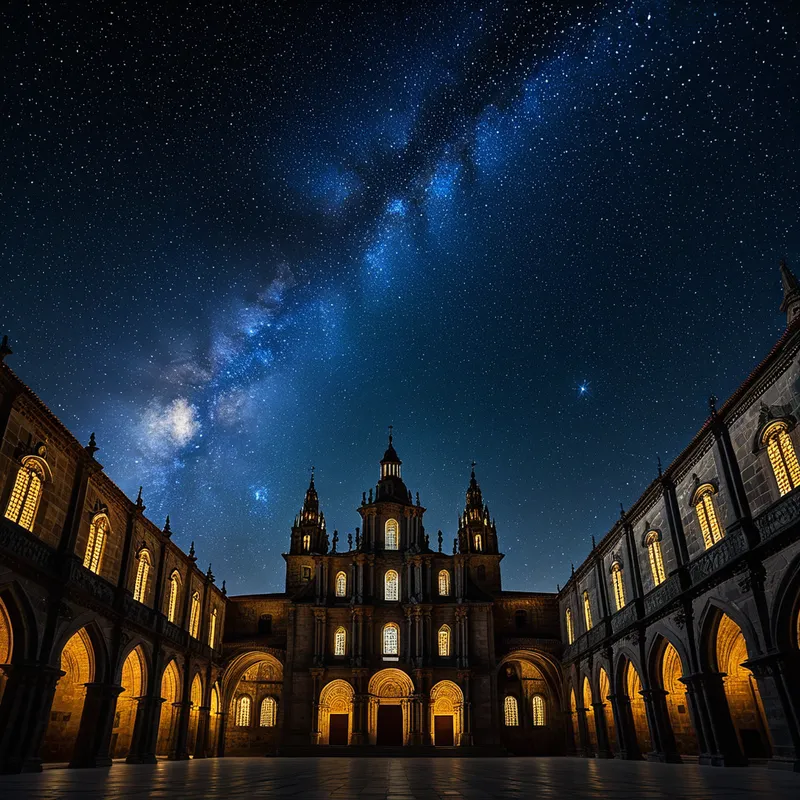
The Sacred Itch: When Your Soul Demands a Pilgrimage
The Somatic Echo
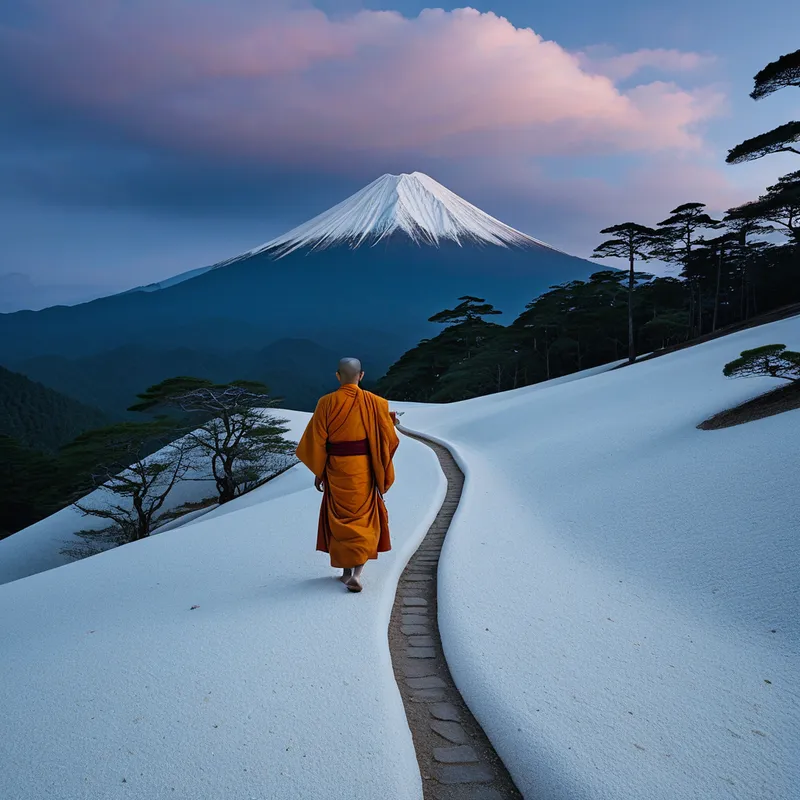
It begins not as a thought, but as a restlessness in the marrow. A low-grade hum in the bones, a subtle ache behind the sternum that feels like homesickness for a place you’ve never been. Your feet feel restless even in stillness; your hands crave the weight of a staff you do not own. It is the body’s pre-linguistic knowing that you are out of alignment with your own center. The pilgrimage dream announces itself first as this somatic echo—a gravitational pull from an internal Mecca. You are being called to move, not to escape, but to arrive at a version of yourself that already exists, waiting patiently at the end of a road only you can walk.
The Dreamer's Log (Case Vignette)
I am walking a long, cracked highway at dusk. I have no bag, only a small, leather-bound journal that feels both foreign and intimately mine. The road is empty, but I know, with absolute certainty, that I must reach a specific grove of silver-barked trees before the last light fails. The urgency is not panic, but a deep, solemn duty.
This dream is not about travel; it is the psyche’s ritual enactment of a necessary departure from the known self, guided by an internal, non-negotiable contract written in the soul’s own hand.

The False Lead
Do not mistake this for mere wanderlust or a fantasy of escape. The pilgrimage is not a vacation from the self, but a confrontation with it. It is not the Shadow Explorer’s aimless drifting, seeking novelty to fill an inner void. The true pilgrimage has a destination, however obscure. Its terror is not of being lost, but of being found—of finally arriving at the altar of your own unmet potential, your unlived life, and having to kneel before it. This theme is a structural shift in your internal geography, not a detour.
Psychological Architecture
Here, the Shadow work is the unpacking of the pilgrim’s bag. What have you been carrying, thinking it was sacred, that is merely heavy? Old identities, outdated vows, the comforting weight of others’ expectations? The path strips these away. The individuation process is the path itself. With each step, you are forced to reconcile the part of you that wants to turn back to the familiar village (the Orphan) with the part that hears the call of the mountain (the Explorer). You become the negotiation between these internal families. The pilgrimage integrates them by making the road the home, transforming the seeker into the sovereign of their own journey. The destination, when reached, is often not a place, but a state of being—a quiet knowing that you are, and have always been, the shrine you sought.
Mythic Resonance
Consider the story of Psyche. Her pilgrimage was not chosen; it was demanded by Aphrodite as an impossible series of tasks to win back Eros. She must sort a mountain of seeds (the work of discernment), gather golden wool from violent rams (extracting value from chaos), and finally, descend into the underworld itself. Her journey is one of radical transformation from mortal maiden to goddess, earned not through birthright, but through the relentless, step-by-step completion of her sacred ordeal. Her myth whispers the truth: the pilgrimage destroys the person who began it, so a more complete being may be born from the ashes of the road.
Symbolic Nodes
- The Road/Path: Rarely straight. Its condition—cracked, overgrown, luminous—speaks to the perceived difficulty or clarity of your inner calling.
- Inadequate or Symbolic Provisions: A single item—a key, an empty cup, a map in a language you don’t know—highlights that the journey depends on inner resources, not outer preparation.
- Natural Thresholds: Rivers to cross, mountains to ascend, dense forests. These represent the emotional and psychological barriers within.
- The Absent or Unseen Destination: Knowing you must reach “the spring,” “the summit,” or “the old temple” without seeing it signifies faith in the process over the prize.
- Fellow Travelers who Vanish or Transform: They represent aspects of your own psyche that accompany you for only a phase of your development.
Archetypal Resonance
The Explorer Archetype is the undeniable pulse of the pilgrimage dream. This is not its shadow, aimless form, but the archetype in its full, seeking majesty. The somatic echo is the Explorer’s restlessness. The core energy is a sacred curiosity, a refusal to accept the map of life as given. The pilgrimage is the Explorer’s highest ritual: a voluntary exile from the known in service to authenticity. Its alchemical potential lies in its completion, where the Explorer, having traversed the interior wilderness, returns not as a wanderer, but as a cartographer of the soul, able to guide others because they have learned to trust the compass of their own longing.
The Alchemical Process
The transmutation here is of Seeking into Being. The raw lead is the gnawing sense of “elsewhere,” the grief that you are not where you belong. The alchemical heat is applied through the relentless, daily pressure of staying on the path even when the destination vanishes in fog. It is the friction of your doubts against your faith, your fatigue against your resolve. This heat cooks off the impurities of external validation and superficial goals. In the crucible of the journey, the desire to find something sacred gradually, painfully, becomes the realization that you are performing a sacred act by walking. The gold forged is sovereignty—the profound, unshakable understanding that your worth is not at the end of the road, but is embodied with every step you take in true alignment. The pilgrimage alchemizes longing into presence.

The Integration Protocol
Question 1: What is the one item, real or symbolic, that I feel compelled to carry on my current life’s journey? What does it promise to provide, and what might it actually weigh me down with?
Question 2: Where in my waking life do I feel most “on the path,” even in a small, mundane activity? Where do I feel most “off-road,” lost in thicket or desert?
Question 3: If my current life phase is a pilgrimage, what is the name of the destination? Not a physical place, but a state (e.g., “The Well of Patience,” “The Grove of Unspoken Truths”).
Action 1 (The Grounding Step): For one week, walk a different route for a routine trip—even if just around the block. Do not use headphones. Pay attention to the somatic echo in your body. Does it pull you left or right? Do you feel drawn to pause? This is micro-pilgrimage, practicing obedience to inner direction.
Action 2 (The Cartographer's Journal): Take a large sheet of paper. In the center, draw a simple symbol representing your Self. Now, without overthinking, let your hand draw the “path” of your life so far—its twists, blockages, wide plains, and narrow passes. Use images, not words. Where are you now? Sketch in the landscape ahead as you intuit it.
Action 3 (The Threshold Ritual): Identify one small, symbolic “threshold” you’ve been avoiding—a difficult conversation, finishing a project, releasing an old item. Before you cross it, pause. Acknowledge aloud: “I cross this threshold not as an escape, but as a step on my path.” Perform the action with this intentionality. Mark it; it is a sacred mile-marker.
Final Validation
The road is long, and the weight of your own becoming is the heaviest pack you will ever carry. It is right to feel weary, to doubt the map, to miss the comforts of a simpler life you have outgrown. Honor that fatigue; it is the honest cost of the journey. But know this: every step taken in true listening, every moment of choosing the uncertain path over the familiar prison, is a prayer answered by your future self. You are not walking toward a finish line. You are walking the line into existence. The pilgrimage is not something you do; it is the way you become. And you are already on the way.