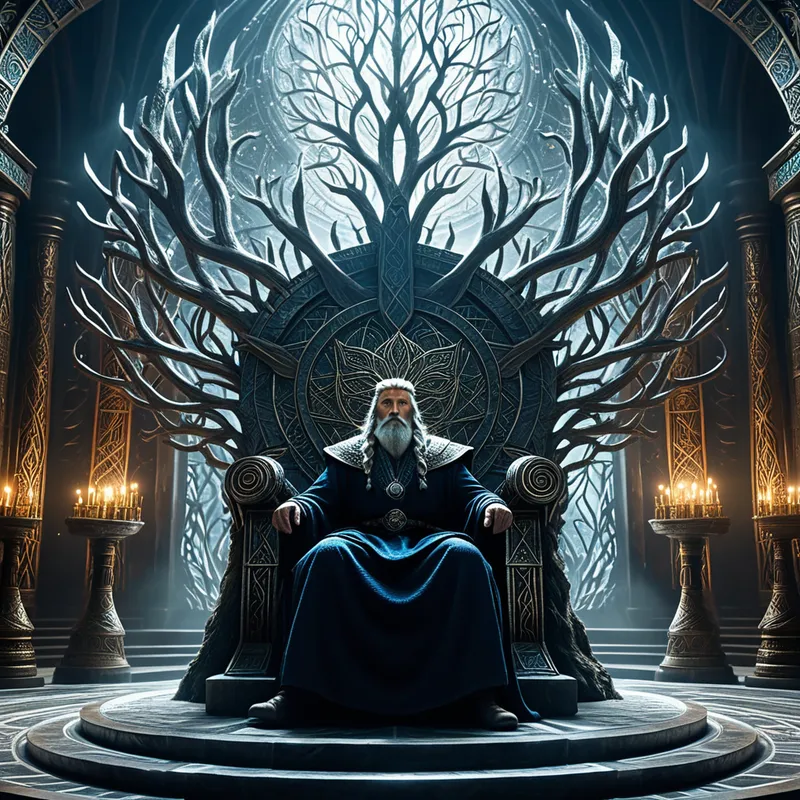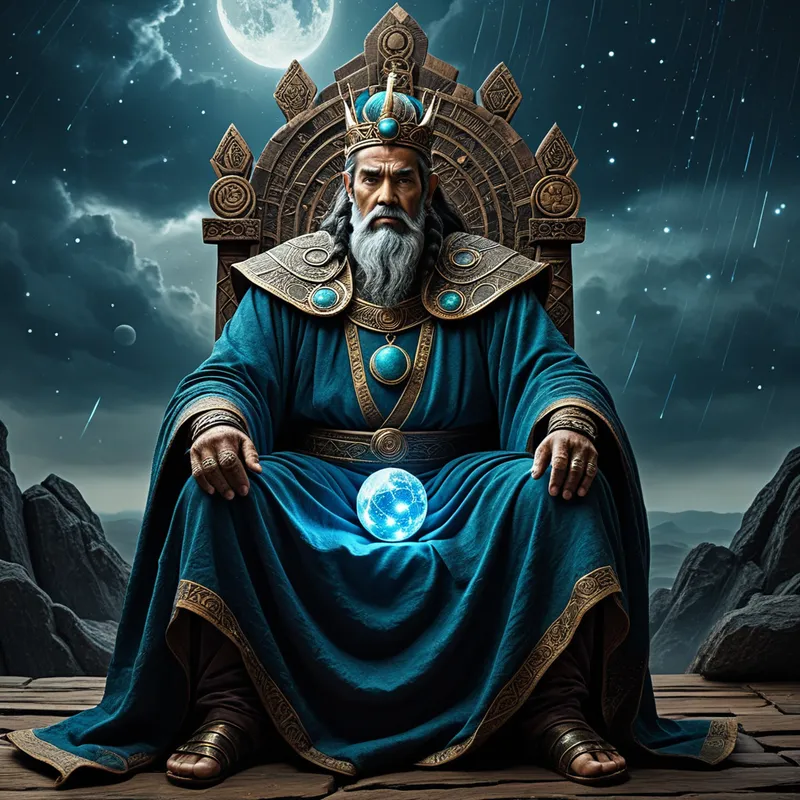
The Sovereign’s Council: Leadership as an Inner Alchemy
The Somatic Echo
Before the mind conjures images of thrones or boardrooms, the body knows. It is a pressure in the solar plexus, a dense, magnetic pull that feels like gravity increasing around your center. It’s not the flutter of anxiety, but a profound, weighted anchoring. Your shoulders may feel the phantom weight of a mantle, or your spine may hum with a current of potential energy, a straightening against an unseen resistance. There is a heat in the chest, not of passion, but of a forge—a sense that something within is being tempered, made dense and capable of bearing weight. This is the somatic signature of leadership dreaming: the body preparing its architecture to house a new, more integrated form of authority. It is the feeling of your internal systems coming online, not to command others, but to finally hold council with all the exiled parts of yourself.
The Dreamer’s Log
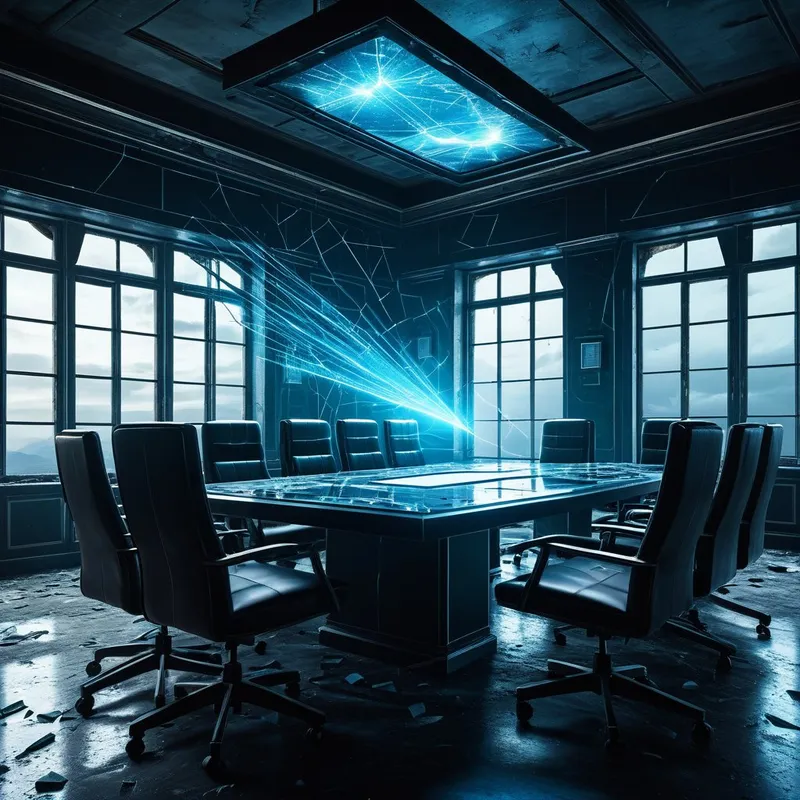
You stand at the head of a shattered glass conference table in a derelict skyscraper. The chairs are empty, but you feel the intense, judgmental gaze of invisible presences. A single, complex holographic blueprint of a labyrinthine city floats above the table, pulsing with a faint, cold light. You know, with a certainty that chills you, that you are responsible for building it, but you cannot find the source code.
This dream is the psyche presenting the blueprint of a life you are meant to architect, while confronting the terrifying solitude of true, un-delegated responsibility.
The False Lead
This theme is not about social dominance, career advancement, or the desire to control external circumstances. To mistake it for such is to confuse the crown for the head that wears it. A dream of leadership is rarely an endorsement of your current managerial style or a promise of promotion. It is not the ego’s fantasy of being in charge. More often, it is a profound critique of where you have abdicated your own sovereignty—where you have let committees of fear, old permissions, or borrowed ideologies make your core decisions. The terror in the dream is not of failure, but of the awesome and lonely freedom that comes when no one else is to blame, and no one else can give the final order.
Psychological Architecture
The deep work here is the assembly of an inner parliament. We are not unitary beings, but ecosystems. The leadership dream emerges when the psyche’s habitual governance—a fragile coalition led by a anxious manager, a rebellious teenager, or a people-pleasing diplomat—has collapsed under the weight of a new life demand. The Shadow work is to enter that derelict boardroom and, one by one, acknowledge the invisible presences. The fearful orphan who wants safety at any cost. The shadow ruler who demands total control to avoid chaos. The wounded caregiver who would sacrifice the vision to tend to every perceived hurt.
Individuation in this realm is the slow, patient process of granting each of these inner figures a seat, a voice, but not the gavel. It is the development of an inner authority capable of listening to the council—the fears, the desires, the traumas, the brilliance—and then making a choice that honors the sovereignty of the whole system, not the tyranny of one part. The leader is not the loudest voice, but the one who can hold the space for all voices and still choose a direction. This is the move from being a battlefield of conflicting impulses to becoming the sovereign ground upon which they are reconciled.
Mythic Resonance
Consider the Arthurian mythos, not at its climax, but at its foundation. The true moment of kingship is not when Arthur draws the sword from the stone, but in the earlier, quieter dream-logic of the Sword in the Stone itself. The kingdom is fractured, each knight and lord a disparate, warring part of a shattered whole. The stone anvil represents the hardened, petrified state of the realm—and the self. The sword within it is not merely a weapon, but a symbol of divine right and integrated authority. The act of extraction is not one of brute strength, but of alignment. Only the one who is sovereign within—whose inner kingdom is rightly ordered—can perform the act that heals the outer one. The dream of leadership is your psyche’s anvil, and the sword is your unlived capacity for authentic, un-borrowed authority.
Symbolic Nodes
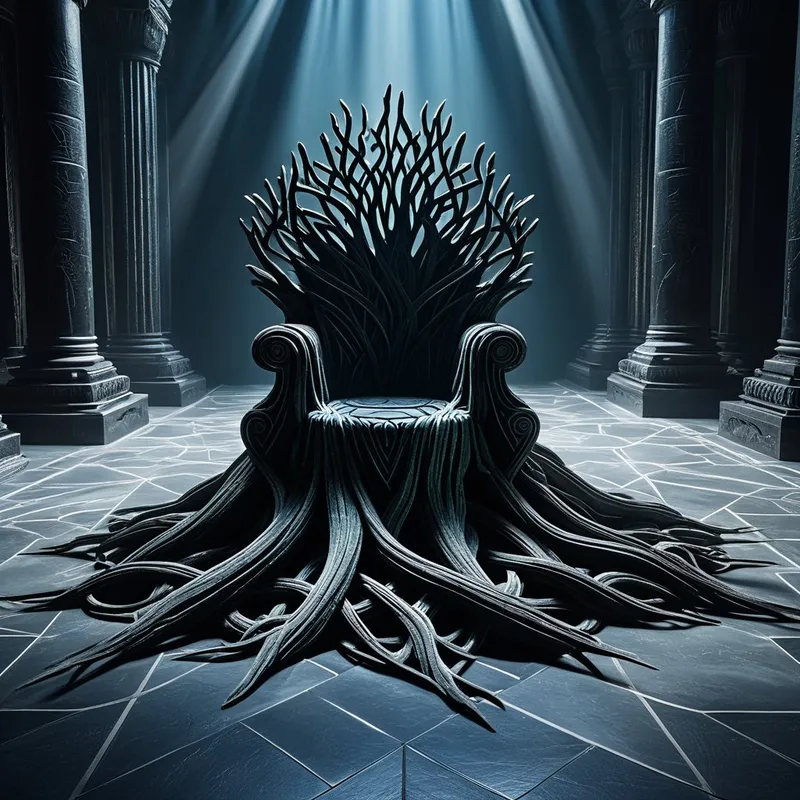
- Empty Thrones or Boardrooms: The structure of authority is present, but the authentic self is not yet seated.
- Broken or Unusable Tools of Command: A shattered scepter, a silent microphone, a corrupted file—the current means of exerting will are ineffective.
- Being Followed by a Silent Crowd: Not adoration, but the projection and expectation of others, representing the weight of external demands you have internalized.
- Navigating a Ship in Stormy Seas: The classic metaphor for steering the vessel of the self through emotional and psychic turbulence.
- A Blueprint or Map You Cannot Fully Decipher: The emerging design of your potential life, perceived before the self is capable of executing it.
Archetypal Resonance
The core energy here resonates most powerfully with The Ruler Archetype. Its shadow, the Tyrant or Control-Freak, is often the first, clumsy manifestation of this energy in dreams—the dictatorial boss, the furious general, the micromanaging deity. This shadow emerges from the terror of chaos and the deep, orphaned wound of believing no one is truly in charge. The somatic echo of the shadow ruler is rigidity, clenched control, and cold isolation.
The alchemical potential of the Ruler, however, is the cultivation of sovereignty. This is not control over others, but benevolent, confident order within the self. It is the capacity to establish inner laws (boundaries, values, disciplines) that create a container secure enough for creativity, love, and vulnerability to flourish. The true Ruler does not dominate the inner kingdom; they create the conditions for every part of it to thrive in harmony. The dream calls you to transmute the tyrannical need for control into the sovereign capacity to hold space, make choices, and bear the beautiful, lonely responsibility of being the author of your own life.
The Alchemical Process
The transmutation here is from Control to Sovereignty. The prima materia, the base matter, is the raw, often toxic experience of anxiety—the feeling that everything will fall apart unless you force it into shape. This is the shadow ruler’s fuel. The alchemical fire is applied through a specific, intense pressure: the conscious, voluntary surrender of micromanagement, both internally and externally.
This means allowing an inner conflict to rage without immediately suppressing one side. It means making a decision without consulting every fear and opinion first. It means watching a project or a part of your life proceed imperfectly, according to its own logic, without seizing the reins. This fire feels like torture to the control-freak. It is the heat of trust. In this crucible, the brittle, ego-driven need for control cracks and dissolves. What remains, and is slowly annealed by the continued heat of practice, is sovereignty: a calm, centered, non-reactive authority that comes from having faced the chaos within and found it containable. The crown is forged not from gold of dominance, but from the tempered steel of self-trust.

The Integration Protocol
Question 1: Where in my waking life do I feel the "phantom weight of the mantle"—a sense of responsibility that is heavy but unclear, as if I'm leading a project no one defined?
Question 2: Which inner "committee member" (e.g., the inner critic, the people-pleaser, the impulsive rebel) has been holding the gavel lately, and what is it desperately trying to control or prevent?
Question 3: If my sovereignty were fully embodied, not as a tyrant but as a wise leader, what is the first, small inner law or boundary I would establish for the kingdom of my self?
Action 1 (The Empty Chair): Find a quiet moment and physically set out two chairs. Sit in one. In the other, imagine sitting the part of you that most craves control (the shadow ruler). Speak to it. Thank it for its service in trying to protect you from chaos. Then, tell it its job is changing; it is now an advisor on security, not the commander-in-chief.
Action 2 (Blueprint Unfolding): Engage in unstructured, non-linear writing or drawing. Let the prompt be: "The blueprint of a life I would have the courage to lead." Do not design with logic. Let lines, shapes, words, and fragments emerge. This is not a plan, but a symbolic excavation of the hologram from your dream-log.
Action 3 (Sovereign's Decree): Perform a small, deliberate ritual of choice. Light a candle. Write down a single, clear decision you have been avoiding—one that has no "right" answer, only your answer. Speak it aloud as a decree to yourself. "I, as sovereign of my experience, choose X." Blow out the candle. The ritual marks the moment you moved from deliberation to authority.
Final Validation
The loneliness you feel in that derelict boardroom is real. The terror of the unreadable blueprint is valid. This is not a call to a party, but to a post. It is hard because it is the most important work you will ever do: the work of becoming who you already are, beneath the committees and the old permissions. Yet, within that very difficulty lies the empowerment. For the dream is not showing you a role to play for others. It is showing you the architecture of your own becoming. The sovereignty it calls for is your birthright, not a prize to be won. The integration is the quiet, lifelong practice of returning to that empty chair at the head of your own table, listening to the cacophony of your soul's council, and finally, gently, speaking with your own true voice. The kingdom awaits its king. The king is you.