
The Dream Theme of Belonging: From Exile to Sanctuary
The Somatic Echo
Before the mind can articulate the concept, the body knows the state of belonging—or its absence. It is not a thought, but a felt sense. It is the deep, resonant hum of being held, a gravity that feels like home. Its absence, however, registers first as a specific, visceral hollowing. It is the cold weight in the solar plexus, a subtle, constant tremor in the hands that feel they have nothing to hold onto. It is the tightness across the shoulders, bracing for an impact that never comes, or the shallow breath of someone who fears their exhalation will not be met with new air. This is the somatic echo of the exile, the internal refugee whose psyche is mapping territories of connection and alienation long before the dream images arrive. The body is the first logbook of belonging, its pages written in tension, release, and the quiet, desperate search for a ground that feels solid.
The Dreamer's Log
I am in a vast, gleaming transit hub, a cathedral of departure. Everyone moves with purpose toward glowing gates. I hold a single, worn suitcase, but my ticket is blank. I approach a help desk, but the attendant is a mirror reflecting only the empty space behind me. The announcement board flickers with destinations written in a script I once knew but can no longer read.
This dream is an alchemical depiction of the psyche confronting the constructed self—the identities, roles, and maps we carry—and finding them void of the validating stamp that says, "You may enter here."

The False Lead
Belonging is not social popularity, fitting neatly into a pre-existing group, or the anxious accumulation of affiliations. To mistake it for such is to chase the reflection in the attendant's mirror. The terror and grief of this theme are not about a lack of external validation, but about a perceived fracture in the internal right to exist within a shared reality. It is the shadow of the Orphan's realism curdling into a conviction of fundamental separateness. This is not bad luck in friendship or romance; it is a profound, structural inquiry into the foundations of the self and its relation to the world. The dream is not reporting on your social calendar; it is conducting an audit of your soul's citizenship.
Psychological Architecture
The deep work here is the reclamation of interior territory. When the dream places you in empty plazas or terminal without a gate, it is showing you the shadow lands of your own psyche—the parts you have exiled because they seemed too messy, too intense, too vulnerable to belong to the "you" you present to the world. The Individuation process at play is the slow, courageous gathering of these exiles. It is hearing the plea of the lonely child, the angry rebel, the silent sage you locked away for fear they would not be welcomed. Belonging, in its deepest sense, begins with this internal amnesty. You cannot petition a world for a home you deny to the fragmented nations within your own borders. The architecture of true belonging is built from the inside out, stone by reclaimed stone, using the very materials you once discarded as unfit.
Mythic Resonance
We see this eternal process in the myth of the Homeric Odysseus. His twenty-year journey is not merely a trip home to Ithaca, but an alchemical ordeal to become a man who can belong to Ithaca again. He is stripped of every external marker of identity—ship, crew, kingly robes—and must pass through the territories of the Lotus-Eaters (forgetting), Circe (animal transformation), and the Underworld (confronting death). Each trial burns away a layer of his former, superficial belonging, forcing him to find a core self that can persist even in absolute alienation. His final arrival, disguised as a beggar, is the ultimate symbol: belonging is not about being recognized by your palace, but about recognizing the truth of your own kingdom, even in its ruins. Similarly, the Buddhist concept of Sangha (spiritual community) does not promise effortless harmony, but presents belonging as a deliberate practice of holding and being held within a field of shared intention, amidst the very human flaws of all involved.
Symbolic Nodes
- Empty Rooms, Vast Halls, Desolate Plazas: The internal landscape of disconnection.
- A Key That Doesn't Fit, A Blank Ticket, An Unreadable Map: The tools of identity failing to interface with the world.
- A Forgotten or Locked Room in a Familiar House: An exiled part of the self awaiting reintegration.
- A Group Moving in Unison From Which You Are Separated: The tension between collective flow and individual isolation.
- A Single, Lit Window in a Dark Cityscape: The nascent, fragile pinpoint of potential connection and inner sanctuary.
Archetypal Resonance
The core energy of this theme resonates most powerfully with The Orphan Archetype. The Orphan's fundamental knowing is that the garden wall has been breached; the idealized shelter is gone. This is the raw somatic echo of the hollow stomach and the wary gaze. The Orphan’s journey is not one of triumphant heroism, but of sober survival and the gritty, unglamorous search for authentic connection amidst the ruins of lost innocence. Its alchemical potential lies precisely in this realism: by fully feeling the exile, by not spiritualizing the loneliness away, the psyche is forced to develop profound resilience, empathy for others' alienation, and, ultimately, the capacity to build a true home from the ground up, rather than inheriting a fragile façade. The shadow—the perpetual Victim—is the risk, but the integrated Orphan becomes the cornerstone of a belonging earned, not granted.
The Alchemical Process
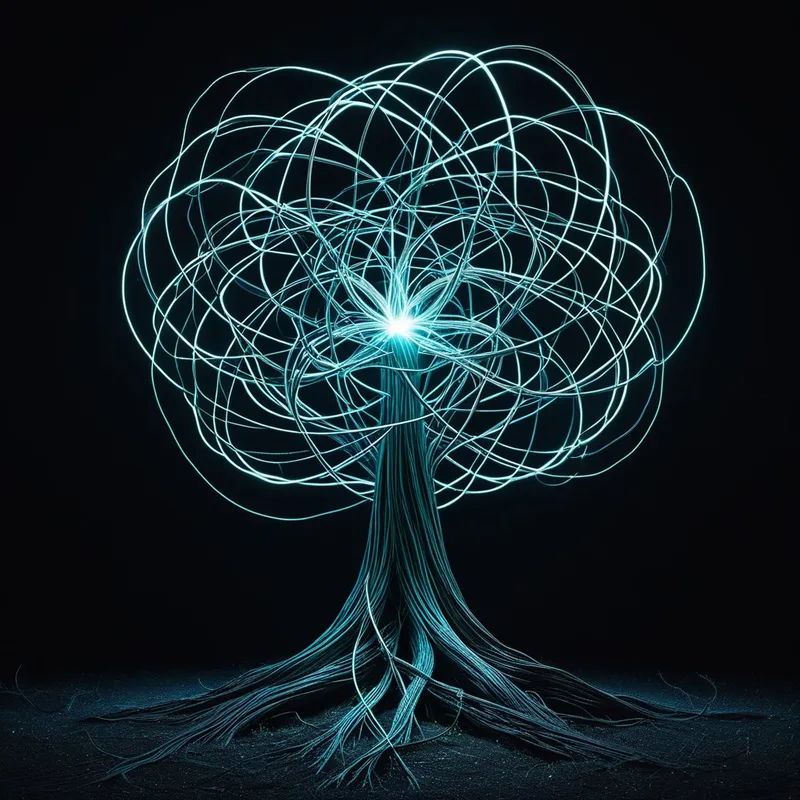
The transmutation here is from Exile to Sanctuary. The prima materia is the raw grief of separateness, the cold lead of feeling like an eternal outsider. The alchemical fire is applied through the intense, sustained pressure of conscious loneliness. This is not the passive ache of being alone, but the active, courageous choice to sit in the empty plaza of the dream and to feel its full, desolate scope without immediately running to fill it with noise or false belonging. This heat dissolves the false identities—the blank tickets and unreadable maps. It forces a breakdown of the external-seeking mechanism. In the resulting void, the separatio, a new insight coalesces: the only belonging that cannot be lost is the belonging you cultivate with the entirety of your own being. The sanctuary is not found; it is secreted from your own substance, a psychic pearl formed around the grit of your deepest alienation. You become both the exiled one and the holy ground that welcomes them home.
The Integration Protocol
Question 1: In the dream-space of your life, where do you most often feel like you are holding a blank ticket? Where does the reflection show you nothing but empty space?
Question 2: Which exiled part of yourself—what emotion, memory, or desire—are you most afraid to welcome "home" into your conscious awareness, for fear it would make you un-belong elsewhere?
Question 3: If your sense of belonging were a physical structure you inhabit, what is its foundation made of right now? Is it the approval of others, a role you play, or something more intrinsic?
Action 1 (Somatic Grounding): For one week, practice this upon waking: place a hand on your solar plexus. Breathe into the space beneath your hand, not to change the sensation (hollowness, tightness, tremor), but to simply acknowledge its message. Whisper, "This, too, belongs."
Action 2 (Exile Amnesty - Creative): With non-dominant hand, draw or make a simple mark on paper representing one "exiled" feeling (e.g., a scribble of anger, a shaky line of grief). Do not judge the image. Then, with your dominant hand, draw a circle or container around it. Place this somewhere private but visible to you, as a ritual act of internal welcome.
Action 3 (Sanctuary Ritual): Choose a small, physical space—a corner of a room, a windowsill. Dedicate 10 minutes to arranging it with objects that feel authentically like "you," without considering their aesthetic or narrative value to anyone else. This is an act of sovereign territory-claiming.
Final Validation
The path of belonging is perhaps the most tender and disorienting of all human journeys. To feel the ache of the orphan, the hollow echo in the terminal, is not a sign of failure, but a testament to your depth—a proof that you are wired for connection so profound that its absence registers as a cosmological event. Honor that ache. It is the compass. The work is not to make the hollow go away, but to follow its resonance inward until you discover, with a shock of recognition, that you are not searching for a home. You are the ground upon which it is being built, and every reclaimed fragment of your exiled self is a stone laid in a sanctuary that, by its very nature, belongs to you completely.