The Wandering Hero Myth Meaning & Symbolism
A hero, cast out or self-exiled, wanders the world's edges, carrying a wound that becomes a gift and a map to a new, more authentic belonging.
The Tale of The Wandering Hero
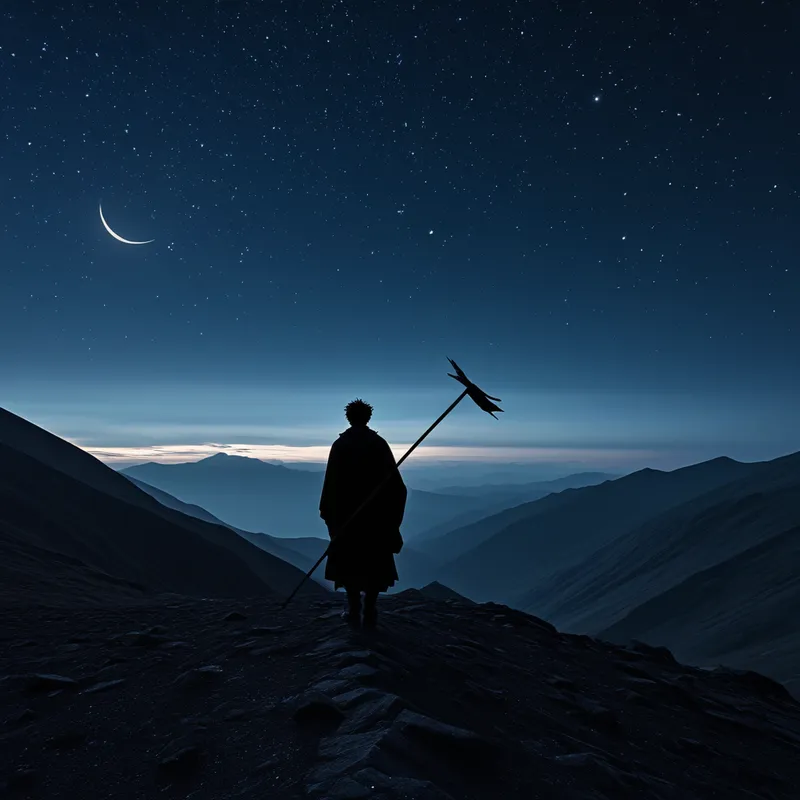
Listen. Before the maps were drawn and the borders hardened, when the world was still a chorus of whispers from forest, desert, and sea, there walked one who belonged everywhere and nowhere. They did not begin with a crown or a prophecy, but with a severing. Perhaps it was a word spoken in anger that could not be taken back, a law broken in the name of a deeper truth, or a catastrophe that scorched the homeland to ashes. The cause matters less than the consequence: exile.
Cast out from the hearth-fire’s circle, they turned their face to the horizon—that thin, bleeding line between the known and the unimaginable. The first steps were a kind of dying. The familiar receded like a tide, taking with it the language of their name, the taste of their bread, the faces that once mirrored their own. They became a silhouette against the sun, a story told by campfires they never sat at.
Their path was not a straight line drawn by purpose, but a meander dictated by storm, thirst, and the cryptic kindness of strangers. They slept in the lee of standing stones that hummed with old power, and under the skeletal branches of trees in blighted lands. They crossed deserts where the wind sculpted dunes into the shapes of forgotten beasts, and forded rivers whose waters carried the songs of mountains yet unseen. They carried little: a staff cut from a unique wood, a waterskin, and the unhealed wound that had set them walking. This wound was their constant companion, aching in the rain, burning in the silence. It was their exile, but also their credential.
For in their wandering, they became a vessel. They learned the healing song from a hermit in a cave, the secret of forging a plowshare from a star-metal from a tribe of tinkers, and the story of the world’s creation from a blind poet who heard it in the waves. They mediated a feud between river spirits, guided only by the logic of dreams. They left pieces of their old self like shed skins on the trail, and in return, the world inscribed its wisdom upon their bones.
The resolution was never a return. The gates of the old city, if they still stood, had grown too small for the person they had become. Instead, the wandering found its end in a moment of profound recognition: a valley that felt like a memory of the future, a community that asked for their story instead of their pedigree, or simply the quiet realization that the wound had transformed. It was no longer a source of pain, but a well of compassion; no longer a mark of banishment, but a seal of unique authority. They stopped walking, not because they had arrived, but because they understood they had carried the destination within them all along. They built a hearth where their feet finally stilled, and the path that led there became a story they told, a map for other exiles yet to come.
Cultural Origins & Context
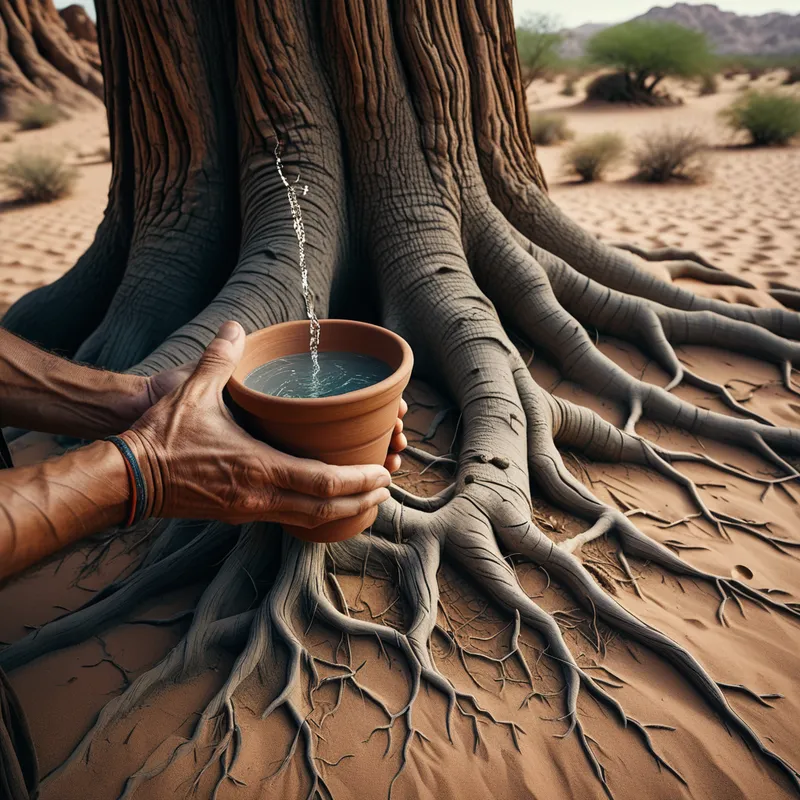
The Wandering Hero is not the property of a single culture but a human constant, etched into our collective story-memory. We find this figure in the Epic of Gilgamesh after Enkidu's death, in the Hebrew tradition of the sojourner and exile, in the Hijra, in the Buddhist parivrajaka, and in the Celtic tales of the wild man like Suibhne. This myth was carried by bards, shamans, and elders—not as mere entertainment, but as a vital social technology. It functioned as a container for the experience of displacement, whether voluntary or forced. It provided a narrative framework for refugees, migrants, outcasts, and seekers, assuring them that their path, though lonely, was a known one, hallowed by archetype. It taught settled communities to see the stranger not just as a threat, but as a potential carrier of new knowledge, a necessary disruptor of stagnant ways.
Symbolic Architecture
At its core, the myth symbolizes the psyche's necessary exile from the comfortable tyranny of the known. The hero’s homeland represents the ego-complex and the collective norms of the tribe. Exile is the brutal but essential act of differentiation, where the individual is forced out of unconscious identification with the group to confront the raw, undomesticated Self.
The wound that exiles is also the womb that transforms. One does not heal it to return, but to learn the language it speaks.
The endless road is the individuation process itself—non-linear, fraught with perils and unexpected allies. The staff is the axis of will and resilience; the waterskin, the capacity to hold and metabolize experience. The strangers met are externalized facets of the hero’s own unknown psyche: the hermit (inner wisdom), the tinker (adaptive skill), the blind poet (intuitive knowledge). The ultimate “home” found is not a geographical location, but the achieved state of psychic integration, where the wanderer can finally be at home in their own skin, carrying the entire world within.

The Dreamer's Resonance
When this myth stirs in modern dreams, it often manifests as dreams of being lost in vast airports, endless highways, or mazes of unfamiliar cities. The dreamer may be searching for a gate that has vanished, a home whose address they’ve forgotten, or running to catch a departing train. Somaticly, this can feel like rootlessness, anxiety in the chest, or a restless energy in the legs. Psychologically, this signals a profound transition. The dream-ego is experiencing an exile from a former identity—a career, a relationship, a belief system—that has become untenable. The psyche is in the liminal space, the “in-between,” where the old has died but the new has not yet been born. The discomfort is the friction of growth. The dream is not a warning, but a confirmation: you are on the path. The wandering has begun.

Alchemical Translation
For the modern individual, the Wandering Hero’s journey models the alchemy of turning leaden trauma into golden wisdom. The initial exile—a loss, a failure, a depression—is the nigredo, the blackening, the dissolution of the old form. The long wandering is the albedo, the whitening, the purification through exposure to the elements of life and the unconscious. Each encounter, each hardship, is a piece of the psychic fragments being gathered.
The goal is not to find where you belong in the world, but to become a person the world belongs to.
The final realization, where the wound becomes a gift, is the rubedo, the reddening, the creation of the true philosophical gold: a self that is complex, resilient, and compassionate precisely because of its fractures. This is the birth of what James Hollis calls the “personal authority.” We stop seeking permission from the old kingdoms and begin to author our own meaning from the raw materials of our exile. We build our hearth not where we are from, but from who we have become. In doing so, we complete the circle: the outcast becomes the cornerstone of a new, more authentic world.
Associated Symbols
Explore related symbols from the CaleaDream lexicon: