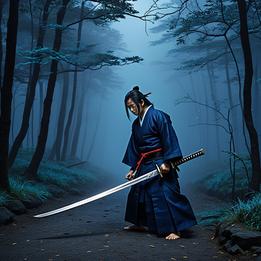
Wakizashi
A traditional Japanese short sword, historically used as a secondary weapon by samurai and for ritual suicide (seppuku).
Wakizashi Dream Meaning
A traditional Japanese short sword, historically used as a secondary weapon by samurai and for ritual suicide (seppuku).
Interpretive Themes
Cultural Lenses
Jungian Perspective
View Context →Animus symbol representing masculine energy in balance—not aggressive dominance but disciplined, honorable action. The short blade suggests shadow integration through controlled confrontation rather than avoidance.
Freudian Perspective
View Context →Phallic symbol representing controlled masculine power and aggression. The secondary position suggests sublimated sexual energy directed toward honorable purposes rather than primal urges.
Gestalt Perspective
View Context →Projection of personal boundaries—the dreamer's ability to defend values while maintaining connection. The blade's size represents awareness of appropriate force in relationships.
Cognitive Perspective
View Context →Mental schema for ethical decision-making under pressure. The weapon represents cognitive tools for moral reasoning when primary coping mechanisms fail.
Evolutionary Perspective
View Context →Status display signaling trustworthiness and coalition value. Ritual associations suggest evolved mechanisms for demonstrating commitment to group norms through costly signaling.
East Asian Perspective
View Context →Samurai secondary weapon representing bushido virtues—loyalty, honor, and readiness for ritual suicide. Modern context: craftsmanship symbol and martial arts training tool preserving cultural heritage.
Global/Universal Perspective
View Context →Universal symbol of personal honor and moral courage. The short blade represents accessible defense of principles, appearing across cultures as ceremonial daggers or ritual knives.
European Perspective
View Context →Analogous to medieval daggers used for close combat and ceremonial purposes. Historically associated with knights' secondary weapons and dueling culture emphasizing honor codes.
Modern Western Perspective
View Context →Collectible artifact representing exoticized Eastern discipline. Often romanticized as symbol of focused willpower in popular media, divorced from historical violence.
South Asian Perspective
View Context →Parallel to ceremonial kirpans in Sikhism—defensive weapons with spiritual significance. Both represent duty to protect while maintaining ethical restraint.
Middle Eastern Perspective
View Context →Comparable to jambiya daggers—status symbols and protective tools with intricate craftsmanship. Both represent tribal honor and personal defense traditions.
African Perspective
View Context →Similar to ritual knives used in initiation ceremonies across cultures. Represents transition to adulthood through symbolic tests of courage and responsibility.
Want a deeper analysis?
Get a personalized interpretation of your entire dream including this symbol.
Interpret My DreamCommon Appearances & Contexts
| Context | Emotion | Interpretation |
|---|---|---|
| Context Receiving wakizashi | Emotion Pride | Interpretation Acceptance of responsibility. |
| Context Polishing wakizashi | Emotion Focus | Interpretation Self-reflection process. |
| Context Wielding wakizashi | Emotion Determination | Interpretation Asserting personal boundaries. |
| Context Broken wakizashi | Emotion Shame | Interpretation Loss of honor. |
| Context Gifting wakizashi | Emotion Trust | Interpretation Passing on legacy. |
| Context Sheathing wakizashi | Emotion Relief | Interpretation Conflict resolution. |
| Context Forging wakizashi | Emotion Purpose | Interpretation Creating identity. |
| Context Displaying wakizashi | Emotion Reverence | Interpretation Honoring tradition. |
| Context Losing wakizashi | Emotion Panic | Interpretation Identity crisis. |
| Context Sharpening wakizashi | Emotion Precision | Interpretation Skill refinement. |
| Context Bloodied wakizashi | Emotion Guilt | Interpretation Moral conflict. |
| Context Ancient wakizashi | Emotion Awe | Interpretation Historical connection. |
Interpret Your Full Dream
Beyond this symbol, every dream carries a unique story. Share your dream for a personalized AI-powered interpretation.