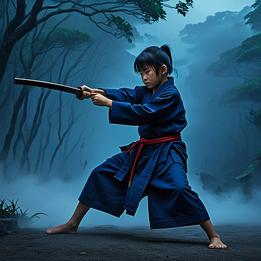
Tonfa
A traditional Okinawan martial arts weapon, often used for self-defense and control. It symbolizes personal power, discipline, and the ability to redirect force.
Tonfa Dream Meaning
A traditional Okinawan martial arts weapon, often used for self-defense and control. It symbolizes personal power, discipline, and the ability to redirect force.
Interpretive Themes
Self-Protection
highDirect physical and psychological defense.
Controlled Power
highPower used with precision, not brute force.
Cosmic Order
mediumMastery through practice and dedication.
Authority and Enforcement
mediumOften linked to societal roles.
Adaptation and Redirection
lowTurning challenges into opportunities.
Cultural Lenses
Jungian Perspective
View Context →Represents the persona's defensive structure or the shadow's controlled aggression. May symbolize the Self's ability to integrate opposing forces through disciplined practice.
Freudian Perspective
View Context →Phallic symbol representing controlled masculine power and aggression. Could indicate sublimation of aggressive drives into disciplined, socially acceptable forms of expression.
Gestalt Perspective
View Context →Part of the self that defends boundaries. The dreamer may be projecting their need for protection or their ability to handle conflict onto this object.
Cognitive Perspective
View Context →Mental schema for 'defense mechanism' or 'controlled response.' The brain processes real-life conflicts or threats through this familiar symbolic representation.
Evolutionary Perspective
View Context →Symbolizes evolved tools for social hierarchy and threat management. Represents humanity's development of controlled weapons over brute force for group survival.
East Asian Perspective
View Context →Originating in Okinawa as a farming tool adapted for self-defense against samurai. Represents ingenuity, cultural resistance, and the warrior-farmer ideal of disciplined protection.
Modern Western Perspective
View Context →Primarily associated with police batons and martial arts. Symbolizes institutional authority, self-defense rights, and the commodification of traditional combat arts.
European Perspective
View Context →Viewed through colonial lens as 'exotic weapon.' In modern context, represents cross-cultural martial arts exchange and the globalization of self-defense techniques.
South Asian Perspective
View Context →Similar to traditional lathi sticks used by police. Represents both community protection and colonial-era control, embodying dual nature of authority.
Global/Universal Perspective
View Context →Universal symbol of the tool-weapon duality. Represents humanity's universal need for protection and the cultural variation in how defense is ritualized and institutionalized.
African Perspective
View Context →Parallels traditional throwing sticks and warrior clubs. Symbolizes community defense, initiation rites, and the transformation of everyday objects into protective instruments.
Middle Eastern Perspective
View Context →Evokes traditional quarterstaff fighting styles. Represents honor-bound defense, the warrior's code, and the spiritual discipline underlying physical combat arts.
Want a deeper analysis?
Get a personalized interpretation of your entire dream including this symbol.
Interpret My DreamCommon Appearances & Contexts
| Context | Emotion | Interpretation |
|---|---|---|
| Context Using in combat | Emotion Empowered | Interpretation Asserting personal strength. |
| Context Training with tonfa | Emotion Focused | Interpretation Developing self-mastery. |
| Context Being attacked | Emotion Fearful | Interpretation Need for protection. |
| Context Holding but not using | Emotion Restrained | Interpretation Power held in check. |
| Context Breaking a tonfa | Emotion Vulnerable | Interpretation Defense mechanism failing. |
| Context Receiving as gift | Emotion Honored | Interpretation Acceptance of responsibility. |
| Context Police officer wielding | Emotion Respectful | Interpretation Societal authority present. |
| Context Ancient warrior using | Emotion Awed | Interpretation Connecting to tradition. |
| Context Child playing with | Emotion Curious | Interpretation Exploring personal power. |
| Context Sparring with partner | Emotion Competitive | Interpretation Testing skills respectfully. |
| Context Displayed on wall | Emotion Proud | Interpretation Symbol of achievement. |
| Context Unable to grip | Emotion Frustrated | Interpretation Feeling powerless. |
Interpret Your Full Dream
Beyond this symbol, every dream carries a unique story. Share your dream for a personalized AI-powered interpretation.