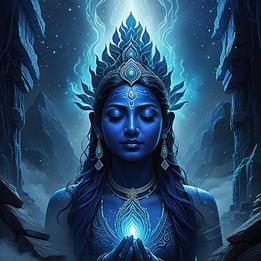
Tattva
In Hindu and yogic philosophy, tattvas are the fundamental principles or elements that constitute reality, representing the building blocks of the universe and consciousness.
Tattva Dream Meaning
In Hindu and yogic philosophy, tattvas are the fundamental principles or elements that constitute reality, representing the building blocks of the universe and consciousness.
Interpretive Themes
Mythological Resonance
Pancha Mahabhuta
HinduThe five great elements (earth, water, fire, air, ether) that constitute all material existence in Hindu cosmology, paralleling the Tattva system.
The Four Roots of Empedocles
GreekThe philosopher Empedocles proposed that all matter arises from four eternal 'roots' or elements (earth, water, air, fire), a Western parallel to elemental principles.
Cultural Lenses
South Asian Perspective
View Context →In Hinduism, Jainism, and yoga, tattvas are the fundamental realities or categories of existence, with systems ranging from 5 elements in Samkhya to 36 in Shaivism, representing cosmic and personal structure.
Jungian Perspective
View Context →Tattvas may represent archetypal patterns in the collective unconscious, symbolizing the fundamental structures of psyche and the process of individuation through integration of opposites.
Freudian Perspective
View Context →Could symbolize repressed primal drives or the basic components of personality (id, ego, superego), with elemental imagery representing sexual or aggressive energies seeking expression.
Gestalt Perspective
View Context →Tattvas represent the figure-ground relationships in perception, with each element being a part that only makes sense in relation to the whole of one's experience and awareness.
Cognitive Perspective
View Context →May represent schemas or basic cognitive structures through which we organize experience, with dreams processing how we categorize and understand reality at fundamental levels.
Evolutionary Perspective
View Context →Could reflect ancient human categorization of natural elements (earth, water, fire, air, space) that aided survival, with dreams activating these primal classification systems.
Modern Western Perspective
View Context →Often appears in New Age and holistic spirituality as a framework for personal growth, energy work, and understanding consciousness beyond materialist perspectives.
East Asian Perspective
View Context →Parallels concepts like Wu Xing (Five Phases) in Chinese philosophy, where elements interact dynamically in cycles of creation and destruction, influencing health and destiny.
Middle Eastern Perspective
View Context →Relates to classical elements in Islamic philosophy and alchemy, where understanding fundamental principles was seen as a path to spiritual enlightenment and mastery of nature.
European Perspective
View Context →Connects to Western esoteric traditions like Hermeticism and alchemy, where elements represent stages of spiritual transformation and the microcosm-macrocosm relationship.
Global/Universal Perspective
View Context →Appears cross-culturally as humanity's attempt to categorize reality into fundamental components, reflecting our innate drive to understand and organize existence.
African Perspective
View Context →Relates to traditional cosmologies where natural elements are imbued with spiritual force, representing the interconnectedness of all life and the foundations of community.
Historical Authorities
Want a deeper analysis?
Get a personalized interpretation of your entire dream including this symbol.
Interpret My DreamThe Oracle's Prediction
Combine multiple symbolsA breakthrough in understanding the fundamental patterns of your life.
Timeframe
Seasonal (~3 Months)
Intensity
Deep
Common Appearances & Contexts
| Context | Emotion | Interpretation |
|---|---|---|
| Context Meditating on elements | Emotion peaceful | Interpretation Spiritual integration process. |
| Context Building with blocks | Emotion focused | Interpretation Constructing inner reality. |
| Context Dissolving into elements | Emotion fearful | Interpretation Ego dissolution anxiety. |
| Context Elemental chaos | Emotion overwhelmed | Interpretation Life feels fragmented. |
| Context Teaching tattvas | Emotion confident | Interpretation Sharing inner wisdom. |
| Context Tattva diagram study | Emotion curious | Interpretation Seeking understanding patterns. |
| Context Elemental transformation | Emotion awed | Interpretation Witnessing profound change. |
| Context Lost in elements | Emotion confused | Interpretation Directionless in life. |
| Context Balancing tattvas | Emotion calm | Interpretation Achieving inner harmony. |
| Context Tattva conflict | Emotion anxious | Interpretation Internal elements clashing. |
| Context Discovering new tattva | Emotion excited | Interpretation Personal revelation occurring. |
| Context Elemental purification | Emotion relieved | Interpretation Cleansing of self. |
Interpret Your Full Dream
Beyond this symbol, every dream carries a unique story. Share your dream for a personalized AI-powered interpretation.