Kabbalah
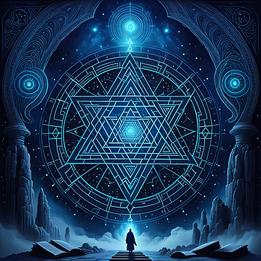
A Jewish mystical tradition focused on understanding the divine, the universe's structure, and the soul's journey through esoteric teachings and symbolic texts.
Kabbalah Dream Meaning
A Jewish mystical tradition focused on understanding the divine, the universe's structure, and the soul's journey through esoteric teachings and symbolic texts.
Interpretive Themes
Hidden Knowledge
highDream suggests seeking deeper truths.
Spiritual Structure
highReflects a need for cosmic understanding.
Transformation
mediumIndicates a journey of self-improvement.
Connection
mediumSymbolizes bridging earthly and spiritual.
Mystery
lowHighlights fascination with the obscure.
Mythological Resonance
The Tree of Life (Etz Chaim)
Jewish MysticismThe central diagram of Kabbalah depicting ten emanations (Sephirot) through which the Infinite (Ein Sof) manifests creation, representing the soul's path to divine union.
Pleroma and Aeons
GnosticThe Gnostic concept of divine fullness (Pleroma) emanating through successive levels (Aeons) parallels the Kabbalistic system of divine emanations.
Cultural Lenses
Jungian Perspective
View Context →Represents the collective unconscious and archetypal patterns, such as the Self or the process of individuation, reflecting integration of the psyche's hidden aspects.
Freudian Perspective
View Context →Symbolizes repressed desires for forbidden knowledge or paternal authority, with mystical elements as sublimation of unconscious sexual or aggressive drives.
Gestalt Perspective
View Context →Seen as a projection of the dreamer's need for wholeness or understanding of life's complexities, emphasizing personal responsibility in creating meaning.
Cognitive Perspective
View Context →Reflects mental schemas for organizing abstract concepts like spirituality, possibly indicating problem-solving related to life's mysteries or belief systems.
Evolutionary Perspective
View Context →Taps into adaptive traits for seeking patterns and agency in the environment, with mystical structures reducing anxiety about the unknown through symbolic order.
Middle Eastern Perspective
View Context →Rooted in Jewish mysticism from medieval Spain and the Levant, Kabbalah involves deep study of Torah and Zohar, with modern practices blending ritual and meditation for divine connection.
European Perspective
View Context →Historically influenced Christian mysticism and Renaissance esotericism, with figures like Isaac Luria shaping its development; today, it appears in occult and philosophical contexts across Europe.
Modern Western Perspective
View Context →Often commercialized in pop culture and self-help movements, Kabbalah is viewed as a spiritual toolkit for personal growth, sometimes criticized for cultural appropriation from Judaism.
Global/Universal Perspective
View Context →Represents a universal human quest for hidden truths and cosmic order, paralleling other mystical traditions worldwide in exploring the intersection of material and spiritual realms.
East Asian Perspective
View Context →Compared to Taoist or Buddhist mysticism, Kabbalah's tree of life mirrors concepts like the Tao or mandalas, offering a structured path to enlightenment through symbolic cosmology.
South Asian Perspective
View Context →Analogous to Hindu Tantra or Vedic cosmology, Kabbalah's sephirot system resembles chakras or cosmic layers, emphasizing energy channels and divine manifestation in ritual practice.
African Perspective
View Context →Resonates with African diasporic traditions like Vodou or Ifá, where Kabbalah's symbolic maps align with divination systems and ancestral wisdom for navigating spiritual and worldly realms.
Historical Authorities
Want a deeper analysis?
Get a personalized interpretation of your entire dream including this symbol.
Interpret My DreamThe Oracle's Prediction
Combine multiple symbolsReceiving a key insight that unlocks a long-standing personal mystery.
Timeframe
Lunation (~29 Days)
Intensity
Deep
Common Appearances & Contexts
| Context | Emotion | Interpretation |
|---|---|---|
| Context Studying ancient texts | Emotion Focused | Interpretation Intellectual spiritual pursuit. |
| Context Climbing a tree | Emotion Determined | Interpretation Ascending spiritual levels. |
| Context Lost in labyrinth | Emotion Confused | Interpretation Seeking esoteric path. |
| Context Receiving a key | Emotion Hopeful | Interpretation Unlocking hidden wisdom. |
| Context Meeting a sage | Emotion Reverent | Interpretation Guidance from tradition. |
| Context Light from above | Emotion Awestruck | Interpretation Divine illumination received. |
| Context Broken vessel | Emotion Anxious | Interpretation Cosmic fragmentation fear. |
| Context Whispering voices | Emotion Curious | Interpretation Hearing secret teachings. |
| Context Floating upward | Emotion Peaceful | Interpretation Soul ascent experience. |
| Context Decoding symbols | Emotion Puzzled | Interpretation Interpreting mystical signs. |
| Context Ancient library | Emotion Overwhelmed | Interpretation Vast knowledge access. |
| Context Ritual ceremony | Emotion Sacred | Interpretation Engaging divine practices. |
Interpret Your Full Dream
Beyond this symbol, every dream carries a unique story. Share your dream for a personalized AI-powered interpretation.