
The Dream of Shelter: Building Sovereignty from the Storm
The Somatic Echo
Before the image forms—the house, the cave, the bunker—the body knows. It is a specific, cellular tension. A clenching along the spine, a subtle drawing-in of the shoulders, as if making the body a smaller target. The breath becomes shallow, held high in the chest, listening. It is not the panic of chase, but the profound vigilance of exposure. The skin feels thin, the boundaries of the self porous and vulnerable to every psychic weather. This is the somatic ground from which the dream of shelter grows: a deep, animal recognition that something essential is unprotected. The mind will later furnish the dream with walls and roofs, but the foundation is always this visceral tremor—the feeling of being unhoused within oneself.
The Dreamer's Log
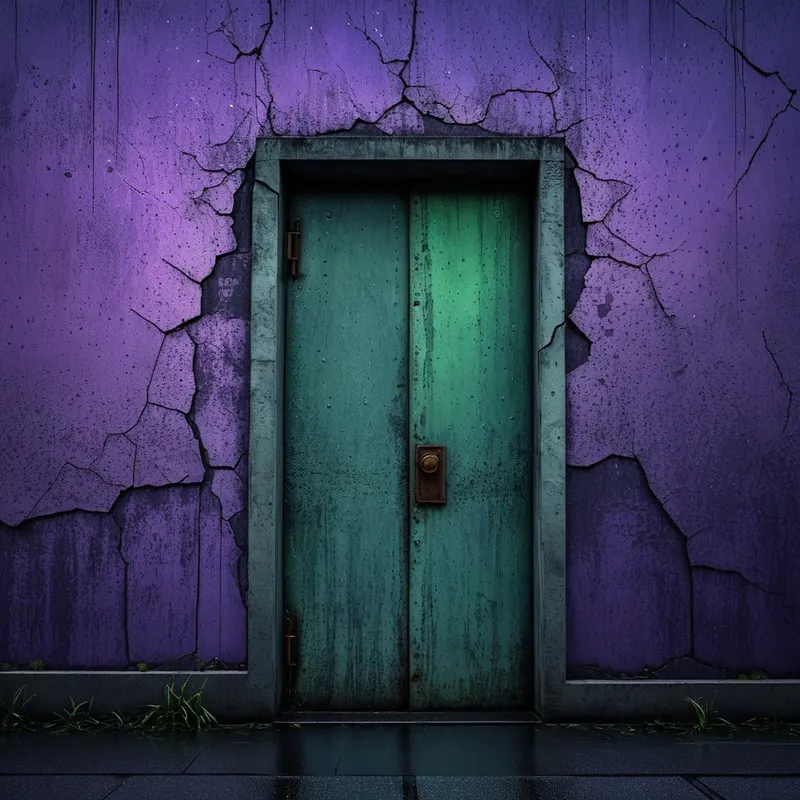
The dream is always the same: I am outside my childhood home in a torrential, windless rain. The house is dark, every window sealed with thick, industrial plastic sheeting that billows inward with a sickly breath. I know I must get inside, but my hand on the doorknob is met with a profound, magnetic resistance. The shelter has become a silent, suffocating chamber. Alchemical Interpretation: The psyche presents the childhood structure of the self not as a refuge, but as an encapsulated trauma, a preserved atmosphere one is both compelled to enter and repelled by.
The False Lead
A dream of shelter is not a simple instruction to find a safer job, a sturdier relationship, or a locked door. To interpret it as such is to mistake the symphony for a single note. This theme is not about acquiring external security, which is often the ego’s first, frantic translation. The absence of shelter in a dream, or the failure of a provided one, is not a prophecy of material lack. It is a profound diagnostic of the internal structure. It points to where the foundational beliefs—the walls of identity, the roof of worldview—have become compromised, not by outside forces, but by a slow, internal corrosion of truth.
Psychological Architecture
To dream of seeking shelter is to stand at the precipice of Shadow work. The exposed, rain-swept dreamer is an aspect of the self that has outgrown its old psychic housing. The childhood adaptations, the cultural personas, the trauma responses that once served as lifeboats have now become the walls of a confined cell. The work here is one of brutal, loving demolition and reassembly. It is the Individuation process in its most architectural form.
You must become both the storm and the architect. You must allow the gale to strip away the rotten shingles of outdated self-concepts—the “I should be” and the “I must never.” You must feel the grief as the familiar floorboards of old identity give way. This is not destruction for its own sake, but to reach the bedrock. The shelter you are ultimately building is not against feeling, but for feeling. Its purpose is to provide a strong, conscious container within which the full spectrum of your experience—the terror, the grief, the wild joy—can be held, witnessed, and integrated without threatening to dissolve the core self. Sovereignty is born here: not as a wall against the world, but as a resilient, permeable membrane that can discern what is truly self and what is merely weather.
Mythic Resonance
Consider the myth of the Hollow Reed. In many traditions, the reed by the riverbank is battered by wind and flood, yet it does not break because it is hollow. Its strength is in its yielding flexibility and its empty core, which allows the storm to pass through it. The rigid oak may splinter. The dream of shelter often pushes us toward a brittle, oak-like fortification, but the psyche’s deeper wisdom points toward the reed’s sovereignty. Similarly, in the tale of Psyche’s fourth task, she is sent to the underworld. Her shelter is not a place, but an instruction: “Take nothing in, offer nothing out.” She must become a perfect, neutral vessel—a shelter for her own soul—amidst the clamoring shadows, relying on no external prop. Both myths guide us away from rigid defense and toward resilient, conscious embodiment.
Symbolic Nodes
- Crumbling Walls/Leaking Roof: The failure of old psychological structures and belief systems.
- Hidden Rooms/Secret Basements: Discovered or unexplored aspects of the personal unconscious.
- Impenetrable Bunkers/Fortresses: The defense mechanisms of the ego, creating isolation.
- Finding Shelter in an Unexpected Place (e.g., under a tree, in a cave): The nascent, organic wisdom of the Self providing refuge when conscious structures fail.
- Being Locked Out of Shelter: The feeling of exile from a part of oneself or a previous state of being.
- Being Trapped Inside a Shelter: The suffocation of an identity or life structure that has become a prison.
Archetypal Resonance
The theme of Shelter resonates most deeply with The Ruler Archetype, particularly in its journey from Shadow Ruler to its mature, integrated form. The Shadow Ruler manifests as the tyrant or control-freak who, feeling profound internal exposure, seeks to command the external environment into a rigid, predictable order. This is the psyche that builds the impenetrable bunker, demanding absolute control to quell the terror of chaos. The somatic echo is that clenched, armored vigilance. The alchemical potential lies in the transformation of this desperate control into true sovereignty. The integrated Ruler does not seek to control the storm, but establishes such unshakable order and safety within the inner kingdom that the external weather loses its power to destabilize. The shelter becomes not a walled city, but a well-governed, resilient self.
The Alchemical Process
The transmutation of shelter follows the alchemical stage of Calcinatio—the burning down to white ash. The intense psychological heat required is the sustained, conscious confrontation with vulnerability. You must willingly sit in the exposed field of the dream and feel everything you have spent a lifetime building walls to avoid. The pressure is the refusal to take the false shelter: the addictive behavior, the numbing narrative, the projection of salvation onto another person.
This fire burns away the illusion that safety can be found out there. It reduces the ego’s frantic blueprints to ash. From this blankness, the new structure can arise. It is built not from fear (“This will protect me from that”), but from essence (“This will allow me to be this”). The grief of losing the old, familiar prison is the fuel. The terror of the open sky is the catalyst. The product is a profound, inner sovereignty—a shelter that is you, that moves with you, that is defined not by what it keeps out, but by the depth of life it can consciously contain.
The Integration Protocol
Question 1: Where in my waking life do I feel that same magnetic resistance I felt at the dream-door—a simultaneous pull toward and repulsion from a person, role, or situation I have called “safe”? Question 2: If my current sense of self were a structure, what is its primary building material? Is it brittle opinion, flexible curiosity, transparent truth, or opaque defense? Question 3: What storm am I truly trying to shelter from? Name the specific emotional weather (e.g., the grief of disappointment, the chaos of unmet desire, the cold wind of others’ judgments).
Action 1 (Somatic Grounding): For three minutes, sit and simply track the sensation of your own boundaries. Feel the literal surface of your skin. Notice where it feels firm, where it feels porous. Breathe into those porous spaces without trying to harden them. Your body is your first shelter; re-inhabit it as a neutral observer. Action 2 (Creative Excavation): Draw, paint, or collage your dream shelter. Then, with a different color or medium, draw the force acting upon it (the storm, the cracking earth, the silent pressure). Finally, depict a third image: how the shelter and the force might look if they were not opposed, but in a dynamic, integrated relationship. Action 3 (Ritual of Sovereignty): Choose a small, personal object that represents an old, rigid rule you have for yourself (“I must never be angry,” “I must always be productive”). Take it to a natural body of water or a crossroads. Acknowledge its former protective service, then leave it there. Walk away without looking back, physically enacting the release of an outdated internal law.
Final Validation
The longing for shelter is one of the most primal and honorable human urges. To feel exposed, to dream of walls that fail, is not a sign of weakness but a profound signal of growth—the old shell is cracking because the life within it is expanding. The process is arduous, for it asks you to find safety not in hiding, but in becoming vast enough to hold your own chaos. The sovereignty that awaits on the other side of this terror is not the absence of storm, but the unshakable knowledge that you are, yourself, the only shelter you will ever need, and the only one that can never be taken away. You are both the sanctuary and the sacred thing within it.