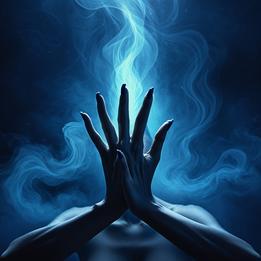
Mudra
A symbolic hand gesture used in Hindu and Buddhist traditions to channel spiritual energy, express teachings, and focus meditation.
Mudra Dream Meaning
A symbolic hand gesture used in Hindu and Buddhist traditions to channel spiritual energy, express teachings, and focus meditation.
Interpretive Themes
Spiritual Communication
highDirect link to divine or inner truth.
Energy Channeling
highBalancing internal energies for healing.
Mental Focus
mediumAnchors awareness in the present.
Ritual Identity
mediumConnects individual to collective practice.
Transformation
lowMarks transition in spiritual journey.
Mythological Resonance
Shiva Nataraja
HinduIn his cosmic dance, Shiva's hands form specific mudras that create, sustain, and dissolve the universe, with the abhaya mudra granting fearlessness and the damaru mudra producing the primordial sound of creation.
Buddha
BuddhistThe Buddha's various mudras in iconography—like the dhyana mudra of meditation, the bhumisparsha mudra of enlightenment, and the abhaya mudra of protection—each convey specific teachings and states of consciousness.
Cultural Lenses
Jungian Perspective
View Context →Archetypal gesture representing the Self's integration; a symbol of individuation where conscious and unconscious unite through ritualized movement, often appearing in dreams as a mandala-like expression of wholeness.
Freudian Perspective
View Context →Symbolic displacement of repressed desires, particularly oral or anal fixations; the hand gesture may represent suppressed sexual energy or childhood rituals transformed into acceptable spiritual practice.
Gestalt Perspective
View Context →Expression of unfinished business or present-moment awareness; the dreamer may be projecting parts of themselves onto the gesture, asking 'What does this mudra want from me?' to integrate fragmented aspects.
Cognitive Perspective
View Context →Mental schema for processing spiritual concepts; the brain uses this familiar symbol to organize abstract ideas about energy, focus, or tradition during sleep's memory consolidation and problem-solving phases.
Evolutionary Perspective
View Context →Ritualized gesture enhancing group cohesion and reducing anxiety; evolved from primate grooming behaviors and threat displays, now serving social bonding and stress regulation through culturally codified hand positions.
South Asian Perspective
View Context →Sacred hand positions in Hinduism and Buddhism dating to Vedic texts; used in temple rituals, classical dance (Bharatanatyam), and meditation to invoke deities, seal energy channels (nadis), and express philosophical teachings like the Dharma.
East Asian Perspective
View Context →In Buddhist traditions like Zen and Tibetan Vajrayana, mudras (印相) accompany mantras and visualizations; the Diamond Realm mandala uses specific gestures to represent Buddhas and bodhisattvas in esoteric meditation practices.
Modern Western Perspective
View Context →Secularized in yoga studios and wellness culture as tools for stress reduction; often divorced from religious origins, reframed as evidence-based techniques for improving focus, circulation, or emotional regulation.
Global/Universal Perspective
View Context →Cross-cultural symbol of non-verbal communication transcending language; appears in Christian blessings, Masonic signs, and even emoji, representing humanity's universal tendency to encode meaning in hand gestures.
European Perspective
View Context →Historically viewed through colonial lens as 'exotic' ritual; now integrated into New Age and neopagan practices, often blended with Western esoteric traditions like Hermeticism or ceremonial magic for energy work.
Middle Eastern Perspective
View Context →In Islamic mystical traditions (Sufism), hand positions during dhikr (remembrance of God) channel barakah (blessing); similar gestures appear in ancient Persian Zoroastrian rituals and modern diaspora yoga practices.
African Perspective
View Context →Parallels in traditional dance and healing rituals where hand gestures invoke ancestors or direct life force (ashé); contemporary African diaspora religions sometimes incorporate mudras into syncretic spiritual practices.
Historical Authorities
Want a deeper analysis?
Get a personalized interpretation of your entire dream including this symbol.
Interpret My DreamThe Oracle's Prediction
Combine multiple symbolsA breakthrough in meditation practice or spiritual insight.
Timeframe
Lunation (~29 Days)
Intensity
Deep
Common Appearances & Contexts
| Context | Emotion | Interpretation |
|---|---|---|
| Context Performing mudra alone | Emotion Peaceful | Interpretation Seeking inner harmony. |
| Context Teaching mudra to others | Emotion Empowered | Interpretation Sharing wisdom or guidance. |
| Context Mudra feels wrong | Emotion Anxious | Interpretation Spiritual disconnection or doubt. |
| Context Mudra glowing with light | Emotion Awe | Interpretation Divine connection or awakening. |
| Context Unable to form mudra | Emotion Frustrated | Interpretation Blocked energy or expression. |
| Context Mudra in a crowd | Emotion Connected | Interpretation Belonging to community. |
| Context Ancient figure shows mudra | Emotion Reverent | Interpretation Receiving ancestral wisdom. |
| Context Mudra causing pain | Emotion Fearful | Interpretation Resistance to change. |
| Context Mudra unlocking a door | Emotion Hopeful | Interpretation Accessing new understanding. |
| Context Forgotten mudra remembered | Emotion Joyful | Interpretation Rediscovering inner power. |
| Context Mudra in storm | Emotion Determined | Interpretation Seeking stability amid chaos. |
| Context Mudra mirrored in water | Emotion Reflective | Interpretation Self-examination or truth. |
Interpret Your Full Dream
Beyond this symbol, every dream carries a unique story. Share your dream for a personalized AI-powered interpretation.