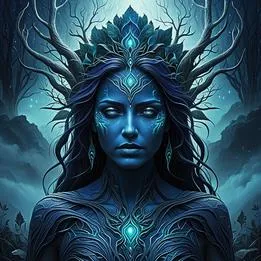
Mother Earth Dream Meaning
A universal archetype representing the planet as a living, nurturing, and sometimes wrathful feminine entity, embodying creation, sustenance, and the cycle of life and death.
Common Appearances & Contexts
| Context | Emotion | Interpretation |
|---|---|---|
| Gardening with her | Content | Personal growth and nurturing. |
| Her angry voice | Fear | Ecological guilt or neglect. |
| Being held by her | Peace | Seeking comfort and security. |
| Her weeping | Sadness | Grief for planetary harm. |
| Feeding from her | Gratitude | Acknowledging life's sustenance. |
| Her crumbling form | Despair | Anxiety about collapse. |
| Dancing with her | Joy | Harmony with nature. |
| Her stern warning | Anxiety | Urgent call to action. |
| Burying in her | Acceptance | Endings and return. |
| Her radiant smile | Awe | Experience of divine love. |
| Her barren landscape | Loneliness | Feeling of disconnection. |
| Rebirth from her | Hope | Renewal and second chances. |
Interpretive Themes
Nurturance & Provision
highDreams may reflect needs for care.
Creation & Fertility
highConnects to creativity or new beginnings.
Cyclicality & Renewal
highMay signal personal transformation phases.
Interconnectedness
mediumDreams about belonging or responsibility.
Wrath & Retribution
mediumCould symbolize fear of loss.
Cultural Lenses
Global/Universal Perspective
View Context →A near-universal archetype across indigenous and ancient traditions (e.g., Gaia, Pachamama, Terra) representing the planet as a conscious, life-giving, and sometimes punitive maternal force, central to creation myths and ecological ethics.
Jungian Perspective
View Context →The Great Mother archetype, part of the collective unconscious. Represents the anima (feminine principle), the Self, and the psyche's connection to the primordial, nurturing, and devouring aspects of nature and the unconscious.
Freudian Perspective
View Context →Primarily a symbol for the biological mother, representing infantile dependency, oral satisfaction (nurturance), and the Oedipal desire for union. May also symbolize repressed wishes for security and regression to the womb.
Gestalt Perspective
View Context →A projection of the dreamer's own nurturing or neglected aspects. The dreamer is Mother Earth; the symbol represents one's capacity for care, creation, or one's relationship with one's body and physical environment.
Cognitive Perspective
View Context →A schema or mental model for understanding ecosystems, interdependence, and life cycles. The dream processes concerns about environmental stability, personal well-being, or metaphors for growth and decay.
Evolutionary Perspective
View Context →A cognitive adaptation reflecting the primal human dependence on fertile land and stable ecosystems for survival. Dreams may activate ancient threat-detection or resource-security modules related to habitat quality.
South Asian Perspective
View Context →Manifests as Bhūmi or Prithvi, the Vedic goddess of the Earth, consort of Vishnu. Revered as a patient, forgiving sustainer in Hinduism, but also capable of withdrawing her bounty, emphasizing dharma (duty) towards the land.
Latin American Perspective
View Context →Pachamama in Andean cultures, a living deity central to rituals (offerings, pagos). She demands reciprocity (ayni); modern context blends indigenous reverence with environmental activism against extractive industries.
European Perspective
View Context →Rooted in Greco-Roman Gaia/Terra and Celtic Danu, later syncretized with the Virgin Mary in some folk traditions. Historically linked to agricultural cycles; modern Neo-Pagan movements (e.g., Wicca) revive her as a central goddess.
African Perspective
View Context →Often an ancestral and creator goddess (e.g., Ala of the Igbo, Asase Yaa of the Akan). Embodies morality, law, and fertility; rituals involve libations to the earth, connecting community, ancestors, and the land's vitality.
Modern Western Perspective
View Context →A secular, ecological, and often feminist symbol. Represents the Gaia Hypothesis, climate change activism, and a critique of anthropocentrism. Less a deity, more a metaphor for planetary systems and environmental justice.
East Asian Perspective
View Context →In Chinese tradition, associated with Hou Tu, the deity of the earth and harvests, and the concept of 'Di' (earth) balancing 'Tian' (heaven). Reflects Confucian and Daoist principles of harmony, balance, and filial piety towards nature.
Interpret Your Full Dream
Beyond this symbol, every dream carries a unique story. Share your dream for a personalized AI-powered interpretation.