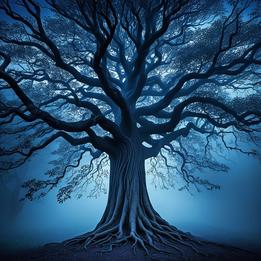
Bodhi Tree
The sacred fig tree under which Siddhartha Gautama attained enlightenment, symbolizing awakening, wisdom, and the interconnectedness of all life.
Bodhi Tree Dream Meaning
The sacred fig tree under which Siddhartha Gautama attained enlightenment, symbolizing awakening, wisdom, and the interconnectedness of all life.
Interpretive Themes
Spiritual Awakening
highDirect link to Buddha's enlightenment experience.
Rooted Wisdom
highTree symbolizes grounded, enduring truth.
Interconnectedness
mediumTree's roots and branches show cosmic connection.
Transformation
highFrom Siddhartha to Buddha under the tree.
Sacred Shelter
mediumTree provides shade and safety for meditation.
Mythological Resonance
Siddhartha Gautama
BuddhistAfter years of asceticism, he sat under the Bodhi tree in Bodh Gaya, vowing not to rise until enlightenment, attaining Buddhahood and understanding the nature of suffering.
Yggdrasil
NorseThe world tree connecting the nine realms, a cosmic axis of wisdom, life, and destiny, where Odin hung himself to gain knowledge of the runes.
Cultural Lenses
Jungian Perspective
View Context →Archetype of the Self, representing wholeness and individuation. The tree connects conscious and unconscious, symbolizing psychic growth and integration of opposites in the journey toward self-realization.
Freudian Perspective
View Context →Phallic symbol representing paternal authority and spiritual aspiration. May indicate unresolved Oedipal conflicts transformed into sublimated spiritual seeking, or a desire for transcendent father-figure guidance.
Gestalt Perspective
View Context →Represents the dreamer's own growth process. Each part of the tree (roots, trunk, branches, leaves) corresponds to aspects of self needing integration for complete awareness in the here-and-now.
Cognitive Perspective
View Context →Mental schema for enlightenment concepts. The tree organizes beliefs about wisdom, growth, and transformation, potentially indicating cognitive restructuring toward more integrated understanding of self and world.
Evolutionary Perspective
View Context →Symbolizes adaptive advantage of wisdom and social cohesion. Trees provided shelter and community gathering spots; this dream symbol may reflect evolved needs for safety, knowledge transmission, and group belonging.
South Asian Perspective
View Context →Sacred site of Buddha's enlightenment in Bodh Gaya, India. Historically worshipped, with rituals including circumambulation and offerings. Modern pilgrims visit seeking blessings, representing living connection to 2,500-year-old spiritual tradition.
East Asian Perspective
View Context →In Chinese and Japanese Buddhism, symbolizes wisdom and compassion. Associated with Bodhisattvas, often depicted in art. Modern Zen gardens incorporate tree imagery for meditation, representing mindfulness in daily practice.
Modern Western Perspective
View Context →Ecospiritual symbol representing interconnectedness and mindfulness. Popular in wellness culture, meditation apps, and environmental movements. Often divorced from specific Buddhist context, representing universal spiritual seeking.
Global/Universal Perspective
View Context →World tree archetype connecting heaven, earth, and underworld. Appears in many mythologies as axis mundi. Modern interpretations focus on ecological consciousness and universal human quest for meaning beyond material existence.
European Perspective
View Context →Through Theosophy and 19th-century Orientalism, became symbol of esoteric wisdom. Influenced Romantic and Transcendentalist movements. Modern New Age interpretations emphasize personal enlightenment outside traditional religious structures.
African Perspective
View Context →Parallels sacred trees in African traditions like the baobab. Represents ancestral wisdom, community gathering, and connection to earth. Modern Afro-spiritual movements may syncretize with Buddhist concepts of interconnectedness.
North American Perspective
View Context →Adopted by counterculture movements since 1960s as symbol of alternative spirituality. In contemporary mindfulness movements, represents stress reduction and personal growth, often commercialized in wellness industries.
Historical Authorities
Want a deeper analysis?
Get a personalized interpretation of your entire dream including this symbol.
Interpret My DreamThe Oracle's Prediction
Combine multiple symbolsA moment of clarity or breakthrough in personal understanding is imminent.
Timeframe
Lunation (~29 Days)
Intensity
Deep
A deepening of connections based on mutual understanding and peace.
Timeframe
Seasonal (~3 Months)
Intensity
Deep
Common Appearances & Contexts
| Context | Emotion | Interpretation |
|---|---|---|
| Context Sitting under the tree in meditation | Emotion peaceful | Interpretation Indicates seeking inner wisdom and calm. |
| Context Seeing the tree from a distance | Emotion longing | Interpretation Suggests desire for spiritual connection or guidance. |
| Context Climbing the tree | Emotion determined | Interpretation Represents active pursuit of higher understanding. |
| Context Tree shedding leaves | Emotion melancholic | Interpretation May symbolize letting go of old beliefs. |
| Context Tree in full bloom | Emotion joyful | Interpretation Signifies flourishing insight and spiritual growth. |
| Context Protecting the tree from harm | Emotion protective | Interpretation Reflects guarding one's spiritual values or peace. |
| Context Tree in a storm | Emotion anxious | Interpretation Indicates spiritual challenges or doubts. |
| Context Planting a Bodhi Tree sapling | Emotion hopeful | Interpretation Suggests beginning a new spiritual journey. |
| Context Tree with many people gathered | Emotion connected | Interpretation Represents community in spiritual seeking. |
| Context Tree appearing in an urban setting | Emotion surprised | Interpretation May symbolize finding spirituality in daily life. |
| Context Old, gnarled Bodhi Tree | Emotion reverent | Interpretation Indicates deep, ancient wisdom within. |
| Context Tree with glowing light | Emotion awestruck | Interpretation Suggests direct experience of enlightenment. |
Interpret Your Full Dream
Beyond this symbol, every dream carries a unique story. Share your dream for a personalized AI-powered interpretation.