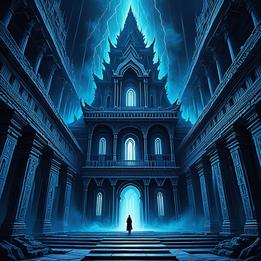
Memory Palace
A mnemonic technique using spatial visualization to store and retrieve information, often linked to ancient memory arts and inner spiritual architecture.
Memory Palace Dream Meaning
A mnemonic technique using spatial visualization to store and retrieve information, often linked to ancient memory arts and inner spiritual architecture.
Interpretive Themes
Cognitive Mastery
highSuggests a desire for mental order.
Inner Exploration
highSymbolizes self-discovery and introspection.
Spiritual Awakening
mediumReflects creation of personal belief systems.
Memory Preservation
highIndicates fear of forgetting or loss.
Cosmic Order
mediumShows need for clarity amid chaos.
Mythological Resonance
Mnemosyne
GreekTitaness of memory, mother of the Muses, whose name gives us 'mnemonics'—she represents the sacred architecture of recollection from which all art and knowledge flows.
The Art of Memory
HermeticA medieval and Renaissance technique where practitioners would mentally construct elaborate palaces to store vast knowledge, bridging the material and spiritual realms.
Cultural Lenses
Jungian Perspective
View Context →Represents the psyche's structure—a map of consciousness where rooms symbolize archetypes, personal complexes, and the collective unconscious. Modern therapy uses it for accessing buried memories and integrating self.
Freudian Perspective
View Context →Symbolizes the mind's architecture, with rooms as repressed desires, childhood memories, and unconscious conflicts. Dreaming of it may indicate attempts to organize or hide traumatic experiences.
Gestalt Perspective
View Context →Seen as a holistic self-representation—each part of the palace reflects aspects of the dreamer's current experience. Emphasizes how memory organization affects present awareness and wholeness.
Cognitive Perspective
View Context →A mnemonic strategy for encoding and retrieving information. In dreams, it may reflect mental rehearsal, learning processes, or anxiety about memory performance in waking life.
Evolutionary Perspective
View Context →Rooted in spatial navigation adaptations, aiding survival through memory of environments. Dreams of memory palaces might enhance cognitive mapping or signal adaptive memory consolidation.
Global/Universal Perspective
View Context →A cross-cultural symbol of inner sanctum and knowledge storage, from ancient Greek method of loci to indigenous oral traditions using landscape memory, representing human universal of organizing thought spatially.
East Asian Perspective
View Context →In Taoist and Buddhist contexts, it mirrors the inner alchemy of mind—palaces as dantian (energy centers) or mandalas for meditation, used historically in memory arts and spiritual cultivation.
South Asian Perspective
View Context →Linked to yogic practices where chakras are visualized as palaces housing deities or consciousness levels. In Ayurveda, it represents mental clarity and memory (smriti) preservation through ritual.
Middle Eastern Perspective
View Context →Echoes Islamic memory techniques (hifz) for Quranic memorization and Sufi imagery of heart as a palace for divine presence. Historically, used in scholarly traditions to safeguard knowledge.
European Perspective
View Context →Stems from Classical Greek and Roman mnemonic arts (method of loci), revived in Renaissance memory theaters. In folklore, appears as enchanted castles storing ancestral wisdom or lost memories.
African Perspective
View Context →Reflects oral tradition techniques where landscapes or body parts serve as memory palaces for genealogies and stories. In spiritual practices, it symbolizes the ancestral realm within the self.
North American Perspective
View Context →In Indigenous contexts, tied to dreamcatcher symbolism or vision quests mapping inner journeys. Modernly, appears in cognitive science and pop culture as a tool for memory champions.
Historical Authorities
Want a deeper analysis?
Get a personalized interpretation of your entire dream including this symbol.
Interpret My DreamThe Oracle's Prediction
Combine multiple symbolsA breakthrough in organizing complex information or leading a structured project.
Timeframe
Seasonal (~3 Months)
Intensity
Deep
Access to forgotten insights or ancestral wisdom through disciplined inner work.
Timeframe
Lunation (~29 Days)
Intensity
Deep
Common Appearances & Contexts
| Context | Emotion | Interpretation |
|---|---|---|
| Context Exploring vast halls | Emotion Awe | Interpretation Discovering inner potential. |
| Context Forgetting a room | Emotion Anxiety | Interpretation Fear of lost memories. |
| Context Building new wing | Emotion Pride | Interpretation Integrating new knowledge. |
| Context Locked doors inside | Emotion Frustration | Interpretation Repressed memories blocking. |
| Context Guiding others through | Emotion Confidence | Interpretation Sharing wisdom or teaching. |
| Context Palace collapsing | Emotion Panic | Interpretation Mental overload or breakdown. |
| Context Finding hidden chamber | Emotion Wonder | Interpretation Uncovering subconscious insights. |
| Context Endless corridors | Emotion Overwhelm | Interpretation Feeling lost in thoughts. |
| Context Bright central atrium | Emotion Clarity | Interpretation Achieving mental focus. |
| Context Dark, dusty rooms | Emotion Melancholy | Interpretation Neglected past experiences. |
| Context Mirrored walls | Emotion Confusion | Interpretation Self-reflection complexities. |
| Context Treasure vault | Emotion Joy | Interpretation Valuing accumulated wisdom. |
Interpret Your Full Dream
Beyond this symbol, every dream carries a unique story. Share your dream for a personalized AI-powered interpretation.