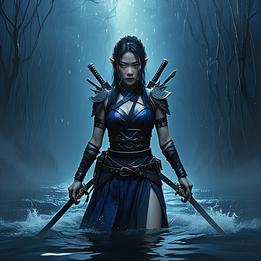
Manriki
A Japanese chain weapon used for restraint and combat, symbolizing control, connection, and hidden potential.
Manriki Dream Meaning
A Japanese chain weapon used for restraint and combat, symbolizing control, connection, and hidden potential.
Interpretive Themes
Restraint and Control
highCan represent self-control or external constraints.
Hidden Connection
mediumReveals underlying relationships or dependencies.
Skillful Defense
highSuggests preparedness against threats.
Duality of Tools
mediumCan be weapon or tool depending on intent.
Chain of Events
lowMay symbolize linked actions or outcomes.
Cultural Lenses
Jungian Perspective
View Context →Represents the vinculum or connecting principle of the psyche, linking conscious and unconscious elements. Symbolizes the process of individuation through integration of opposites, with chains as psychic bonds needing conscious recognition.
Freudian Perspective
View Context →Phallic symbol representing sexual aggression and control issues. The chain suggests bondage fantasies or repressed desires for dominance/submission, with the weapon aspect indicating unresolved childhood power dynamics.
Gestalt Perspective
View Context →Projects the dreamer's relationship with control and connection. Each link represents aspects of self needing integration; the whole weapon symbolizes how separate parts function together as a unified defensive system.
Cognitive Perspective
View Context →Mental schema for problem-solving involving constraint management. Represents cognitive processes for handling complex, interconnected challenges, with the physical manipulation mirroring mental organization strategies.
Evolutionary Perspective
View Context →Archetypal tool representing survival advantages of restraint technology. Symbolizes human innovation in controlling threats and resources, with chain weapons evolving from primal needs for binding prey and securing territory.
East Asian Perspective
View Context →In Japanese tradition, symbolizes disciplined control (bujutsu) and hidden preparedness. Historically used by ninja and police, it represents the warrior's balance of restraint and action, with spiritual connotations of binding negative energies.
European Perspective
View Context →Medieval chain weapons symbolize feudal bonds and obligations. Represents the tension between freedom and duty, with historical use in judicial restraint reflecting societal control mechanisms and hierarchical relationships.
Modern Western Perspective
View Context →Metaphor for systemic constraints and interconnectedness. In business/technology contexts, represents supply chains or network dependencies; psychologically, symbolizes how modern life binds individuals through digital and social connections.
African Perspective
View Context →Similar to throwing chains in some traditions, representing communal bonds and ancestral connections. Symbolizes the links between generations, with ritual uses in ceremonies binding communities together spiritually and socially.
Middle Eastern Perspective
View Context →Historical chain weapons symbolize divine justice and cosmic order. In Islamic art, geometric chain patterns represent the interconnectedness of creation, with practical uses reflecting the balance between mercy and judgment in governance.
South Asian Perspective
View Context →Associated with Vajra (thunderbolt) symbolism in modified forms, representing indestructible truth. In Hindu and Buddhist contexts, chains can symbolize both Maya (illusion) binding souls and the disciplined path to liberation through restraint.
Global/Universal Perspective
View Context →Archetypal symbol of connection and control found across cultures in chains, nets, and binding tools. Represents fundamental human experiences of limitation and linkage, from physical restraints to metaphorical bonds of relationship and obligation.
Want a deeper analysis?
Get a personalized interpretation of your entire dream including this symbol.
Interpret My DreamCommon Appearances & Contexts
| Context | Emotion | Interpretation |
|---|---|---|
| Context Using manriki | Emotion Focused | Interpretation Mastery of situation. |
| Context Manriki breaking | Emotion Liberated | Interpretation Release from constraints. |
| Context Being bound | Emotion Trapped | Interpretation Feeling restricted externally. |
| Context Finding manriki | Emotion Curious | Interpretation Discovering hidden power. |
| Context Gifting manriki | Emotion Trusting | Interpretation Sharing control responsibility. |
| Context Manriki as jewelry | Emotion Deceptive | Interpretation Hidden threat disguised. |
| Context Untangling manriki | Emotion Frustrated | Interpretation Solving complex problems. |
| Context Manriki in water | Emotion Fluid | Interpretation Adaptable control methods. |
| Context Manriki glowing | Emotion Awed | Interpretation Revealed inner strength. |
| Context Manriki too heavy | Emotion Burdened | Interpretation Responsibility overwhelming. |
| Context Teaching with manriki | Emotion Patient | Interpretation Passing on wisdom. |
| Context Manriki as bridge | Emotion Hopeful | Interpretation Connection overcoming separation. |
Interpret Your Full Dream
Beyond this symbol, every dream carries a unique story. Share your dream for a personalized AI-powered interpretation.