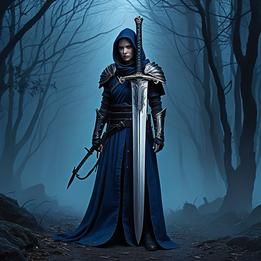
Scabbard
A protective sheath for a blade, symbolizing restraint, readiness, and the containment of power or aggression.
Scabbard Dream Meaning
A protective sheath for a blade, symbolizing restraint, readiness, and the containment of power or aggression.
Interpretive Themes
Restraint and Control
highSymbolizes self-discipline or suppression.
Potential and Readiness
highRepresents untapped abilities or opportunities.
Protection and Safety
mediumCan indicate a need for security.
Identity and Role
mediumLinks to personal or social roles.
Transition and Action
lowMay signal impending change.
Cultural Lenses
Jungian Perspective
View Context →Represents the persona or conscious ego containing the shadow (sword). Historically linked to warrior archetypes; modernly, it symbolizes societal roles restraining primal instincts.
Freudian Perspective
View Context →A phallic symbol representing sexual restraint or repression. Historically, it may relate to patriarchal power structures; in modern dreams, it often signifies suppressed desires or aggression.
Gestalt Perspective
View Context →Seen as a part of the self that holds or protects another part. In modern context, it represents how one aspect of personality contains or manages another, such as logic restraining emotion.
Cognitive Perspective
View Context →Symbolizes mental schemas for threat management or preparation. Historically, it reflects adaptive problem-solving; today, it may represent cognitive strategies for handling stress or conflict.
Evolutionary Perspective
View Context →Rooted in tool-use and threat preparedness for survival. Historically, it enhanced weapon efficiency; in modern dreams, it taps into innate mechanisms for resource protection and risk assessment.
East Asian Perspective
View Context →In traditions like Japanese samurai culture, it symbolizes bushido virtues—restraint, honor, and readiness. Modernly, it represents disciplined potential in professional or personal life.
European Perspective
View Context →Medieval chivalry associated it with knightly identity and social order. Today, it may symbolize legal or ethical constraints on power, or heritage values.
Middle Eastern Perspective
View Context →Historically linked to ceremonial and martial traditions, such as in Persian or Ottoman cultures, representing authority and protection. Modernly, it can signify cultural pride or defensive postures.
African Perspective
View Context →In many traditions, it relates to warriorhood, initiation rites, and communal defense. Contemporary interpretations often focus on preserving cultural identity or personal resilience.
South Asian Perspective
View Context →In Hindu and Buddhist contexts, it can symbolize the sheath of Maya (illusion) containing the sword of wisdom. Modernly, it represents spiritual discipline or hidden knowledge.
Global/Universal Perspective
View Context →A cross-cultural symbol of containment and readiness, found from ancient Mesopotamia to indigenous tribes. Universally, it speaks to human themes of protection, potential, and controlled power.
Want a deeper analysis?
Get a personalized interpretation of your entire dream including this symbol.
Interpret My DreamCommon Appearances & Contexts
| Context | Emotion | Interpretation |
|---|---|---|
| Context Empty scabbard | Emotion Anxiety | Interpretation Loss of protection or power. |
| Context Drawing sword | Emotion Determination | Interpretation Preparing for confrontation. |
| Context Sheathing sword | Emotion Relief | Interpretation Conflict resolution or restraint. |
| Context Broken scabbard | Emotion Vulnerability | Interpretation Defenses compromised. |
| Context Ornate scabbard | Emotion Pride | Interpretation Valued identity or status. |
| Context Lost scabbard | Emotion Panic | Interpretation Unprepared for challenges. |
| Context Gifting scabbard | Emotion Trust | Interpretation Delegating power or responsibility. |
| Context Polishing scabbard | Emotion Focus | Interpretation Maintaining readiness or image. |
| Context Multiple scabbards | Emotion Overwhelm | Interpretation Too many roles or tools. |
| Context Ancient scabbard | Emotion Reverence | Interpretation Connection to heritage or wisdom. |
| Context Creating scabbard | Emotion Creativity | Interpretation Crafting personal defenses. |
| Context Borrowed scabbard | Emotion Dependence | Interpretation Relying on external support. |
Interpret Your Full Dream
Beyond this symbol, every dream carries a unique story. Share your dream for a personalized AI-powered interpretation.