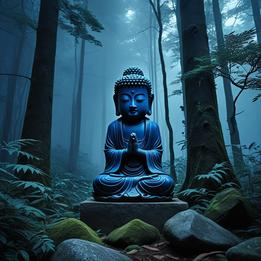
Jizo Statue
A stone Buddhist deity protecting travelers, children, and souls in transition, representing compassion and guardianship.
Jizo Statue Dream Meaning
A stone Buddhist deity protecting travelers, children, and souls in transition, representing compassion and guardianship.
Interpretive Themes
Mythological Resonance
Hermes Psychopomp
GreekGuide of souls who escorts the deceased to the underworld, offering protection and safe passage during the ultimate transition.
Saint Christopher
ChristianPatron saint of travelers who carried the Christ child across a river, representing protection for those on perilous journeys.
Cultural Lenses
Jungian Perspective
View Context →Archetype of the protector or wise old man, representing the Self's guidance through life transitions, integrating shadow aspects of loss or vulnerability.
Freudian Perspective
View Context →Phallic symbol representing paternal protection, possibly reflecting unresolved father issues or desires for security and authority in the dreamer's psyche.
Gestalt Perspective
View Context →Projection of the dreamer's own protective qualities or unmet needs for safety, asking what part of yourself feels like a guardian or needs guarding.
Cognitive Perspective
View Context →Mental schema for safety and transition, possibly activated by recent stressors involving protection, change, or memorial processing in waking life.
Evolutionary Perspective
View Context →Instinctual representation of kinship protection and care for offspring, tapping into deep-seated drives to safeguard vulnerable group members for survival.
East Asian Perspective
View Context →In Japanese Buddhism, Jizo Bosatsu protects travelers, children, and souls in the afterlife, often adorned with red bibs and hats as offerings for miscarried or aborted children.
Global/Universal Perspective
View Context →Cross-cultural guardian deity figure, akin to Hermes or psychopomps, guiding souls and offering protection during vulnerable transitions across spiritual traditions.
South Asian Perspective
View Context →Related to Ksitigarbha in Mahayana Buddhism, vowing to save all beings from hell realms, emphasizing compassion and endurance in spiritual practice.
Modern Western Perspective
View Context →Often viewed as a garden ornament or art piece, sometimes appropriated for aesthetic purposes while retaining subtle spiritual connotations of peace and remembrance.
European Perspective
View Context →Comparable to roadside shrines or saint statues in Catholicism, serving as focal points for prayer, protection, and community memory in public spaces.
Latin American Perspective
View Context →Resonates with syncretic figures like Santo Niño or guardian angels, blending indigenous and Catholic traditions of child protection and spiritual guidance.
African Perspective
View Context →Parallels ancestor veneration and guardian spirits in traditions like Yoruba or Akan, where stone figures represent enduring protection and lineage continuity.
Historical Authorities
Want a deeper analysis?
Get a personalized interpretation of your entire dream including this symbol.
Interpret My DreamThe Oracle's Prediction
Combine multiple symbolsYou will provide or receive crucial emotional support during a difficult transition, deepening a bond.
Timeframe
Seasonal (~3 Months)
Intensity
Deep
A period of grief, ending, or uncertainty will be accompanied by a profound sense of being guided or protected.
Timeframe
Immediate (Next 48h)
Intensity
Deep
Common Appearances & Contexts
| Context | Emotion | Interpretation |
|---|---|---|
| Context Lost in forest | Emotion Fearful | Interpretation Seeking guidance. |
| Context Child in danger | Emotion Anxious | Interpretation Protective instinct. |
| Context Graveyard visit | Emotion Grieving | Interpretation Soul comfort. |
| Context Crossing bridge | Emotion Uncertain | Interpretation Transition support. |
| Context Offering gifts | Emotion Reverent | Interpretation Ritual devotion. |
| Context Statue damaged | Emotion Distressed | Interpretation Protection failing. |
| Context Multiple statues | Emotion Awed | Interpretation Collective guardianship. |
| Context Touching statue | Emotion Comforted | Interpretation Direct connection. |
| Context Ignoring statue | Emotion Guilty | Interpretation Neglected duty. |
| Context Statue moving | Emotion Surprised | Interpretation Active intervention. |
| Context Dressing statue | Emotion Caring | Interpretation Nurturing act. |
| Context Statue speaking | Emotion Enlightened | Interpretation Divine message. |
Interpret Your Full Dream
Beyond this symbol, every dream carries a unique story. Share your dream for a personalized AI-powered interpretation.