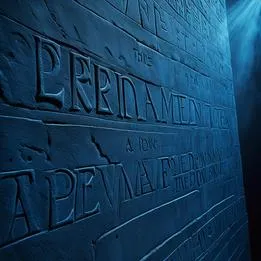
Inscription Dream Meaning
A permanent mark, carving, or writing on a surface, often carrying messages, records, or artistic expression meant to endure.
Common Appearances & Contexts
| Context | Emotion | Interpretation |
|---|---|---|
| Reading an inscription | Awe | Discovering profound wisdom. |
| Carving an inscription | Determination | Asserting personal legacy. |
| Inscription eroding | Anxiety | Fear of being forgotten. |
| Illegible inscription | Frustration | Truth is obscured. |
| Inscription on skin | Vulnerability | Identity is branded. |
| Inscription on a wall | Defiance | Public declaration made. |
| Inscription on a gift | Love | Personal, lasting connection. |
| Inscription in a tomb | Grief | Confronting mortality's record. |
| Inscription glowing | Wonder | Divine or magical message. |
| Inscription changing | Confusion | Unstable truth or memory. |
| Forging an inscription | Guilt | Creating a false record. |
| Finding hidden inscription | Excitement | Unearthing secret knowledge. |
Interpretive Themes
Cultural Lenses
Jungian Perspective
View Context →Represents the process of individuation; an inscription is a symbol from the collective unconscious making the personal psyche permanent, like carving the Self into stone from the formless.
Freudian Perspective
View Context →Often a phallic symbol of penetration (carving) or a representation of the superego's rigid, unchangeable rules and societal commandments etched into the psyche.
Gestalt Perspective
View Context →The inscription is an aspect of the self asking for integration. Who is the carver? The surface? The message? It represents a fixed part of your personality needing acknowledgment.
Cognitive Perspective
View Context →Reflects the brain's memory encoding processes or schema formation. The dream processes anxieties about information permanence, data storage, or the fear of cognitive decline eroding mental 'records'.
Evolutionary Perspective
View Context →Taps into deep-seated drives for social legacy and genetic immortality. Inscriptions simulate ritual marking of territory, tribal law, or ancestor veneration to ensure group cohesion and personal remembrance.
Middle Eastern Perspective
View Context →Deeply tied to divine revelation (e.g., tablets of law) and sacred calligraphy. Historically, inscriptions on monuments declared royal power; modernly, they signify unchangeable religious truth and artistic devotion.
East Asian Perspective
View Context →Connected to seals (chops) of authority, stone steles recording history, and poetic inscriptions on landscapes. It blends bureaucratic permanence, historical duty, and the artist's harmonious mark on nature.
European Perspective
View Context →Evokes classical epigraphy, medieval illuminated manuscripts, and Renaissance lapidary inscriptions. Historically signified law, lineage, and learning; modernly, it's associated with archaeological discovery and memorialization.
South Asian Perspective
View Context →Linked to sacred Sanskrit mantras carved into temple walls, Ashokan edicts on pillars spreading Buddhist law, and the concept of 'samskara' (mental impressions) as inscriptions on the soul.
African Perspective
View Context →Relates to scarification and body inscriptions as rites of passage, tribal identity, and beauty. Also connects to ancient rock art and proto-writing systems like Nsibidi, encoding secret societal knowledge.
Modern Western Perspective
View Context →Symbolizes digital data permanence (blockchain, hard drives), tattoo culture as personal narrative, and historical graffiti as social commentary. Represents anxiety about privacy versus the desire for a lasting digital footprint.
Global/Universal Perspective
View Context →A cross-cultural archetype of humanity's struggle against oblivion. From cave paintings to satellites, inscriptions represent the universal urge to communicate, record, and assert 'I was here' beyond a single lifespan.
Interpret Your Full Dream
Beyond this symbol, every dream carries a unique story. Share your dream for a personalized AI-powered interpretation.