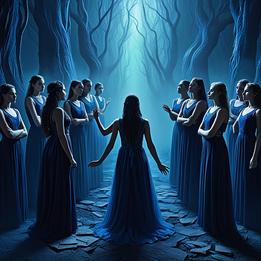
Ensemble
A group performing together, representing collaboration, harmony, and collective identity. It symbolizes the balance between individual contribution and group cohesion.
Ensemble Dream Meaning
A group performing together, representing collaboration, harmony, and collective identity. It symbolizes the balance between individual contribution and group cohesion.
Interpretive Themes
Mythological Resonance
The Muses
GreekThe nine goddesses of arts and sciences who inspired collective creation, representing how diverse talents harmonize to generate cultural beauty.
The Trimurti
HinduThe divine triad of Brahma (creation), Vishnu (preservation), and Shiva (destruction) working in cosmic ensemble to maintain universal balance.
Cultural Lenses
Jungian Perspective
View Context →Represents the collective unconscious and archetypal patterns of group dynamics. The ensemble symbolizes the integration of different aspects of the psyche into a harmonious whole, reflecting individuation through social roles.
Freudian Perspective
View Context →May symbolize repressed desires for social acceptance or fear of exposure. The ensemble could represent sublimated libidinal energy channeled into group performance, with instruments as phallic symbols.
Gestalt Perspective
View Context →The ensemble is greater than the sum of its parts. Dream interpretation focuses on the relationship between individual members and the whole, examining how each part contributes to the complete experience.
Cognitive Perspective
View Context →Reflects mental schemas about social cooperation and role expectations. The dream processes waking experiences of teamwork, using the ensemble as a metaphor for cognitive coordination in group tasks.
Evolutionary Perspective
View Context →Rooted in ancestral needs for group cohesion for survival. The ensemble symbolizes tribal cooperation mechanisms, where synchronized performance enhances social bonding and collective success against threats.
East Asian Perspective
View Context →In Confucian traditions, represents hierarchical harmony where each member knows their place. Historically seen in court orchestras, modernly reflects corporate teamwork emphasizing collective over individual achievement.
European Perspective
View Context →Classical orchestras symbolize Enlightenment ideals of rational order. Historically tied to royal courts, now represents cultural refinement and the balance between tradition and innovation in artistic expression.
African Perspective
View Context →Drum circles and vocal ensembles represent community storytelling and ancestral connection. Ritually used in ceremonies, modernly symbolizes diaspora identity and collective resistance through musical traditions.
Middle Eastern Perspective
View Context →Traditional ensembles like takht groups represent spiritual unity through intricate melodic patterns. Historically used in Sufi rituals, now symbolizes cultural preservation amidst modernization pressures.
South Asian Perspective
View Context →Raga ensembles represent cosmic harmony and devotional expression. Historically temple-based, modernly blends traditional structures with contemporary collaborations, symbolizing cultural synthesis.
Latin American Perspective
View Context →Mariachi or samba ensembles represent festive community identity and resistance. Historically rooted in indigenous and colonial fusion, now symbolizes national pride and social celebration.
Modern Western Perspective
View Context →Rock bands or corporate teams symbolize both creative collaboration and commercial pressure. Reflects contemporary tensions between artistic integrity and market demands in collaborative endeavors.
Historical Authorities
Want a deeper analysis?
Get a personalized interpretation of your entire dream including this symbol.
Interpret My DreamThe Oracle's Prediction
Combine multiple symbolsA collaborative opportunity will lead to significant professional advancement.
Timeframe
Seasonal (~3 Months)
Intensity
Deep
You will find or deepen a community that nourishes your soul.
Timeframe
Lunation (~29 Days)
Intensity
Deep
Common Appearances & Contexts
| Context | Emotion | Interpretation |
|---|---|---|
| Context Performing on stage | Emotion Pride | Interpretation Successful teamwork. |
| Context Missing a cue | Emotion Shame | Interpretation Fear of failure. |
| Context Leading the group | Emotion Confidence | Interpretation Leadership role. |
| Context Harmonizing perfectly | Emotion Joy | Interpretation Ideal collaboration. |
| Context Arguing over parts | Emotion Frustration | Interpretation Conflict in group. |
| Context Practicing endlessly | Emotion Determination | Interpretation Preparation phase. |
| Context Audience applauding | Emotion Validation | Interpretation Group recognition. |
| Context Instrument out of tune | Emotion Anxiety | Interpretation Disruption warning. |
| Context New member joining | Emotion Curiosity | Interpretation Change adaptation. |
| Context Solo overshadowing group | Emotion Resentment | Interpretation Ego conflict. |
| Context Silent rehearsal | Emotion Focus | Interpretation Internal preparation. |
| Context Sudden disbandment | Emotion Loss | Interpretation Group dissolution. |
Interpret Your Full Dream
Beyond this symbol, every dream carries a unique story. Share your dream for a personalized AI-powered interpretation.