
The Hidden Self: Recovering the Exiled Kingdom Within
The Somatic Echo
It begins not as a thought, but as a hollow. A subtle, gravitational pull in the solar plexus, a low-grade hum of absence behind the sternum. It is the body’s memory of a missing piece, a phantom limb of the soul. You move through your days with a quiet, unplaceable friction, as if wearing a garment woven with a single, crucial thread left unwoven. There is a sense of carrying a secret you have forgotten, of being a custodian to a sealed room in your own house. This is the somatic signature of the Hidden Self—not a monster in the basement, but a sovereign in exile. The dream is the courier, arriving in the dead of night to deliver the map to the throne room you sealed shut long ago.
The Dreamer's Log
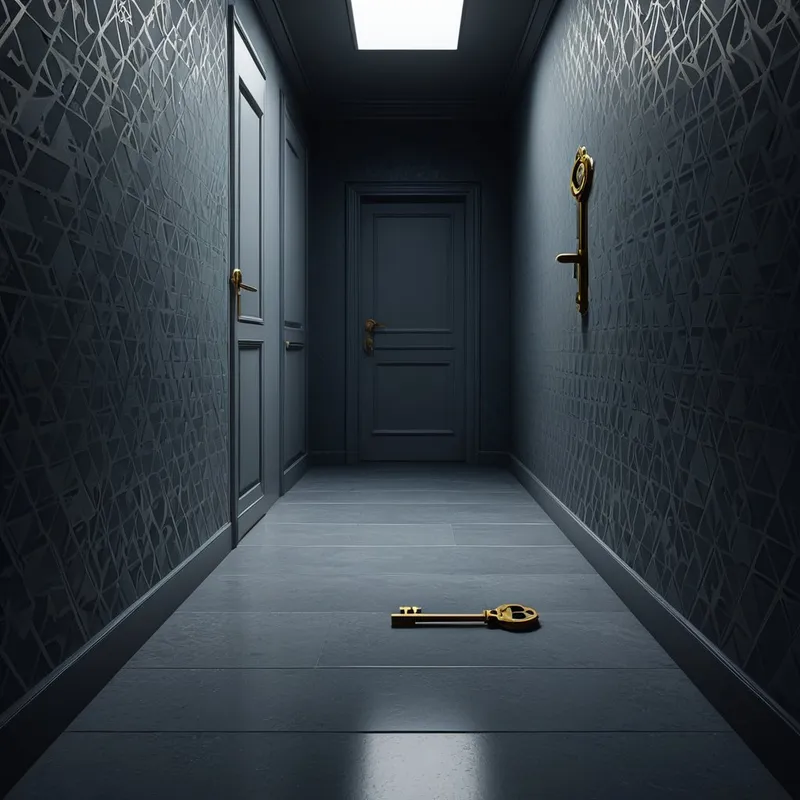
You are in your apartment, but it feels endless. You know, with dream-certainty, that there is a door you have never opened. You find it—a plain, featureless panel in the hallway wall. Behind it is not a room, but a vast, silent library of leather-bound books written in a language of light. You cannot read them, but their presence fills you with a grief so sweet it cracks your ribs.
This dream is an alchemical delivery: the psyche presenting the sealed archive of your unlived life, the untranslated text of your essence.
The False Lead
This theme is not about discovering a hidden talent for piano or a latent flair for drama. It is not a mere puzzle of personality to be solved. To mistake it for such is to confuse the crown for the kingdom. The Hidden Self is not a trait you lack, but a core stratum of being you have dis-associated from—often for survival. Its emergence is not a gentle unveiling but a tectonic reintegration, a re-membering of a self that was strategically forgotten. It is the difference between finding a lost coin and welcoming home a banished heir.
Psychological Architecture
The architecture of the Hidden Self is built from the mortar of necessary exile. In the internal family of the psyche, certain parts—the too-vulnerable child, the furious rebel, the ecstatic mystic, the potent sovereign—are often locked away. They threatened the cohesion of the fragile ego-structure we built to navigate the world. We did not hide them out of malice, but out of a desperate, childlike logic: This much feeling will shatter me. This much power will exile me. This much truth will destroy my world.
So, we construct an inner bureaucracy—a network of managers, firefighters, and exiles, to use the language of Internal Family Systems. The Hidden Self is the most sacred of these exiles. Shadow work, in this context, is not a heroic slaying of monsters, but a diplomatic mission into the interior. It is the slow, patient work of approaching the sealed door not with a crowbar, but with a lantern, announcing, “I am ready to hear your terms. I am ready to bear your weight.” Individuation demands we reclaim this lost ambassador from the hinterlands of our own soul, for wholeness is impossible while a rightful ruler remains in chains within our own borders.
Mythic Resonance
We see this eternal process in the myth of Psyche and Eros. Psyche is forbidden to look upon her divine lover, Eros. He is her hidden self, the animating spirit of her deepest life, which can only thrive in the dark, in the unseen. When she lifts the lamp, driven by doubt and human curiosity, he flees. Her entire heroic journey—the impossible tasks set by Aphrodite—is not to win him back, but to become capable of containing the reality of him. She must develop the sovereignty to hold the gaze of her own divine hiddenness without annihilating it or being annihilated by it. The union at the end is not a romance, but the integration of the mortal ego with the immortal, hidden self.
Symbolic Nodes
- Sealed/Unknown Rooms: Compartments of the psyche not yet integrated into conscious life.
- Forgotten/Lost Objects (Keys, Books, Chests): Latent knowledge, access, or legacy waiting to be reclaimed.
- Mirrors that Don't Reflect, or Show a Different Face: The confrontation with the self that exists outside the curated identity.
- Being Followed by a Silent, Unseen Presence: The persistent pressure of the exiled part seeking recognition.
- A Second, Hidden House Within Your House: The profound, often richer, inner life that exists parallel to the conscious one.
Archetypal Resonance
The energy of the Hidden Self most profoundly resonates with The Orphan Archetype—not in its shadow aspect of victimhood, but in its core essence as the Realist and the Survivor. The Orphan knows what it is to be cast out, to adapt, to make a life in the margins. The Hidden Self is the ultimate inner Orphan: the part of us that was sent away for its own safety or the safety of the system. Its resonance is felt in that somatic echo of hollow grief, the deep knowing of being separated from one's own source. The alchemical potential lies in the Orphan's journey: by acknowledging and integrating this exiled one, we move from merely surviving within a fractured self to becoming the sovereign who can finally grant sanctuary within. The reclaimed Orphan does not just return home; it teaches the ego what home truly is.
The Alchemical Process
The alchemical transmutation of the Hidden Self is the Opus Contra Naturum—the work against the nature of the defended ego. The base material is the leaden grief of exile, the heavy silence of the sealed room. The heat is applied not in a furnace, but in the unbearable tension of holding the contradiction: you must both respect the wisdom of the exile (it was hidden for a reason) and court the terror of its return.
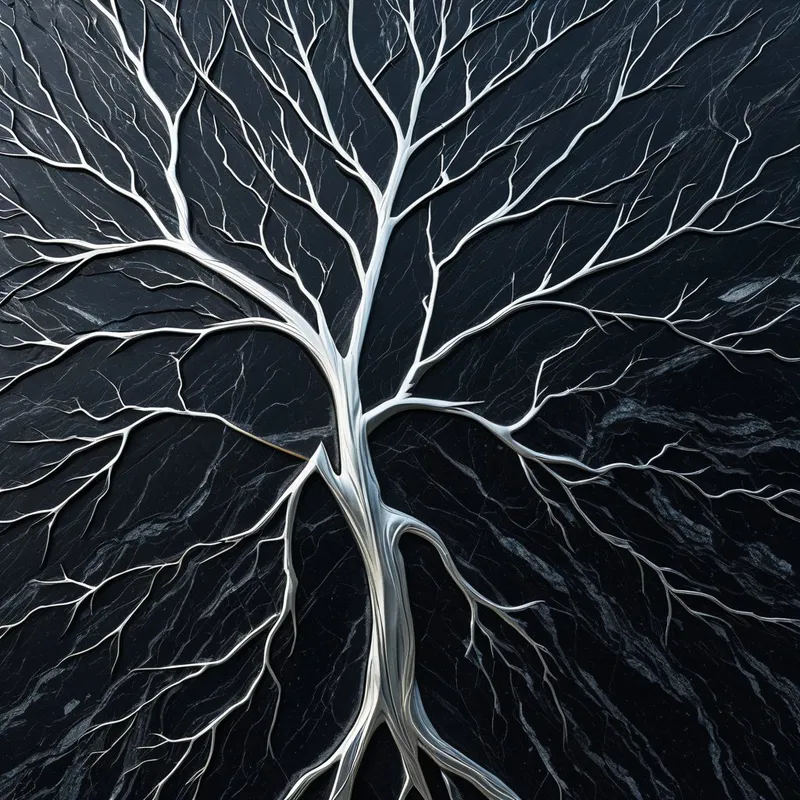
This is the nigredo, the blackening. It feels like a dissolution, a psychic death, as the old ego-structure that required the exile begins to soften. The pressure is the sustained, non-judgmental attention you must offer to the hollow feeling, to the dream image, to the grief. You do not analyze it; you attend to it as one would attend a sovereign. In this sacred heat, a separation occurs—not of parts, but of identity from identification. You are not the exile, nor are you the one who exiled it. You are the vessel in which this reunion is possible. The silver vein emerges in the granite: the hidden self begins to communicate, not as a trauma, but as a truth. The transmutation is into Sovereignty—the integrated self that can contain its own multiplicities without fracture.
The Integration Protocol
Question 1: Where in my body do I feel the presence of an absence? Can I describe its texture, temperature, and weight without trying to change it?
Question 2: What one memory, feeling, or capacity did I learn, as a child, was "too much" for my world to handle? Where might that exiled energy be living now?
Question 3: If the being behind the sealed door in my dream could send me one message, what would it be? Not in words, but as a pure sensation or knowing.
Action 1 (Somatic Anchoring): For one week, dedicate five minutes upon waking to lie still. Scan for that "hollow" or "pull." Instead of filling it with thought, imagine breathing into that space. Visualize the breath as a neutral, welcoming light, not to fix, but to acknowledge.
Action 2 (Unstructured Recoding): Take the central image from your "Dreamer's Log" (e.g., the library of light-books). Set a timer for 10 minutes and write from the perspective of that image. Let the library speak. Let the key describe its purpose. Do not write as yourself analyzing it; let the symbol author its own manifesto. This bypasses the ego's censors.
Action 3 (Ritual of Sanctuary): Create a small, physical "sanctuary" for your hidden self. This could be a corner of a shelf, a box, or a digital folder. Place within it one object, image, or word that hints at the exiled quality without defining it—something ambiguous, beautiful, and slightly mysterious to your logical mind. Visit it not to analyze, but to simply acknowledge, "This is for you. You have a place here."
Final Validation
To dream of the Hidden Self is to be entrusted with a profound and difficult grace. It means your psyche believes you are strong enough to begin the homecoming. The grief you feel is not a sign of brokenness, but a testament to the value of what was lost—it is the love you could not afford to feel at the moment of exile, returning with compound interest. This work is not about becoming someone new, but about ceasing to abandon who you always were. The door is not locked against you. It was locked for you. And now, the key, warm from the grip of your own dreaming hand, is waiting in the hall.