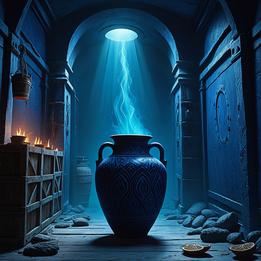
Amphora
An ancient storage vessel symbolizing preservation, cultural heritage, and the containment of valuable substances like wine, oil, or ashes.
Amphora Dream Meaning
An ancient storage vessel symbolizing preservation, cultural heritage, and the containment of valuable substances like wine, oil, or ashes.
Interpretive Themes
Cultural Lenses
Jungian Perspective
View Context →Represents the 'vessel' archetype—a container for the unconscious, symbolizing the Self's potential to hold and integrate psychic contents. Historically used in rituals, it mirrors the psyche's capacity for transformation.
Freudian Perspective
View Context →Often symbolizes the womb or female sexuality due to its shape and function of containment. May represent repressed desires or the nurturing aspect, linked to early developmental stages and unconscious drives.
Gestalt Perspective
View Context →Seen as a projection of the dreamer's self—what is being 'contained' or 'preserved' reflects current life aspects. The amphora's condition (e.g., full, broken) mirrors personal state or unfinished business.
Cognitive Perspective
View Context →A memory schema related to storage or history, possibly triggered by recent exposure to ancient artifacts. It processes concepts of preservation, value, and cultural narratives, influencing problem-solving or emotional regulation.
Evolutionary Perspective
View Context →Taps into ancient human adaptations for resource storage and survival. Symbolizes communal sharing (e.g., wine), ritual bonding, or territorial markers, reflecting ingrained behaviors for social cohesion and legacy.
Global/Universal Perspective
View Context →A cross-cultural symbol of storage and transport, from Greek wine vessels to Roman ash urns. Universally represents containment, preservation, and the human need to safeguard valuables across eras and societies.
East Asian Perspective
View Context →In Chinese and Korean traditions, similar ceramic jars symbolize harmony, prosperity, and ancestral reverence. Used in rituals for offerings, they represent balance (yin-yang) and the flow of qi or spiritual energy.
South Asian Perspective
View Context →In Hindu and Buddhist contexts, vessels like kalasha hold sacred water, symbolizing purity, abundance, and the cosmos. They are used in pujas, representing divine presence and life-sustaining forces.
Middle Eastern Perspective
View Context →Ancient Mesopotamian and Egyptian amphorae stored oils and grains, linked to trade, divinity, and the afterlife. In Islamic art, they symbolize hospitality and spiritual nourishment, often depicted in mosaics.
European Perspective
View Context →Greek and Roman amphorae were central to economy, ritual, and burial. They symbolize classical heritage, democracy (shared wine), and mortality (as funerary urns), influencing Western art and archaeology.
African Perspective
View Context →In cultures like the Nok or Ancient Egypt, ceramic vessels held spiritual significance for rituals, ancestor worship, and trade. They symbolize community, continuity, and the earth's fertility in many traditions.
Latin American Perspective
View Context →Pre-Columbian amphorae from Maya or Inca cultures stored chicha or offerings, representing cosmological order and agricultural cycles. Modern views blend indigenous heritage with colonial influences in art.
Want a deeper analysis?
Get a personalized interpretation of your entire dream including this symbol.
Interpret My DreamCommon Appearances & Contexts
| Context | Emotion | Interpretation |
|---|---|---|
| Context Carrying amphora | Emotion Responsibility | Interpretation Bearing important legacy. |
| Context Breaking amphora | Emotion Loss | Interpretation Release of contained emotions. |
| Context Filling amphora | Emotion Accomplishment | Interpretation Gathering valuable resources. |
| Context Empty amphora | Emotion Longing | Interpretation Desire for fulfillment. |
| Context Ancient amphora | Emotion Awe | Interpretation Connection to antiquity. |
| Context Selling amphora | Emotion Betrayal | Interpretation Parting with heritage. |
| Context Burying amphora | Emotion Secrecy | Interpretation Hiding something precious. |
| Context Amphora on ship | Emotion Adventure | Interpretation Journey with valuables. |
| Context Decorated amphora | Emotion Pride | Interpretation Display of artistry. |
| Context Amphora in museum | Emotion Reverence | Interpretation Valuing history. |
| Context Amphora as urn | Emotion Grief | Interpretation Memorializing the past. |
| Context Amphora in market | Emotion Curiosity | Interpretation Seeking treasures. |
Interpret Your Full Dream
Beyond this symbol, every dream carries a unique story. Share your dream for a personalized AI-powered interpretation.