
Yoruba Diaspora in the Americas Myth Meaning & Symbolism
A myth of souls scattered across the ocean, remembering their names through drumbeats, surviving within new forms, and forging an unbreakable spiritual bridge.
The Tale of Yoruba Diaspora in the Americas
Listen. The story begins not on the shore, but in the breaking.
The world cracked. The firmament, held aloft by the hands of Olodumare, shuddered. A great tearing sound, louder than the thunder of Shango, ripped through the soul of the land. It was the sound of roots being ripped from the red earth of Ile-Ife. It was the sound of names being stolen from tongues.
They were taken, the children of Oduduwa, not in battle, but in a bewildering twilight of chains and confusion. The iron felt cold, a foreign element, a perversion of Ogun’s sacred metal. The ships were wooden bellies, groaning beasts that swallowed them whole. In that darkness, the air thick with salt and despair, they could not see the moon, Oshun’s mirror. They could not feel the earth, Oya’s body. They were orphans in a void, suspended between the world they knew and a terror unknown.
But in that hold, a whisper began. It was not a word, but a pulse. A grandmother, her bones pressed against the hull, tapped a rhythm against the wood. Dun… dun-dun… It was the heartbeat of the earth. A man, his spirit bruised but unbroken, hummed a fragment of a chant to Yemoja. The fragments swirled in the dark—a piece of a name, a shard of a melody, the ghost of a dance step. They were gathering the scattered pieces of their soul.
The ocean, Yemoja’s domain, raged. She was both womb and tomb, testing them. Some she took to her breast, giving them a gentler sleep. Others she spat onto strange, hard shores—lands of bitter cane and cruel sun. Here, the masters tried to break the rhythm. They forbade the drums, the language, the names of the gods.
But the gods are not so easily dismissed. Shango did not die; he hid in the crack of the overseer’s whip, in the sudden summer storm. Oshun did not vanish; she flowed in the tears of a woman singing a work song, in the honey offered in secret. Ogun did not abandon them; he lived in the machete that cleared the field, in the determination to survive.
They performed the rites in whispers. They fed the gods with what they had—cornmeal became Oya’s ebo, river water became Oshun’s shrine. They gave the gods new names—Yemoja became Yemaya, Shango became Chango—masks that allowed the essence to walk in a new world. The dance continued in the sway of a Baptist choir, the spirit-possession in the ecstatic shout of a revival. The diaspora was not an end, but a desperate, brilliant act of spiritual metamorphosis. The bridge was built not of wood, but of memory, and it held.
Cultural Origins & Context
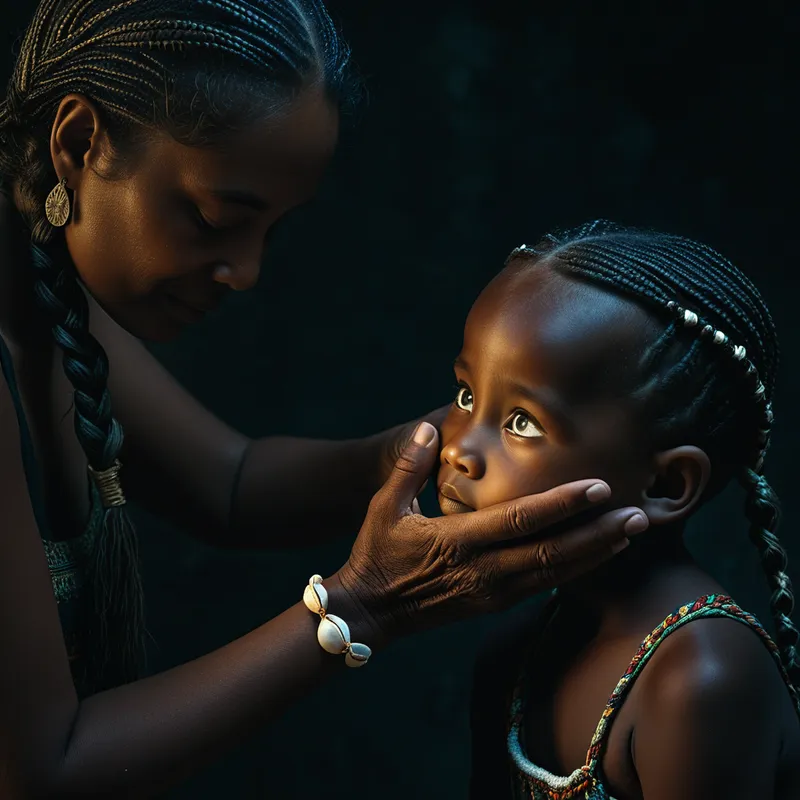
This is not a single myth from a dusty tome, but a living, breathing narrative woven from the collective trauma and triumph of the Atlantic Slave Trade as experienced by the Yoruba people. Its “authors” are the millions who endured the Middle Passage from the Bight of Benin, primarily in the 18th and 19th centuries, to places like Cuba, Brazil, Trinidad, and the United States. The story is passed down not linearly, but spirally—through the rhythms of the batá drum in Cuba, the intricate steps of Candomblé in Brazil, the sung sermons of the Black church, the coded quilts, the family recipes, and the very syntax of Creole languages.
Its societal function is paramount: survival and identity re-creation. In the face of systematic cultural genocide, this narrative—this understanding of their journey as a spiritual trial orchestrated by the Orisha—provided a framework to make meaning of the unimaginable. It transformed victims of history into protagonists of a cosmic drama. It asserted that their essence, their ayanmo, could not be destroyed, only disguised and ultimately reborn. The myth served as a map for navigating a hostile new world while maintaining a psychic connection to the ancestral homeland, Ile-Ife.
Symbolic Architecture
The myth’s core is the symbolic death and rebirth of the soul under duress. The Middle Passage is the ultimate katabasis, a forced journey to the underworld of the ship’s hold and the oceanic abyss. The scattering of the people represents the fragmentation of the psyche under trauma—the loss of language, family, and social structure mirroring the disintegration of a coherent sense of self.
The ocean is not merely water; it is the amniotic fluid of a painful rebirth and the cemetery of a murdered past. To cross it is to be dissolved and reconstituted.
The Orisha going into hiding, taking on Catholic saint names (a process called syncretism), symbolizes the necessary survival strategy of the unconscious. When the conscious ego (the open practice of tradition) is threatened with annihilation, the core archetypal energies (the gods) retreat into the personal and collective shadow, adopting acceptable disguises to continue influencing the individual and the community. The drum, forbidden, moving into the heartbeat and the clap, represents the indomitable pulse of life and memory that cannot be legislated away.
The Dreamer’s Resonance
When this mythic pattern stirs in the modern dreamer, it often signals a profound process of psychic displacement and re-membering. One may dream of being in a vast, featureless airport terminal (the holding area), missing a flight to a forgotten homeland, or speaking a language no one understands. These are dreams of the orphaned Self.
Somatically, this can feel like a deep, ancestral grief—a weight in the chest, a tightening in the throat (the stifled chant). Psychologically, it is the process of confronting a “middle passage” in one’s own life: a divorce, an immigration, a career loss, any event that severs you from your known identity and community. The dream-ego is in the hold, and the task is to begin the whisper, to find the fragmented pieces of one’s own spirit—the forgotten talents, the repressed emotions, the ancestral wounds—and start tapping them back into a rhythm. The dream may present a cryptic symbol (a cowrie shell, a specific color, a piece of cloth) that serves as the first thread to pull to begin re-weaving the self.

Alchemical Translation
For the individual, this myth models the alchemy of individuation through diaspora. It is a map for transforming catastrophic loss into resilient identity. The first stage is the Nigredo: the brutal, involuntary dissolution. This is the experience of psychological slavery—to an addiction, a toxic relationship, a crippling belief system. One is chained and taken from the “land” of the old personality.
The Albedo, the washing, occurs in the ocean of tears, grief, and therapy. Here, in the salty darkness, one must do the work of the hold: listening for the inner whisper, gathering the shards. This is shadow work—recognizing the Orisha within that have gone into hiding. Perhaps your creative Oshun is disguised as compulsive shopping. Your assertive Shango is masked as explosive rage.
The triumph is not in returning to a pristine past, but in performing a sacred act of translation: rendering the essence of your soul into a language the new world of your psyche can understand.
The Rubedo, the reddening or culmination, is the establishment of a sustainable inner practice. It is building your own ile (house) within. You learn the new names for your powers. You feed them with conscious attention (your modern ebo). You no longer live as a captive in a foreign land of your own making, but as a sovereign spirit who has mastered the art of carrying home within, building an unbreakable bridge between who you were, what you suffered, and who you are becoming.
Associated Symbols
Explore related symbols from the CaleaDream lexicon:
- Ocean — The great, terrifying womb-tomb of transformation, representing both the dissolution of the old self in the Middle Passage and the vast, maternal depth of the unconscious from which new forms emerge.
- Bridge — The spiritual and psychological construct of memory and practice that connects the shattered past to the living present, allowing the essence of the soul to cross the abyss of trauma.
- Mask — The necessary disguise adopted by the gods and the self for survival, symbolizing syncretism, the protective persona, and the archetype’s ability to wear different forms while retaining its core power.
- Drum — The unstoppable heartbeat of ancestral memory and cultural continuity, persisting even when silenced outwardly, moving inward to become the rhythm of the breath and the pulse of resilience.
- Root — The connection to the ancestral homeland and original identity that is violently severed, yet continues to seek nourishment and anchor the spirit in foreign soil.
- Ritual — The coded, often hidden acts of remembrance and worship that re-member the fragmented community and psyche, turning mundane actions into vessels of profound meaning.
- Spirit — The indestructible essence, the emi, that cannot be enslaved or erased, which undertakes the journey and drives the process of metamorphosis and survival.
- Name — The sacred word of identity and destiny that is stolen and must be recovered or re-forged in exile, representing the struggle for self-definition against forces of annihilation.
- Tears — The sacred waters of Oshun, representing the flood of grief that cleanses, the emotional currency of memory, and the transformative fluid of deep feeling.
- Iron — The metal of Ogun, symbolizing both the chains of bondage and the tools of liberation, the double-edged nature of technology and will used for oppression and for cutting a path to freedom.
- Dance — The embodied memory and kinetic prayer, the way the story is told with the whole body when words are forbidden, keeping the archetypes alive in muscle and motion.
- Seed — The potential for life and regeneration carried within the scattered people, containing the blueprint of the future culture and identity that will grow in seemingly infertile ground.