
Xochipilli Myth Meaning & Symbolism
The myth of the Flower Prince, a deity of art, beauty, sacred plants, and ecstatic joy, who embodies the soul's deepest longing for divine intoxication.
The Tale of Xochipilli
Listen. The air is thick with the perfume of a thousand blossoms. Not the tame scent of garden flowers, but the wild, intoxicating breath of the jungle after the first rains—of ololiuhqui, of the sacred mushroom, of datura that opens the gates of vision. In this realm of eternal midsummer twilight, where hummingbirds are emerald flashes and butterflies are fragments of the sun, a figure stirs.
He is not a god of thunder or war. His throne is not of stone, but of woven vines and soft moss. He is Xochipilli, and his body is a living tapestry. Flowers bloom from his joints; his skin is painted with the swirling patterns of petals and serpentine stems. He does not speak in commands, but in melodies that rise from the throats of unseen birds and in the rustling poetry of leaves.
His story is not one of conquest, but of descent—a descent into the very heart of sensation. One cycle of the world, a pall fell over the land. Laughter grew thin. Songs became dirges. The dance lost its rhythm, and the hearts of the people turned as hard and dry as clay. The world was forgetting how to feel.
Xochipilli saw this withering. He did not raise an army. Instead, he closed his eyes and began to dance. His feet beat a rhythm on the soft earth, a pulse that traveled down through roots and mycelial threads, awakening the sleeping spirits of the plants. He sang a note so pure it cracked the shell of mundane perception. And then, he reached out. Not with his hands, but with his spirit.
He plunged his awareness into the crimson heart of the poppy, the dizzying spiral of the morning glory, the silent, earth-born wisdom of the mushroom. He drank the essence of intoxication, not to flee the world, but to marry it—to fuse the ecstasy of the spirit with the sensuality of the flesh. He absorbed the visions, the terror and the beauty, the laughter that bubbles up from the abyss, the erotic pulse of life itself.
He emerged transformed, radiating not light, but a palpable field of feeling. Where he walked, color intensified. Music found its lost harmonies. Lovers felt their connection as a tangible, golden thread. Artists saw the patterns of the cosmos in the flight of a bee. He became the living bridge between the sober, suffering world and the divine madness of creation. The conflict was the numbness of the soul; the resolution was an ecstatic, embodied re-enchantment. The Prince had opened the gates, not to a distant heaven, but to the sacred paradise hidden within a single, deeply felt moment.
Cultural Origins & Context
The myth of Xochipilli finds its roots in the rich, complex, and often paradoxical soil of Mexica civilization. He was not a peripheral figure, but a central deity in the pantheon of a people who held a profound, dualistic view of existence: life and death, order and chaos, sacrifice and abundance were inextricably linked. His cult was prominent among poets (cuicapicque), musicians, dancers, and artisans—the creators who shaped the beauty and meaning of the world.
His stories and essence were passed down not through epic tales of battle, but through ritual, song (cuicatl), and the sacred pageantry of festivals. During the festival of Etzalcualiztli, his likeness, adorned with fresh flowers, was venerated. His myth served a vital societal function: it sanctified the human experiences of joy, pleasure, artistic creation, and even the sacred intoxication sought through entheogenic plants. In a world rigidly structured by calendrical cycles and the grim necessity of solar nourishment through sacrifice, Xochipilli’s domain offered a sanctioned, necessary release—a divine reminder that to be fully human was also to experience beauty, ecstasy, and creative overflow.
Symbolic Architecture
Xochipilli is not merely a "god of fun." He is the archetypal embodiment of the spirit made flesh through ecstatic experience. His symbols form a coherent psychic architecture:
- The Flowers & Butterflies: These are not decorative. They represent the soul (tonalli) in its most beautiful, fleeting, and transformative state. The butterfly, specifically, is the soul emerging from the chrysalis of ordinary consciousness.
- The Hallucinogenic Plants: Mushrooms, morning glories, and others are the "keys" or the "sacred technology." They symbolize the deliberate dissolution of the ego's boundaries to achieve communion with the non-ordinary, animistic reality of the world.
- Music, Dance, and Games: These represent the expression of the inner revelation. The ecstatic state is not for hoarding; it must flow outward as creativity, connection, and playful engagement with life.
Ecstasy is not an escape from the self, but the terrifying and beautiful process of the self dissolving into a vaster pattern of life, only to return, re-membered and re-enchanted.
Psychologically, Xochipilli represents the Eros principle in its most profound sense—not merely sexual love, but the force of attraction, connection, creativity, and the yearning for joyous union with all that is. He is the antidote to psychic atrophy, to the deadening of feeling under the weight of duty, trauma, or mere routine.
The Dreamer's Resonance
When the pattern of Xochipilli stirs in the modern dreamer, it signals a deep somatic and psychological process: the unconscious demand for re-sensitization. The psyche is parched for authentic feeling and unmediated experience.
You may dream of:
- Vivid, overwhelming gardens where flowers have faces or sing.
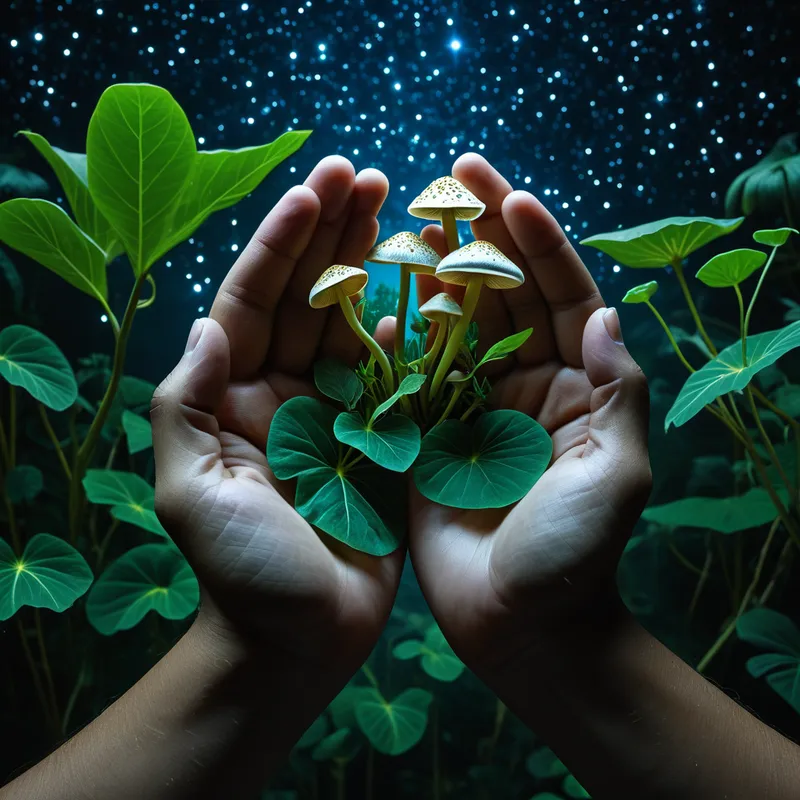
- Finding strange, beautiful fungi that glow with inner light.
- Experiencing spontaneous, uncontrollable dancing or singing of a language you don't know but deeply feel.
- A figure who touches you, not with hands, but with waves of pure emotion—joy, sorrow, awe—flooding your body.
These are not random hallucinations. They are the psyche's attempt to reboot the feeling function, to break through the anesthetic of daily life. The somatic process is one of awakening the nervous system to a wider spectrum of vibration—from pleasure to awe to sacred terror. It is the body dreaming of being fully alive, of feeling its connection to the biological and cosmic web without the filter of the analyzing mind. The conflict in the dream is often the dreamer's own resistance, their fear of losing control, of being overwhelmed by the sheer intensity of being.

Alchemical Translation
The myth of Xochipilli models a precise alchemy of individuation: the transmutation of leadened consciousness into golden awareness through ecstatic dissolution.
The modern individual often lives in a state of psychic "soberness"—identified with their persona, their burdens, their isolating ego-structure. This is the prima materia, the heavy, inert lead. The call of Xochipilli is the call to the nigredo, not through despair, but through the voluntary, sacred intoxication of the soul. It is the willingness to "take the plant," to allow the rigid structures of the self to soften, melt, and dissolve in the ferment of feeling and vision.
This is the solutio—dissolution in the waters of the unconscious, in the sap of life. It is terrifying, for it feels like madness, like a loss of self.
The alchemy of ecstasy requires the courage to be annihilated by beauty, to let the known self die in the flower's bloom, so a more authentic one may be pollinated by the cosmos.
But from this dissolution comes the albedo, the whitening: the purification and illumination. One sees the interconnectedness of all things, not as an idea, but as a felt, embodied truth. The final stage is the rubedo, the reddening or embodiment. The gold is not kept in a spiritual vault. Like Xochipilli, the individual must return, bearing the gifts. The ecstatic insight must be woven back into life—as art, as deeper human connection, as a more compassionate and joyous engagement with the world. The transformed self is no longer a isolated unit, but a flowering node in the living network, a prince or princess of the ever-unfolding, sensuous, and heartbreakingly beautiful dream of existence.
Associated Symbols
Explore related symbols from the CaleaDream lexicon: