Tsam Ceremony Origin Myth Meaning & Symbolism
A mythic tale of a divine protector subduing a primordial chaos spirit through sacred dance, birthing a ritual of cosmic balance and psychological integration.
The Tale of Tsam Ceremony Origin
Listen. Before the world settled into its rhythms, when the winds of the high steppe still carried the whispers of unformed things, a shadow grew in the north. It was not a shadow cast by mountain or cloud, but a living darkness, a coalescence of primal chaos and untamed fear. Its name was Lhamo, a spirit of such potent disorder that the very earth trembled, rivers ran backwards, and the minds of people were clouded with madness and strife.
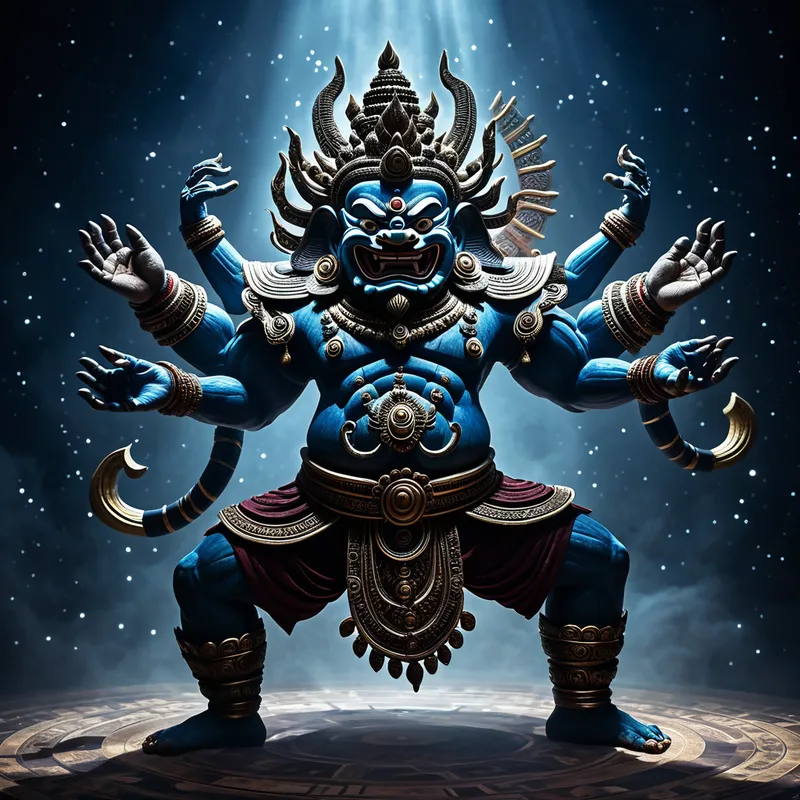
Into this turmoil came a being of luminous resolve. He was not born of the earth but of a vow—the vow to protect the sacred teachings and all sentient beings. He was Mahakala, the Great Black One. His form was terrible to behold, a symphony of divine wrath: skin the blue-black of a midnight storm, a crown of skulls, eyes burning with the fire of wisdom that sees through all illusion. In his many hands, he held the tools of transformation: a curved knife to cut ignorance, a skull-cup brimming with the nectar of realization.
The confrontation was not of brute force, but of essence. Lhamo swirled, a tempest of formless rage, shrieking promises of endless winter and shattered minds. Mahakala did not strike. He began to move. His steps were not a march to war, but a dance—a precise, powerful, utterly controlled dance. Each stomp of his foot mapped a sacred mandala onto the chaotic ground. Each gesture of his arms wove a net of cosmic order from the threads of disorder. The dance was a language older than words, a geometry of the spirit.
Lhamo raged, but found its chaotic strikes met not with opposition, but with absorption. The dance did not seek to annihilate the shadow, but to encompass it, to give its wild energy a form, a role, a place within the greater pattern. The struggle lasted for an acon, the dance etching its truth into the fabric of reality. Finally, exhausted and transformed, the spirit of Lhamo submitted. Its chaotic energy was not destroyed, but bound into a new, potent shape—a mask, a visage of its former self, now frozen in a ritualized expression of its own nature.
Mahakala, his dance complete, imparted this sacred choreography to the first lama. “This,” he intoned, his voice the rumble of distant thunder, “is the Tsam. Perform it. Let the dance be a mirror, a field where chaos is met not with fear, but with sacred movement. Let the mask give form to the formless, so it may be seen, known, and ultimately, pacified.” And so, the ceremony was born—not as a mere performance, but as a living re-enactment of the cosmos taming its own wild heart.
Cultural Origins & Context
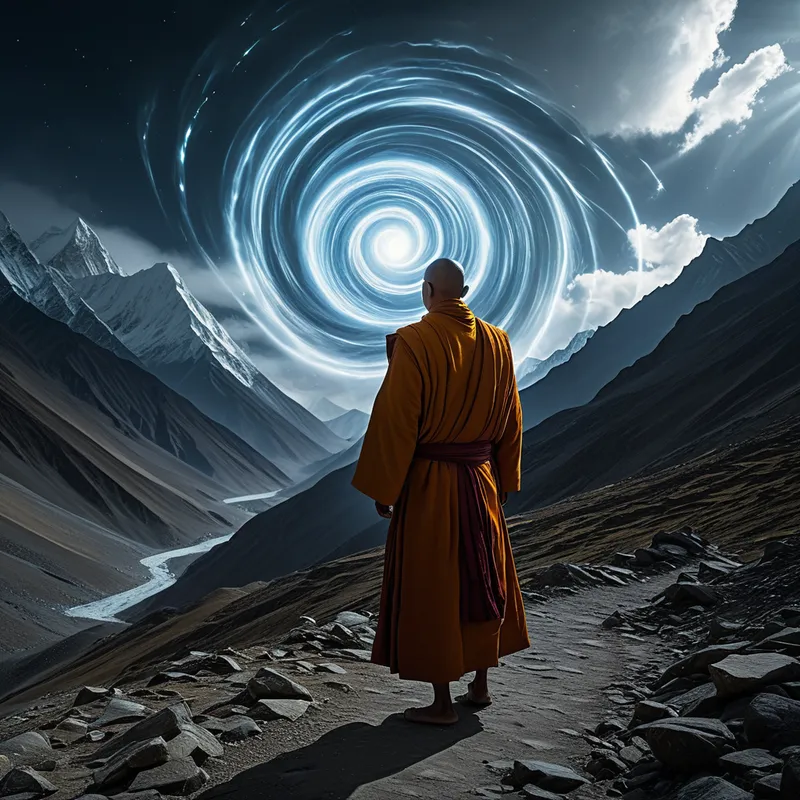
The myth of the Tsam’s origin is inextricably woven into the spiritual tapestry of Mongolia following the widespread adoption of Tibetan Buddhism, particularly in its Vajrayana form, from the 16th century onward. This was not a passive import but a dynamic synthesis, where the nomadic, shamanic soul of Mongolia met the intricate philosophical and ritual structures of Buddhism. The Tsam ceremony became a primary vessel for this synthesis.
The myth was transmitted orally by lamas and storytellers within monastic communities, most notably those of the Gelug and Nyingma traditions. Its societal function was multifaceted. On one level, it was a public teaching—a vibrant, theatrical sermon for a largely non-literate populace, illustrating the triumph of enlightened compassion (Mahakala) over destructive ignorance (Lhamo). On another, it was a profound communal exorcism. By ritually invoking and then subduing chaotic forces, the ceremony was believed to purify the local environment, ward off misfortune, and restore spiritual and social harmony for the coming year. It served as a powerful reminder that order is not a static state, but an active, danced-into-being achievement.
Symbolic Architecture
At its core, the myth presents a masterful blueprint for the relationship between consciousness and the unconscious, between structure and chaos.
The mask does not hide the demon; it reveals it, giving the unseen a face so it may be confronted in the sacred arena of ritual.
Mahakala represents the active, discerning power of the awakened mind. His wrath is not hatred, but the fierce, focused energy required to engage directly with the shadowy contents of the psyche and the world. He is the archetype of the Magician, who transforms base elements (chaos) into spiritual gold (sacred order) through precise, symbolic action.
Lhamo is the personified shadow—the sum total of repressed fears, untamed instincts, and psychic chaos that threatens to destabilize the individual and the collective. The myth wisely understands that this energy cannot be simply ignored or wished away; it must be engaged.
The Tsam dance itself is the transformative process. It is the ritual container, the temenos, where the encounter occurs. The choreography is a symbolic language, a moving mandala that creates a bounded psychic space. Within this space, the chaotic shadow (the dancer wearing the Lhamo mask) is allowed full expression, but only within the strict, sacred geometry of the dance led by the Mahakala figure. This is the essence of integration: not destruction, but conscious relationship and redirection.
The Dreamer’s Resonance
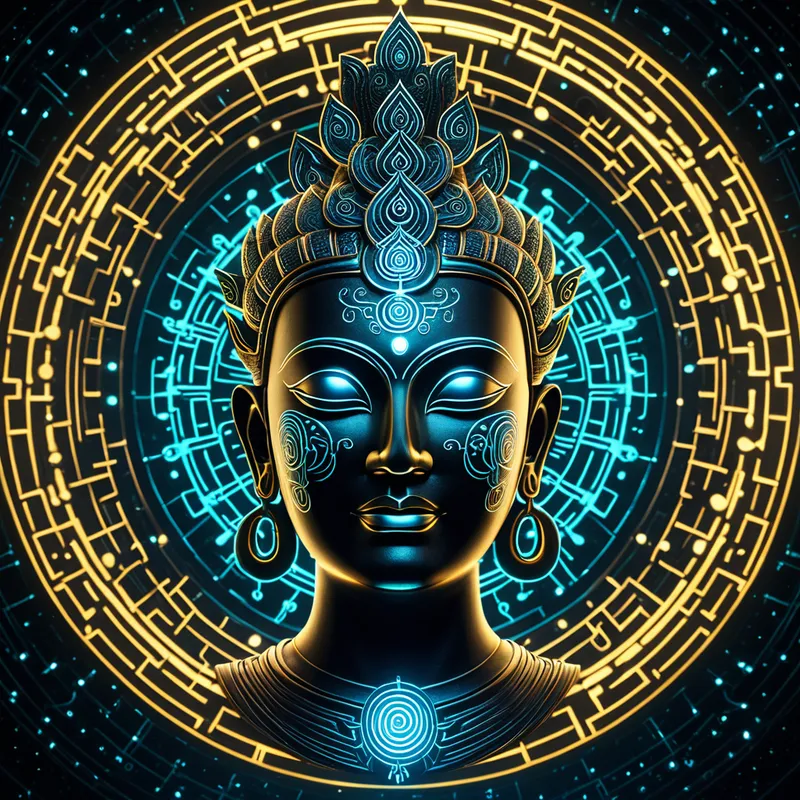
When this mythic pattern stirs in the modern dreamscape, it often signals a profound encounter with one’s own shadow. The dreamer may find themselves in a chaotic, threatening landscape—a swirling storm, a collapsing building, or facing a monstrous, formless presence. This is the somatic echo of Lhamo, the unintegrated chaos within.
The critical turn in such a dream is not the arrival of a savior, but the emergence of a capacity for ritual action. The dream ego may begin to move in a specific, patterned way, trace a symbol in the air, or don a garment of authority. This is the nascent Mahakala energy awakening. The psyche is attempting to create an internal “Tsam”—a structured, conscious process to meet the disintegrating fear. The dream is a rehearsal for psychic transmutation, where the overwhelming affect is being given a form (the mask) so it can be danced with, rather than being fled from or fought in a futile, exhausting battle.
Alchemical Translation
For the modern individual navigating a world of internal and external chaos, the Tsam origin myth models the alchemical stage of nigredo and its transformation. The first step is the honest acknowledgment of the inner Lhamo—the rage, shame, fear, or compulsive patterns that disrupt our inner peace.
Individuation begins not with achieving perfection, but with inviting one’s own chaos to the dance.
The Mahakala principle is then invoked. This is not a violent suppression, but the application of disciplined awareness (the dance steps). It is the commitment to a daily practice—journaling, meditation, therapy, artistic expression—that creates the sacred container. Within this container, we consciously “dance” with our shadow material. We give it a voice in a controlled setting, we observe its patterns, we trace its origins without being consumed by it.
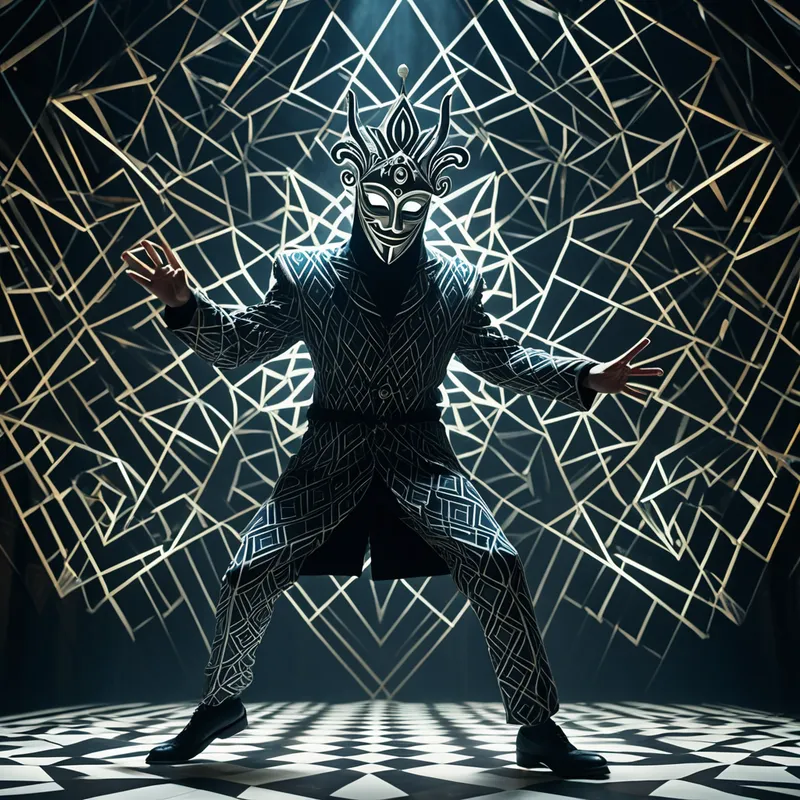
The final act of alchemy is the creation of the “mask.” This is the symbolic, integrated form the chaotic energy takes once it has been worked with. A fierce temper might be transformed into the ability to set strong boundaries (a protective mask). A deep grief might become a well of compassion for others (a mask of the weeping bodhisattva). The energy is not gone; it is redeemed, repurposed within the larger, more conscious structure of the Self. The individual becomes both the dancer and the choreographer of their own being, capable of holding both order and the creative potential of chaos in a dynamic, sacred balance.
Associated Symbols
Explore related symbols from the CaleaDream lexicon:
- Mask — The central artifact of the Tsam, representing the act of giving a conscious, ritualized form to unconscious, chaotic energies so they may be safely witnessed and integrated.
- Dance — The transformative process itself; the sacred movement that creates order from chaos, modeling the conscious engagement with psychic content.
- Chaos — The primordial, untamed force represented by Lhamo, symbolizing the raw, disorganized potential of the unconscious that precedes creation and order.
- Order — The sacred structure imposed by the dance of Mahakala, representing the conscious ego’s necessary role in creating psychic stability and meaning.
- Ritual — The prescribed, symbolic container of the Tsam ceremony, which provides a safe and potent framework for encountering and transmuting shadow elements.
- Shadow — The psychological counterpart to Lhamo, encompassing all the repressed, denied, or feared aspects of the individual psyche that demand recognition.
- Ceremony — The full, communal enactment of the myth, representing the collective and individual commitment to the ongoing work of balancing cosmic and psychic forces.
- Origin — The mythic moment of inception, pointing to the deep, archetypal source of practices that mediate between the human and the divine, the conscious and the unconscious.
- God — Represented by Mahakala, not as a distant ruler, but as an immanent, active principle of enlightened power that engages directly with darkness to transform it.
- Spirit — The ambiguous nature of Lhamo, a non-corporeal force of influence that can be destructive or, once integrated, a source of potent energy.
- Transformation — The core purpose of the entire mythic cycle; the alchemical change of chaotic spirit into sacred mask, of terror into ritual, of shadow into acknowledged part of the self.