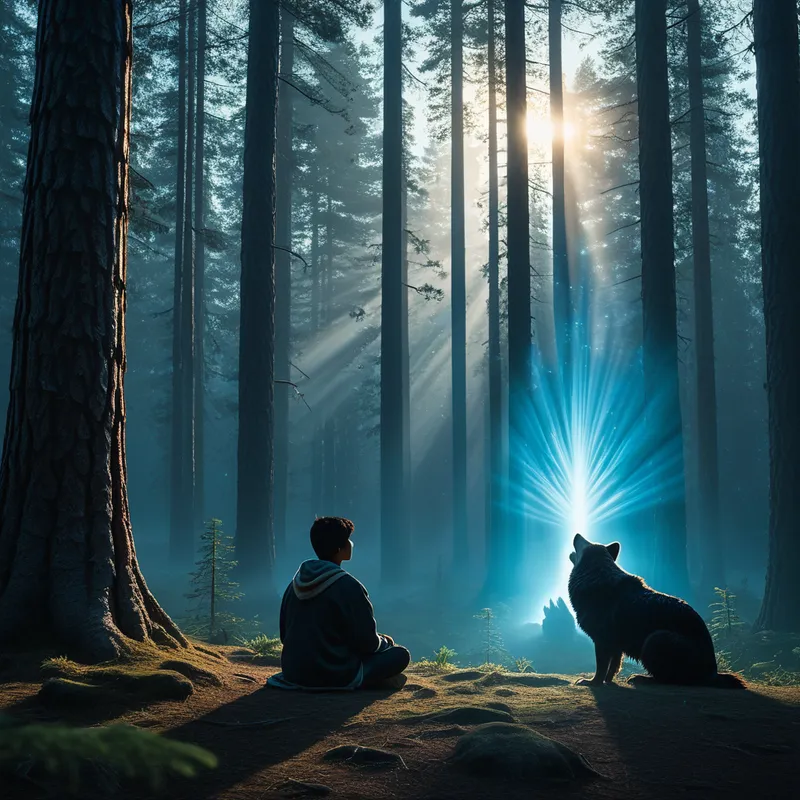
Totem Animals Myth Meaning & Symbolism
A myth where humans receive spirit animal guides through vision quests, forging a sacred bond that defines identity, duty, and connection to the living world.
The Tale of Totem Animals
Listen. The world was not always separate. In the time before time, when the breath of the Creator still warmed the clay of the first people, the animals spoke with human tongues. They walked as brothers and sisters under the same sun, drank from the same streams. But as the people multiplied and their villages grew, a silence began to fall. The songs of the wolf grew distant. The wisdom of the bear became a rumble in the hills, not words in the ear. The people felt a loneliness in their souls, a hollow place where their true name should be.
It was in this longing that the first seeker went out. A young one, heart aching with questions the elders could not answer: "Who am I? Where do I belong?" Instructed by a grandmother whose eyes held the depth of night, they prepared. They fasted, purifying the body. They prayed, emptying the mind of village noise. Then, they walked alone into the embrace of the mountains, to a high place where the wind scours the rock clean.
For four days and nights, they sat. Hunger carved a space inside them. Thirst made their vision sharp. They watched the eagle carve circles in the sky, the patience of the spider weaving its web, the sudden, fierce grace of the puma flowing over stone. They were a vessel, empty and waiting. On the fourth night, as a cold moon rose, exhaustion took them. In that thin place between waking and sleeping, the world shifted.
The mountain itself seemed to breathe. From the starlit forest, a presence approached. Not with sound, but with a weight in the air, a scent of pine and deep earth. It was Ma’iingan, the Wolf, but he was also more than wolf. His eyes were pools of ancient knowing, and in them, the seeker saw not an animal, but a reflection of their own soul—the loyalty of the pack, the keenness of the hunt, the lonely howl that calls to the moon. The Wolf did not speak, yet understanding flowed like a river. Then came Migizi, the Eagle, whose wings blotted out the stars, offering the gift of far sight, of spirit rising above the mundane. And finally, Mukwa, the Bear, who showed the way into the deep cave of the self, the long sleep where truths are born.
The vision was not a dream, but a waking. A covenant was forged, not in words, but in essence. The animals bestowed upon the seeker a piece of their spirit, a totem. They were no longer just a person of the village; they were now Wolf, Eagle, Bear. They carried their song, their strength, their medicine. Returning to the people, hollow-eyed but radiant, they brought back a new language—the language of connection. And so the path of the vision quest was born, a bridge rebuilt across the silence, so that no soul need ever walk without a guide again.

Cultural Origins & Context
The concept of the totem animal is not a single, monolithic myth but a profound, living spiritual reality woven into the fabric of numerous Indigenous Nations across Turtle Island. Its transmission was not through written texts, but through oral tradition, ceremony, and direct experience. Elders and medicine people served as the guides, preparing the youth for their hanbleceya, or vision quest. This was not undertaken lightly; it was a sacred threshold, often approached at pivotal life transitions.
Societally, totems functioned on multiple levels. For an individual, a personal totem granted identity, protection, and life-long spiritual counsel. For a clan or family, a shared totem—like the Wolf Clan or the Beaver Clan—created a web of kinship and defined social roles, responsibilities, and taboos. It was a system of ecological ethics, teaching that humans are not above nature, but one thread in a vast, animate web. To have a bear as your totem was to understand your relationship to bears, to honor them, to learn from them, and to recognize that your fate was intertwined with theirs. This mythos was the bedrock of a worldview where the cosmos is communicative, and every being has spirit and purpose.
Symbolic Architecture
At its heart, the totem animal myth is a profound map of the psyche’s relationship with the instinctual and archetypal world. The animals represent not literal beasts, but clusters of primal power, wisdom, and instinct that reside within the human unconscious.
The totem is not an external pet, but an internal compass. It is the face of an instinct, the embodied form of a psychic function waiting to be integrated.
The solitary quest symbolizes the necessary withdrawal from the collective—the "village" of persona and social expectation—to confront the raw, untamed wilderness of the Self. The fasting and exposure are an alchemical stripping away, a mortificatio, where the ego is humbled so that a deeper, more authentic voice can be heard. The animals that appear are thus symbolic emissaries from what Carl Jung called the collective unconscious. The Wolf might symbolize the social instinct, loyalty, or the shadow of the outsider. The Eagle embodies the transcendent function, the ability to see life from a higher, more objective perspective. The Bear is the archetype of deep introspection, healing, and cyclical renewal through hibernation.
The receiving of the totem is the moment of symbolic integration. It represents the conscious ego forming a relationship with a specific archetypal energy, thereby enlarging the personality. One does not become the animal in a literal sense, but one learns to speak its language, to embody its "medicine" or unique power in a human context.
The Dreamer's Resonance
When this mythic pattern stirs in the modern dreamer, it often signals a profound crossroads in the process of self-discovery. Dreams of powerful, watching animals—especially those that feel numinous or communicative—are the psyche’s native tongue for this archetypal process.
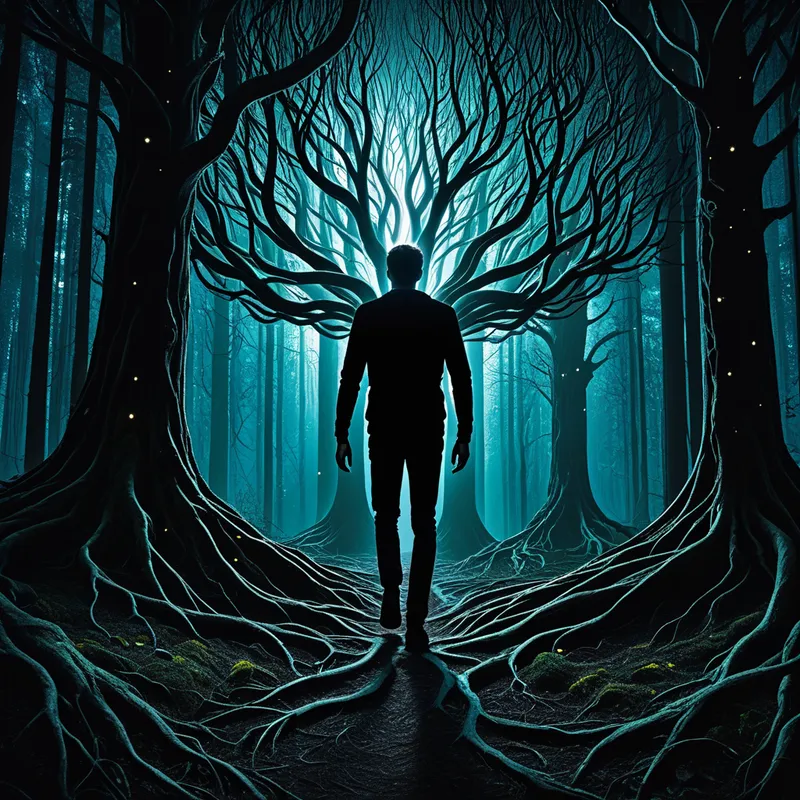
A dream of being pursued by a bear may not be a nightmare of threat, but a summons from the deep unconscious, pressing the dreamer toward necessary introspection or confronting a powerful, buried emotion. A dream of flying with eagle’s wings often coincides with a need for a major shift in perspective, to rise above a confusing or entrapping life situation. When an animal in a dream acts as a guide, leading the dreamer through a dark forest or to a specific place, it is a direct expression of the totem function: the instinctual self knows the way where the conscious mind is lost.
Somatically, these dreams can be accompanied upon waking by a felt sense—a grounding weight if it’s a bear, a lightness if it’s a bird, a restless energy if it’s a wolf. The psychological process is one of recognition and dialogue. The ego is being asked to acknowledge a part of its own native intelligence that it has forgotten, neglected, or feared. The dream animal is a bridge to a more complete, more instinctually-aligned existence.
Alchemical Translation
The myth of the totem animal provides a flawless model for the modern journey of individuation—the alchemical process of becoming who one fundamentally is. The quest begins with a sense of lack, the "loneliness" of the disconnected ego.
Individuation does not mean perfection, but completion. It is the long journey of gathering the scattered fragments of one’s soul, and the totem animals are the guardians of those fragments.
The first stage, the nigredo or blackening, is the fasting on the mountain: the dissolution of old identities, the confrontation with emptiness and shadow. The appearance of the animal spirits is the albedo, the whitening—the illuminating insight, the gift of symbolic meaning from the unconscious. The covenant formed is the rubedo, the reddening—the integration of that energy into daily life, giving the soul a new, vibrant color and purpose.
For us today, the "vision quest" is any deliberate, sustained engagement with the unconscious: through therapy, active imagination, creative work, or deep immersion in nature. The "totem" is the symbolic form that our own unique constellation of instincts takes. To discover one’s totem is to answer the ancient, echoing questions: What is my native strength? What wisdom do I carry in my bones? How am I connected to the living world? It is to move from being a spectator of life to a participant in a sacred, animated conversation, where every creature, both within and without, has something vital to say.
Associated Symbols
Explore related symbols from the CaleaDream lexicon: