The Three Worlds Above and Below
A Siberian cosmological myth describing three interconnected realms—upper, middle, and lower worlds—that shape existence, spirituality, and shamanic journeys.
The Tale of The Three Worlds Above and Below
In the beginning, there was the Great Tree. Its roots, gnarled and deep, plunged into a world of fertile darkness. Its trunk, vast and steadfast, stood firm in a world of wind and struggle. Its crown, radiant and boundless, reached into a world of luminous silence. This was the axis of all that is, the [Axis Mundi](/myths/axis-mundi “Myth from Various culture.”/), and around it, the Three Worlds breathed.
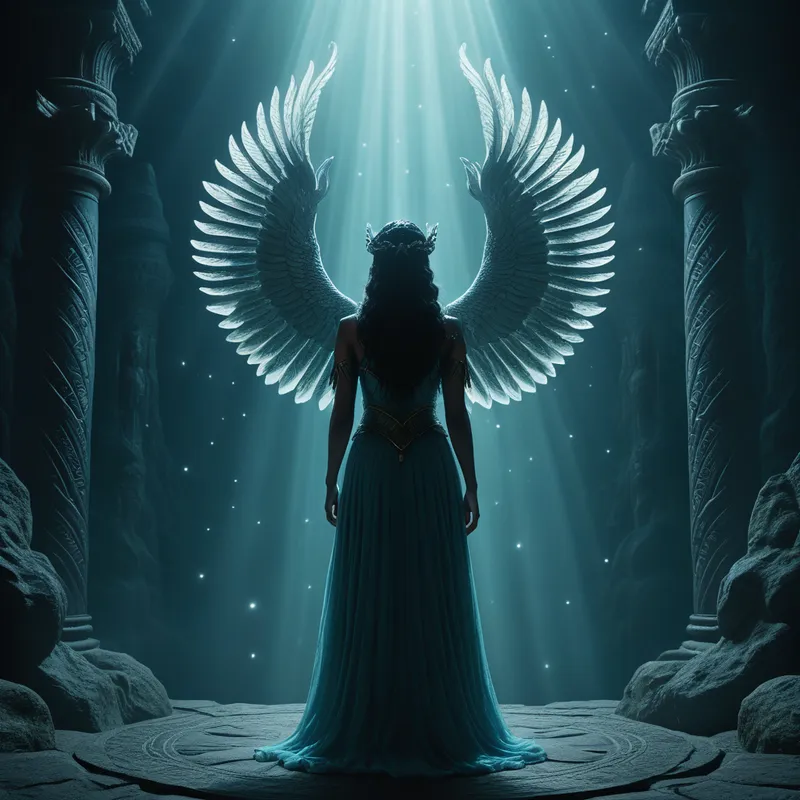
The Upper World, Tengri, is the realm of celestial spirits, ancestral guides, and luminous order. Here, the air is not air but clarity; light is not illumination but pure consciousness. It is a world of perfected forms, of causes rather than effects, where the great celestial beings—the sun, [the moon](/myths/the-moon “Myth from Tarot culture.”/), the stars—have their true essence. To journey here is to journey toward source, toward the archetypal blueprints of existence. It is not a place of easy grace, but of profound and often austere truth.
The Middle World, Düïe or Orto Doidu, is our own—the realm of the living, of humans, animals, forests, rivers, and mountains. It is [the world](/myths/the-world “Myth from Tarot culture.”/) of tangible experience, of growth and decay, community and isolation, joy and suffering. It is the plane of manifestation, where the influences of the worlds above and below meet and mingle. This world is not a neutral ground, but a vibrant, contested, and sacred meeting place, sustained by a fragile [covenant](/myths/covenant “Myth from Christian culture.”/) between humanity and the myriad visible and invisible beings that share it.
The Lower World, Aïy or Ülgen, is not a hell, but a chthonic realm of raw potential, primal power, and deep memory. It is the world of earth spirits, animal masters, and the ancestors of the land. Here lies the origin of life-force, instinct, and the transformative powers of decay and regeneration. It is a place of immense creative and destructive energy, often perceived as chaotic or fearsome to the uninitiated, but essential for healing, vitality, and understanding the roots of existence.
These worlds are not separate floors in a cosmic building. They interpenetrate, whisper to one another through the sap of [the World Tree](/myths/the-world-tree “Myth from Celtic culture.”/), the smoke of a [sacred fire](/myths/sacred-fire “Myth from Various culture.”/), or the depths of a shaman’s drum. The well-being of one affects all. If the Middle World becomes polluted with disharmony, the Upper World withdraws its guiding light, and the Lower World stirs with illness and misfortune. Balance is not a static state, but a dynamic, ever-negotiated relationship, maintained through respect, ritual, and the perilous journeys of those who can travel between them: the shamans.
Cultural Origins & Context
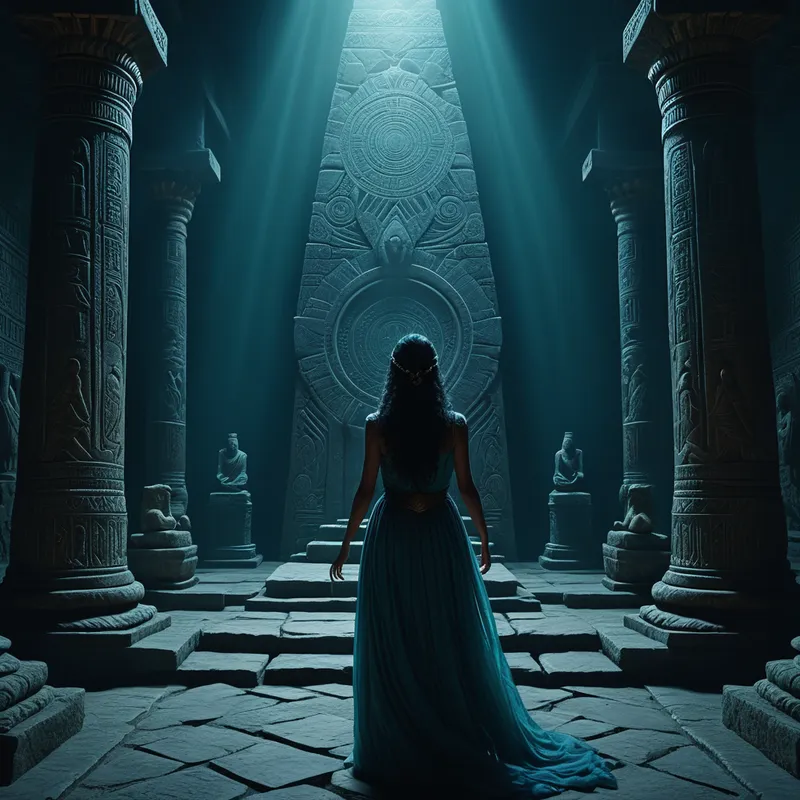
This tripartite cosmology is foundational across the diverse Indigenous cultures of Siberia—from the Turkic-speaking Yakuts and Tuvans to the Tungusic Evenki and the Uralic-speaking Khanty and Nenets. It emerged not from philosophical abstraction, but from a lived, experiential relationship with an immense and demanding landscape. The vast taiga, the sweeping steppe, the frozen tundra, and the towering mountains provided a direct template: [the earth](/myths/the-earth “Myth from Hindu culture.”/) beneath (Lower), the living surface (Middle), and the overwhelming sky above (Upper).
This worldview is fundamentally animistic and shamanic. Every mountain, lake, and forest has its master-spirit (eeren or ichchi), residing in the Lower or Middle Worlds. The celestial deities and ancestral spirits inhabit the Upper World. Human life is a constant dialogue with these beings. Survival, hunting success, health, and fortune depend on maintaining right relationship through offerings, taboos, and the intercession of [the shaman](/myths/the-shaman “Myth from Siberian culture.”/), the kam or böö.
The myth is not merely a description of the universe; it is a map for navigating it. It provides the coordinates for the [shamanic journey](/myths/shamanic-journey “Myth from Siberian culture.”/), the central spiritual practice. Using the rhythmic pulse of [the drum](/myths/the-drum “Myth from West African / Diasporic culture.”/) to enter a trance state, the shaman’s soul ascends the [World Tree](/myths/world-tree “Myth from Global culture.”/) to seek wisdom from the Upper World, or descends through a hole in the earth, a river’s source, or the roots of a tree to retrieve lost souls or gain power from the Lower World. The myth is the narrative structure that makes these non-ordinary experiences coherent and communicable.
Symbolic Architecture
The [architecture](/symbols/architecture “Symbol: Architecture in dreams often signifies structure, stability, and the framing of personal identity or life’s journey.”/) of the Three Worlds is a profound symbolic [system](/symbols/system “Symbol: A system represents structure, organization, and interrelated components functioning together, often reflecting personal or social order.”/) describing the [structure](/symbols/structure “Symbol: Structure in dreams often symbolizes stability, organization, and the framework of one’s life, reflecting how one perceives their environment and personal life.”/) of [reality](/symbols/reality “Symbol: Reality signifies the state of existence and perception, often reflecting one’s understanding of truth and life experiences.”/) and the [psyche](/myths/psyche “Myth from Greek culture.”/). It moves beyond simple [hierarchy](/symbols/hierarchy “Symbol: A structured system of ranking or authority, often representing social order, power dynamics, and one’s position within groups or institutions.”/) to depict a necessary ecology of being.
The Upper World represents the superconscious—the realm of ideals, spiritual laws, and the transcendent Self. It is the pull toward meaning, order, and the numinous. The Lower World embodies the subconscious and the unconscious—the seat of instincts, passions, forgotten memories, traumas, and the raw, unshaped libido of life. The Middle World is the conscious ego, the “I” that navigates daily life, perpetually suspended between the call of spirit above and the pull of the psyche below.
The World [Tree](/symbols/tree “Symbol: In dreams, the tree often symbolizes growth, stability, and the interconnectedness of life.”/) or World [Mountain](/symbols/mountain “Symbol: Mountains often symbolize challenges, aspirations, and the journey toward self-discovery and enlightenment.”/), as the connecting [axis](/symbols/axis “Symbol: A central line or principle around which things revolve, representing stability, orientation, and the fundamental structure of reality or consciousness.”/), symbolizes the [spine](/symbols/spine “Symbol: The spine symbolizes strength, support, and the foundational structure of one’s life and identity.”/) of the individual and the [community](/symbols/community “Symbol: Community in dreams symbolizes connection, support, and the need for belonging.”/)—the central channel through which [energy](/symbols/energy “Symbol: Energy symbolizes vitality, motivation, and the drive that fuels actions and ambitions.”/) and [information](/symbols/information “Symbol: Information signifies knowledge, communication, and the processing of facts or insights.”/) must flow for wholeness. A blockage in this channel, a refusal to acknowledge either the [heights](/symbols/heights “Symbol: Represents ambition, fear, or spiritual elevation. Often symbolizes life challenges or a desire for perspective.”/) or the [depths](/symbols/depths “Symbol: Represents the subconscious, hidden emotions, or foundational aspects of the self, often linked to primal fears or profound truths.”/), leads to psychic and social illness: a sterile spirituality disconnected from the [body](/symbols/body “Symbol: The body in dreams often symbolizes the dreamer’s self-identity, personal health, and the relationship they have with their physical existence.”/), or a chaotic materialism devoid of higher [purpose](/symbols/purpose “Symbol: Purpose signifies direction, meaning, and intention in life, often reflecting personal ambitions and core values.”/).
The [shaman](/symbols/shaman “Symbol: A spiritual mediator who bridges the human and spirit worlds, often through altered states, healing, and guidance.”/)’s [journey](/symbols/journey “Symbol: A journey in dreams typically signifies adventure, growth, or a significant life transition.”/) is the symbolic enactment of individuation. To heal another, the [shaman](/symbols/shaman “Symbol: A spiritual mediator who bridges the human and spirit worlds, often through altered states, healing, and guidance.”/) must first navigate their own inner Upper and Lower Worlds, confront their own spirits and shadows, and restore communication along their own inner axis. The myth thus externalizes an internal process: the need to consciously integrate the guiding principles of our higher [nature](/symbols/nature “Symbol: Nature symbolizes growth, connectivity, and the primal forces of existence.”/) with the vital, often chaotic energies of our foundational being.
The Dreamer’s Resonance
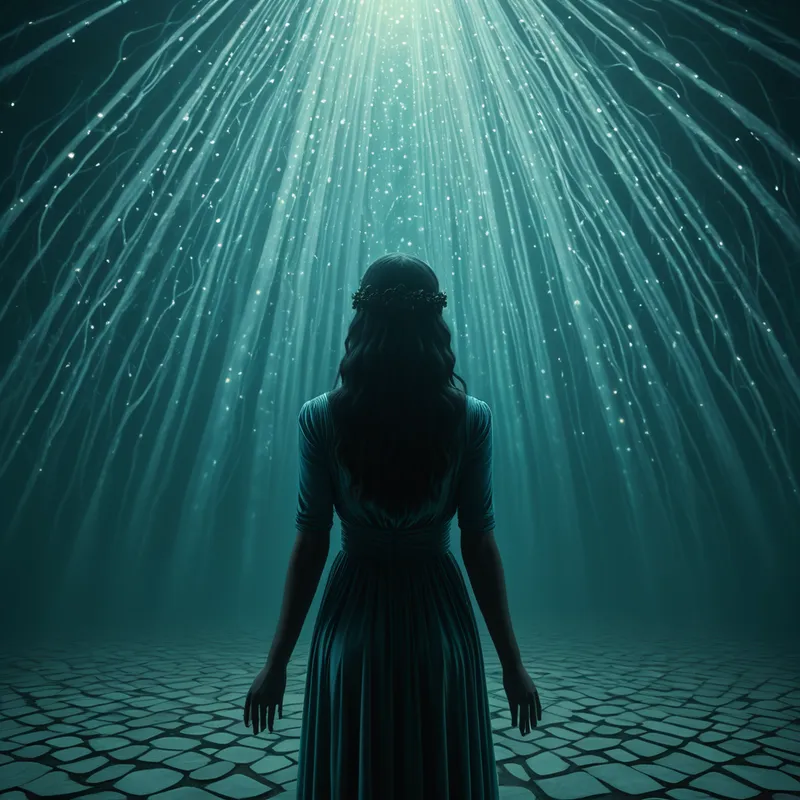
For the modern dreamer, the myth of the Three Worlds offers a powerful lens for self-understanding. It suggests that a sense of fragmentation or existential unease may stem from living only in the “Middle World” of mundane concerns, cut off from both transcendence and depth.
Dreams of soaring flight, meeting wise figures, or luminous landscapes may be encounters with the Upper World—invitations to connect with intuition, purpose, and a broader perspective. Dreams of descending into caves, confronting wild animals, or navigating murky waters often reflect journeys into the Lower World—encounters with repressed emotions, creative potentials, or foundational aspects of the psyche that demand attention.
The myth validates the necessity of both movements. To seek only “higher” spiritual experiences without integrating the “lower” material and instinctual self leads to inflation and dissociation. Conversely, to be consumed by primal drives or unresolved shadows without the ordering, compassionate light of consciousness leads to entrapment. Psychological health, like cosmological balance, requires a living dialogue between all three realms. The dream itself becomes the shaman’s drum, the vehicle for spontaneous journeys that seek to restore this inner equilibrium.
Alchemical Translation
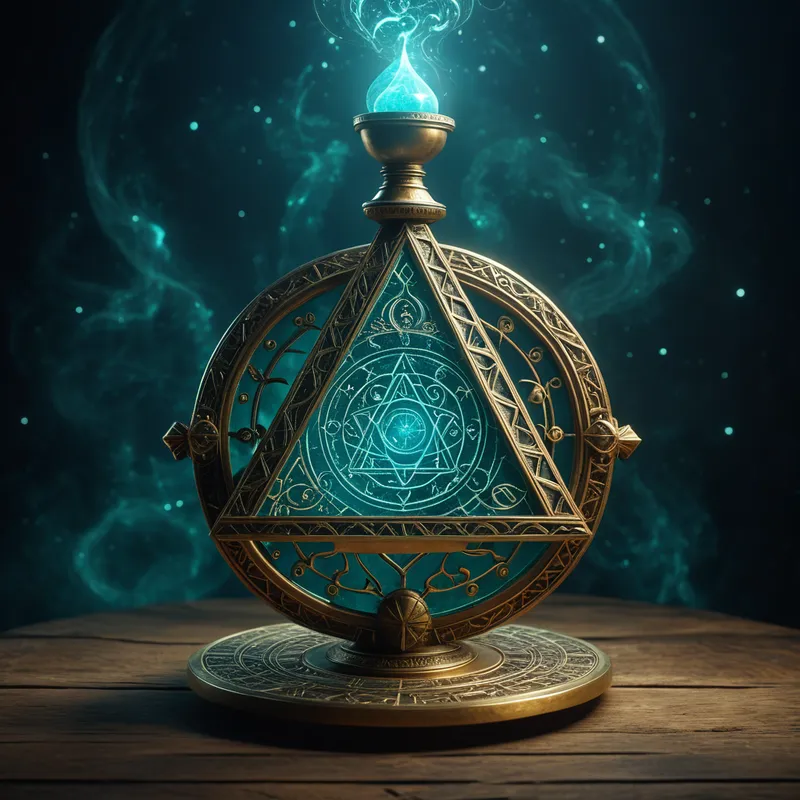
In the alchemy of the soul, the Three Worlds correspond to the three primary stages of the Opus Magnum.
The descent into the Lower World is the nigredo, the blackening. It is the necessary confrontation with the shadow, the prima materia of the psyche—all that is chaotic, painful, and unformed. This is not a moral failing but the essential first matter of transformation. The journey to the Upper World mirrors the albedo, the whitening. It is the purification, the gaining of clarity and lunar consciousness, the reception of guiding insight from the archetypal realm. The return to, and transformation of, the Middle World is the rubedo, the reddening. It is the integration of the journey’s fruits into embodied life, creating a “philosophical gold”—an individual who can live in the ordinary world while consciously embodying the relationship between the depths and the heights.
The shaman, wounded and remade by their journeys, becomes the living embodiment of the completed work. They carry the scars of the Lower World and the vision of the Upper World into the heart of the community, acting as a walking, talking Axis Mundi. Their very presence is a reminder that wholeness is not the absence of tension, but the conscious containment of the sacred dialogue between the worlds within a single human being.
Associated Symbols
Explore related symbols from the CaleaDream lexicon:
- Tree — [The cosmic axis](/myths/the-cosmic-axis “Myth from Various culture.”/) and connective tissue of the Three Worlds, representing both the structure of the cosmos and the central channel of the individual psyche.
- Journey — The essential movement between realms, embodying the process of seeking, retrieval, and transformation that defines shamanic practice and psychological growth.
- Bridge — The mediating principle or the shaman themselves, facilitating passage and communication between the separated but interdependent realms of existence.
- Drum — The vehicle of ecstatic travel, its rhythmic heartbeat mirroring the pulse of the World Tree and entraining consciousness for passage between worlds.
- Mountain — An alternative form of [the Axis Mundi](/myths/the-axis-mundi “Myth from Chinese culture.”/), representing the arduous ascent toward spiritual clarity and the solid, enduring connection between earth and sky.
- Cave — An entrance to the Lower World, symbolizing descent into the subconscious, [the womb](/myths/the-womb “Myth from Various culture.”/) of the earth, and the realm of primal origins and healing.
- Bird — A creature of the Upper World, often a shamanic helper or familiar, representing spirit, perspective, and the capacity to traverse celestial realms.
- Horse — A common shamanic steed for soul journeys, embodying stamina, power, and the ability to carry consciousness swiftly across non-ordinary landscapes.
- Mirror — A shamanic tool for divination and soul-work, reflecting not the physical world but the hidden realities of the other realms and the inner self.
- Root — The anchoring, nourishing connection to the Lower World, symbolizing ancestry, instinct, and the foundational sources of life and identity.
- Sky — The manifest face of the Upper World, representing infinity, divine law, and the vast container of celestial influences and ancestral spirits.
- Balance — The dynamic and sacred equilibrium between the Three Worlds, the ultimate goal of ritual and shamanic work, without which life tips into [chaos](/myths/chaos “Myth from Greek culture.”/) or sterility.