The Three Games of the Gods
In Mongolian mythology, the gods play three cosmic games that determine the fate of humanity and the structure of the universe.
The Tale of The Three Games of the Gods
In the time before time, when the Tengri were newly born from the great silence, the universe was a formless potential, a breath held in the dark. It was then that the eldest of the gods, seeing the raw material of existence, proposed not a command, but a contest. They would play three games, and from their play, all things would spring.
The first game was played with bones of polished silver upon a board of night. This was the Game of Dice, cast not by hand, but by will. As the celestial dice tumbled through [the void](/myths/the-void “Myth from Buddhist culture.”/), their falling carved the first laws: above and below, light and dark, the rhythm of time and the stillness of space. The clatter of their landing was the first sound, and from that sound echoed the mountains and the abysses, the courses of stars and the depths of [the underworld](/myths/the-underworld “Myth from Greek culture.”/). The gods played for the architecture of reality, and the board became [the world](/myths/the-world “Myth from Tarot culture.”/), its squares the lands and its lines the great rivers. But within the throw was always the unseen number, the chance that defied even a god’s intention. Thus, the foundation of all things was laid with a core of beautiful, terrifying uncertainty.
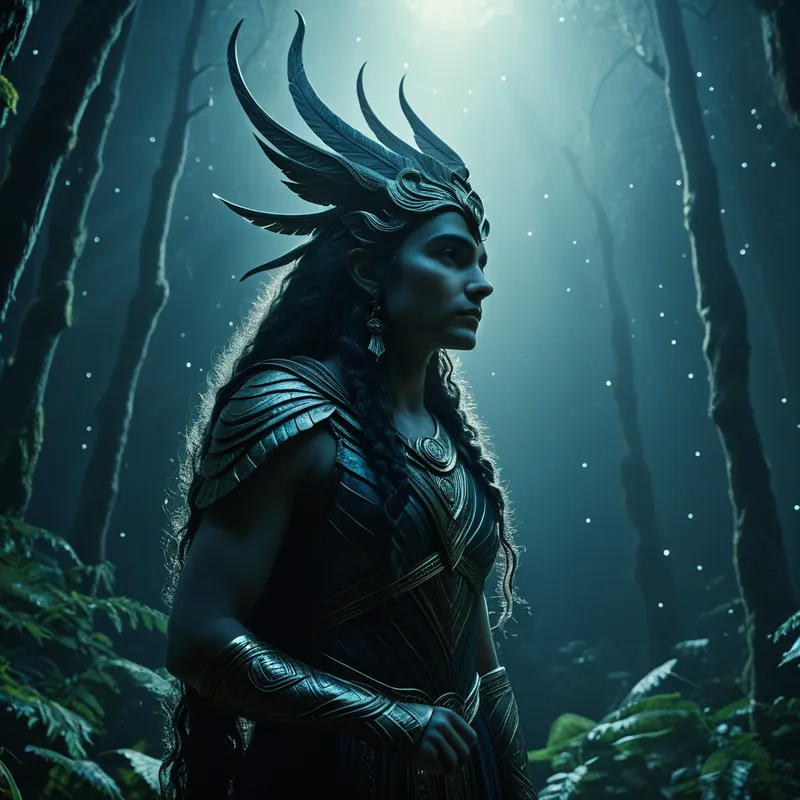
The second game was a contest of strength and cunning, the Game of Wrestling. Here, the gods took forms of wind and stone, of eagle and Makhai, and grappled upon the newborn earth. Where their feet stamped, valleys deepened; where their hands gripped, mountain ranges rose. Their sweat became the first rains and the saline lakes. This game was not of chance, but of direct, striving force—a testing of essence against essence. It shaped the tangible world of struggle and endurance, of peak and plain. It was through this divine wrestling that the spirit of competition, of proving one’s mettle against a worthy opponent, was woven into the fabric of life. The game decided the dominion of sky, land, and [water](/myths/water “Myth from Chinese culture.”/), but its true prize was the principle of dynamic balance, a universe held in the tension of opposing yet equal powers.
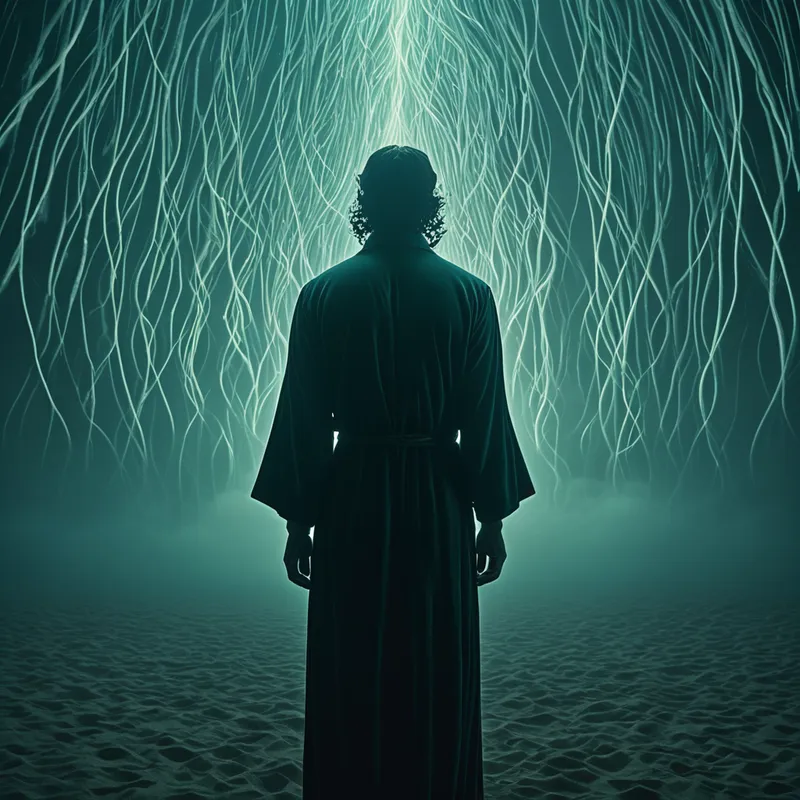
The third and final game was the most subtle and profound: the Game of Hidden Threads. The gods sat in a circle, and before them was placed an immense, luminous knot, its strands representing the lives of all that would ever be. Each god took a thread, and without looking, began to weave it into a vast, collective tapestry—the Tapestry of Fate. No god could see the whole pattern; each could only feel the tension and slack of their own strand as it crossed and intertwined with the others. This game required deep listening, patience, and a surrender to the emerging whole. Here, the concepts of destiny and free will were born not as enemies, but as partners. A god could pull their thread with purpose (will), but its path was forever altered by the unseen threads of others (fate). From this game emerged the souls of humanity and all creatures, each a single thread endowed with the spark of choice, yet forever part of a greater design they could never fully comprehend.
Thus, through dice, wrestling, and the loom, the cosmos was not merely made, but played into being—a sacred drama whose rules were its very structure, and whose players, both divine and mortal, are forever engaged in its unfolding.
Cultural Origins & Context
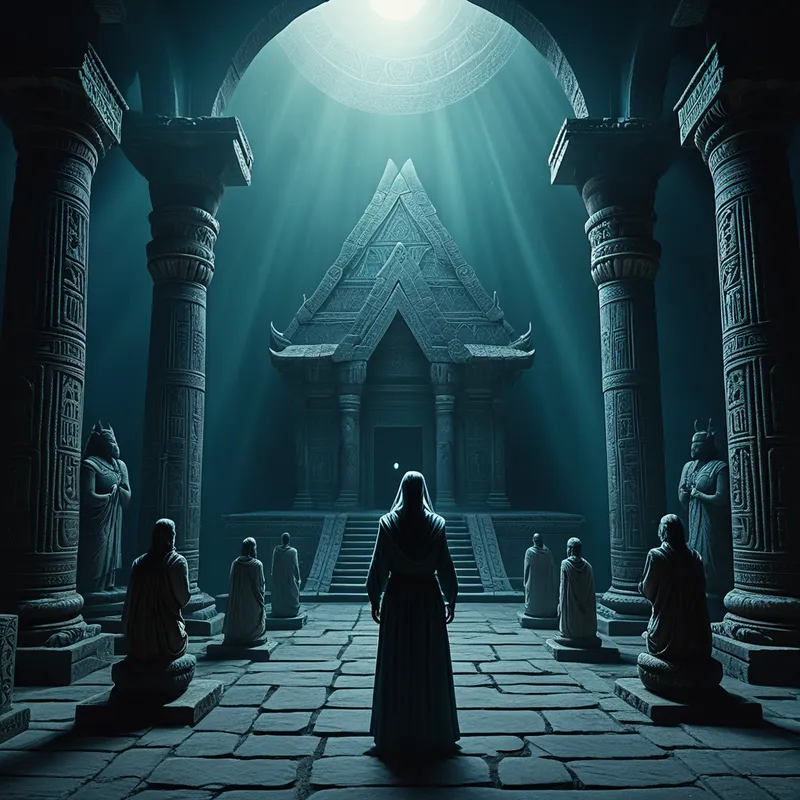
The motif of divine games is deeply embedded in the nomadic and shamanic worldview of the Mongolian peoples. Life on the vast, open steppe was itself perceived as a series of contests—against the elements, for resources, in sport and warfare. The “Three Manly Games” of wrestling, horse racing, and archery, central to the Naadam festival, are not mere entertainment but ritual re-enactments of cosmic principles, echoes of the gods’ own contests. This myth likely evolved from ancient Turkic and Mongolian shamanic traditions, where the cosmos was seen as a living, interactive field of forces rather than a static creation.
[The sky](/myths/the-sky “Myth from Persian culture.”/)-father Tengri is the implicit host of these games, but the myth reflects a polytheistic layer where various deities (spirits of earth, water, fire) participate. It synthesizes the Mongolian reverence for the unpredictable sky (chance, destiny) with the tangible, hard-won realities of earthly existence (struggle, skill). The myth served as a philosophical framework, explaining why the world contains both rigid law and wild chance, both individual ambition and inescapable interconnectedness. It legitimized the cultural values of resilience, strategic cunning, and accepting one’s lot with honor, all while acknowledging the mysterious, weaving hand of fate.
Symbolic Architecture
The three games form a complete metaphysical [system](/symbols/system “Symbol: A system represents structure, organization, and interrelated components functioning together, often reflecting personal or social order.”/). The [Dice](/symbols/dice “Symbol: Dice symbolize chance, risk, and the unpredictability of outcomes in life.”/) represent pure archetypal potential and the randomness at the [heart](/symbols/heart “Symbol: The heart symbolizes love, emotion, and the core of one’s existence, representing deep connections with others and self.”/) of existence—the [quantum](/symbols/quantum “Symbol: Represents fundamental uncertainty, interconnectedness, and the collapse of possibilities into reality. It signifies the observer’s role in shaping existence.”/) [foundation](/symbols/foundation “Symbol: A foundation symbolizes the underlying support systems, values, and beliefs that shape one’s life, serving as the bedrock for growth and development.”/). The Wrestling grounds this potential into polarized, manifest form: matter and [energy](/symbols/energy “Symbol: Energy symbolizes vitality, motivation, and the drive that fuels actions and ambitions.”/), self and other. The Hidden Threads then complexify this duality into the intricate web of [relationship](/symbols/relationship “Symbol: A representation of connections we have with others in our lives, often reflecting our emotional state.”/), [consciousness](/symbols/consciousness “Symbol: Consciousness represents the state of awareness and perception, encompassing thoughts, feelings, and experiences.”/), and time.
The games move from the solitary act of the throw (archetype), to the dyadic struggle of the match (polarity), to the communal, multi-voiced act of weaving (complexity). This is the psyche’s own journey from potential, to confrontation, to integration.
The games are also a profound commentary on the [nature](/symbols/nature “Symbol: Nature symbolizes growth, connectivity, and the primal forces of existence.”/) of divinity. The gods are not omnipotent tyrants, but participants bound by the very rules they generate. They too must submit to [chance](/symbols/chance “Symbol: A representation of opportunities and unpredictability in life, illustrating how fate can influence one’s journey.”/), test their [strength](/symbols/strength “Symbol: ‘Strength’ symbolizes resilience, courage, and the ability to overcome challenges.”/), and lose themselves in a [pattern](/symbols/pattern “Symbol: A ‘Pattern’ in dreams often signifies the underlying structure of experiences and thoughts, representing both order and the repetitiveness of life’s situations.”/) larger than their individual wills. This creates a [cosmos](/symbols/cosmos “Symbol: The entire universe as an ordered, harmonious system, often representing the totality of existence, spiritual connection, and the unknown.”/) that is relational, dynamic, and deeply alive.
The Dreamer’s Resonance
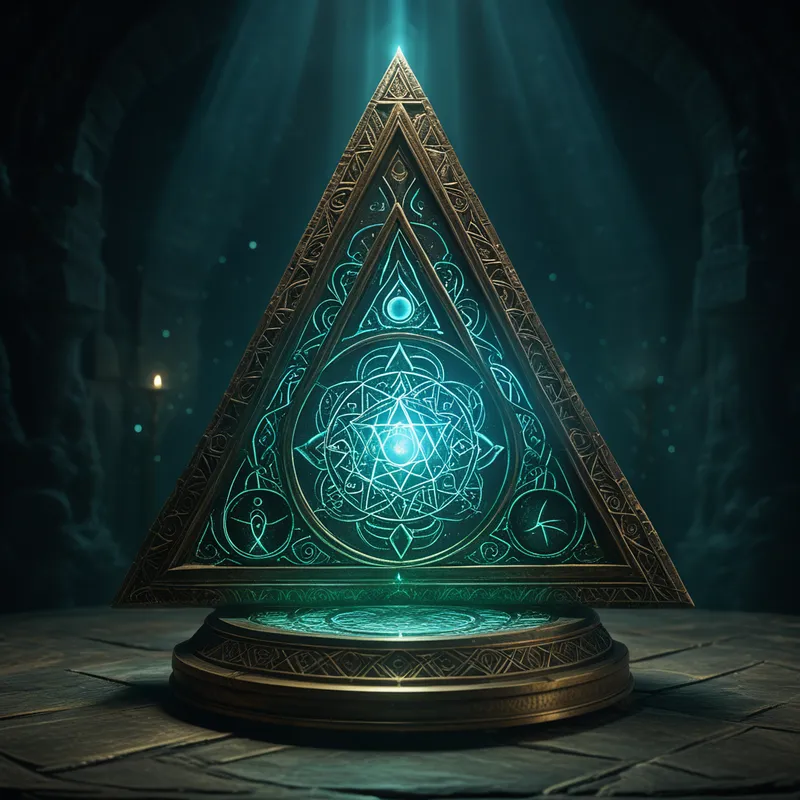
For the individual [psyche](/myths/psyche “Myth from Greek culture.”/), this myth maps the process of individuation. The First Game is the unconscious throw of our innate gifts, traumas, and circumstances—the “lot” we are given at birth, the foundational [chaos](/myths/chaos “Myth from Greek culture.”/) of our being. The Second Game is [the ego](/myths/the-ego “Myth from Jungian culture.”/)’s struggle: our lifelong wrestling match with these givens, with our shadow, with the external world. It is the effort to shape our identity and destiny through willpower and action.
The Third Game is the call to [the Self](/myths/the-self “Myth from Jungian culture.”/). It is the recognition that our personal thread is part of a vast, meaningful tapestry we cannot see. Engaging with this game means moving beyond simple victory or defeat, and learning to “weave”—to relate, to listen for the pull of other threads (other people, [the collective unconscious](/myths/the-collective-unconscious “Myth from Jungian culture.”/), synchronicity), and to find meaning in the pattern that emerges from the interplay of our will and a greater design. To refuse this game is to remain forever in the brittle duality of the wrestler, seeing life only as a contest to be won or lost.
Alchemical Translation
Psychologically, the three games correspond to fundamental forces within the human experience. The Dice are the Randomizer, the source of novelty, surprise, and the breakdown of order that forces new growth. The Wrestling is the Negotiator, the principle of effort, conflict, and the differentiation necessary for consciousness. The Hidden Threads are the Integrator, the function of meaning-making, connection, and the synthesis of opposites into a coherent narrative.
In therapeutic terms, one works with the Dice (accepting the unchangeable facts of one’s history), engages in the Wrestling (the hard work of confronting patterns and making choices), and ultimately learns the art of the Threads (finding purpose and connection within the totality of one’s life story).
The myth suggests that wholeness is not a static state of perfection, but the dynamic capacity to participate skillfully in all three games simultaneously: to accept chance with grace, to engage struggle with courage, and to weave relationship with humility.
Associated Symbols
Explore related symbols from the CaleaDream lexicon:
- Fate (Urðr / Wyrd) — The woven tapestry of destiny, an ever-emerging pattern created by the interplay of divine will, chance, and the actions of all beings.
- Game — The fundamental, playful contest that structures reality, a sacred activity through which cosmic order and meaning are generated and revealed.
- Circle of Fate — The eternal, cyclical arena in which the games of chance, struggle, and weaving are played out, binding all participants in a shared destiny.
- Competition — The fiery, striving spirit that drives differentiation, growth, and the testing of essence against essence, as seen in the divine wrestling match.
- Dice — The arbiters of primordial chance, whose fall carves the first distinctions in the void and introduces the element of unpredictable potential into all existence.
- Tapestry of Fate — The luminous, living fabric woven from the threads of all lives, a complex whole whose grand pattern remains partially hidden from any individual perspective.
- Wrestling — The sacred struggle that gives form to the formless, manifesting the tangible world and the principle of dynamic, polarized tension.
- Sky — The domain of Tengri and the arena of the first game, representing the realm of pure potential, law, and overarching destiny.
- Earth — The solid ground formed by the second game, the realm of tangible struggle, material consequence, and earned achievement.
- Thread — The individual strand of life, consciousness, or destiny, endowed with agency yet forever interwoven with others to create a larger pattern.
- Mirror — The reflective surface in which the gods might see not their own faces, but the emerging pattern of the tapestry, symbolizing the elusive nature of perceiving fate.
- Bridge — The connection between the isolated throw of the dice, the direct confrontation of the wrestlers, and the collaborative act of weaving, representing the integration of the three cosmic principles.