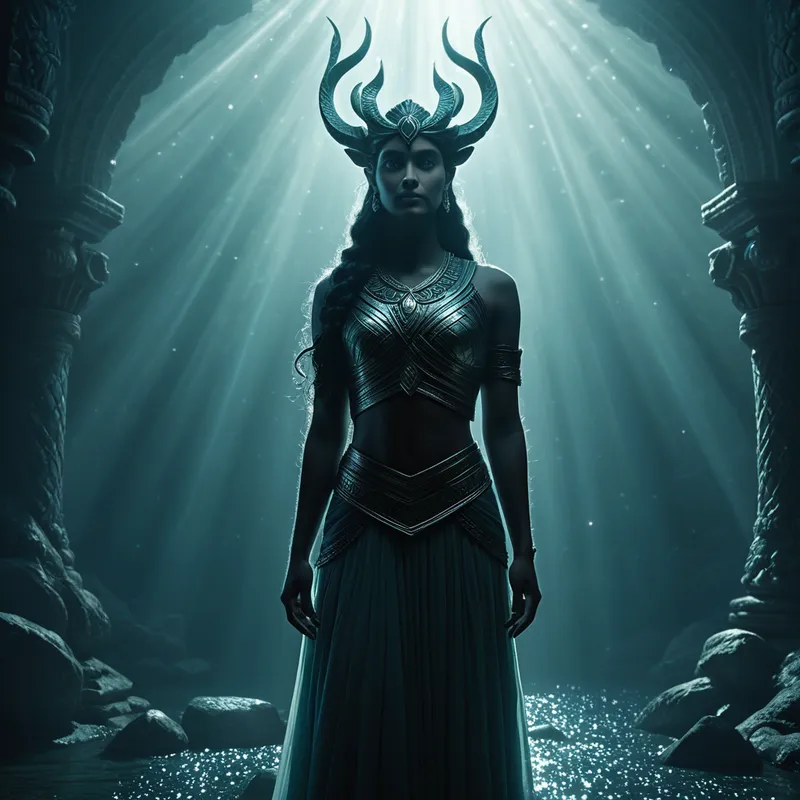
The Thousand and One Nights
A legendary collection of Arabian tales where Scheherazade tells stories for 1001 nights to delay her execution, weaving magic, adventure, and wisdom.
The Tale of The Thousand and One Nights
The tale begins not with a story, but with a wound. King Shahryar, once a just ruler, is shattered by the betrayal of his first wife. In his rage and grief, he descends into a madness of logic: all women are faithless. To protect himself from future betrayal, he vows to marry a new virgin each night and have her executed at dawn. The kingdom is plunged into a silent terror, its daughters disappearing one by one into the palace, never to return.
Into this cycle of [death](/myths/death “Myth from Tarot culture.”/) steps [Scheherazade](/myths/scheherazade “Myth from Global culture.”/), the vizier’s eldest daughter, a woman of peerless intellect and profound learning. She knows the king’s decree, yet she volunteers to be his next bride. On her wedding night, she performs her first act of sacred cunning. She requests that her younger sister, Dinarzade, be allowed to sleep in the chamber. As night deepens, Dinarzade, as pre-arranged, asks Scheherazade to tell a story to while away the final hours. The king, intrigued, consents.
And so, Scheherazade begins. She spins a tale of wonder—perhaps of a magical genie in a lamp, a voyage across strange seas, or a cunning thief in a bustling city. But as dawn’s first light tinges [the sky](/myths/the-sky “Myth from Persian culture.”/), she stops at a moment of unbearable suspense, with a hero dangling over a pit or a secret left unspoken. King Shahryar, his curiosity aflame, spares her life for one more day, to hear the story’s end.
That next night, Scheherazade finishes her tale, and immediately begins another, weaving narrative within narrative, character spawning story, story birthing character. For one thousand and one nights, she holds death at bay with the gossamer thread of narrative. She tells of love and loss, of [justice](/myths/justice “Myth from Tarot culture.”/) and trickery, of demons and wise fools. The stories are not mere distractions; they are a subtle, relentless education. Through them, the king is led to witness every facet of the human soul—its capacity for cruelty and its potential for redemption, its foolishness and its wisdom. He is made to feel, through the proxy of characters, the grief he has caused and the love he has forsaken.
On the one thousand and first night, Scheherazade has no more stories. Instead, she presents the king with the three sons she has borne him during these years of storytelling. She asks, gently, for her life, not for her own sake, but so that these children may not be motherless. The king, whose heart has been slowly remade by the alchemy of her words, weeps. He has been healed. He declares Scheherazade his true queen and wife, and the cycle of violence is broken, not by force, but by the transformative power of a story well-told.
Cultural Origins & Context
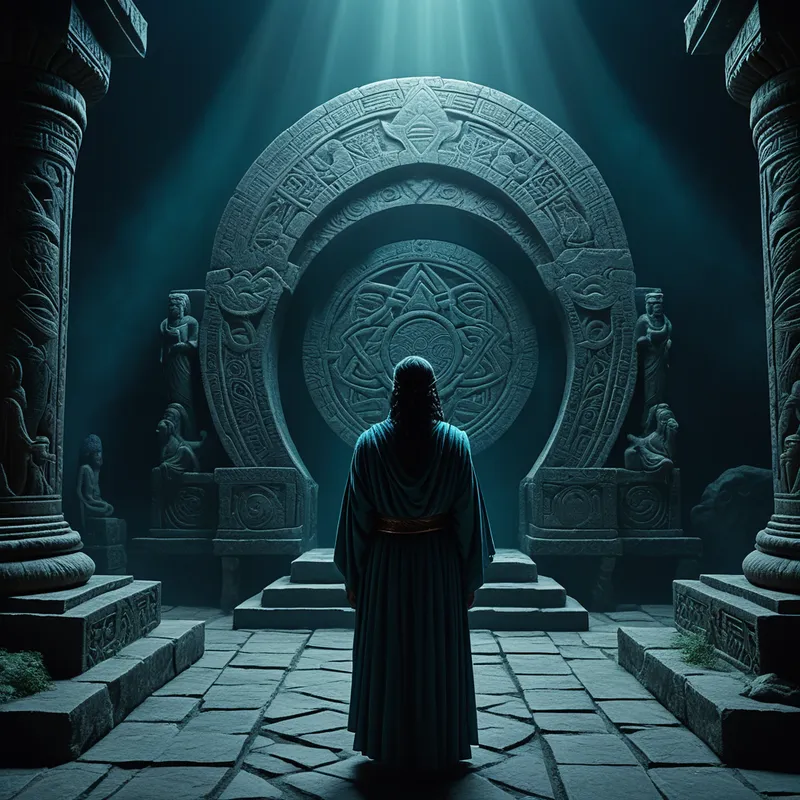
The Thousand and One Nights is not a monolithic text born from a single author, but a vast, living tapestry woven over centuries. Its roots dig deep into the soil of pre-Islamic Persian literature, with the core frame story likely originating from the Sassanid-era Persian work Hazar Afsan (A Thousand Tales). This Persian skeleton was then richly fleshed out during the Islamic [Golden Age](/myths/golden-age “Myth from Universal culture.”/), particularly in the cosmopolitan cultural hubs of Baghdad under the Abbasids and later in Cairo. Arab scholars and storytellers translated, adapted, and infused the tales with the spirit, humor, social mores, and marvels of the medieval Islamic world.
The collection as we know it is fundamentally an artifact of the oral storytelling tradition, the hakawati in the coffeehouse and the tales told in royal courts. It is a literary bazaar where Indian fables, Mesopotamian myths, Jewish folklore, and Egyptian anecdotes were traded, polished, and strung together. The first known European translation, by Antoine Galland in the early 18th [century](/myths/century “Myth from Biblical culture.”/), introduced tales like “Aladdin” and “Ali Baba,” which, while inspired by Middle Eastern lore, were arguably shaped for a European audience. The Nights thus exist in a fluid space between East and West, between folk tradition and literary canon, forever resisting a fixed, authoritative form. This very fluidity mirrors the nature of Scheherazade’s storytelling itself—adaptive, incorporative, and endlessly generative.
Symbolic Architecture
At its [heart](/symbols/heart “Symbol: The heart symbolizes love, emotion, and the core of one’s existence, representing deep connections with others and self.”/), the frame [story](/symbols/story “Symbol: The symbol of ‘Story’ represents the narrative woven through our lives, embodying experiences, lessons, and emotions that shape our identities.”/) is a profound psychological and metaphysical [blueprint](/symbols/blueprint “Symbol: A blueprint represents the foundational plan or design for something, often symbolizing potential, structure, and the mapping of one’s inner self or future.”/). The [king](/symbols/king “Symbol: A symbol of ultimate authority, leadership, and societal order, often representing the dreamer’s inner power or external control figures.”/)’s [palace](/symbols/palace “Symbol: A palace symbolizes grandeur, authority, and the pursuit of one’s ambitions or dreams, often embodying a desire for stability and wealth.”/) becomes the [psyche](/myths/psyche “Myth from Greek culture.”/) in a state of traumatic arrest, ruled by a tyrannical, wounded complex (Shahryar) that seeks to destroy the [anima](/symbols/anima “Symbol: The feminine archetype within the male unconscious, representing soul, creativity, and connection to the inner world.”/) (the feminine principle) anew each day. Scheherazade represents the healing function of the Self. She does not confront the tyrant with force or reason, but with the indirect, symbolic [language](/symbols/language “Symbol: Language symbolizes communication, understanding, and the complexities of expressing thoughts and emotions.”/) of the unconscious: the [story](/symbols/story “Symbol: The symbol of ‘Story’ represents the narrative woven through our lives, embodying experiences, lessons, and emotions that shape our identities.”/).
The 1,001 nights are not a random number. In numerology, 1,000 represents completion, a closed cycle. The addition of one breaks the sterile, repetitive pattern (the king’s murderous cycle) and introduces the principle of the unique, the individual, the new beginning. Story 1,001 is life itself.
Each [night](/symbols/night “Symbol: Night often symbolizes the unconscious, mystery, and the unknown, representing the realm of dreams and intuition.”/), Scheherazade descends into the symbolic [realm](/symbols/realm “Symbol: The symbol of ‘Realm’ often signifies the boundaries of one’s consciousness, experiences, or emotional states, suggesting aspects of reality that are either explored or ignored.”/) (the [stories](/symbols/stories “Symbol: Stories symbolize the narratives of our lives, reflecting personal experiences and collective culture.”/)) and returns at [dawn](/symbols/dawn “Symbol: The first light of day, symbolizing new beginnings, hope, and the transition from darkness to illumination.”/), performing a nightly [katabasis](/myths/katabasis “Myth from Greek culture.”/). The [cliffhanger](/symbols/cliffhanger “Symbol: A narrative device leaving resolution uncertain, representing life’s unresolved tensions and the anxiety of pending outcomes.”/) is a masterstroke of psychological technique—it leaves the king’s conscious mind in a state of unresolved [tension](/symbols/tension “Symbol: A state of mental or emotional strain, often manifesting physically as tightness, pressure, or unease, signaling unresolved conflict or anticipation.”/), ensuring his unconscious remains engaged with the symbolic [material](/symbols/material “Symbol: Material signifies the tangible aspects of life, often representing physical resources, desires, and the physical world’s influence on our existence.”/), working on it below the surface of his [awareness](/symbols/awareness “Symbol: Conscious perception of self, surroundings, or internal states. Often signifies awakening, insight, or heightened sensitivity.”/). The tales are not escapism; they are [soul](/symbols/soul “Symbol: The soul represents the essence of a person, encompassing their spirit, identity, and connection to the universe.”/)-making. They rebuild the king’s eroded [capacity](/symbols/capacity “Symbol: A measure of one’s potential, limits, or ability to contain, process, or achieve something, often reflecting self-assessment or external demands.”/) for [empathy](/symbols/empathy “Symbol: The capacity to understand and share the feelings of others, often manifesting as emotional resonance or intuitive connection in dreams.”/), complexity, and [connection](/symbols/connection “Symbol: Connection symbolizes relationships, communication, and bonds among individuals.”/) by allowing him to experience [life](/symbols/life “Symbol: The symbol of ‘Life’ represents a journey of growth, interconnectedness, and existential meaning, encompassing both the joys and challenges that define human experience.”/) vicariously through a thousand different eyes.
The Dreamer’s Resonance
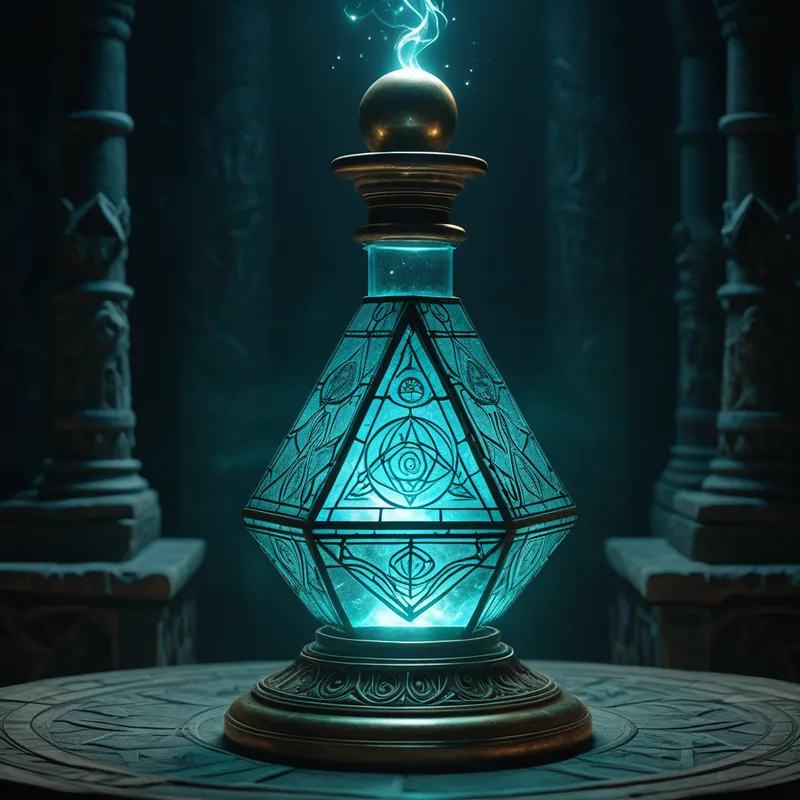
For the modern dreamer, The Thousand and One Nights is not a distant fable but an urgent inner drama. We all harbor our own King Shahryar—a part of us hardened by betrayal, disappointment, or grief, that pronounces harsh, absolutist judgments and seeks to cut off sources of potential pain (vulnerability, creativity, love). This inner tyrant demands the execution of hope each dawn.
Simultaneously, we each possess a Scheherazade. This is the voice of our creative intelligence, our intuitive wisdom, our capacity to narrativize our experience. When faced with an inner or outer crisis, the Scheherazade function does not argue with the brutal facts; it begins, “Once upon a time…” It weaves the raw, painful data of our lives into a story with pattern, meaning, and possibility. To engage this function is to practice a form of psychic survival. We tell ourselves stories to live, to delay the execution of our spirit by despair or nihilism. The myth validates the profound necessity of storytelling not as a lie, but as a deeper truth-telling, a way to re-order a chaotic inner world and imagine a future beyond the current night of the soul.
Alchemical Translation
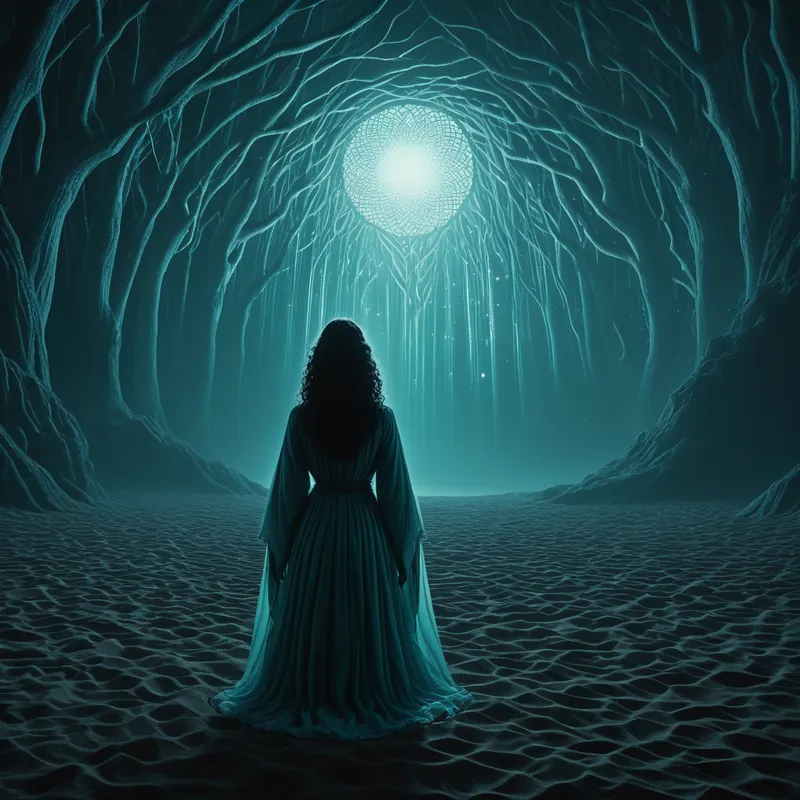
The entire epic is an alchemical opus. The base material is the [prima materia](/myths/prima-materia “Myth from Alchemical culture.”/) of raw, unprocessed trauma (the king’s rage) and the leaden fear of death (the nightly executions). Scheherazade is [the alchemist](/myths/the-alchemist “Myth from Various culture.”/), and her vessel is the night itself. The fire that heats [the vessel](/myths/the-vessel “Myth from Alchemical culture.”/) is the king’s burning curiosity and the emotional heat of the tales. The stories are the successive stages of dissolution and coagulation ([solve et coagula](/myths/solve-et-coagula “Myth from Alchemical culture.”/)), breaking down the king’s rigid, leaden worldview and reconstituting it into a more integrated, golden state.
The three sons presented on the final morning are the tangible, living filius philosophorum—the philosophical child, the symbol of the new, integrated consciousness born from the union of opposites (the king’s masculine authority and Scheherazade’s feminine wisdom). They represent a future forged not from violence, but from narrative.
The ultimate transformation is not Scheherazade’s survival, but the king’s rebirth. He moves from a state of paranoid separation (executing the feminine) to one of sacred conjunction (marrying it in its wisest form). The cycle of time, which was a meaningless, horrific repetition (dawn after dawn of death), is redeemed into a meaningful, generative sequence (night after night of creation, culminating in new life). The myth teaches that salvation is found not in avoiding the dark night, but in learning to speak creatively within it.
Associated Symbols
Explore related symbols from the CaleaDream lexicon:
- Story — The fundamental unit of meaning and survival; a woven thread that can mend a shattered reality or build a bridge across an abyss of despair.
- Night — The realm of the unconscious, danger, and potential; the fertile darkness where stories are conceived and from which new understanding must dawn.
- Thousand — The number of completion, totality, and the seemingly infinite cycle that must be endured and transcended to achieve wholeness.
- Door — [The threshold](/myths/the-threshold “Myth from Folklore culture.”/) between death and life, silence and speech, one night and the next; Scheherazade’s artistry keeps this door open.
- Blood — The price of the old, unhealed wound and the symbol of the king’s violent decree; its cessation marks the transition from a psychology of sacrifice to one of life.
- Mirror — The function of the tales, which reflect back to the king the multitudes of the human soul, allowing him to see himself and his actions in a new light.
- Circle — The vicious, closed cycle of trauma and revenge, which is magically transformed into [the sacred circle](/myths/the-sacred-circle “Myth from Various culture.”/) of the storytelling ritual and the wholeness of the healed self.
- Key — Scheherazade’s wisdom and narrative skill, which unlocks the hardened heart of the king and opens the prison of a fatal destiny.
- Dream — The state akin to listening to a tale, where the rational mind is subdued and the symbolic, transformative language of the psyche holds sway.
- Rebirth — The ultimate outcome for both king and kingdom; not a return to a naive past, but the emergence of a new, more conscious order from the long night of storytelling.
- Magic Storytelling — The active, transformative principle that uses narrative as a spell to alter reality, delay fate, and heal the deepest wounds of the soul.