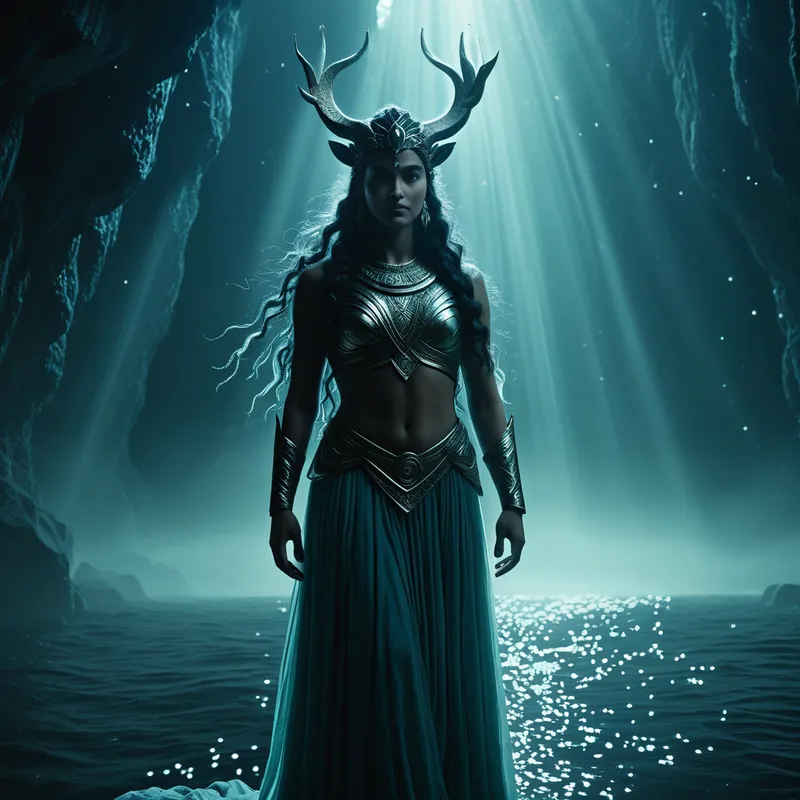
The Mortar of the Sky
A Yoruba creation myth about the celestial mortar that supports the heavens, exploring themes of divine responsibility and cosmic equilibrium.
The Tale of The Mortar of the Sky
In the beginning, there was only the primordial waters of Okun, and above it, a vast, formless expanse. The Supreme God, Olodumare, the owner of the ultimate source, willed the cosmos into being. He sent the divine architect, Obatala, down a great chain from the heavens to the waters, with a snail shell full of earth, a five-toed hen, and a palm nut. Obatala poured the earth upon the waters, and the hen scratched it, spreading it to form the solid land of Ilè-ayé. The palm nut grew into the first tree, its roots anchoring the new world.
But the sky, Orun, remained perilously close, pressing down upon the earth, a low and heavy lid on the newborn world. Life beneath it was cramped, stifled; humanity could not stand upright, and the breath of creation felt thin. Seeing this, Olodumare summoned the mightiest of the Orisha, Ogun, the master of iron, technology, and clear paths. To Ogun was given a sacred task: to forge a vessel of celestial strength, a mortar of infinite capacity, to lift the sky and hold it in its rightful place.
Ogun descended to the nascent earth. He did not dig iron from the ground, for the earth was still soft. Instead, he gathered the first principles of order—the unyielding logic of mathematics, the silent strength of mountains yet unborn, the patience of deep time. With his divine hammer, he pounded these abstracts not on an anvil, but upon the very concept of boundary and support. From this metaphysical forge emerged the Mortar of the Sky. It was not an object one could see with mortal eyes, but a presence one could feel—a profound, unwavering certainty at the four corners of the world.
Ogun placed this invisible, yet utterly real, mortar upon the broad back of the earth. Then, with a collective heave of all the Orisha, the sky was lifted and settled into this celestial vessel. A great sigh echoed through creation. The sky rose, vast and generous, allowing air, light, and rain to move freely. The world could breathe. The mortar held the bowl of the heavens aloft, its rim the horizon where Orun and Ilè-ayé meet in a perpetual, balanced embrace.
Yet, within this mortar, Olodumare placed a secret. It was not merely a physical support; it was the container for the delicate equilibrium of the cosmos. Within its unseen curve rested the counterweights of day and night, the tension between drought and flood, the balance between human free will (ayanmo) and supreme destiny (kadara). The mortar is the fulcrum. Should its contents be disturbed—should greed outweigh generosity, chaos overwhelm order, or arrogance displace humility—the mortar itself would tremble. The sky would not fall, for Ogun’s work is eternal, but the world within that sky would know suffering, discord, and the harsh lessons of imbalance. Thus, the mortar is both grace and responsibility, a divine gift that demands cosmic care.
Cultural Origins & Context
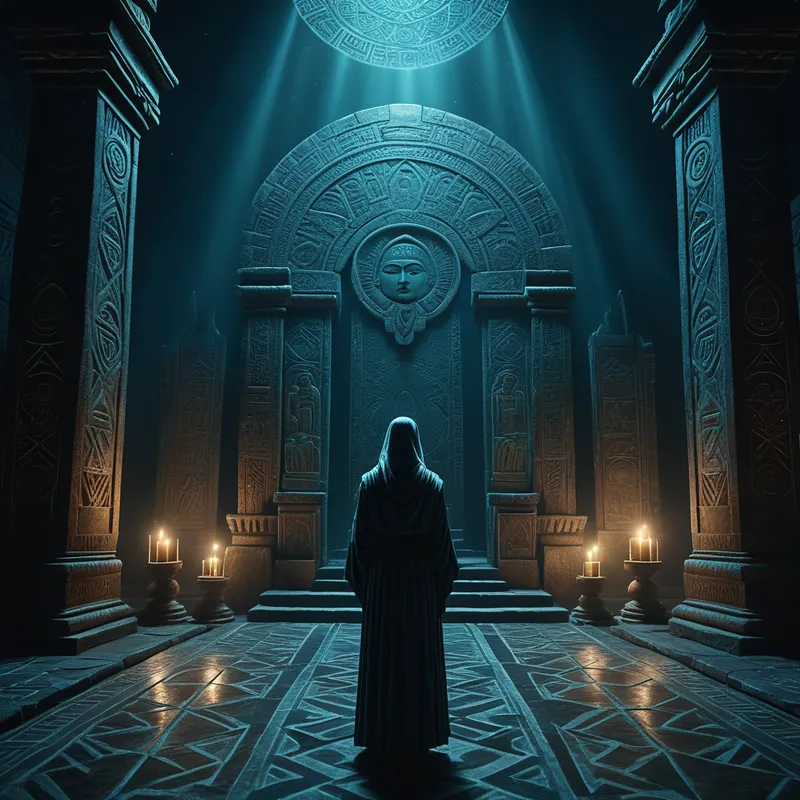
This myth is embedded in the rich oral and ritual traditions of the Yoruba people of West Africa and the African diaspora. It speaks to a core philosophical principle: Iwa Lewa (character is beauty), which extends to the cosmos itself. A beautiful, functional universe requires good character, balance (iwontunwonsi), and ethical living. The myth is not merely an etiological story explaining why the sky is high; it is a cosmological map of moral responsibility.
The narrative is often linked to the sacred Ifá literary corpus. Specific Odu (the foundational chapters of Ifá) reference the separation of heaven and earth as a foundational act that made life, choice, and destiny possible. The myth underscores the Yoruba view of a participatory cosmos. The Orisha are not distant rulers but divine forces involved in the ongoing maintenance of reality. Humanity, created by Obatala and given breath (emi) by Olodumare, lives within the space created by the mortar and thus shares in the duty to uphold the balance it represents.
Symbolic Architecture
The Mortar of the Sky is a master symbol of containment, foundation, and ethical geometry. It transforms the cosmos from a chaotic pile into a structured, habitable realm.
The mortar is the archetypal vessel. It holds the un-holdable—the sky—just as the human soul (ori) is a vessel for divine breath (emi), and the community is a vessel for shared destiny. Its function is silent, foundational, and absolute; it works only when unnoticed, a testament to perfect craftsmanship and perfect order.
Its symbolism is triune. First, as a Boundary, it creates the sacred space for life by separating the realms of the divine (Orun) and the earthly (Aye), allowing for the necessary tension and exchange between them. Second, as a Container, it holds the active principles of balance—the ethical and natural counterweights that keep the system in harmony. Third, as a Foundation, it is the non-negotiable base upon which all subsequent reality is built, a testament to the necessity of structure before flourish.
Psychologically, it represents the internalized structure of the Self—the ego’s capacity to hold the tension between opposites (conscious and unconscious, order and chaos, individual and collective), creating the "psychic space" in which conscious life and growth can occur.
The Dreamer's Resonance
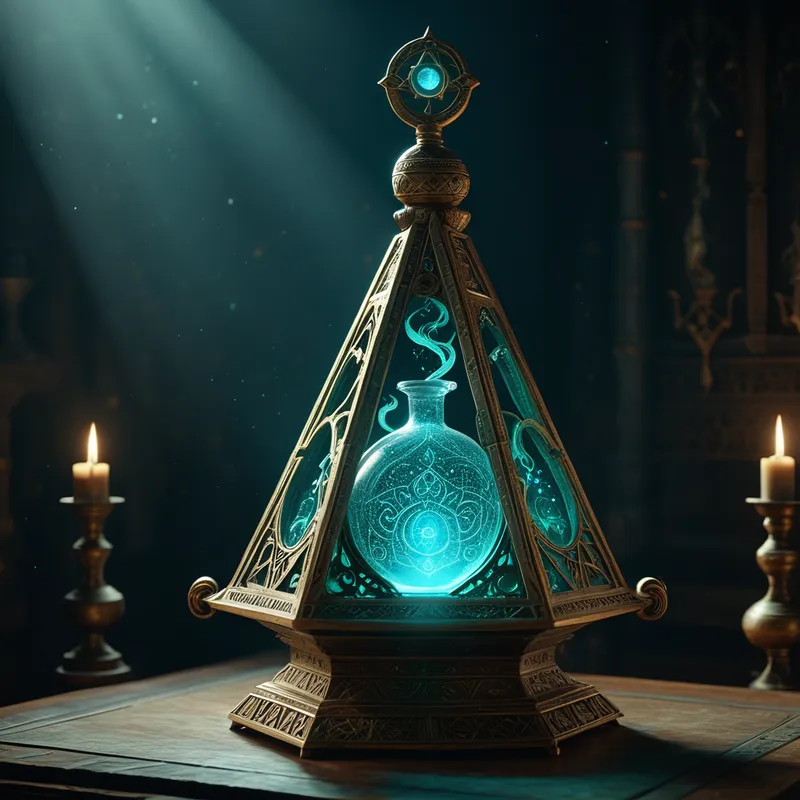
To encounter the Mortar of the Sky in a dream or vision is to confront the architecture of one’s own existence. It asks fundamental questions: What holds up your personal sky? What are the foundational principles—the often invisible ethics, habits, and beliefs—that create the space in which your life unfolds?
The dream image may manifest not as a literal mortar, but as a feeling of immense, silent support, or conversely, a terrifying tremor in one’s foundations. It can signal a time to examine the balance of forces within one’s life. Are responsibilities crushing creativity? Is passion undermining stability? The mortar reminds us that we are both the beneficiaries of a granted order and the custodians of its maintenance. A crumbling foundation in a dreamscape may not call for frantic propping up, but for a deep, Ogun-like return to first principles—to forge anew the core truths that can bear the weight of our expanding consciousness.

Alchemical Translation
In the soul’s alchemy, the myth of the mortar describes the opus of creating a durable inner vessel—the vas hermeticum—capable of containing the transformative process. The initial state is the massa confusa, the cramped, undifferentiated psyche where potential is stifled.
The lifting of the sky is the moment of separatio, the crucial differentiation that creates inner space. It is the conscious decision to hold opposing thoughts, feelings, and impulses apart, to examine them, rather than being crushed by their chaotic unity. This act requires the Ogun-force of will, discipline, and clear-cutting through psychic undergrowth.
The "secrets" placed within the mortar are the paradoxical laws of inner balance: that strength requires vulnerability, that growth requires decay, that light is defined by shadow. The alchemical goal is not to empty the mortar but to learn the art of its contents—to become the skilled weigher of one’s own soul, maintaining the equilibrium that allows for the golden precipitate, the integrated Self, to form in the spaciousness created.
Associated Symbols
Explore related symbols from the CaleaDream lexicon:
- Sky — The boundless expanse held aloft, representing consciousness, aspiration, and the realm of divine authority and potential.
- Earth — The foundational plane that supports the mortar, symbolizing the physical world, stability, fertility, and the grounded reality of existence.
- Balance — The core principle contained within the mortar, representing cosmic equilibrium, ethical harmony, and the just measure of all forces.
- Cosmic Balance — The specific application of equilibrium to the universal scale, the grand counterweight of celestial and moral laws held in the celestial vessel.
- Mountain — An echo of the mortar’s unshakable support and its role as the axis mundi, connecting and separating heaven and earth.
- Order — The divine principle enacted by the mortar’s placement, the structured arrangement of chaos into a habitable, meaningful cosmos.
- Stone Mortar — The earthly, tangible counterpart to the celestial one, representing the grounding of divine principles in ritual, sustenance, and daily transformative work.
- Trickster — The potential force of chaos that tests the integrity of the mortar’s balance, reminding that order is dynamic and must be continually engaged.
- Root — The hidden, anchoring strength that parallels the mortar’s foundational role, securing the visible world to its source of nourishment and stability.
- Bridge — The connection made possible by the separation, the means of communication and exchange between the realms that the mortar holds apart.