The Minotaur Myth Meaning & Symbolism
A king's broken vow births a monster, a maze is built to hide it, and a hero must descend into the dark to face the beast within.
The Tale of The Minotaur
Hear now of the beast in the belly of [the earth](/myths/the-earth “Myth from Hindu culture.”/), born from a king’s pride and a god’s wrath. It begins with a ship, white sails against a wine-dark sea, and a promise made to [Poseidon](/myths/poseidon “Myth from Greek culture.”/). [Minos](/myths/minos “Myth from Greek culture.”/), lord of mighty Crete, prayed for a sign of his rightful rule. From the foaming waves, [the Earth](/myths/the-earth “Myth from Hindu culture.”/)-Shaker sent a bull, a creature of such stunning perfection it seemed carved from moonlight and muscle. The vow was this: the bull would be sacrificed in the god’s honor. But when [Minos](/myths/minos “Myth from Greek culture.”/) saw the magnificent beast, greed coiled in his heart. He could not bear to destroy such splendor. He hid the divine bull in his herds and slew another in its place.
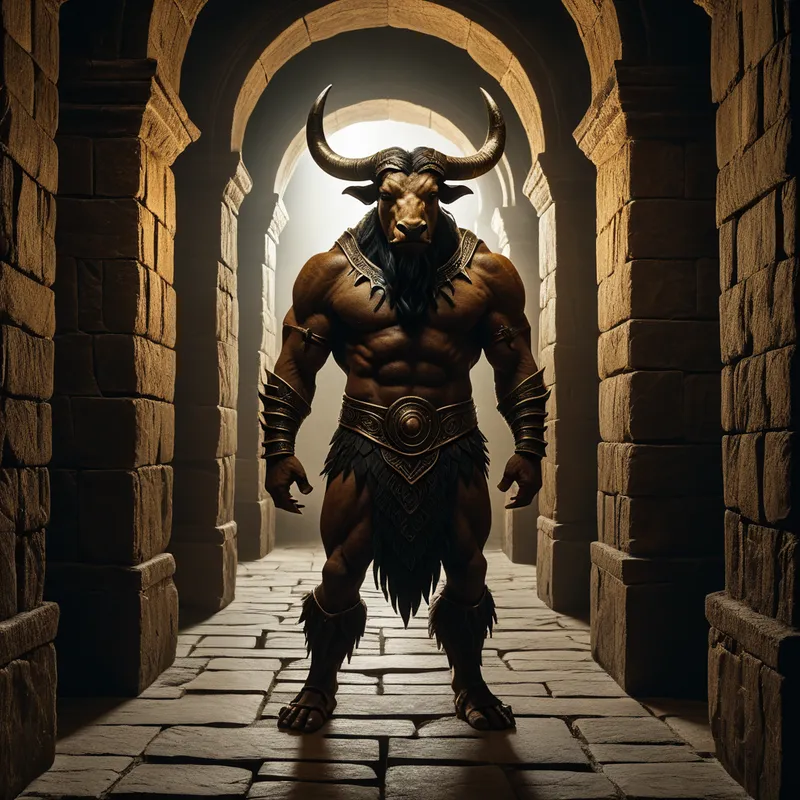
[The sea](/myths/the-sea “Myth from Greek culture.”/) is not so easily deceived. Poseidon’s vengeance was not a thunderbolt, but a twisting of desire. He inflamed Pasiphaë, the queen, with a monstrous passion for the white bull. Consumed by a fire not her own, she sought the help of the master craftsman, Daedalus. From wood and hide, he built for her a hollow cow, a deceitful shell. Within its dark confines, the queen waited. From this unnatural union, a child was born—but it was no child. It had the body of a powerful man and the head and tail of a bull. It was the [Minotaur](/myths/minotaur “Myth from Greek culture.”/), and its first cry was a roar that shook the palace foundations.
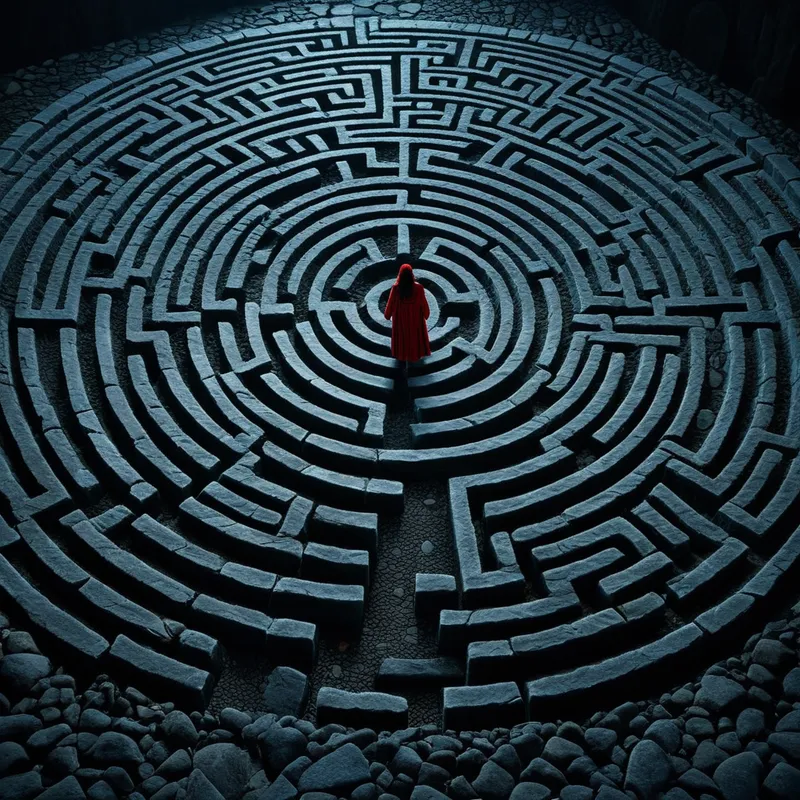
Shame and terror filled Minos. The monster was a walking testament to his broken oath and his queen’s disgrace. To hide his sin, he again summoned Daedalus, commanding him to build a prison from which nothing could escape. And so the [Labyrinth](/myths/labyrinth “Myth from Various culture.”/) was born at Knossos. Not merely a maze, but a place of endless, winding stone, a confusion made solid. Into its heart, they cast the bellowing Minotaur. And there it remained, in the perpetual dark, its only sustenance the human tributes sent from afar.
For Minos’s wrath had also fallen upon Athens, whom he blamed for the death of his son. As recompense, every nine years, seven Athenian youths and seven maidens were forced onto a black-sailed ship and delivered to Crete. They were led into the mouth of [the Labyrinth](/myths/the-labyrinth “Myth from Greek culture.”/), left to wander until the beast found them. The stone corridors echoed with their lost cries, then with silence.
Until the third tribute. Among the chosen was [Theseus](/myths/theseus “Myth from Greek culture.”/), prince of Athens, who vowed to end the slaughter. When the ship landed, Ariadne, the princess, saw him and her heart was ensnared. She went to Daedalus, who gave her the secret of the maze. That night, she found [Theseus](/myths/theseus “Myth from Greek culture.”/) and offered him a sword and a skein of thread. “Tie this to the entrance,” she whispered. “Unwind it as you go deep. It will be your path back from the dark.”
Theseus entered the place of echoes. The air was cold and smelled of damp stone and old fear. He followed the thread, a crimson line through the endless turns, listening for the scrape of hoof on rock, the hot, ragged breath of the beast. Deep in the absolute center, he found it. The Minotaur awaited, not as a mindless monster, but as a tragic figure of immense power, born of betrayal and imprisoned by shame. They fought, hero and beast, in the heart of the king’s hidden guilt. Theseus prevailed. Following the lifeline of Ariadne’s thread, he led the surviving Athenians from the terrible dark, back to [the world](/myths/the-world “Myth from Tarot culture.”/) of light and air, leaving the monster dead in its lair.
Cultural Origins & Context
The myth of the Minotaur is a foundational story of the Minoan and Mycenaean world, later codified by Athenian poets like Euripides and retold by historians like Plutarch. It functioned as an etiological tale, explaining Athenian tributes to Crete and celebrating Athenian heroism. The story was not mere entertainment; it was a societal narrative about order versus chaos, civilization versus the monstrous, and the consequences of failing divine and social contracts. The physical setting of Knossos, with its vast, complex palace ruins (which later Greeks believed to be the Labyrinth), gave the myth a potent geographical anchor. It was a story told to reinforce cultural identity, warn against hubris, and explore the terrifying price of broken oaths.
Symbolic Architecture
The myth is a masterful [blueprint](/symbols/blueprint “Symbol: A blueprint represents the foundational plan or design for something, often symbolizing potential, structure, and the mapping of one’s inner self or future.”/) of the [psyche](/myths/psyche “Myth from Greek culture.”/). The [Labyrinth](/symbols/labyrinth “Symbol: The labyrinth represents a complex journey, symbolizing the intricate path toward self-discovery and understanding one’s life’s direction.”/) is not just a [prison](/symbols/prison “Symbol: Prison in dreams typically represents feelings of restriction, confinement, or a lack of freedom in one’s life or mind.”/); it is the unconscious mind itself—winding, disorienting, and containing what we have cast into [shadow](/symbols/shadow “Symbol: The ‘shadow’ embodies the unconscious, repressed aspects of the self and often represents fears or hidden emotions.”/).
The monster is not placed in the labyrinth; the labyrinth is built around the monster.
The [Minotaur](/symbols/minotaur “Symbol: The Minotaur, a creature from Greek mythology, is often interpreted as a symbol of inner turmoil and the struggle between human and beast.”/) represents the rejected, hybrid self, the consequence of unintegrated instincts (the [bull](/symbols/bull “Symbol: The bull often symbolizes strength, power, and determination in many cultures.”/)) and conscious [identity](/symbols/identity “Symbol: Identity represents the sense of self, encompassing personal beliefs, cultural background, and social roles.”/) (the man). It is the “bastard” [child](/symbols/child “Symbol: The child symbolizes innocence, vulnerability, and potential growth, often representing the dreamer’s inner child or unresolved issues from childhood.”/) of a divine transgression (Minos’s greed) and a distorted [passion](/symbols/passion “Symbol: Intense emotional or physical desire, often linked to love, creativity, or purpose. Represents life force and deep engagement.”/) (Pasiphaë’s [curse](/symbols/curse “Symbol: A supernatural invocation of harm or misfortune, often representing deep-seated fears, guilt, or perceived external malevolence.”/)), symbolizing what is created when we deny a sacred [obligation](/symbols/obligation “Symbol: A perceived duty or responsibility imposed by social norms, relationships, or internalized expectations, often involving a sense of being bound to act.”/) or when natural desire is perverted by deceit. It is the [symptom](/symbols/symptom “Symbol: A physical or emotional sign indicating an underlying imbalance, distress, or message from the unconscious mind.”/) of a repressed complex, fed by periodic sacrifices—the recurring anxieties, shames, and unresolved traumas we feed it.
Theseus is [the ego](/myths/the-ego “Myth from Jungian culture.”/)-[consciousness](/symbols/consciousness “Symbol: Consciousness represents the state of awareness and perception, encompassing thoughts, feelings, and experiences.”/) that chooses to enter the [maze](/symbols/maze “Symbol: A maze represents confusion, complexity, or a search for truth, often reflecting life’s challenges or inner turmoil.”/) voluntarily, the heroic [aspect](/symbols/aspect “Symbol: A distinct feature, quality, or perspective of something, often representing a partial view of a larger whole.”/) of the psyche that seeks [resolution](/symbols/resolution “Symbol: In arts and music, resolution refers to the movement from dissonance to consonance, creating a sense of completion, release, or finality in a composition.”/). Ariadne’s thread is the [symbol](/symbols/symbol “Symbol: A symbol can represent an idea, concept, or belief, serving as a powerful tool for communication and understanding.”/) of relatedness and the guiding principle of consciousness ([logos](/myths/logos “Myth from Christian culture.”/) or intellect, gifted by Daedalus). It is the fragile but persistent [connection](/symbols/connection “Symbol: Connection symbolizes relationships, communication, and bonds among individuals.”/) to the outer world, to love, to [memory](/symbols/memory “Symbol: Memory symbolizes the past, lessons learned, and the narratives we construct about our identities.”/), that allows one to descend into [chaos](/symbols/chaos “Symbol: In Arts & Music, chaos represents raw creative potential, uncontrolled expression, and the breakdown of order to forge new artistic forms.”/) and return transformed, not lost.
The Dreamer’s Resonance
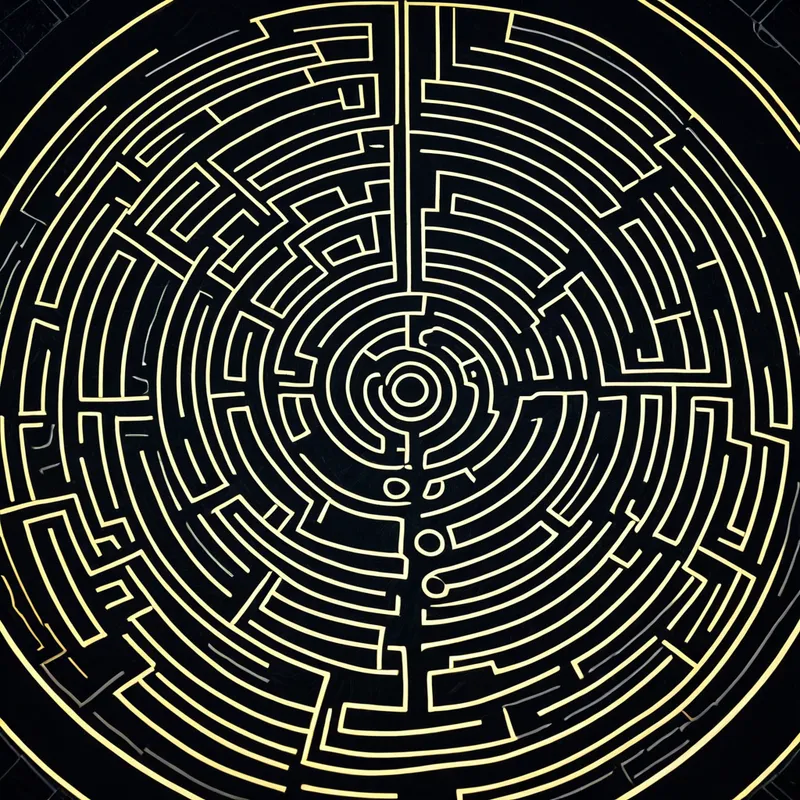
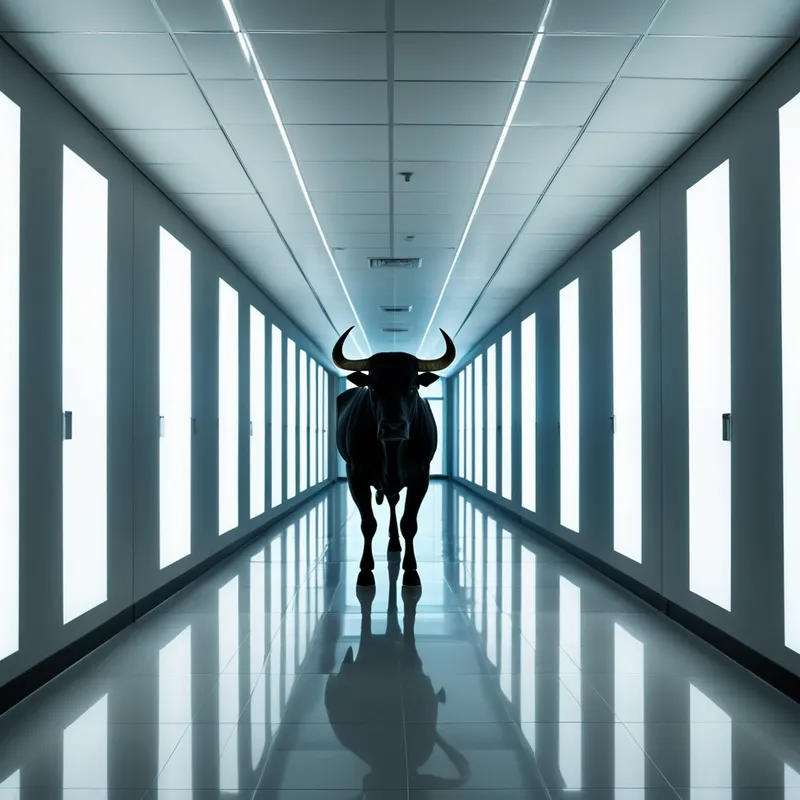
When this myth pattern stirs in modern dreams, it signals a profound confrontation with the personal shadow. Dreaming of being lost in a maze, office complex, or endless basement signifies a state of psychic disorientation, where the conscious mind has lost its way in the complexities of an inner conflict. The feeling is somatic: a tightening in the chest, a shortness of breath, the chill of the stone.
To dream of a hidden, powerful, or hybrid creature (not necessarily a bull-man) waiting at the center indicates that a long-avoided aspect of [the self](/myths/the-self “Myth from Jungian culture.”/) is demanding recognition. This is not a call to “slay” the beast, but to face it. The anxiety of the dream is the ego’s resistance to this encounter. The dream may present a “thread”—a helping figure, a sudden memory, a phone line, a literal string—representing the nascent insight or connection needed to navigate the process. The dream is the psyche’s Labyrinth, and the dreamer is both the tribute and the potential Theseus.
Alchemical Translation
The myth models the alchemical process of individuation, where base elements of the psyche are transmuted into gold. The initial state is one of confusion (the maze) caused by a hidden flaw (Minos’s broken vow). The monstrous [nigredo](/myths/nigredo “Myth from Alchemical culture.”/) is embodied by the Minotaur—the dark, chaotic, and shameful material we refuse to acknowledge.
The descent into the labyrinth is the necessary mortificatio, the death of the ego’s illusion of control and purity.
Theseus’s journey is the [separatio](/myths/separatio “Myth from Alchemical culture.”/): he must differentiate himself from the collective fate (the other tributes) and follow his own thread. The confrontation is the coniunctio—not a gentle union, but a violent engagement with the opposite. He does not befriend the Minotaur; he slays it. In psychological terms, this is the integration of [the shadow](/myths/the-shadow “Myth from Jungian culture.”/), not by becoming the monster, but by consciously assimilating its raw power and ending its autonomous, destructive reign over the inner world.
Emerging with the thread intact is the albedo, the illumination. The hero returns to light, but he is changed. He has reclaimed the sacrificed energy that was fed to the monster. For the modern individual, this translates to the hard-won insight that frees one from a repetitive, sacrificial pattern—be it a toxic relationship, a crippling addiction, or a cycle of self-sabotage. The maze remains as memory and structure, but the center is now empty, a sacred space where a monster once ruled, ready to be filled with something new, something whole.
Associated Symbols
Explore related symbols from the CaleaDream lexicon: