The Messiah Stories Myth Meaning & Symbolism
A tapestry of prophecies and yearnings for a figure who will end exile, restore justice, and usher in an age of universal peace and divine presence.
The Tale of The Messiah Stories
Listen. There is a story woven into the very fabric of time, a thread of gold spun through centuries of longing. It is not a story of one man, but of a promise—a breath held by an entire people, a sigh that became a prophecy.
In the beginning was the Word, and the Word was a covenant. A people were chosen, not for ease, but for witness. They walked with the Divine Presence, the Shekhinah, in a garden of law and light. But hearts grew heavy, and feet wandered. The temple, that nexus of heaven and earth, was shattered—once, twice—its stones weeping and its gold carried off to foreign lands. The people were scattered like seeds to the four winds, and the Shekhinah went into exile with them.
In the long night of this exile, the prophets arose. They were voices crying in the wilderness, their eyes scorched by visions of what could be. Isaiah saw a shoot from the stump of Jesse—a branch that would bear fruit. He would be a king, but unlike any other. The spirit of wisdom, understanding, counsel, and might would rest upon him. He would not judge by what his eyes saw, but with righteousness for the poor. The wolf would dwell with the lamb, the leopard lie down with the kid. They would not hurt or destroy on all God’s holy mountain, for the earth would be full of the knowledge of the Divine as the waters cover the sea.
Micah whispered of one who would come forth from Bethlehem, whose origins were from of old, from ancient days. He would stand and shepherd his flock in the strength of the Divine, and they would live securely, for his greatness would reach to the ends of the earth. And he would be peace.
Zechariah saw a figure, humble and riding on a donkey, on a colt, the foal of a donkey. He would cut off the chariot and the war horse, and command peace to the nations.
But other threads were darker, more complex. Daniel spoke of a mysterious “Son of Man” coming with the clouds of heaven, given dominion and glory and a kingdom that all peoples should serve. The rabbis of the Talmud pondered a suffering servant, a Mashiach son of Joseph, who would fall in battle before the final triumphant Mashiach son of David would arise. This was a story of catastrophe and glory intertwined, of a world in unbearable labor pains before the birth of a new age—the Olam Ha-Ba.
And so the people waited. In every generation, they said, the Mashiach could come—if they were worthy. They set an extra place at the Seder table for Elijah, the harbinger. They sang of the day when the great shofar would be blown, and the exiles gathered from the corners of the earth. They dreamed of a world repaired, a world at peace, where the Divine Presence would return to dwell, visibly, tangibly, in Zion. The story was not an ending, but a horizon—always receding, always pulling the heart forward.
Cultural Origins & Context
The Messiah Stories are not a single, unified narrative but a collective symphony of hope composed over millennia. Their roots dig deep into the soil of ancient Israel’s covenant theology—the promise that David’s lineage would rule forever (2 Samuel 7). The trauma of the Babylonian exile (586 BCE) acted as a crucible, forging vague royal hopes into explicit, future-oriented prophecies of restoration. The failed revolts against Rome (66-70 CE and 132-135 CE) and the subsequent, seemingly permanent exile (Galut) further deepened and complicated the myth.
The stories were passed down through sacred scripture (the Tanakh), elaborated in the rabbinic commentaries of the Talmud and Kabbalah, and lived in ritual and liturgy. Every Passover concludes with “Next year in Jerusalem!” The daily Amidah prayer pleads for the sprouting of David’s offspring and the rebuilding of Jerusalem. The myth functioned as a psychological and social survival mechanism. It transformed passive suffering into active waiting, giving meaning to persecution and a telos to history. It was the North Star for a people navigating the long night of diaspora, a guarantee that history was going somewhere—toward Tikkun Olam, the mending of the world.
Symbolic Architecture
At its core, the Messiah myth is the archetypal [drama](/symbols/drama “Symbol: Drama signifies narratives, emotional expression, and the exploration of human experiences.”/) of the fractured Self yearning for wholeness. The exiled people mirror the exiled [soul](/symbols/soul “Symbol: The soul represents the essence of a person, encompassing their spirit, identity, and connection to the universe.”/), and the promised Mashiach represents the latent, integrated [personality](/symbols/personality “Symbol: Personality in dreams often symbolizes the traits and characteristics of the dreamer, reflecting how they perceive themselves and how they believe they are perceived by others.”/)—the Self in Jungian terms—that can heal the [rupture](/symbols/rupture “Symbol: A sudden break or tear in continuity, often representing abrupt change, separation, or the shattering of established patterns.”/).
The Messiah is not a person who will come, but a potentiality within the collective soul that must be realized.
The Olam Ha-Ba symbolizes a state of complete psychic [integration](/symbols/integration “Symbol: The process of unifying disparate parts of the self or experience into a cohesive whole, often representing psychological wholeness or resolution of internal conflict.”/), where inner conflicts ([wolf](/symbols/wolf “Symbol: Wolves in dreams symbolize instinct, intelligence, freedom, and a deep connection to the wilderness and primal instincts.”/) and [lamb](/symbols/lamb “Symbol: A symbol of innocence, purity, sacrifice, and new beginnings, often representing vulnerability and gentleness.”/)) are reconciled, and the ego is properly oriented toward the transpersonal center (the [knowledge](/symbols/knowledge “Symbol: Knowledge symbolizes learning, understanding, and wisdom, embodying the acquisition of information and enlightenment.”/) of God covering the [earth](/symbols/earth “Symbol: The symbol of Earth often represents grounding, stability, and the physical realm, embodying a connection to nature and the innate support it provides.”/)). The suffering servant [motif](/symbols/motif “Symbol: A recurring thematic element, pattern, or design in artistic or musical works, representing underlying ideas or emotional currents.”/) acknowledges the immense cost of this transformation—the old [consciousness](/symbols/consciousness “Symbol: Consciousness represents the state of awareness and perception, encompassing thoughts, feelings, and experiences.”/), the old world order, must die for the new to be born. The Messiah is both the agent and the [symbol](/symbols/symbol “Symbol: A symbol can represent an idea, concept, or belief, serving as a powerful tool for communication and understanding.”/) of this [alchemical process](/symbols/alchemical-process “Symbol: A symbolic transformation of base materials into spiritual gold, representing inner purification, integration, and the journey toward wholeness.”/): the lead of historical [trauma](/symbols/trauma “Symbol: A deeply distressing or disturbing experience that overwhelms the psyche, often manifesting in dreams as unresolved emotional wounds or psychological injury.”/) and spiritual longing transmuted into the gold of redeemed existence.
The Dreamer’s Resonance
When this myth stirs in the modern dreamer, it speaks to a profound crisis of meaning and a longing for deliverance from an internal exile. Dreaming of a awaited but never-arriving guide, of a task of cosmic importance that feels both assigned and impossible, or of a promised land seen from a distance—these are messianic motifs.
Somatically, this may manifest as a chronic tension between the heart and the horizon, a feeling of being “chosen” for a burden one did not choose. Psychologically, it is the process of confronting the gap between one’s current, fragmented state and one’s potential wholeness. The dreamer is in the “birth pangs of the Messiah”—the often painful, chaotic, and confusing period where the old psychic structures are breaking down to make way for a new, more authentic ordering of the personality. The dream may highlight the “suffering servant” phase, where one feels sacrificed to a process larger than oneself.
Alchemical Translation
For the individual, the Messiah myth maps the path of individuation—the journey toward becoming who one truly is. The first stage is Exile (Galut): the feeling of being disconnected from one’s essence, living by the values of the “outer empire” (societal expectations, the persona). This is a necessary darkness.
The second is Prophecy and Waiting: the emergence of inner guidance (the prophetic function of the unconscious) that hints at a greater possibility. This is the nurturing of the “shoot from the stump,” the fragile, true self.
The crucible is Catastrophe and Sacrifice: the Mashiach ben Yosef phase. Here, the ego must endure suffering and be humbled (the donkey ride). Old identities and defenses must die. This is the nigredo, the blackening.
The culmination is Redemptive Integration: the Mashiach son of David arrives. This is not the ego becoming a king, but the ego submitting to the rightful rule of the Self. The inner opposites are reconciled (lion/lamb), and one’s personal life becomes a vessel for the transpersonal—the Shekhinah returns to dwell within. The work is Tikkun, not of the world out there first, but of the world in here. The messianic age dawns when the individual takes full responsibility for their own redemption.
To wait for the Messiah is to wait for one’s own completed self. To hasten his coming is to engage courageously in the work of inner repair.
Associated Symbols
Explore related symbols from the CaleaDream lexicon:
- Star — The Magen David, a symbol of the divine promise and the hoped-for dawn of the messianic era, guiding the people through the night of exile.
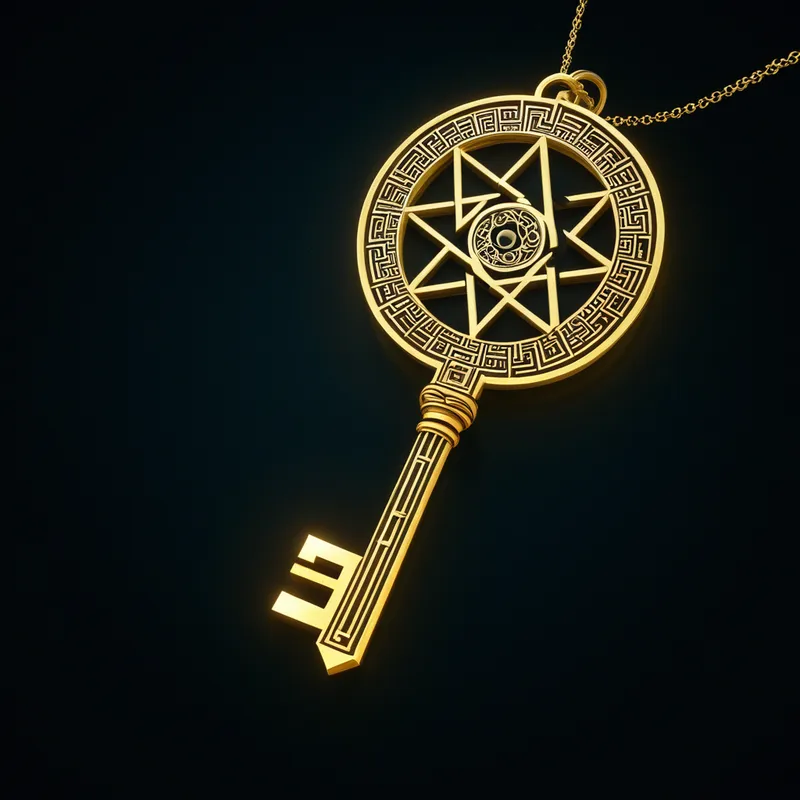
- Key — Represents the power to end the exile and unlock the gates of righteousness, justice, and the final redemption, often held by the prophet Elijah.
- Temple — The symbol of the perfected world order, the integrated Self, and the dwelling place of the divine presence that must be rebuilt within and without.
- Sacrifice — The necessary suffering of the servant-messiah and the cost of cosmic repair, embodying the painful dissolution of the old consciousness.
- Light — The divine knowledge and presence that will flood the world in the messianic age, representing enlightenment and the end of inner darkness.
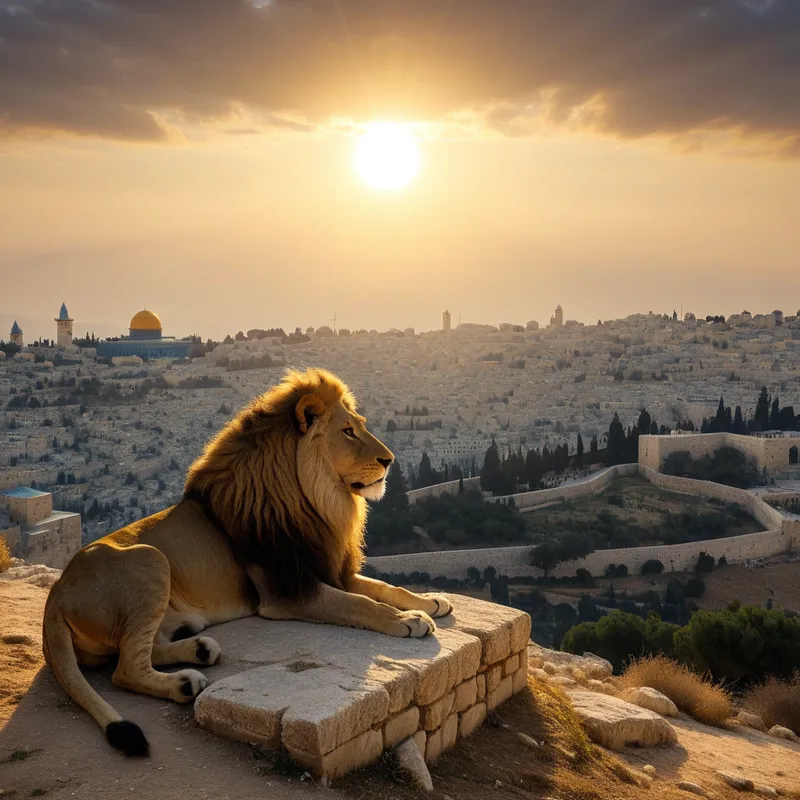
- Lion — The powerful, regal aspect of the Messiah from the tribe of Judah, lying peacefully with the lamb, symbolizing the integration of fierce power with gentle peace.
- Journey — The long, collective path of exile and return, the pilgrimage of the soul back to its source and wholeness.
- Crown — The rightful sovereignty of the Davidic line and the achieved authority of the integrated Self, ruling with justice and compassion.
- River — The flow of prophecy, wisdom, and the life-giving waters of redemption that will issue forth from Jerusalem in the messianic vision.
- Root — The hidden, ancient lineage of David and the deep, often unconscious, connection to tradition and source from which the messianic hope springs.
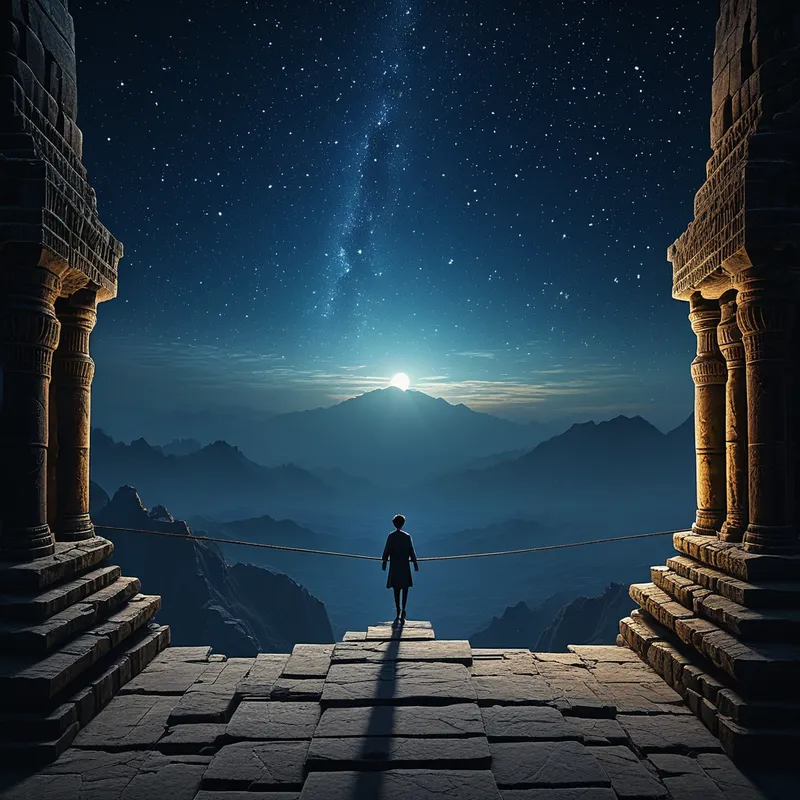
- Bridge — The Messiah as the connector between heaven and earth, the divine and the human, exile and homeland, fragmentation and wholeness.
- Stone — The foundation stone of Zion, the rebuilt Temple, and the enduring, unmovable nature of the divine promise through all generations.