
The Magic Lamp Aladdin
A poor young man discovers a magical lamp containing a powerful genie, transforming his destiny through wishes that reveal deeper lessons about fortune and morality.
The Tale of The Magic Lamp Aladdin
In the winding, sun-baked streets of a city in the Maghreb or the distant lands of China—as the storyteller wills—lived a young man named Aladdin. He was fatherless, his days a tapestry of poverty and idle potential, scolded by his weary mother for his lack of trade. His life was a vessel waiting to be filled, a story yet to be inscribed.
This emptiness drew the gaze of a sorcerer from the west, a false uncle who saw in Aladdin not a nephew, but an instrument. He needed a pure, unwitting hand to retrieve a treasure no cunning magician could touch: a simple, tarnished oil lamp, hidden in a subterranean garden of stone and enchantment. Led into [the earth](/myths/the-earth “Myth from Hindu culture.”/), through chambers glittering with [forbidden fruit](/myths/forbidden-fruit “Myth from Christian culture.”/), Aladdin was instructed to take nothing but [the lamp](/myths/the-lamp “Myth from Alchemical culture.”/). Yet, when the sorcerer demanded the prize be passed upward first, Aladdin, trapped and suspicious, refused. Enraged, [the magician](/myths/the-magician “Myth from Tarot culture.”/) sealed the mouth of [the earth](/myths/the-earth “Myth from Hindu culture.”/), entombing the boy with his prize.
In the darkness, as despair threatened to consume him, Aladdin rubbed the lamp—perhaps to clean it, perhaps in a gesture of helpless frustration. From its spout erupted not smoke, but a presence that filled the cavern: a jinn of colossal power, bound to the lamp’s possessor. “Command me,” it intoned, “for I am the slave of whoever holds the lamp.” With a trembling voice, Aladdin wished not for kingdoms, but for the simple, profound grace of return: “Take me home.”
Thus began the alchemy of his soul. The genie of the lamp, and later the genie of a recovered ring, became the architects of his destiny. He wished for a feast to appease his mother, then for riches to marry the Sultan’s daughter, the Princess Badroulbadour. His grandest wish materialized as a palace of unimaginable splendor, a testament to divine power conjured overnight beside the Sultan’s own. Yet, this meteoric ascent was fragile. The spurned sorcerer returned, and through cunning trickery—the cry of “new lamps for old!”—reclaimed the source of Aladdin’s power. In an instant, palace and princess vanished, transported to the sorcerer’s distant African homeland.
Stripped of his magical proxy, Aladdin stood truly naked for the first time. The ring’s lesser genie could guide, but not restore. The journey that followed was not of magic, but of grit, tears, and cunning. He crossed deserts, infiltrated the sorcerer’s stronghold, and with the help of his loyal wife, orchestrated the villain’s downfall and the lamp’s recovery. The final restoration was not merely of a palace, but of a self. Aladdin, who began as a vessel of lack, became a sovereign—not by the genie’s power alone, but through [the crucible](/myths/the-crucible “Myth from Alchemical culture.”/) of its loss and the courageous reclamation of his own fate.
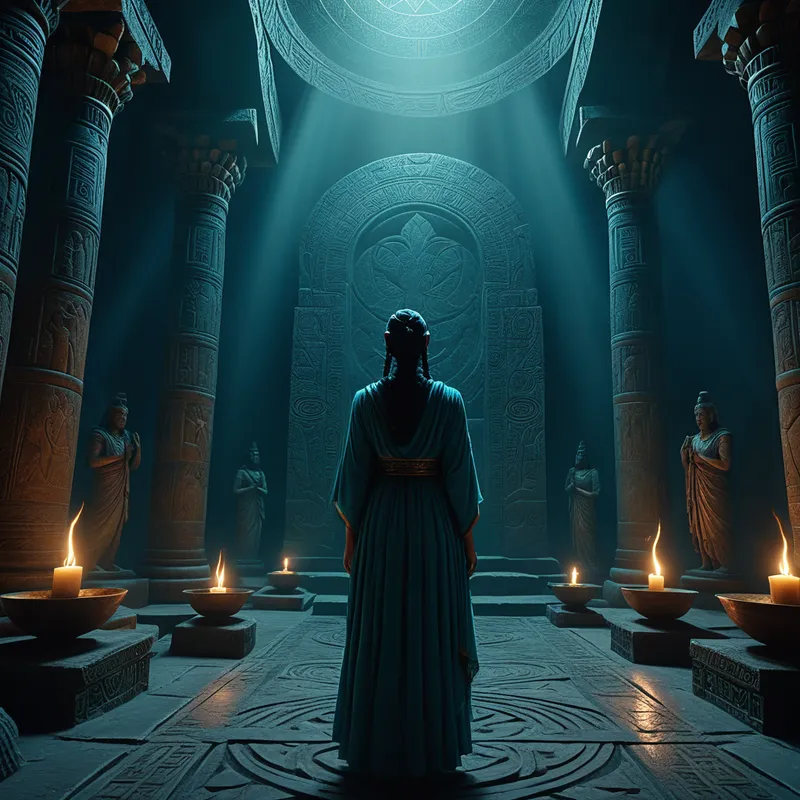
Cultural Origins & Context
The tale of Aladdin is a jewel with a complex setting. Although immortalized in Antoine Galland’s 18th-[century](/myths/century “Myth from Biblical culture.”/) French translation of [The Thousand and One Nights](/myths/the-thousand-and-one-nights “Myth from Arabian culture.”/), its origins are deeply woven into the fabric of Islamic and Middle Eastern oral tradition. Galland heard the story from a Syrian Maronite storyteller, Hanna Diyab, and its themes resonate with classical Islamic concerns about destiny, wealth, and the unseen world.
The story exists in the liminal space between earthly struggle and celestial possibility, a space defined by the Islamic concept of Qadar. Aladdin’s sudden fortune challenges a simple reading of fate; is his wealth qadar, or is it a test? The presence of [the jinn](/myths/the-jinn “Myth from Pre-Islamic Arabian / Islamic culture.”/) is crucial here. In Islamic cosmology, jinn are real beings of smokeless fire, with free will, capable of both good and evil, subservience and rebellion. They inhabit the ghayb—the unseen world. The genie of the lamp is thus not a fantastical invention but a narrative engagement with a real cosmological belief, a force from the ghayb made manifest to alter the shahada, the witnessed world.
Furthermore, the tale navigates the tension between rizq (sustenance, provision from God) and kasb (human effort and acquisition). Aladdin’s initial state is one of lacking rizq. The lamp provides unimaginable rizq, but passively, without kasb. The crisis comes when this unearned provision is stripped away, forcing Aladdin to synthesize the two—to use his wits (aql) and courage (shuja’a) to reclaim what was first given. This mirrors a profound spiritual lesson: divine grace may lift you, but it is your own striving that makes you worthy of remaining aloft.
Symbolic Architecture
At its [heart](/symbols/heart “Symbol: The heart symbolizes love, emotion, and the core of one’s existence, representing deep connections with others and self.”/), the myth is a map of the [psyche](/myths/psyche “Myth from Greek culture.”/)’s transformation. Aladdin begins in a state of puer [consciousness](/symbols/consciousness “Symbol: Consciousness represents the state of awareness and perception, encompassing thoughts, feelings, and experiences.”/)—the eternal boy, unfocused, dreamy, and fatherless, both literally and symbolically. The underground garden is the unconscious itself, filled with the glittering but untapped potentials (the jewels) and the central, transformative object: the [lamp](/symbols/lamp “Symbol: A lamp symbolizes guidance, enlightenment, and the illumination of truth, often representing knowledge or clarity in dark times.”/). The lamp is the dormant Self, the encapsulated totality of one’s power, buried under the [dust](/symbols/dust “Symbol: Dust often symbolizes neglect, forgotten memories, or the passage of time and life’s impermanence.”/) of neglect and circumstance.
The act of rubbing the lamp is the first, crucial act of attention. It is the friction of consciousness applied to the dormant self, the spark that ignites the inner fire and summons the tremendous, often terrifying, power of the psyche into service.
The genie is the raw, archetypal power of the unconscious, bound to serve the one who consciously holds the [vessel](/symbols/vessel “Symbol: A container or structure that holds, transports, or protects something essential, representing the self, emotions, or life journey.”/). It can build palaces or destroy worlds, but it has no inherent moral compass; it merely executes the will, or the whim, of the possessor. This is where the [story](/symbols/story “Symbol: The symbol of ‘Story’ represents the narrative woven through our lives, embodying experiences, lessons, and emotions that shape our identities.”/)’s morality plays out—not in forbidding wishes, but in demonstrating that wishes made from a childish or fearful consciousness create a fragile [reality](/symbols/reality “Symbol: Reality signifies the state of existence and perception, often reflecting one’s understanding of truth and life experiences.”/). The [palace](/symbols/palace “Symbol: A palace symbolizes grandeur, authority, and the pursuit of one’s ambitions or dreams, often embodying a desire for stability and wealth.”/), for all its splendor, can be whisked away because its [foundation](/symbols/foundation “Symbol: A foundation symbolizes the underlying support systems, values, and beliefs that shape one’s life, serving as the bedrock for growth and development.”/) is not in the earned [strength](/symbols/strength “Symbol: ‘Strength’ symbolizes resilience, courage, and the ability to overcome challenges.”/) of Aladdin’s [character](/symbols/character “Symbol: Characters in dreams often signify different aspects of the dreamer’s personality or influences in their life.”/), but in a command given to a slave.
The [loss](/symbols/loss “Symbol: Loss often symbolizes change, grief, and transformation in dreams, representing the emotional or psychological detachment from something or someone significant.”/) of the lamp is therefore the necessary [night](/symbols/night “Symbol: Night often symbolizes the unconscious, mystery, and the unknown, representing the realm of dreams and intuition.”/) sea [journey](/symbols/journey “Symbol: A journey in dreams typically signifies adventure, growth, or a significant life transition.”/). It is the withdrawal of [projection](/symbols/projection “Symbol: The unconscious act of attributing one’s own internal qualities, emotions, or shadow aspects onto external entities, people, or situations.”/), the [moment](/symbols/moment “Symbol: The symbol of a ‘moment’ embodies the significance of transient experiences that encapsulate emotional depth or pivotal transformations in life.”/) when the magic we thought was “out there” is revealed to have been a part of us all along, now stolen by a [shadow figure](/symbols/shadow-figure “Symbol: The shadow figure represents the repressed or hidden aspects of oneself, often embodying fears or unresolved conflicts that can impact personal growth.”/) (the sorcerer). To recover it, Aladdin must leave home, traverse [the desert](/myths/the-desert “Myth from Biblical culture.”/) (the arid [landscape](/symbols/landscape “Symbol: Landscapes in dreams are powerful symbols representing the dreamer’s emotional state, personal journey, and the broader context of life situations.”/) of the [soul](/symbols/soul “Symbol: The soul represents the essence of a person, encompassing their spirit, identity, and connection to the universe.”/) in [crisis](/symbols/crisis “Symbol: A crisis symbolizes turmoil, urgent challenges, and the need for immediate resolution or change.”/)), and confront the [shadow](/symbols/shadow “Symbol: The ‘shadow’ embodies the unconscious, repressed aspects of the self and often represents fears or hidden emotions.”/) on its own ground. His victory, achieved with the [Princess](/symbols/princess “Symbol: The symbol of a princess embodies themes of power, privilege, and feminine grace, often entailing a journey of self-discovery.”/)’s cleverness, signifies the [integration](/symbols/integration “Symbol: The process of unifying disparate parts of the self or experience into a cohesive whole, often representing psychological wholeness or resolution of internal conflict.”/) of the [anima](/symbols/anima “Symbol: The feminine archetype within the male unconscious, representing soul, creativity, and connection to the inner world.”/) (the feminine principle of relatedness and wisdom) with the [hero](/symbols/hero “Symbol: A hero embodies strength, courage, and the ability to overcome significant challenges.”/)’s resolve, leading to the true, secure possession of [the Self](/myths/the-self “Myth from Jungian culture.”/).
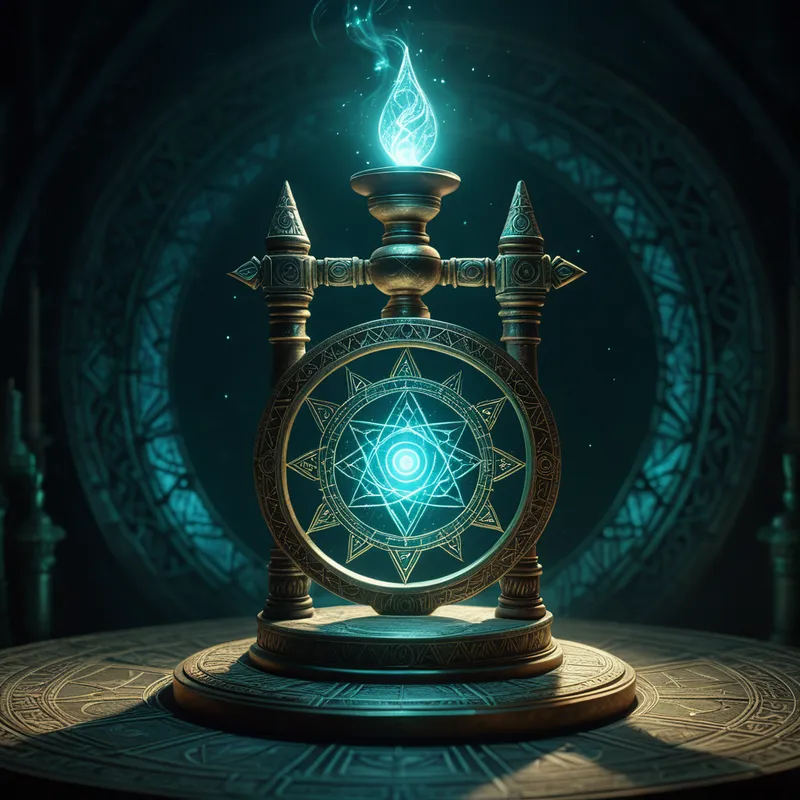
The Dreamer’s Resonance
Why does this tale, of all tales, hold such enduring power in the global imagination? It speaks directly to the universal dream of sudden, effortless transformation—the lottery win, the discovery of hidden talent, the love that rescues. It validates our deepest fantasies of being the “chosen one,” the overlooked vessel of greatness. In dreams, we may find ourselves in caverns discovering strange objects, or being granted powers that solve intractable problems, mirroring Aladdin’s initial descent and ascent.
Yet, the myth’s deeper resonance lies in its second act: the loss. This is the part we often forget in our wishing. In the dreamer’s life, this translates to the collapse of the identity built on unearned privilege, the discovered talent that fails under pressure, the relationship that cannot sustain idealized [projection](/myths/projection “Myth from Alchemical culture.”/). The story tells us this collapse is not a tragedy, but the beginning of the real work. It forces the dreamer out of the passive role of “wisher” and into the active role of “seeker.” The lamp must be lost so that the hero can be found. In our own journeys, we are called not just to find our magic, but to lose it, and in the desperate search to reclaim it, to discover we are the magic we sought.
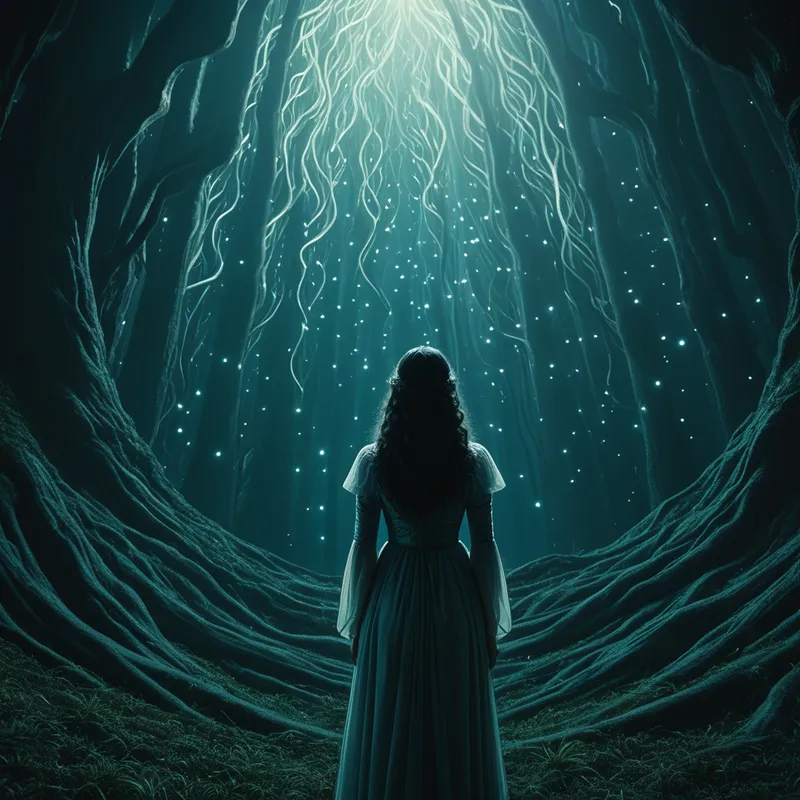
Alchemical Translation
The myth is a perfect allegory for the alchemical process. Aladdin, the [prima materia](/myths/prima-materia “Myth from Alchemical culture.”/), is base and unformed. The underground journey is the descensus ad inferos, the necessary descent into the dark, moist earth (the unconscious) for the [nigredo](/myths/nigredo “Myth from Alchemical culture.”/), the blackening of the initial, naive state. The lamp is the lapis, the philosopher’s stone in its crude, unactivated form.
The genie is the spiritus mercurius, the volatile, transformative spirit imprisoned in matter. Rubbing the lamp is the application of heat and friction (solve), releasing this spirit to begin the work of transmutation, elevating the base lead of Aladdin’s life into the gold of kingship.
But this first gold is false, a aureum non aurum (gold that is not gold). It lacks fixity. The sorcerer’s theft represents the [separatio](/myths/separatio “Myth from Alchemical culture.”/), the dividing of the volatile from the fixed, the spirit from the conscious ego that must learn to contain it. Aladdin’s arduous journey to Africa is the coagula, the long, slow process of re-solidification, of integrating the lesson. The final recovery and the sorcerer’s [death](/myths/death “Myth from Tarot culture.”/) signify the [rubedo](/myths/rubedo “Myth from Alchemical culture.”/), the reddening—the achievement of the true, incorruptible [lapis philosophorum](/myths/lapis-philosophorum “Myth from Alchemical culture.”/). The Self is now fixed, conscious, and sovereign. The genie, once a master, is now a integrated servant of a realized individual.
Associated Symbols
Explore related symbols from the CaleaDream lexicon:
- Lamp — [The vessel](/myths/the-vessel “Myth from Alchemical culture.”/) of the dormant Self and latent potential; its light is only revealed through the active friction of consciousness and effort.
- Cave — [The womb](/myths/the-womb “Myth from Various culture.”/) of the unconscious, a place of perilous descent where the treasures of the psyche are hidden and guarded by shadow.
- Genie — The raw, archetypal power of the unconscious, bound to serve the conscious will but amoral in its execution, representing both immense creative and destructive potential.
- Transformation Cocoon — The entire narrative arc of Aladdin’s journey, from idle youth to integrated sovereign, symbolizing the necessary period of hidden, often painful, metamorphosis.
- [Magic Carpet](/myths/magic-carpet “Myth from Persian culture.”/) — A symbol of transcendent travel and elevated perspective, akin to the sudden, magical mobility the lamp provides, lifting one above the mundane struggles of earthly life.
- Trickster — Embodied by the sorcerer, who uses deception to access power, representing [the shadow](/myths/the-shadow “Myth from Jungian culture.”/) aspect of cunning and the necessary adversary that forces genuine growth.
- Journey — The essential movement from passive poverty to active sovereignty, particularly the perilous trek to Africa which represents the soul’s quest to reclaim its projected power.
- Fire — The elemental substance of the jinn and the transformative spark released by rubbing the lamp, representing passion, inspiration, and the purifying force of ordeal.
- Palace — The magnificent but fragile edifice of the wished-for life, a projection of the ideal Self that lacks stability until its foundation is built on integrated experience.
- Key — The secret knowledge or action (like the rubbing of the lamp, or the trick to poison the sorcerer) that unlocks a new stage of existence or retrieves what was lost.
- Shadow — The repressed or disowned aspects of power and cunning, initially projected onto the sorcerer, which must be confronted and integrated for wholeness.
- Circle — The cyclical nature of the myth: from poverty to power, loss, and redeemed, more authentic power; symbolizing the completion of the individuation process.