The Lodge / Kiva Myth Meaning & Symbolism
A myth of descent into the sacred earth, where the dark womb of the lodge becomes a vessel for death, vision, and collective rebirth.
The Tale of The Lodge / Kiva
Listen. [The world](/myths/the-world “Myth from Tarot culture.”/) above is loud with wind and sun, but the true story is told below, in the belly of [the earth](/myths/the-earth “Myth from Hindu culture.”/). It begins not with a hero, but with a need. The people were scattered, their thoughts like dry seeds on hard ground. They had forgotten how to listen to the heartbeat of [the world](/myths/the-world “Myth from Tarot culture.”/).
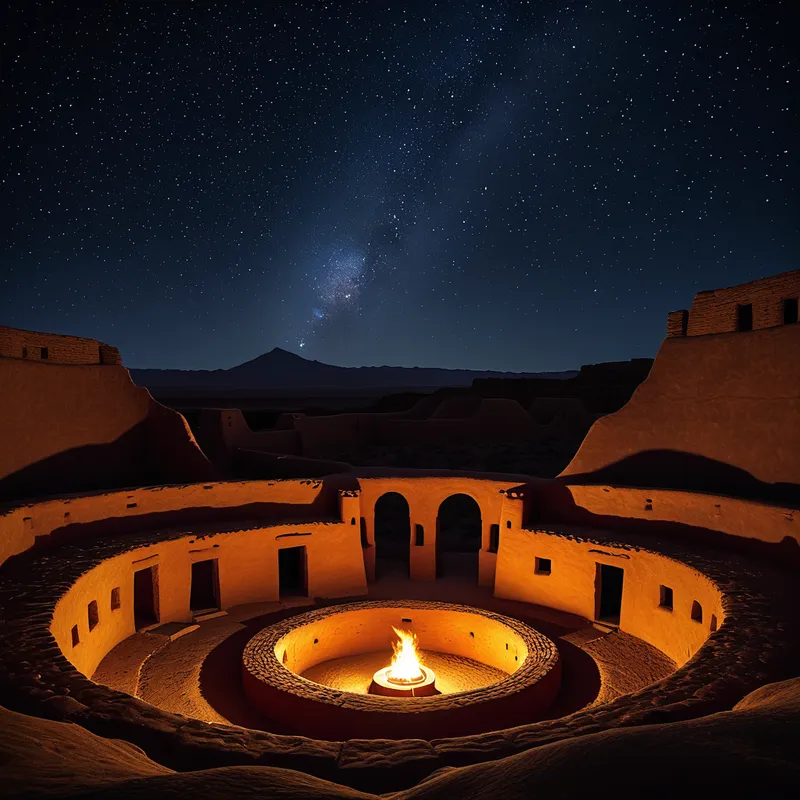
So, they remembered the first instruction. They gathered willow branches, supple and strong, and bent them into a great hoop, the circle with no end. They dug, not a grave, but a womb. Their hands clawed at the soil until they stood in a pit, the cool, dark earth rising around them like the sides of a primordial vessel. Over this pit, they built the frame—a dome of poles, each one a rib of the world. They covered it with hides and earth until from the outside, it was just a low, breathing mound, a hump on the back of Turtle Island.
Inside, the world changed. The chaos of [the wind](/myths/the-wind “Myth from Various culture.”/) died. The only light came from a small fire burning in a central pit, its smoke seeking the single opening in the roof, the [sipapu](/myths/sipapu “Myth from Hopi culture.”/), a tiny circle of distant sky. The air grew thick with the smell of damp soil, sage, and sweat. Here, in this deliberate dark, the people sat in a circle. They were not chiefs or hunters, mothers or children. They were simply beings in the dark, waiting.
The fire crackled, a tiny sun in their [underworld](/myths/underworld “Myth from Greek culture.”/). Shadows danced on the curved walls, becoming the shapes of ancestors, of buffalo, of crow. [The drum](/myths/the-drum “Myth from West African / Diasporic culture.”/) began, a sound not heard with ears but felt in the bones—thump-thump, thump-thump—matching the pulse of the earth. Songs rose, old words that had traveled up from the soil itself. They sang until their throats were raw, until time lost its meaning. They fasted. They thirsted.
In that shared darkness, the boundaries of [the self](/myths/the-self “Myth from Jungian culture.”/) began to soften. The man beside you was no longer just a man; he was the echo of your own hunger. The flickering shadow was no longer just a trick of light; it was the nagual, whispering. The lodge was no longer a structure of wood and hide, but a living entity, a great lung breathing in their prayers and breathing out visions. The descent was complete. They had entered the dark, sacred center, and in doing so, they had found not oblivion, but the source. When they finally emerged, blinking into the dawn, they were not the same people who had entered. They were remade. They carried the quiet of the earth and the clarity of the vision back into the world of light.
Cultural Origins & Context
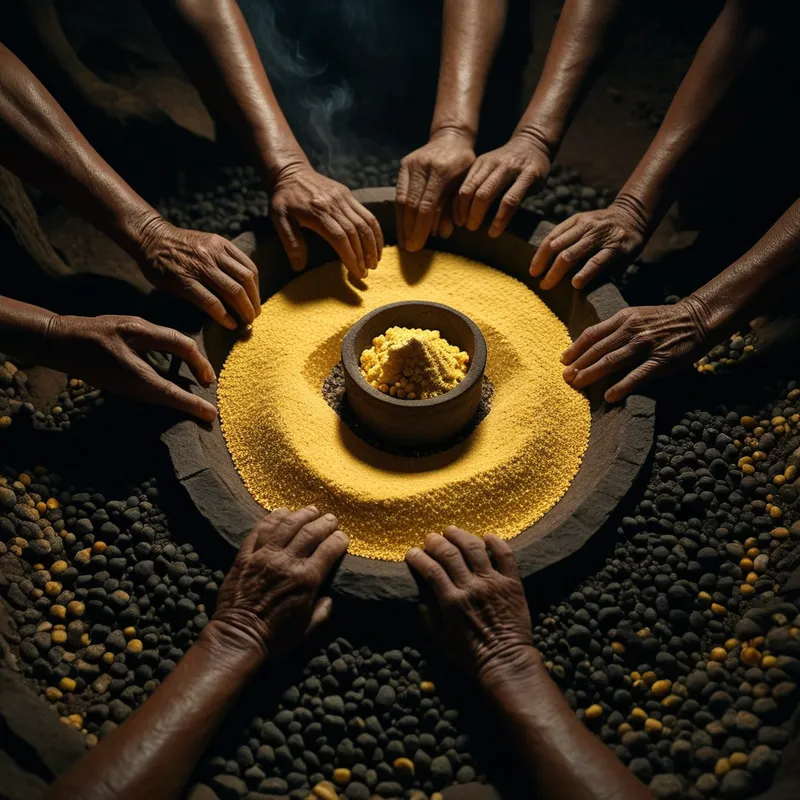
The story of the lodge or kiva is not a single narrative with a fixed plot, but a living architectural myth enacted across countless Indigenous traditions of the Americas. From the Inípi (sweat lodge) of the Lakota to the subterranean kivas of the Pueblo peoples, and the ceremonial lodges of the Pacific Northwest, this form is a cornerstone of spiritual practice. It was passed down not merely as a tale, but as a manual for building sacred space. Elders and ceremonial leaders taught the precise methods: the orientation of the door to the east, the number of poles, the placement of the altar stones. Its societal function was profound—it was the engine of community cohesion, [the crucible](/myths/the-crucible “Myth from Alchemical culture.”/) for healing, the chamber where law and tradition were reaffirmed, and the portal for seeking vision and guidance for the entire people. It served as a microcosm of the universe and a literal re-creation of the primordial emergence place.
Symbolic Architecture
The lodge is a master [symbol](/symbols/symbol “Symbol: A symbol can represent an idea, concept, or belief, serving as a powerful tool for communication and understanding.”/) of containment, inversion, and psychic return. Its [architecture](/symbols/architecture “Symbol: Architecture in dreams often signifies structure, stability, and the framing of personal identity or life’s journey.”/) is a map of the [soul](/symbols/soul “Symbol: The soul represents the essence of a person, encompassing their spirit, identity, and connection to the universe.”/). The descent into the [earth](/symbols/earth “Symbol: The symbol of Earth often represents grounding, stability, and the physical realm, embodying a connection to nature and the innate support it provides.”/) is a voluntary [regression](/symbols/regression “Symbol: A psychological or spiritual return to earlier states of being, often involving revisiting past patterns, memories, or developmental stages for insight or healing.”/), a symbolic [death](/symbols/death “Symbol: Symbolizes transformation, endings, and new beginnings; often associated with fear of the unknown.”/) of the egoic self that lives in the “upper world” of daylight [consciousness](/symbols/consciousness “Symbol: Consciousness represents the state of awareness and perception, encompassing thoughts, feelings, and experiences.”/), social roles, and scattered thought.
To enter the lodge is to consent to be unmade, so that you may be remade by a pattern older than yourself.
The [dome](/symbols/dome “Symbol: A dome symbolizes shelter, protection, and the boundaries we place around our personal lives, as well as aspirations toward the divine or higher consciousness.”/) represents the [vault](/symbols/vault “Symbol: A secure, enclosed space for storing valuables or secrets, often representing hidden aspects of the self or protected resources.”/) of the heavens brought down to earth, while [the pit](/myths/the-pit “Myth from Christian culture.”/) connects to the [underworld](/symbols/underworld “Symbol: A symbolic journey into the unconscious, representing exploration of hidden aspects of self, transformation, or confronting repressed material.”/); the [structure](/symbols/structure “Symbol: Structure in dreams often symbolizes stability, organization, and the framework of one’s life, reflecting how one perceives their environment and personal life.”/) thus binds the three cosmic realms. The central fire is the transformative spark of [spirit](/symbols/spirit “Symbol: Spirit symbolizes the essence of life, vitality, and the spiritual journey of the individual.”/) and consciousness, the enduring core of the self that must be tended in darkness. The oppressive heat, the thick darkness, the rhythmic drumming—these are not mere discomforts but alchemical agents designed to dissolve the hardened [shell](/symbols/shell “Symbol: Shells are often seen as symbols of protection, transition, and the journey of personal growth.”/) of the individual. In this [womb](/symbols/womb “Symbol: A symbol of origin, potential, and profound transformation, representing the beginning of life’s journey and the unconscious source of creation.”/)-like [space](/symbols/space “Symbol: Dreaming of ‘Space’ often symbolizes the vastness of potential, personal freedom, or feelings of isolation and exploration in one’s life.”/), the psychic contents that are repressed or ignored in daily [life](/symbols/life “Symbol: The symbol of ‘Life’ represents a journey of growth, interconnectedness, and existential meaning, encompassing both the joys and challenges that define human experience.”/)—the fears, the ancestral memories, the instinctual drives—are allowed to surface and be witnessed, not as personal failings, but as aspects of the shared [human](/symbols/human “Symbol: The symbol of a human represents individuality, complexity of emotions, and social relationships.”/) and earthly [condition](/symbols/condition “Symbol: Condition reflects the state of being, often focusing on physical, emotional, or situational aspects of life.”/).
The Dreamer’s Resonance
When this mythic pattern stirs in the modern dreamer, it often manifests as dreams of discovering hidden rooms in a familiar house, descending into cellars or caves, or finding oneself in a circular, enclosed space that feels both profoundly safe and intensely confronting. The somatic experience is key: there may be a feeling of constriction, of being held or trapped, of overwhelming heat or palpable darkness. Psychologically, this signals a process of necessary introversion. The conscious mind is being called “downward” and “inward” to confront what it has avoided. The lodge in the dream is the self-created container for this difficult, sacred work. It is the [psyche](/myths/psyche “Myth from Greek culture.”/)‘s own built sanctuary for holding the tension of opposites—light and shadow, spirit and matter, individual and collective—until a new synthesis can emerge. The dream may feel claustrophobic, but its intent is therapeutic compression.
Alchemical Translation
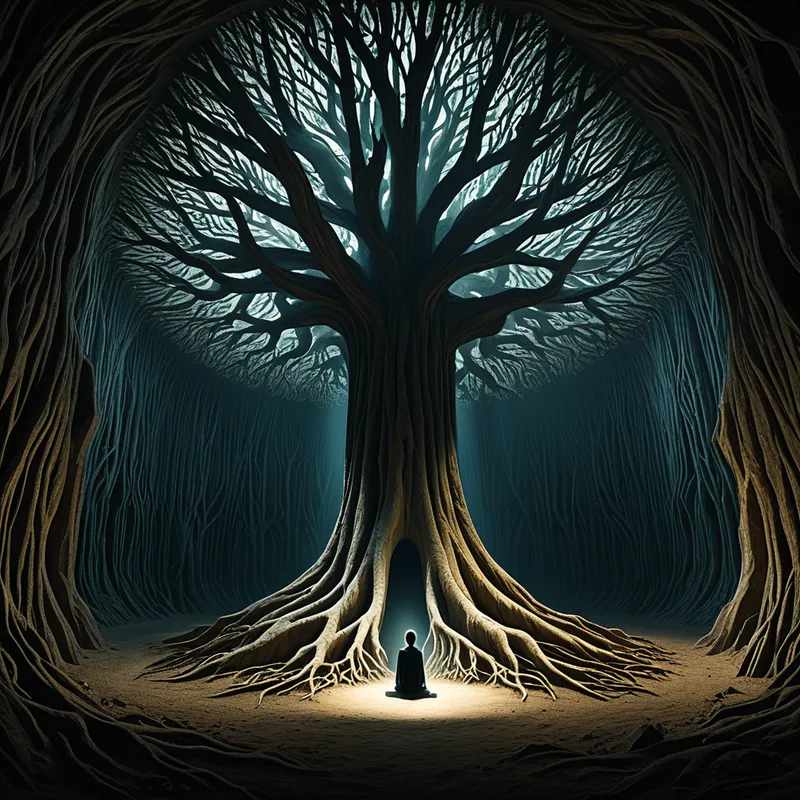
For the modern individual navigating a fragmented, hyper-stimulated world, the myth of the lodge models the essential, non-negotiable phase of psychic transmutation: the [nigredo](/myths/nigredo “Myth from Alchemical culture.”/), or blackening. This is [the dark night of the soul](/myths/the-dark-night-of-the-soul “Myth from Christian Mysticism culture.”/), the period of confusion, depression, and felt stagnation that precedes renewal. The myth teaches that this is not a failure, but a sacred descent that must be properly contained and ritualized.
Individuation does not begin with soaring into the light, but with the courageous decision to sit in your own dark, sacred ground and tend the small fire of your attention.
We must build our own “lodge”—a disciplined practice of meditation, journaling, therapy, or nature immersion—that serves as a container for this work. We must consciously enter the “dark” of our unresolved grief, our shadow aspects, and our primal fears. The collective circle of the traditional lodge translates to the need for witnessed, held space—whether with a trusted guide, a community, or even the internalized presence of a compassionate self. The emergence, reborn, is the result of having stayed with the process, of having allowed the heat of suffering and the pressure of introspection to transmute leaden despair into the gold of deeper self-knowledge and reconnection to the animating pulse of life. The lodge myth ultimately asserts that true wholeness is found not by escaping the earth, but by returning to its dark, generative core.
Associated Symbols
Explore related symbols from the CaleaDream lexicon: