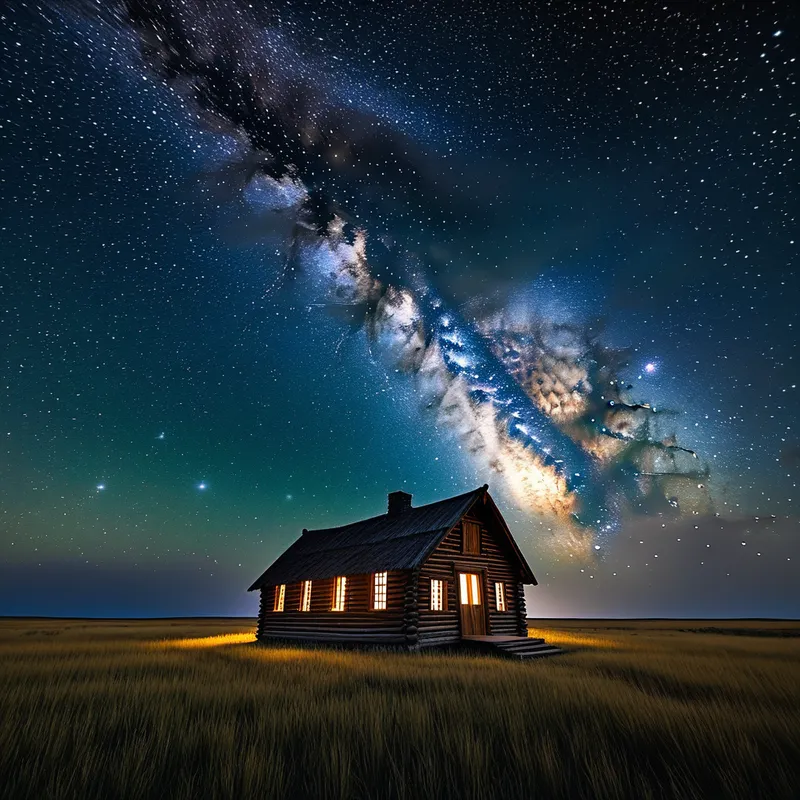
The Lodge Myth Meaning & Symbolism
A myth of a sacred, ever-shifting structure where seekers enter to face their shadows and emerge transformed, carrying a piece of the cosmic center.
The Tale of The Lodge
Listen. In the time before memory solidified, when [the world](/myths/the-world “Myth from Tarot culture.”/) was still breathing its first mist, there was a place that was not a place. It was a structure that did not stand still. The People called it The Lodge.
It did not appear on any map drawn by human hand. You could not find it by walking. You found it by becoming lost. A hunter, straying too far in pursuit of a white elk that was more spirit than flesh, would crest a hill and see it there, where nothing had been before. A humble, powerful shape against [the sky](/myths/the-sky “Myth from Persian culture.”/). Its frame was of saplings, bent by a will greater than [the wind](/myths/the-wind “Myth from Various culture.”/), lashed with sinew that hummed. Its covering was the hide of no ordinary beast—it shimmered like the inside of a storm cloud, stitched with patterns that told the story of the stars’ birth.
The door was a flap, a mouth of darkness. No fire was seen within, yet a deep, amber glow pulsed from its walls, as if the Lodge itself held a heartbeat. To see it was to feel a pull in the chest, a longing for a home you never knew you had. But also, a terror. For the stories said that to enter The Lodge was to be unmade.
One who was called He-Who-Wanders-Between came upon it. He was a man of two minds, his spirit divided like a creek around a stone. He saw The Lodge and knew his wandering was over. The air grew still. The crickets held their song. Pushing aside the heavy hide, he entered.
Inside, there was no up or down. The space was vast, vaster than the plains outside, yet he could feel the walls close around him. In the center, where a fire should be, there was only a circle of packed earth. And around the circle, sitting in the gloom, were figures. They were not men, not animals. They were the Ancient Ones. Their eyes held the cold fire of distant suns.
No one spoke with a mouth. The Lodge spoke. The very walls pressed questions into his skin: Who are you when no one names you? What song does your shadow sing? Where is your true center? Visions rose from [the earth](/myths/the-earth “Myth from Hindu culture.”/)—not as pictures, but as sensations. He felt the fear of his first hunt, the bitterness of a betrayal given and received, the hollow ache of a promise unkept. He had to face them, not as memories, but as living presences in the dark.
The conflict was not of fists, but of essence. To flee was to be trapped forever in the entrance-way, a ghost of indecision. To stay was to let these shadow-selves speak, and in speaking, dissolve. He stood in the center, on the bare earth, and let the storm of himself rage. Hours? Years? Time was a hide stretched taut, beating like a drum.
Then, a silence. A profound, empty silence. The oppressive figures were gone. The glowing walls softened. In the absolute center of the circle, a small, perfect flame kindled itself from nothing—a steady, warm, utterly simple light. It asked for nothing. It simply was. He-Who-Wanders-Between looked into it, and for the first time, saw a face that was wholly his own, yet part of everything.
When he pushed back through the doorway, the dawn was new. The Lodge was gone. In his hand, he held not a trophy, but a single, perfect pebble from the circle’s edge, warm as a living heart. He carried it home, not as a prize, but as a reminder. He carried the center within him now. And the People, seeing the change in his eyes—the stillness where there had been storm—knew where he had been. They did not ask for stories. They simply began to call him He-Who-Sits-in-the-Center.
Cultural Origins & Context
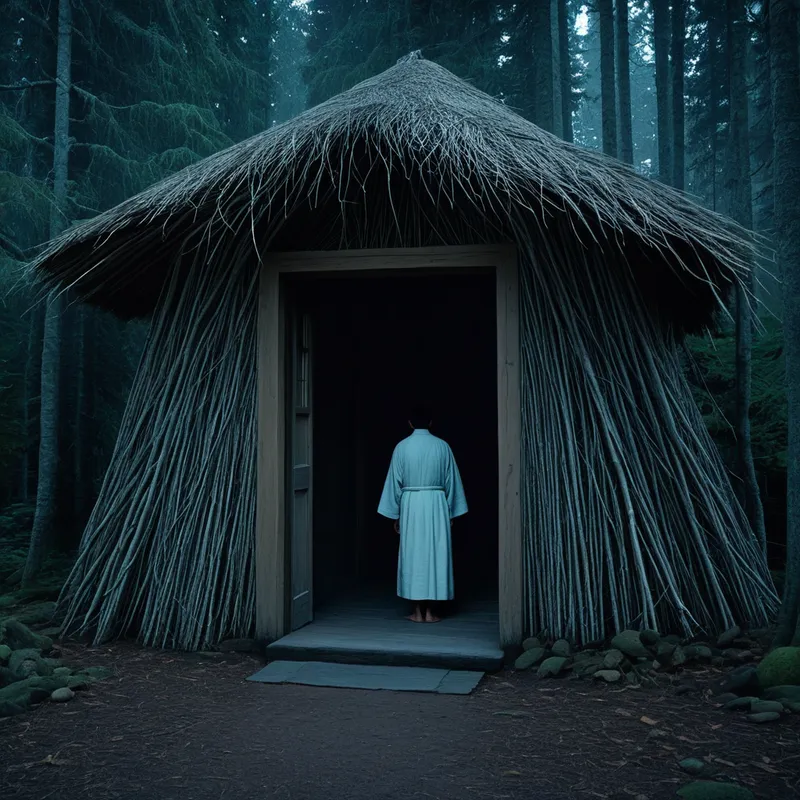
The myth of The Lodge is not the property of a single nation, but a resonant pattern found in various forms across many Indigenous cultures of North America. It is the deep story behind the physical Inipi or medicine lodge, the narrative that gives those structures their profound spiritual power. This myth was not written, but breathed—passed down through oral tradition by elders and storytellers during long winter nights or in preparation for sacred rites.
Its tellers were often those who had undergone their own profound initiations. The story served a crucial societal function: it was a map of the invisible landscape of the soul. It prepared the young, the seekers, and the grieving for the reality of spiritual ordeal. It taught that transformation is not a gentle education, but a terrifying and necessary dissolution within a sacred container. The Lodge myth validated the experience of being lost, framing it not as a failure, but as the first step toward finding the true, immovable center that exists within both the individual and the community. It was a story that maintained the cosmic order by explaining how human disorder could be ritually resolved and reintegrated.
Symbolic Architecture
The Lodge is the ultimate [symbol](/symbols/symbol “Symbol: A symbol can represent an idea, concept, or belief, serving as a powerful tool for communication and understanding.”/) of the [temenos](/myths/temenos “Myth from Greek culture.”/)—the sacred, protected container in which radical change can safely occur. It represents the constructed [ritual](/symbols/ritual “Symbol: Rituals signify structured, meaningful actions carried out regularly, reflecting cultural beliefs and emotional needs.”/) [space](/symbols/space “Symbol: Dreaming of ‘Space’ often symbolizes the vastness of potential, personal freedom, or feelings of isolation and exploration in one’s life.”/), the therapeutic [alliance](/symbols/alliance “Symbol: A formal or informal union between individuals or groups for mutual benefit, support, or protection.”/), and the bounded [psyche](/myths/psyche “Myth from Greek culture.”/) itself.
The Lodge is not a shelter from the storm; it is the vessel built to contain the storm of the self, so that the eye at its center may be found.
Its ever-shifting [location](/symbols/location “Symbol: The symbol of ‘Location’ signifies a sense of place, context, and the environment in which experiences unfold.”/) speaks to the [nature](/symbols/nature “Symbol: Nature symbolizes growth, connectivity, and the primal forces of existence.”/) of spiritual [crisis](/symbols/crisis “Symbol: A crisis symbolizes turmoil, urgent challenges, and the need for immediate resolution or change.”/): it appears only when [the ego](/myths/the-ego “Myth from Jungian culture.”/) is sufficiently disoriented, its ordinary maps useless. The figures within are the personified contents of the unconscious—repressed memories, complexes, ancestral patterns—that must be confronted not intellectually, but somatically, in the dark where [vision](/symbols/vision “Symbol: Vision reflects perception, insight, and clarity — often signifying the ability to foresee or understand deeper truths.”/) is internal. The central, empty circle of [earth](/symbols/earth “Symbol: The symbol of Earth often represents grounding, stability, and the physical realm, embodying a connection to nature and the innate support it provides.”/) is the potential space of the true Self, prior to ego. The spontaneous ignition of the simple flame is the [birth](/symbols/birth “Symbol: Birth symbolizes new beginnings, transformation, and the potential for growth and development.”/) of individual [consciousness](/symbols/consciousness “Symbol: Consciousness represents the state of awareness and perception, encompassing thoughts, feelings, and experiences.”/) from this confrontation, a light that is neither borrowed nor manufactured, but emerges from the [integration](/symbols/integration “Symbol: The process of unifying disparate parts of the self or experience into a cohesive whole, often representing psychological wholeness or resolution of internal conflict.”/) of the [shadow](/symbols/shadow “Symbol: The ‘shadow’ embodies the unconscious, repressed aspects of the self and often represents fears or hidden emotions.”/).
The pebble brought back is a crucial symbol. It signifies that the goal is not to stay in the transcendent state, but to return to the ordinary world carrying its touchstone—a tangible, grounding [connection](/symbols/connection “Symbol: Connection symbolizes relationships, communication, and bonds among individuals.”/) to the core experience of wholeness.
The Dreamer’s Resonance
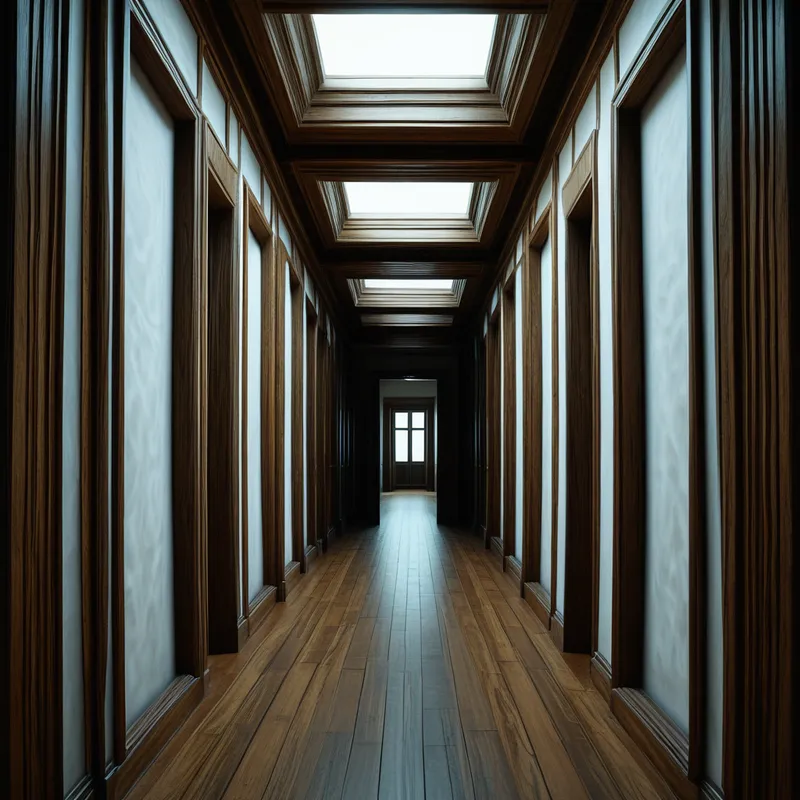
When this myth stirs in the modern unconscious, it often manifests in dreams of profound architectural spaces. One may dream of finding a hidden room in their childhood home, an endless basement, or a complex, institutional building with a secret, perfectly round chamber at its heart. The somatic feeling is one of both awe and dread—a magnetic pull toward a central mystery coupled with the fear of what one might meet in the corridors.
Psychologically, this dream pattern signals a process of deep interior reorganization. The dream-ego is being called to a necessary initiation. The “figures” in these dreams may appear as silent judges, forgotten relatives, or monstrous shapes. They represent aspects of the psyche that have been split off and denied, now demanding acknowledgment. The process is one of encounter and containment. The dream is creating the sacred Lodge itself, providing the psychic container where these elements can finally be faced without destroying the conscious personality. To dream of emerging from such a space, often at dawn, with a small, significant object (a key, a stone, a piece of paper) is a powerful sign of successful internal alchemy—a piece of the core Self has been recovered.
Alchemical Translation
The journey into The Lodge is a perfect model for the Jungian process of individuation. The first step, becoming lost, is the [nigredo](/myths/nigredo “Myth from Alchemical culture.”/)—the blackening, the dissolution of the comfortable, yet limiting, ego identity. Entering the Lodge is the conscious commitment to this dark night.
The confrontation with the Ancient Ones is the stage of confrontation with [the shadow](/myths/the-shadow “Myth from Jungian culture.”/). This is not a battle to be won, but a dialogue to be endured. One must “sit in the center” of one’s own contradictions and allow the opposing voices to speak. This is the painful, chaotic work of [separatio](/myths/separatio “Myth from Alchemical culture.”/) and mortificatio—separating from identification with [persona](/myths/persona “Myth from Greek culture.”/) and experiencing the symbolic death of the old self.
The flame that ignites in the void is the lumen naturae, the light of nature—the innate spark of the individuated Self that can only appear when the noisy claims of the ego and the complex have been silenced through integration.
Finally, returning with the pebble is the [rubedo](/myths/rubedo “Myth from Alchemical culture.”/)—the reddening, the return to the world infused with the gold of the spirit. The pebble is the lapis, [the philosopher’s stone](/myths/the-philosophers-stone “Myth from Alchemical culture.”/) not as a magical object, but as the realized knowledge of one’s own center. For the modern individual, this translates to the hard-earned ability to remain grounded and centered amidst life’s chaos, not because they avoid the dark, but because they have built an inner Lodge that can hold it. They carry their sanctuary within.
Associated Symbols
Explore related symbols from the CaleaDream lexicon: