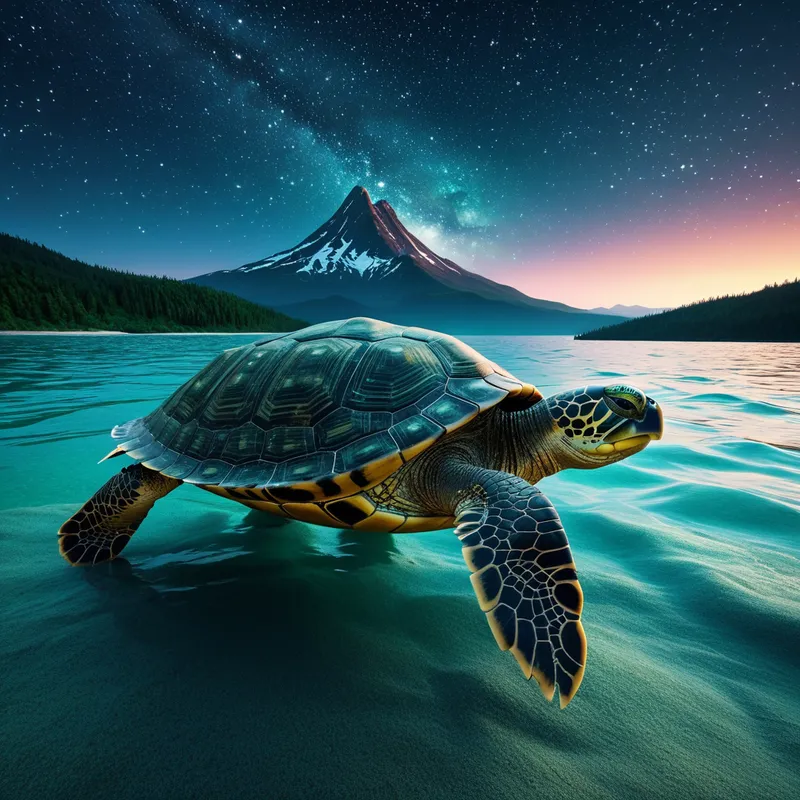
Turtle Island Myth Meaning & Symbolism
A creation myth where animals dive into the primordial sea to place earth on a turtle's back, forming the land we live upon.
The Tale of Turtle Island
In the time before time, there was only Sky World above and the endless, dark Primordial Sea below. In Sky World, the Tree of Life grew, its roots deep in the celestial soil. But a great rupture came. The tree was uprooted, and through the hole left in the floor of the sky, a being fell—some say a woman, a star, a spark of consciousness—tumbling down, down through the void.
There was no place to land. Only the cold, fathomless waters, stretching in every direction. As she fell, birds of the air saw her plight. With great compassion, they flew beneath her, forming a living net with their wings to slow her descent. They could not hold her forever, nor could they find solid ground. A great council was called of all the swimmers and divers of the deep.
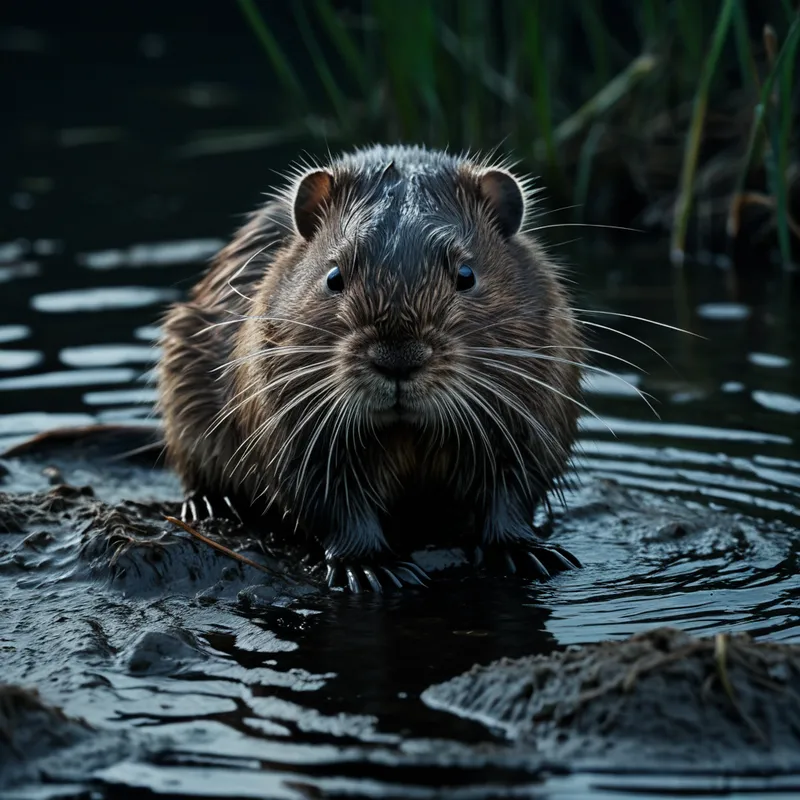
“Who will bear the weight of a world?” the creatures asked. The loon tried, diving deep into the blackness, but returned gasping, having found no bottom. The beaver plunged with all its strength, staying down until its lungs nearly burst, but surfaced with nothing. One by one, the great divers failed. Despair began to settle over the waters.
Then, the humble muskrat, small and seemingly ill-suited for such a heroic task, volunteered. The others doubted, but the muskrat’s spirit was fierce. It dove, disappearing into the abyss. The moments stretched. The water grew still. They waited, fearing the worst. Just as hope was fading, the muskrat broke the surface, lifeless, its small paws clenched. But within them was a single, precious grain of soil.
Now, a foundation was needed. A being of immense patience and fortitude stepped forward: the Great Turtle. “Place the earth upon my back,” it said. The soil was placed on the broad, sturdy shell. It was breathed upon by the winds, warmed by the sky-fallen one’s spirit. Miraculously, it began to grow. It spread and multiplied, from a speck to a handful, to a mound, to a vast expanse of rich, black earth. Grasses sprouted, then trees, then mountains rose and rivers carved their paths. Upon the back of the steadfast Turtle, the world was born—a living, breathing island in the cosmic sea.
Cultural Origins & Context
The story of Turtle Island is a foundational narrative for many Northeastern Woodlands nations, including the Lenape (Delaware) people. It was not a singular, fixed text but a living story, told and retold across generations, often during the long winter nights or at important gatherings. Elders and storytellers were the keepers of this knowledge, their voices weaving the tale with a rhythm and gravity that connected the listeners not just to a past event, but to the ongoing, sacred reality of the land beneath their feet.
Its function was multifaceted. It was a cosmological map, explaining the origin and sacred nature of the world. It was a social charter, teaching that the world was built not by a single, all-powerful deity, but through the collaborative sacrifice and unique strengths of many beings. This established a fundamental ethic of reciprocity, responsibility, and respect for all life—from the mightiest tree to the smallest muskrat. The land was not a commodity, but a relative, a gift borne from sacrifice, requiring care and gratitude.
Symbolic Architecture
The myth’s power lies in its profound, layered symbolism. Each element is a psychic truth made manifest.
The world is not a given; it is a gift, born from descent, sacrifice, and willing support.
The fall from Sky World represents the necessary descent of spirit into matter, of consciousness into the chaotic waters of the unconscious. The Primordial Sea is the formless potential, the womb of all creation, but also a terrifying abyss. The animals represent the instinctual forces of the psyche, the innate, pre-human intelligences that must be engaged to build a conscious world.
The muskrat is the archetype of the unlikely hero, the part of ourselves we underestimate—persistence, humility, and the courage to dive into our own deepest, darkest depths (the personal and collective unconscious) to retrieve the foundational “earth,” the core substance of our authentic being. Its death symbolizes the ego’s surrender to a process greater than itself.
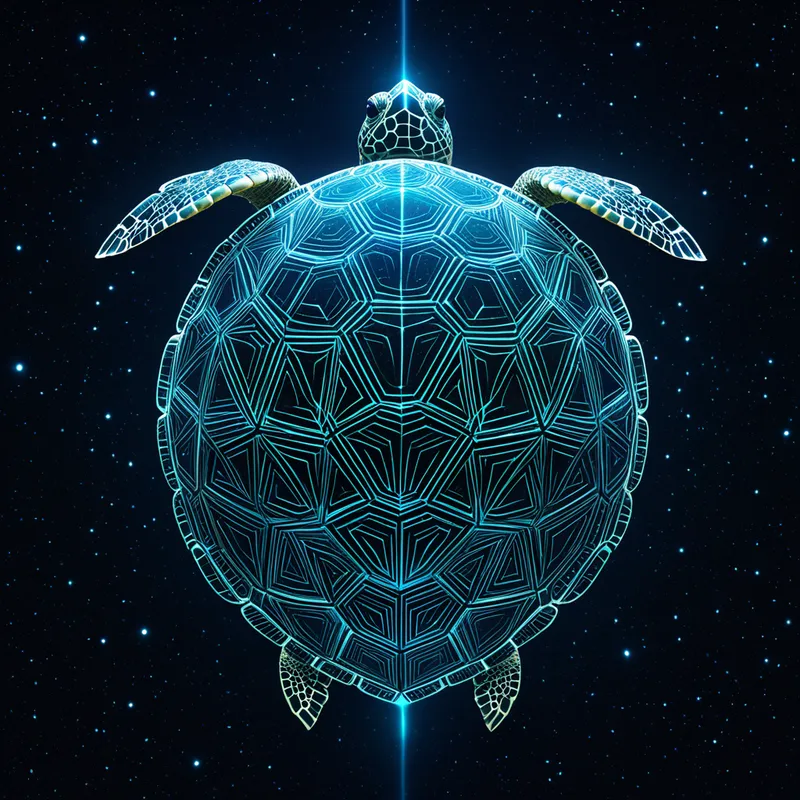
The Great Turtle is the ultimate symbol of the Self, in Jungian terms. It is the psychic foundation—stable, enduring, patient, and capable of bearing the immense weight of an entire world of complexity, conflict, and beauty. The turtle does not create the soil; it provides the sacred, supportive space where creation can take root and grow.
The Dreamer’s Resonance
When this myth stirs in modern dreams, it often signals a profound process of psychic foundation-building. To dream of drowning in a vast ocean may reflect a feeling of being overwhelmed by the formless chaos of life or the unconscious. The appearance of helping animals—birds, otters, turtles—suggests the dreamer is being supported by instinctual wisdom or forgotten inner resources.
A pivotal dream image is the act of diving deep into dark water, searching for something small but essential. This somatic experience mirrors the muskrat’s quest. The dreamer may be in a life phase requiring them to “dive deep”—into their past, their shadow, their grief, or a creative void—to retrieve a tiny, vital truth (the “grain of soil”) that feels like a matter of survival. The exhaustion and near-drowning in the dream are real; this is hard, perilous inner work.
Finally, dreaming of standing on stable, living land that is also a great creature speaks to the process of finding one’s ground. It is the felt sense of the ego aligning with the supportive, enduring foundation of the Self. The world is no longer a chaotic sea; it is a sacred, borne reality.
Alchemical Translation
The myth of Turtle Island is a perfect allegory for the alchemical and Jungian process of individuation—becoming who one fundamentally is.
The first stage, descent (nigredo), is the fall from the familiar “sky world” of conscious attitudes into the chaotic “sea” of the unconscious. This is often precipitated by a crisis, an uprooting. The second stage is the conjunction, the council of animals. Here, the ego must relinquish sole authority and call upon the diverse, often humble or ignored aspects of the psyche (the complex emotions, the body’s wisdom, the forgotten talents).
Individuation is not a solitary hero’s journey, but a cosmic collaboration where the smallest, most sacrificed part of us holds the key to the foundation.
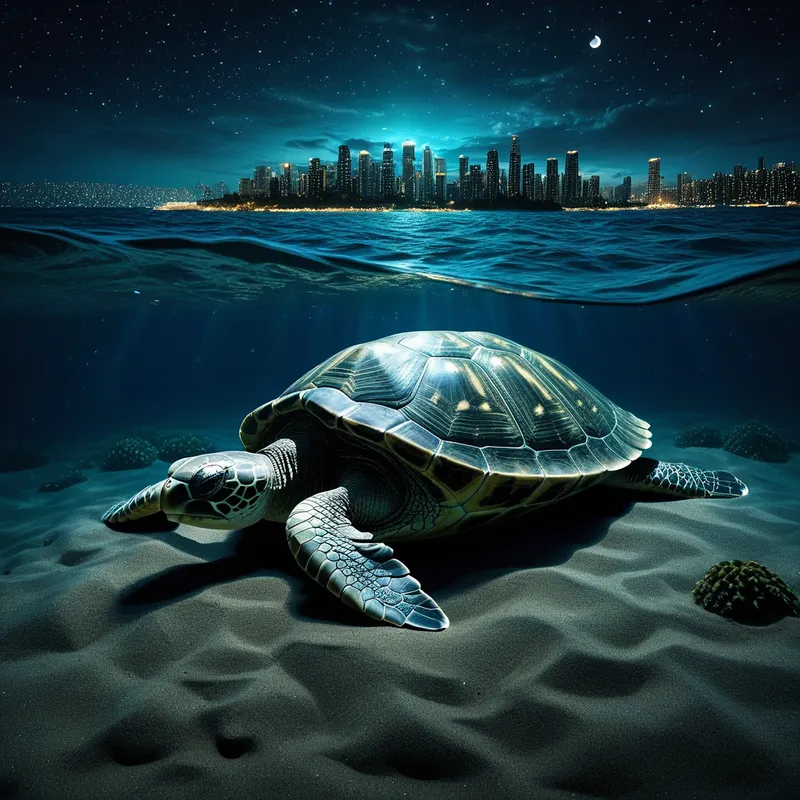
The muskrat’s dive is the mortificatio—the willing ego-death required to retrieve the prima materia, the raw, essential substance of the soul from the depths. This is the most painful, sacrificial part of the work. The turtle’s offering is the coagulatio—the solidification. The retrieved essence is placed upon the stable, eternal foundation of the Self. From there, it can grow. This is the albedo and rubedo, the expansion and enlivening of consciousness. The isolated grain becomes a world; the personal insight becomes a way of life.
For the modern individual, the myth teaches that a solid identity and a meaningful life are not built through force of will alone, but through humble descent, collaborative effort with all parts of oneself, sacrificial diving for truth, and finally, resting that truth upon the patient, eternal foundation of one’s deepest being. We do not create ourselves ex nihilo. We discover ourselves, and the world, already being borne.
Associated Symbols
Explore related symbols from the CaleaDream lexicon: