
The Journey to the Self Sufism
A mystical exploration of the Sufi path where the journey inward becomes a sacred pilgrimage toward divine unity and self-realization.
The Tale of The Journey to The Self Sufism
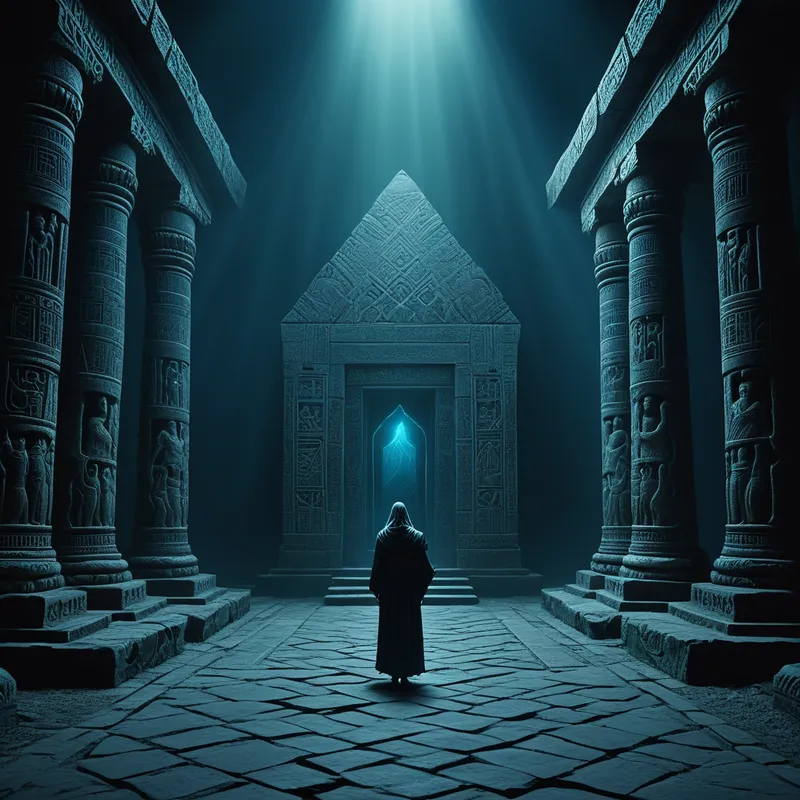
It begins not with a step outward, but with a breath held in the silence of the heart. The seeker, the salik, stands at [the threshold](/myths/the-threshold “Myth from Folklore culture.”/) of a world turned inside out. The bustling markets, the call to prayer echoing from minarets, the very earth beneath their feet—all these become a veil, a poignant distraction from a deeper, more urgent call. This call is a whisper that does not come from [the sky](/myths/the-sky “Myth from Persian culture.”/), but from a profound emptiness within, a divine homesickness for a Beloved they have never seen, yet have always known.
Thus, the journey commences, a pilgrimage with no visible road. The salik turns their back on [the horizon](/myths/the-horizon “Myth from Various culture.”/) and enters [the labyrinth](/myths/the-labyrinth “Myth from Greek culture.”/) of their own being. This is the Tariqa, the Path. It is said to have many stations, Maqamat, each a state of being that must be lived, endured, and transcended. The first may be Repentance, a burning away of the old self, followed by Patience, a desert of the soul where every mirage of certainty vanishes. Then comes Trust, a terrifying surrender to the current of a hidden will, and Contentment, finding a strange peace in the heart of longing itself.
Guided by the wisdom of a Murshid, the seeker navigates these inner landscapes. The guide does not carry them, but points to the traps of [the ego](/myths/the-ego “Myth from Jungian culture.”/), the Nafs al-Ammara, which whispers of separation and pride. The struggle, the Jihad al-Akbar, is here, in this unseen battlefield. The seeker learns to listen not with the ear, but with the Qalb, the subtle heart that is the throne of divine perception.
Through prayer, through the ecstatic remembrance of God in Dhikr, through the whirling dance that turns [the self](/myths/the-self “Myth from Jungian culture.”/) into a vanishing point, the seeker is polished. Layers of identity—the scholar, the merchant, the sinner, the saint—fall away like dried clay. In the depths, they encounter the Ruh, the eternal spark that is a direct [emanation](/myths/emanation “Myth from Neoplatonic/Gnostic culture.”/) from the Divine. The journey becomes an annihilation, Fana, a blowing out of the candle’s flame not into darkness, but into the overwhelming light of the sun. In that annihilating light, a secret is revealed: the seeker, the path, and the Beloved were never separate. This is Baqa, abiding in the Divine while returning to [the world](/myths/the-world “Myth from Tarot culture.”/), now seeing the face of the Beloved in every leaf, every face, every moment of joy and sorrow. The journey to [the Self](/myths/the-self “Myth from Jungian culture.”/) ends where it began: in the heart, now understood to be [the mirror](/myths/the-mirror “Myth from Various culture.”/) of the Divine, reflecting unity in the midst of the apparent many.
Cultural Origins & Context
The Journey to the Self emerges from the fertile ground of early Islamic spirituality, blossoming between the 8th and 12th centuries CE. It is the heart of Sufism, the esoteric, mystical dimension of Islam. While rooted in the Quran and the traditions of the Prophet Muhammad—who himself is seen as the perfect archetype of this inward journey—Sufism absorbed and transformed influences from the Neoplatonic philosophy prevalent in the conquered lands of Persia and Byzantium, as well as from Christian monasticism and even strands of Hindu and Buddhist thought encountered along the [Silk Road](/myths/silk-road “Myth from Chinese culture.”/).
This was not a rebellion against Islamic law (Sharia), but its interiorization. If Sharia was the riverbank, the Tariqa was [the river](/myths/the-river “Myth from Buddhist culture.”/)’s current, carrying the seeker to the ocean of Truth (Haqiqa). It flourished in a world where the rapid expansion of empire created a spiritual crisis, a longing for direct, personal experience of the Divine beyond ritual and dogma. It found expression in the poetry of Jalal ad-Din Rumi in Persia, the sober teachings of Al-Ghazali which reconciled mysticism with orthodoxy, and the ecstatic songs of [Rabia al-Adawiyya](/myths/rabia-al-adawiyya “Myth from Sufi culture.”/) in Basra, who framed the entire journey as one of passionate, intimate love. The path was institutionalized in orders (turuq) like the Qadiri, Naqshbandi, and Mevlevi, each with its own methods of Dhikr and guidance, ensuring the transmission of this inner science from master to disciple across generations and continents.
Symbolic Architecture
The myth’s power lies in its profound remapping of universal spiritual coordinates. The external [pilgrimage](/symbols/pilgrimage “Symbol: A spiritual or transformative journey toward a sacred destination, representing personal growth, devotion, and the search for meaning.”/) to Mecca (Hajj) becomes the internal template; the Ka’aba is the [heart](/symbols/heart “Symbol: The heart symbolizes love, emotion, and the core of one’s existence, representing deep connections with others and self.”/). The outer [ritual](/symbols/ritual “Symbol: Rituals signify structured, meaningful actions carried out regularly, reflecting cultural beliefs and emotional needs.”/) washing (Wudu) symbolizes the purification of the [soul](/symbols/soul “Symbol: The soul represents the essence of a person, encompassing their spirit, identity, and connection to the universe.”/). The entire [cosmos](/symbols/cosmos “Symbol: The entire universe as an ordered, harmonious system, often representing the totality of existence, spiritual connection, and the unknown.”/) is inverted: the [macrocosm](/symbols/macrocosm “Symbol: The universe as a whole, representing the interconnectedness of all existence and the reflection of the individual within the cosmic order.”/) is found within the [microcosm](/symbols/microcosm “Symbol: A small, self-contained system that mirrors or represents a larger, more complex whole, often reflecting the universe within an individual.”/) of the [human](/symbols/human “Symbol: The symbol of a human represents individuality, complexity of emotions, and social relationships.”/) being.
“I was a hidden treasure and I loved to be known, so I created creation.” This famous Hadith Qudsi provides the metaphysical blueprint. The journey is God’s journey back to God, through the vehicle of the human soul. The seeker’s longing is, in truth, the Divine longing for Itself.
The guide (Murshid) is the symbolic embodiment of the transcendental function, the mediating principle between the limited ego and the boundless Self. The trials are not punishments, but the necessary fires that burn away the dross of false [identity](/symbols/identity “Symbol: Identity represents the sense of self, encompassing personal beliefs, cultural background, and social roles.”/). The ultimate [symbol](/symbols/symbol “Symbol: A symbol can represent an idea, concept, or belief, serving as a powerful tool for communication and understanding.”/) is the mirror: the polished heart that has been cleansed of the rust of forgetfulness (ghaflah) and can now reflect the Divine attributes (Asma ul-Husna) into the world.
The Dreamer’s Resonance
For the modern [psyche](/myths/psyche “Myth from Greek culture.”/), estranged and often fragmented, this Sufi journey offers a powerful map for individuation. The Nafs corresponds directly to the complex-ridden ego, the [persona](/myths/persona “Myth from Greek culture.”/) we mistake for our totality. The longing for the Beloved is the [psyche](/myths/psyche “Myth from Greek culture.”/)’s pull toward wholeness, the Self in Jungian terms. The stages of the path mirror the psychological process of confronting [the shadow](/myths/the-shadow “Myth from Jungian culture.”/), integrating [anima/animus](/myths/animaanimus “Myth from Jungian culture.”/), and moving beyond the tyranny of the personal toward the transpersonal.
The seeker’s despair and “[dark night of the soul](/myths/dark-night-of-the-soul “Myth from Christian culture.”/)” resonate with experiences of depression, meaninglessness, and existential crisis. The Sufi framework re-frames this not as pathology, but as a sacred prelude to transformation, a Bala that tests and refines. The ecstatic states sought in Dhikr or Sama (spiritual concert) speak to a deep human need to transcend the rational mind and experience unity directly, a need often unmet in secular life. The journey validates the interior life as the primary field of meaning-making, offering a poetic and rigorous language for the most intimate of human experiences: the search for who and what we truly are.

Alchemical Translation
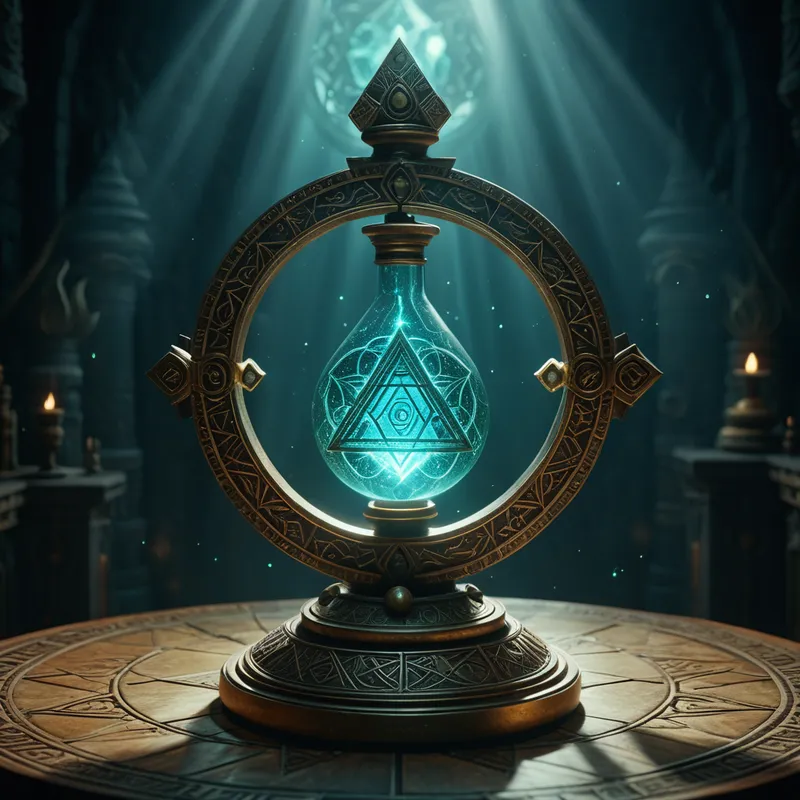
The Sufi path is a precise alchemy of the soul. The base metal of the lower self (Nafs al-Ammara), driven by passion and illusion, is subjected to the transformative fires of discipline (Mujahada) and remembrance (Dhikr). The guide provides the secret formula, the stabilizing Baraka, that prevents the volatile elements from shattering [the vessel](/myths/the-vessel “Myth from Alchemical culture.”/).
The central operation is Tawhid, the declaration of Unity, which psychologically translates to the integration of opposites. Consciousness and unconsciousness, light and shadow, humanity and divinity, are not fought but reconciled in the crucible of the heart.
Fana is the [nigredo](/myths/nigredo “Myth from Alchemical culture.”/), the blackening and dissolution of the old form—the utter deconstruction of the ego. What follows is not nothingness, but Baqa, the [albedo](/myths/albedo “Myth from Alchemical culture.”/) and [rubedo](/myths/rubedo “Myth from Alchemical culture.”/)—the whitening and reddening—where a new, subtler form of consciousness arises, one that participates in the Divine life while fully engaged in the human world. The “Philosopher’s Stone” is the realized heart, the Insan al-Kamil, which can transmute the lead of worldly experience into the gold of divine witness. The journey’s end is not an escape from matter, but the sanctification of it, seeing the world as it truly is: a manifestation of the Beloved.
Associated Symbols
Explore related symbols from the CaleaDream lexicon:
- Journey — The fundamental archetype of moving from a state of lack or seeking toward a destination of wholeness, understanding, or unity.
- Mirror — The symbol of self-reflection, truth, and the polished soul capable of revealing the divine image hidden within.
- Heart — The spiritual center, the throne of intuition and love, and the inner chamber where the ultimate meeting with the Beloved occurs.
- Fire — The transformative agent that purifies the soul, burns away attachments, and represents the burning love that fuels the seeker’s quest.
- Ocean — The boundless Divine Reality, the destination of the seeker’s river, symbolizing immersion, unity, and the dissolution of the separate self.
- Door — The threshold between states of consciousness, the entry point to the inner path, and the portal to the hidden chambers of the heart.
- Shadow Self — The equivalent of the commanding Nafs, the collection of unconscious, rejected, and egoic aspects that must be confronted and integrated.
- Pilgrimage Journey — The sacred, intentional travel toward a holy center, here internalized as the movement through spiritual stations toward the heart.
- Mountain — The arduous ascent of the soul, representing the struggle, aspiration, and ultimate transcendence sought on the path.
- Dance — The embodied prayer and ecstatic ritual, like the whirling of the Mevlevi, used to bypass the intellect and spin the soul into union.
- Key — The guidance of the Murshid, the practice of Dhikr, or the divine grace (Baraka) that unlocks the doors to inner chambers.
- Rebirth — The state of Baqa, the subsistence in God, where the annihilated self is resurrected into a new, divinely-oriented existence.