The Dragon of Komodo Myth Meaning & Symbolism
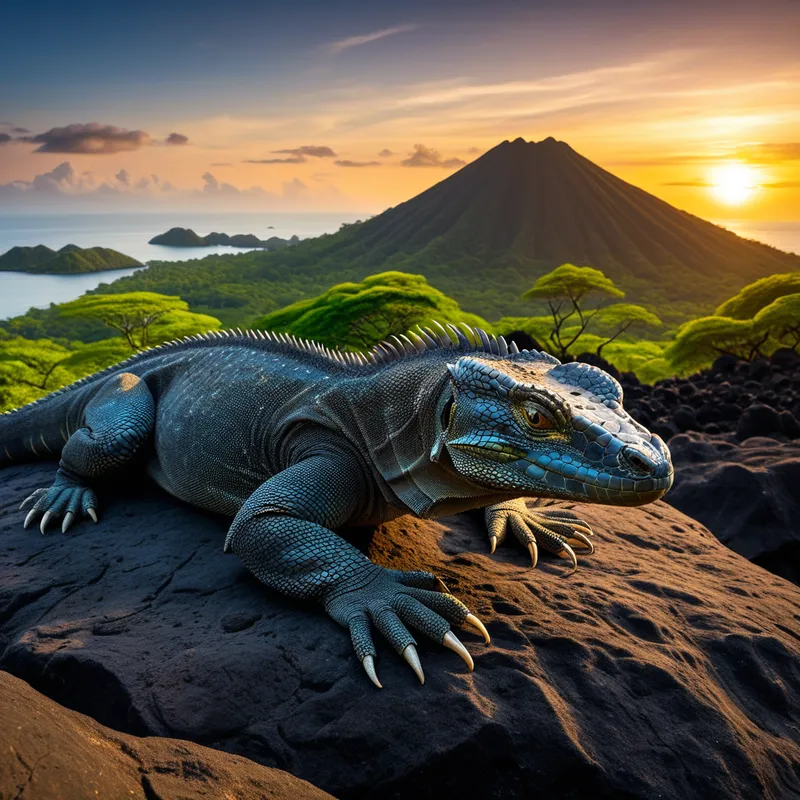
A myth of a primordial guardian, the Orah, born from ancestral union to protect the sacred balance of the islands, embodying both terror and profound duty.
The Tale of The Dragon of Komodo
Listen, and let the wind from the Flores Sea carry you back. Before the lines on maps, before the names of islands were fixed, there was a time when the world was still whispering its first secrets. In the emerald necklace of the Lesser Sunda Islands, where volcanoes breathe fire into the sky and the sea is a turquoise mirror, a profound silence was broken.
It began not with a roar, but with a longing. Putri Naga, the Dragon Princess, whose spirit was the monsoon rain and the deep ocean trench, gazed upon the wild, beautiful islands of Komodo, Rinca, and Flores. They were lush, but they were untethered, their rhythms wild and unchecked. She saw the need for a guardian, a being of immense patience and terrible power, to hold the balance between the fecund jungle and the barren rock, between life in abundance and death in its rightful time.
Her desire met the essence of the land itself, a spirit of stone and fire, of timeless endurance. From this union of the fluid and the fixed, the nurturing and the austere, a new life was forged. It did not burst forth, but emerged, slow as continental drift. From the sacred earth of <abbr title=“A mythical, primordial island often associated with the origin place of life."">Pulau Purba, it arose: the Orah.
Its body was the landscape given flesh: skin like armored volcanic rock, a tongue that tasted the very wind, and eyes that held the stillness of a deep lagoon at noon. It was not a beast of frenzy, but of immense, deliberate potency. The Orah took its first breath, and the island held its own. It moved, and the ground trembled not in fear, but in recognition. The Princess bestowed upon it a sacred duty: to be the great equalizer, the keeper of the threshold. It would cull the herds so the forests did not starve, and its very presence would be a reminder—a living, breathing monument to the pact between the wild world and the order that sustains it.
For generations untold, the people of the islands knew. They did not speak of it lightly. To see the Orah was to stand before a fundamental truth. Hunters would leave a portion of their kill. Villagers would speak in hushed tones of the “land crocodile” that was neither crocodile nor lizard, but something older. It was the shadow under the sun, the quiet ruler of the dry savannahs. It demanded respect born of primal awe, a recognition that here walked the embodied will of the land itself, performing its slow, necessary sacrament of balance. The myth was not a story of a hero slaying a monster, but of a people learning to live in the respectful, fearful presence of the guardian that made their world whole.
Cultural Origins & Context
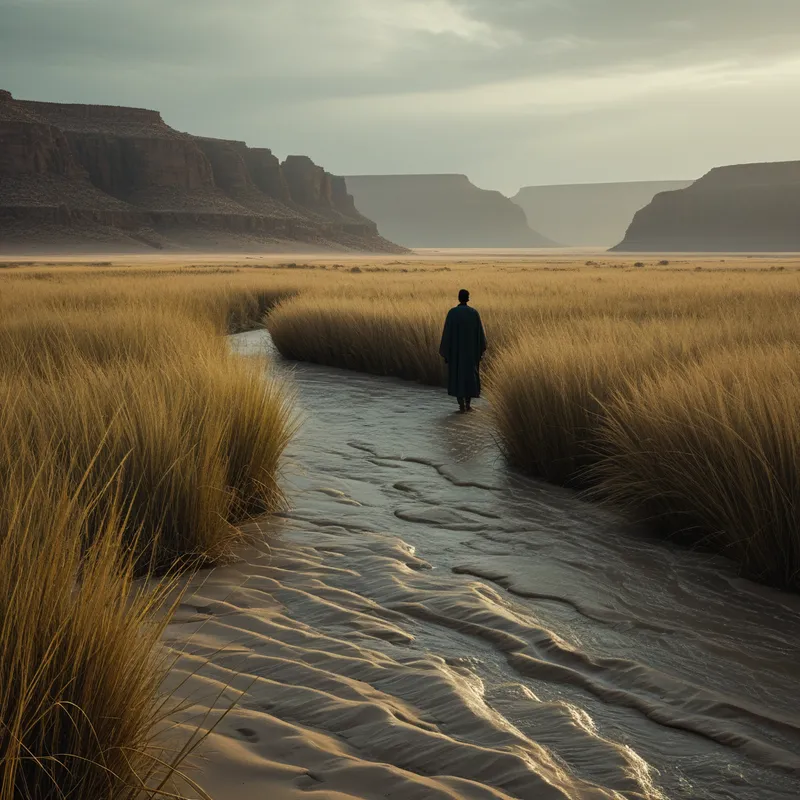
This narrative exists in the oral traditions of the communities living alongside the Komodo dragon (Varanus komodoensis) on a handful of Indonesian islands. It is less a formal, singular epic and more a constellation of beliefs, observations, and respectful explanations woven into the fabric of local cosmology. The story arises from a direct, enduring relationship with an awe-inspiring animal. For the people of Komodo, Rinca, and parts of Flores, the dragon is not merely fauna; it is a neighbor of immense power and ancient lineage.
The tales were likely passed down by elders and shamans, those who interpreted the natural world as a text of spiritual signs. The myth served crucial societal functions. Firstly, it was a profound piece of ethno-zoology, explaining the origin and fearsome nature of the world’s largest lizard. More importantly, it functioned as ecological and spiritual law. By framing the Komodo dragon as a sacred guardian (penunggu) placed by ancestral or divine will, the myth enforced taboos against harming it unnecessarily. It codified a relationship of cautious coexistence, ensuring human activities did not disrupt the creature’s role in the local ecosystem. The dragon became a symbol of the islands’ unique identity and a constant reminder that humanity is not the sole, nor the supreme, force in the natural order.
Symbolic Architecture
The Orah is a masterful [symbol](/symbols/symbol “Symbol: A symbol can represent an idea, concept, or belief, serving as a powerful tool for communication and understanding.”/) of the [Shadow](/symbols/shadow “Symbol: The ‘shadow’ embodies the unconscious, repressed aspects of the self and often represents fears or hidden emotions.”/) in its most primordial, ecological form. It is not a personal [shadow](/symbols/shadow “Symbol: The ‘shadow’ embodies the unconscious, repressed aspects of the self and often represents fears or hidden emotions.”/) of repressed desires, but a collective, ancestral shadow—the part of [nature](/symbols/nature “Symbol: Nature symbolizes growth, connectivity, and the primal forces of existence.”/) that is ruthless, patient, and utterly indifferent to [human](/symbols/human “Symbol: The symbol of a human represents individuality, complexity of emotions, and social relationships.”/) sentiment. It represents the necessary cycle of decay and renewal that underpins all [life](/symbols/life “Symbol: The symbol of ‘Life’ represents a journey of growth, interconnectedness, and existential meaning, encompassing both the joys and challenges that define human experience.”/), a process that is often terrifying to witness.
The guardian does not protect us from the wild; it protects the wild within us, and the wild around us, from our own forgetting.
The [dragon](/symbols/dragon “Symbol: Dragons are potent symbols of power, wisdom, and transformation, often embodying the duality of creation and destruction.”/)‘s infamous bite, laden with septic [bacteria](/symbols/bacteria “Symbol: Bacteria in dreams often symbolize unseen emotional or psychological influences, representing both threats to well-being and essential processes of transformation.”/), symbolizes a [truth](/symbols/truth “Symbol: Truth represents authenticity, honesty, and the quest for knowledge beyond mere appearances.”/) modern [psychology](/symbols/psychology “Symbol: Psychology in dreams often represents the exploration of the self, the subconscious mind, and emotional conflicts.”/) understands well: some forces work slowly, inevitably. A wound inflicted may not show its full consequence immediately. This mirrors psychological complexes or traumas that fester unseen before manifesting. The Orah’s slow, deliberate [movement](/symbols/movement “Symbol: Movement symbolizes change, progress, and the dynamics of personal growth, reflecting an individual’s desire or need to transform their circumstances.”/) speaks to the [pace](/symbols/pace “Symbol: The rhythm or speed of movement, thought, or life, reflecting internal tempo, urgency, or harmony with one’s environment.”/) of deep, unconscious processes, of psychic realities that cannot be rushed. Its [origin](/symbols/origin “Symbol: The starting point of a journey, often representing one’s roots, source, or initial state before transformation.”/) from the union of the [Dragon](/symbols/dragon “Symbol: Dragons are potent symbols of power, wisdom, and transformation, often embodying the duality of creation and destruction.”/) [Princess](/symbols/princess “Symbol: The symbol of a princess embodies themes of power, privilege, and feminine grace, often entailing a journey of self-discovery.”/) (fluid, nurturing, celestial) and the [spirit](/symbols/spirit “Symbol: Spirit symbolizes the essence of life, vitality, and the spiritual journey of the individual.”/) of the land (solid, enduring, chthonic) symbolizes the necessary [integration](/symbols/integration “Symbol: The process of unifying disparate parts of the self or experience into a cohesive whole, often representing psychological wholeness or resolution of internal conflict.”/) of opposites—[spirit](/symbols/spirit “Symbol: Spirit symbolizes the essence of life, vitality, and the spiritual journey of the individual.”/) and matter, [consciousness](/symbols/consciousness “Symbol: Consciousness represents the state of awareness and perception, encompassing thoughts, feelings, and experiences.”/) and the unconscious, the nurturing [mother](/symbols/mother “Symbol: The symbol of ‘Mother’ represents nurturing, protection, and the foundational aspect of one’s emotional being, often associated with comfort and unconditional love.”/) and the severe, disciplinarian [aspect](/symbols/aspect “Symbol: A distinct feature, quality, or perspective of something, often representing a partial view of a larger whole.”/) of nature.
The Dreamer’s Resonance
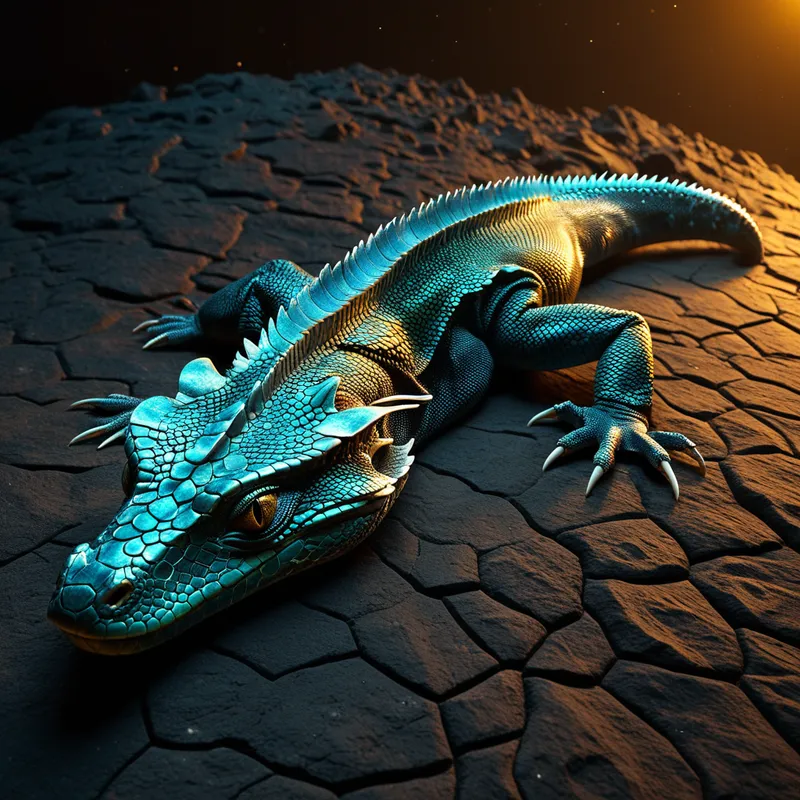
To dream of the Komodo dragon is to encounter an archetypal image of immense, slow-burning power within the psyche. It rarely appears as an active aggressor; more often, it is seen basking, watching, or moving with deliberate, unstoppable intent through a dream landscape. This points to the dreamer’s confrontation with a foundational aspect of their own nature or history that has been ignored but is now demanding recognition.
Somatically, this dream may be accompanied by feelings of deep dread, a chilling stillness, or the sensation of being weighed down. Psychologically, it signals the emergence of something ancient within the self—a long-buried family pattern, a core instinctual drive (like survival or territoriality), or a “toxic” truth that has been passively poisoning one’s emotional life, much like the dragon’s septic bite. The dream is an invitation to acknowledge this slow, potent force, to cease running from its patient gaze, and to begin the difficult work of understanding what this primal guardian within is actually protecting. It often appears when one is on the verge of a significant life transition, guarding the threshold to a new state of being.
Alchemical Translation
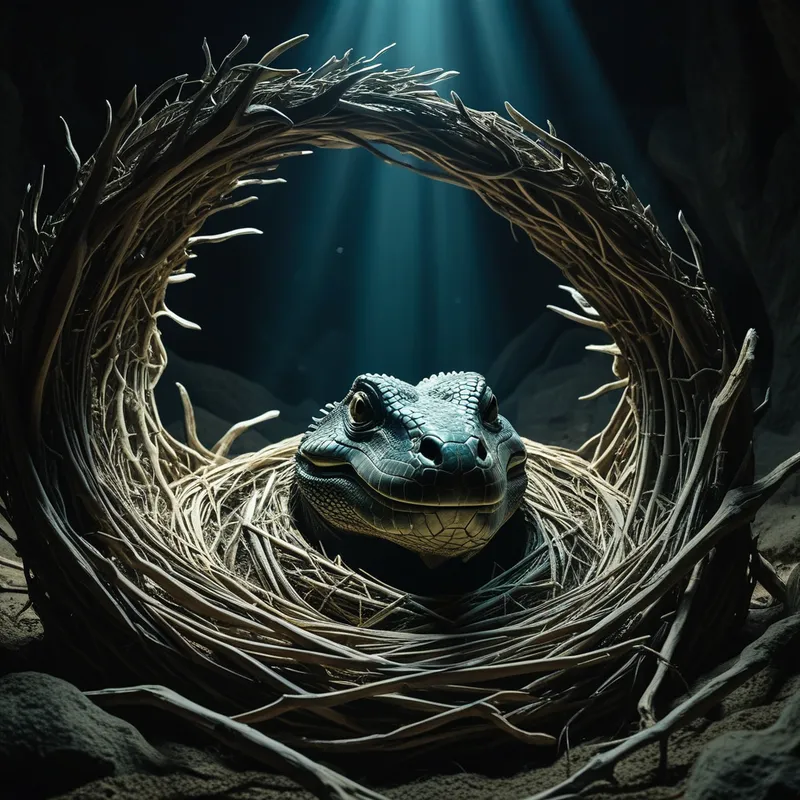
The myth models a specific alchemical operation: the nigredo, or the blackening. This is not a heroic journey to slay the dragon, but to sit with it, to endure its presence, and to recognize its function in the psychic ecosystem. The individuation process here involves the transmutation of raw, primal fear into sacred awe, and of perceived monstrosity into recognized guardianship.
The modern individual is tasked with finding their own “Orah”—that within them which seems alien, terrifying, and ancient. This could be a rage that feels reptilian in its coldness, a depression that moves with the slow certainty of geologic time, or a hunger for life that feels primitive and unsocialized. The alchemical work is to stop projecting this inner dragon as an external monster to be avoided or destroyed. Instead, one must approach it with the respect of the island villagers. One must ask: What balance is this fierce presence maintaining? What overgrowth of ego is it culling? What sacred, if severe, law does it enforce?
To integrate the dragon is not to become the dragon, but to acknowledge its right to exist within the ecology of the self, and in doing so, reclaim the immense, grounded power it holds.
This process transforms the psychic substance. The fear becomes a grounding respect for one’s own depths. The “septic bite” of old wounds is gradually neutralized through conscious attention. The individual moves from being a subject terrified of the shadow to becoming the conscious steward of their own inner landscape, understanding that the guardian’s terrible grace is what allows the garden of the conscious self to truly flourish. One achieves not dominance over nature, but a solemn covenant with it.
Associated Symbols
Explore related symbols from the CaleaDream lexicon:
- Dragon — The primordial guardian, the Orah, representing the ancient, untamed force of nature and the unconscious that enforces ecological and psychic balance.
- Earth — The literal and symbolic source of the Orah, representing the grounded, chthonic power, enduring patience, and the physical reality from which all life and myth emerge.
- Guardian — The core function of the Orah, a protector not of people from the land, but of the sacred order and balance of the land itself.
- Blood — Symbolizes the cycle of life, death, and sustenance central to the Orah’s role, as well as the potent, often feared vitality and ancestral lineage it embodies.
- Shadow — The psychological counterpart to the Orah, representing the feared, rejected, yet essential aspects of the self and nature that must be integrated for wholeness.
- Ritual — The respectful, prescribed behaviors of the islanders towards the Orah, modeling the conscious engagement needed to relate to powerful unconscious forces.
- Threshold — The space the Orah inhabits and guards, the liminal zone between life and death, the known world and the primal wild, consciousness and the unconscious.
- Mountain — Echoes the Orah’s immovable presence and ancient origin, symbolizing a enduring, formidable truth that shapes the landscape of the psyche.
- Death — Not as an end, but as the necessary agent of balance that the Orah administers, representing the dissolution required for renewal in both nature and the psyche.
- Balance — The ultimate purpose of the Orah’s existence, the harmonious equilibrium between opposing forces that it tirelessly and ruthlessly maintains.