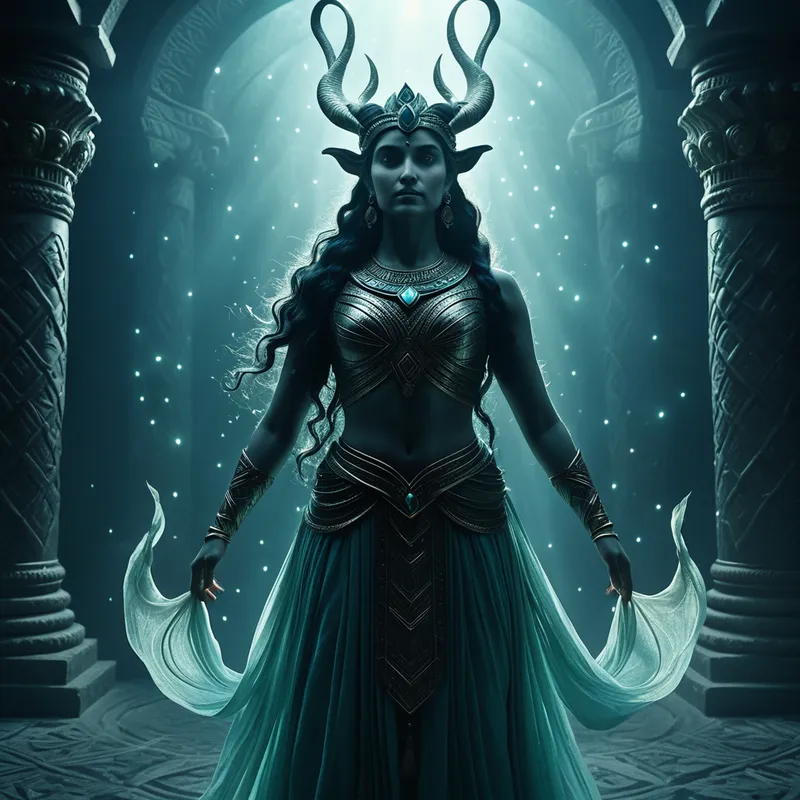
The City of Brass Arabian
A legendary, cursed city of jinn and immense wealth, often sought by adventurers but shrouded in peril and mystery.
The Tale of The City of Brass Arabian
The tale begins not with a map, but with a whisper, a fragment of lore carried on [the desert](/myths/the-desert “Myth from Biblical culture.”/) wind. It speaks of a city beyond the dunes of time, a metropolis of impossible splendor forged not by human hands but by the will of the jinn. This is [the City of Brass](/myths/the-city-of-brass “Myth from Islamic culture.”/), a place of legend where the very walls shimmer with the hue of captured sunsets, and towers pierce [the sky](/myths/the-sky “Myth from Persian culture.”/) like frozen flames. It is said to lie in a distant, trackless waste, a jewel in a setting of desolation, protected by sands that shift to confound the traveler and skies that offer no mercy.
The narrative, as preserved in manuscripts like [The Thousand and One Nights](/myths/the-thousand-and-one-nights “Myth from Arabian culture.”/), often follows a company of men—a caliph’s envoy, a wise scholar, a brave soldier. Their journey is an odyssey of thirst and mirage, a stripping away of worldly assurance under the relentless sun. They are guided by cryptic inscriptions on ancient tombstones, warnings carved in stone that speak of pride laid low. Finally, they reach its formidable walls. No gate stands open. The only entrance is a high, smooth portal, accessible only by a perilous ascent. The first to climb finds not a welcoming committee, but a silent, terrible sentinel: a brass horseman on a brass steed, its lance extended. A mechanism triggers, and the figure moves, striking the explorer and casting him down—a stark lesson in the price of entry.
Those who succeed enter a realm of breathtaking, sterile grandeur. Streets are paved with gold and lapis lazuli. Palaces are inlaid with pearls and precious stones. Fountains, dry for centuries, stand as sculptures of lost abundance. And everywhere, there are the people. They stand in markets, sit in halls, recline in gardens—figures of exquisite beauty and wealth, clad in silks and brocade. But a touch reveals the horror: they are hollow, mere shells of metal and precious wood, their eyes gems that see nothing. The city is a museum of itself, a perfect, cursed tableau of life that has been petrified in its moment of greatest hubris.
The seekers press on, drawn to the central palace and its throne room. There, upon a dais, sits the queen, more radiant than all others, a scroll upon her lap. The scroll contains the city’s epitaph. It tells of a mighty king of [the jinn](/myths/the-jinn “Myth from Pre-Islamic Arabian / Islamic culture.”/), whose wealth and power knew no bounds. In his arrogance, he defied the divine order, believing his city eternal and his reign supreme. A plague was sent upon them—not of disease, but of cessation. Life was withdrawn, leaving only the magnificent shell. The wealth remained, but the spirit that animated it was gone, transformed into a warning for all who would place their faith in mortal treasure. The adventurers, if they are wise, take only this story and a profound dread with them as they flee the silent, golden tomb. If they are foolish, they grasp for the riches and join the eternal, metallic court.
Cultural Origins & Context
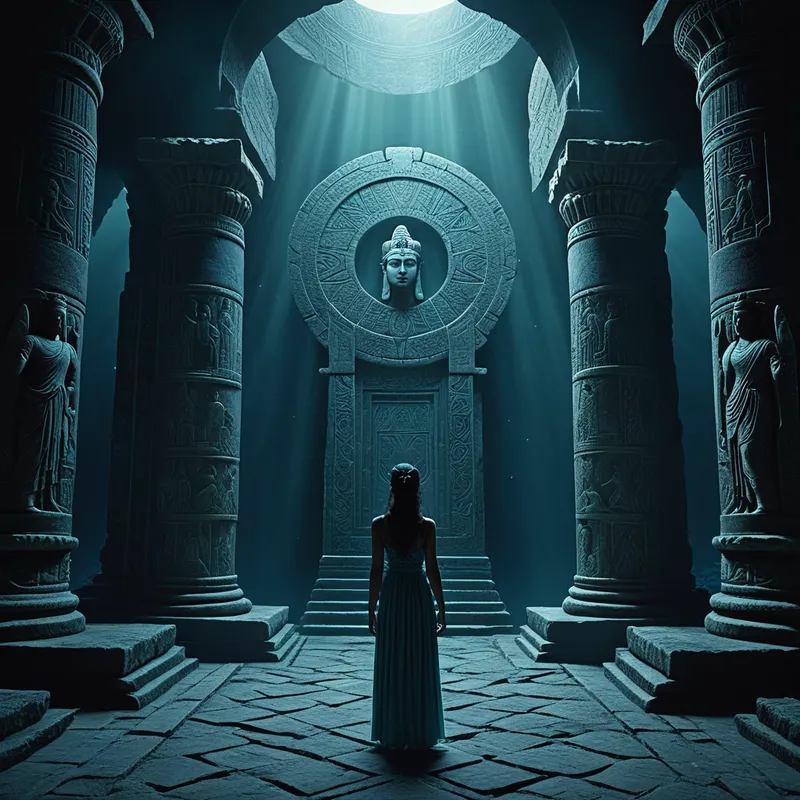
The City of Brass is a quintessential artifact of the Islamic [Golden Age](/myths/golden-age “Myth from Universal culture.”/) imagination, a narrative nexus where pre-Islamic Arabian lore met Persian, Greek, and Indian storytelling traditions. Its deepest roots tap into the ancient Bedouin awareness of the desert as both a preserver and an obliterator. Lost cities, swallowed by sand, were a potent reality and metaphor. The tale crystallized within the vast compendium of The Thousand and One Nights, but its themes resonate with core Islamic and broader Near Eastern worldview.
The story is a profound [memento mori](/myths/memento-mori “Myth from Christian culture.”/) and a theological assertion. In a culture where the transience of worldly life (dunya) is constantly contrasted with the permanence of the hereafter (akhirah), the City of Brass is the ultimate object lesson. It literalizes the Quranic warning that worldly life is but “play and amusement, adornment and boasting among yourselves, and rivalry in respect of wealth and children.” The city is that adornment and boasting made permanent, and thus made utterly hollow. It is a cautionary tale against istikbar (arrogance) and kufr (disbelief, ingratitude), showing the fate of those who, like [the Pharaoh](/myths/the-pharaoh “Myth from Egyptian culture.”/) or the tribes of ‘Ad and Thamud from Quranic tradition, believed themselves masters of their own destiny, independent of divine will.
Furthermore, the city exists in the liminal realm of the jinn, beings of smokeless fire who inhabit a world parallel to our own. They can be pious or wicked, builders or destroyers. A city built by jinn represents the pinnacle of worldly power and artistry, yet it remains subject to the same cosmic laws as humanity. This levels the playing field of existence; no creature, however powerful or splendid, is outside the moral and metaphysical order. The tale served as a sophisticated narrative for courtly audiences who themselves lived amidst great wealth and power, a dark mirror held up to caliphs and viziers in their own palaces of marble and gold.
Symbolic Architecture
The [city](/symbols/city “Symbol: A city often symbolizes community, social connection, and the complexities of modern life, reflecting the dreamer’s relationships and societal integration.”/) is not merely a setting; it is the primary [symbol](/symbols/symbol “Symbol: A symbol can represent an idea, concept, or belief, serving as a powerful tool for communication and understanding.”/), a constructed [psyche](/myths/psyche “Myth from Greek culture.”/) frozen in a state of catastrophic success.
The walls of brass are not merely fortifications; they are the ultimate defense that becomes the ultimate prison. They keep the world out, but they also seal the curse within, creating a perfect, sterile interior where the soul has evaporated, leaving only the glittering carapace of identity.
The [architecture](/symbols/architecture “Symbol: Architecture in dreams often signifies structure, stability, and the framing of personal identity or life’s journey.”/) is one of sublime [paradox](/symbols/paradox “Symbol: A contradictory yet true concept that challenges logic and perception, often representing unresolved tensions or profound truths.”/). The immense [wealth](/symbols/wealth “Symbol: Wealth in dreams often represents abundance, security, or inner resources, but can also symbolize burdens, anxieties, or moral/spiritual values.”/)—the gold streets, jeweled palaces—represents the total externalization of value. Everything of worth has been turned [outward](/symbols/outward “Symbol: Movement or orientation away from the self or center; expansion, expression, or externalization of inner states into the world.”/), made manifest and tangible, until nothing of intangible worth remains within. The automated [brass](/symbols/brass “Symbol: A durable alloy of copper and zinc, symbolizing resilience, tradition, and a blend of strength with warmth. Often associated with craftsmanship and ceremonial objects.”/) horseman at the gate is a perfect symbol of a [defense](/symbols/defense “Symbol: A protective mechanism or barrier against perceived threats, representing boundaries, security, and resistance to external or internal challenges.”/) [mechanism](/symbols/mechanism “Symbol: Represents the body’s internal systems, emotional regulation, or psychological processes working together like a machine.”/) that has outlived [the self](/myths/the-self “Myth from Jungian culture.”/) it was meant to protect, now mindlessly striking down any new [life](/symbols/life “Symbol: The symbol of ‘Life’ represents a journey of growth, interconnectedness, and existential meaning, encompassing both the joys and challenges that define human experience.”/) that approaches.
Most haunting are the silent, metallic citizens. They are the [persona](/symbols/persona “Symbol: The social mask or outward identity one presents to the world, often concealing the true self.”/)—the social mask—taken to its literal, terrifying [conclusion](/symbols/conclusion “Symbol: A conclusion can symbolize resolution, closure, and the finality of experiences or decisions.”/). Every social [role](/symbols/role “Symbol: The concept of ‘role’ in dreams often reflects one’s identity or how individuals perceive their place within various social structures.”/) (merchant, [queen](/symbols/queen “Symbol: A queen represents authority, power, nurturing, and femininity, often embodying leadership and responsibility.”/), guard, [musician](/symbols/musician “Symbol: A musician symbolizes creativity, expression, and the ability to communicate emotions through art.”/)) is perfectly performed, eternally maintained, and utterly dead. There is no [shadow](/symbols/shadow “Symbol: The ‘shadow’ embodies the unconscious, repressed aspects of the self and often represents fears or hidden emotions.”/) here, no conflict, no desire—only the flawless, [static](/symbols/static “Symbol: Static represents interference, disruption, and the breakdown of clear communication or signal, often evoking feelings of frustration and disconnection.”/) [presentation](/symbols/presentation “Symbol: A presentation in a dream can symbolize the act of revealing or showcasing one’s ideas, emotions, or status, reflecting the dreamer’s current life circumstances or relationships.”/) of a finished society. It is [the ego](/myths/the-ego “Myth from Jungian culture.”/)’s [paradise](/symbols/paradise “Symbol: A perfect, blissful place or state of being, often representing ultimate fulfillment, harmony, and transcendence beyond ordinary reality.”/) and the [soul](/symbols/soul “Symbol: The soul represents the essence of a person, encompassing their spirit, identity, and connection to the universe.”/)’s hell, a state of being where development has ceased because perfection, of a [material](/symbols/material “Symbol: Material signifies the tangible aspects of life, often representing physical resources, desires, and the physical world’s influence on our existence.”/) kind, has been achieved.
The Dreamer’s Resonance
To encounter the City of Brass in dream or active imagination is to confront a profound psychological state. It represents a complex within the psyche that has achieved a formidable, brilliant, and completely lifeless stability. This is the “successful” adaptation that has killed the spirit: the career built, the image perfected, the wealth accumulated, at the cost of all inner spontaneity, connection, and growth. The dreamer who wanders its silent streets may feel awe, followed by a deep, chilling loneliness. The city resonates with the experience of depression or burnout that wears a golden mask—outwardly impeccable, inwardly desolate.
It symbolizes a condition where the animating fire of the libido has been completely invested in constructing and maintaining this internal citadel, leaving no energy for relationship, creativity, or the unknown. The curse is not an external punishment but the inevitable result of this total investment in the static image. The quest for the city, then, mirrors a dangerous yearning in the modern soul: the desire for a guaranteed, permanent state of security and [triumph](/myths/triumph “Myth from Roman culture.”/), a fantasy that, if realized, would be a living [death](/myths/death “Myth from Tarot culture.”/). The city warns that the goal of eliminating all risk, all want, and all uncertainty is not paradise, but the most exquisite of curses.
Alchemical Translation
In the alchemical opus, the City of Brass represents a critical and perilous stage: the false [albedo](/myths/albedo “Myth from Alchemical culture.”/), or the whitening that is not true illumination. Alchemy sought the transmutation of base lead ([the nigredo](/myths/the-nigredo “Myth from Alchemical culture.”/), or chaotic, dark soul) into spiritual gold through stages of blackening, whitening, and reddening. The City, in its blinding, metallic splendor, mimics the [albedo](/myths/albedo “Myth from Alchemical culture.”/)—the stage of purification and whitening—but it is a counterfeit. It is order achieved through petrification, not transformation; clarity achieved through emptiness, not insight.
The brass, an alloy, is key. It is not pure gold (the ultimate goal of rubedo, or spiritual integration), nor is it base lead. It is a showy, durable, intermediate substance—the ego’s idea of spiritual achievement. It is the philosopher’s stone mistaken for a literal stone of great market value. The alchemical process has been hijacked by the materialist impulse, resulting in a magnificent, fixed, and dead product.
The journey to the city is the [nigredo](/myths/nigredo “Myth from Alchemical culture.”/), the difficult desert crossing that strips the travelers down. Entering the city is encountering this dazzling, final-seeming state. The true alchemical work, however, is to read the queen’s scroll—to understand the nature of the curse—and to flee. This represents the crucial insight that one must not identify with or become trapped in any intermediate stage, no matter how splendid. The true gold is not to be found in the city’s treasuries, but in the living, humbled heart of the traveler who returns to [the world](/myths/the-world “Myth from Tarot culture.”/) of flux and mortality, carrying the wisdom of the hollow splendor.
Associated Symbols
Explore related symbols from the CaleaDream lexicon:
- City — The ultimate human construct of order and identity, which can become a prison for the soul when its walls grow too rigid and its laws too absolute.
- Curse — A binding enchantment or fate that often manifests when a natural law or moral order has been profoundly violated, freezing a situation in a state of tragic consequence.
- Wealth — Material abundance and treasure, which symbolizes potential energy and value but can easily become a false idol that obscures inner poverty.
- Gold — The archetypal symbol of ultimate value, divinity, and the perfected self, which in its corrupted form manifests as mere material greed and spiritual stagnation.
- Mirror — A surface for reflection, revealing truth or illusion; the City of Brass acts as a dark mirror, showing the beholder the potential fate of their own worldly ambitions.
- Tomb — A chamber for the dead, representing an ending, preservation, and a warning from the past; the entire city is a grand, ornate tomb for a lost civilization.
- Door — A threshold between realms, offering passage that often requires a sacrifice or price; the city’s high gate demands a perilous ascent and a confrontation with a mechanical guardian.
- Mask — A false face or [persona](/myths/persona “Myth from Greek culture.”/) worn for protection or deception; the city’s inhabitants are literally hollow masks, perfect social facades with no inner life.
- Stone — Symbolizing permanence, law, and endurance, but also potential petrification and death; the city’s fate is to be turned from living community to a stony, metallic monument.
- Journey — The fundamental archetype of quest and transformation, where the path and its trials are often more important than the destination, which may prove to be a trap.
- Pride — The sin of hubris and excessive self-regard, which precedes a fall and is the core spiritual failure that doomed the city’s jinn rulers.
- Dream — A state of visionary reality; the city exists in the collective dream as a powerful warning, a fantasy of perfection that reveals itself to be a nightmare.