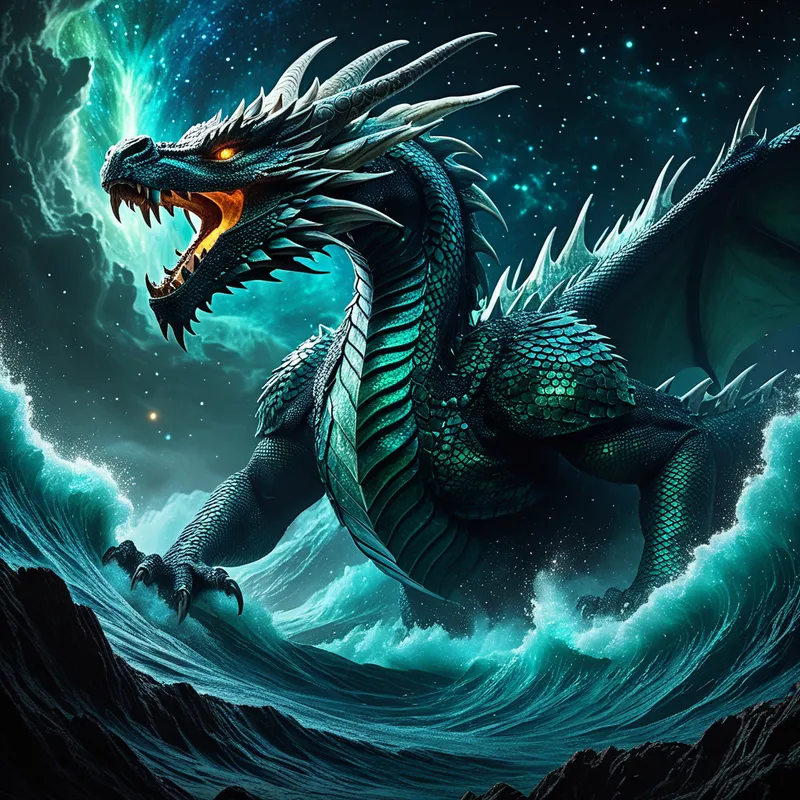
The Abyss of Tiamat - Mesopota Myth Meaning & Symbolism
A primordial dragon of saltwater chaos is slain by a storm god, her body becoming the ordered cosmos in an ancient Mesopotamian creation epic.
The Tale of The Abyss of Tiamat - Mesopota
In the time before time, there was no name for heaven, no word for earth. There was only the mingled waters, Apsu the sweet, and Tiamat the salt, coiled together in the silent, boundless deep. They were the first parents, the womb of all possibility, a darkness that was not empty but teeming with unformed life.
From their waters, generations of gods were born. But these young deities were not quiet. They danced with light and thunder in the belly of the deep, and their clamor was a torment to Apsu, who desired the old silence. He plotted their destruction. But Tiamat, the Mother of All, roared in protest. "Shall we destroy what we have made?" Her voice was the sound of tides crashing in a starless void. Yet Apsu was slain, and in that act, a sacred stillness was broken.
Then arose in Tiamat a fury like the universe had never known. The grief of a mother betrayed became the rage of a dragon awakened. She birthed a legion of monsters: horned serpents with venom for blood, raging lion-demons, scorpion-men, and Qingu, to whom she gave the Tablet of Destinies. She appointed him her general, and her cry shook the foundations of the deep. She was chaos incarnate, no longer a womb but a maw, ready to unmake her own children and return all to the formless, churning abyss.
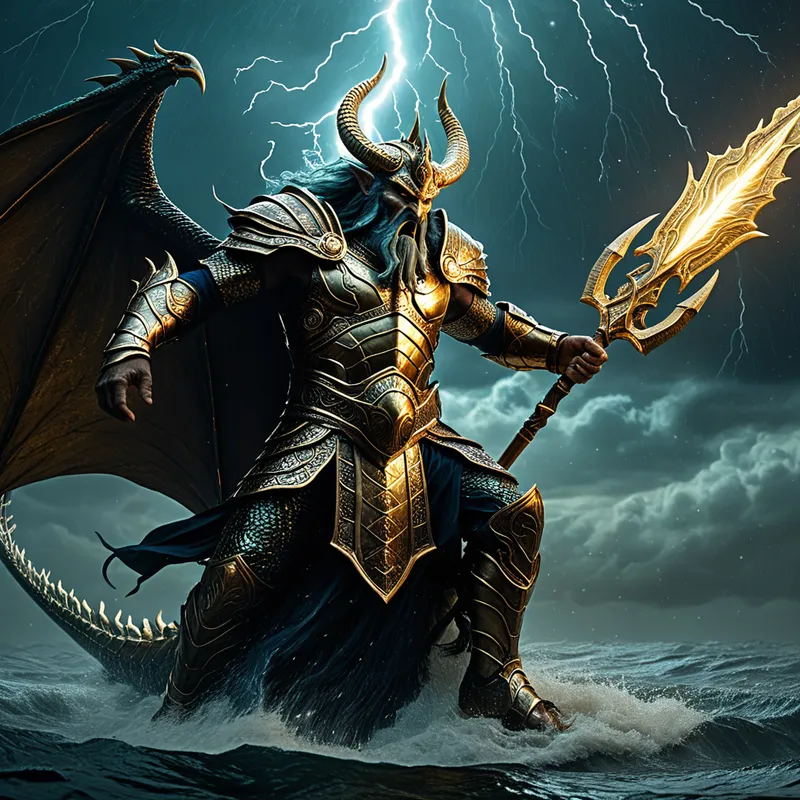
Terror seized the gods. They huddled like frightened stars. Then rose Marduk, a younger god of terrifying power. He made a pact: if they would grant him kingship, he would face the Mother-Dragon. They agreed, clothing him in seven winds, a blazing armor, and a net to ensnare chaos itself. He mounted his storm-chariot, and the very fabric of the deep trembled as he advanced.
They met in the void, the embodiment of order and the essence of chaos. Tiamat opened her jaws to swallow him, a gateway to eternal night. But Marduk drove the raging winds into her, inflating her vast body. As she gaped, helpless, he shot an arrow that split her heart. Her monstrous roar became a sigh that shaped the first wind. He stood upon her lifeless form, and with his mace, he shattered her skull.
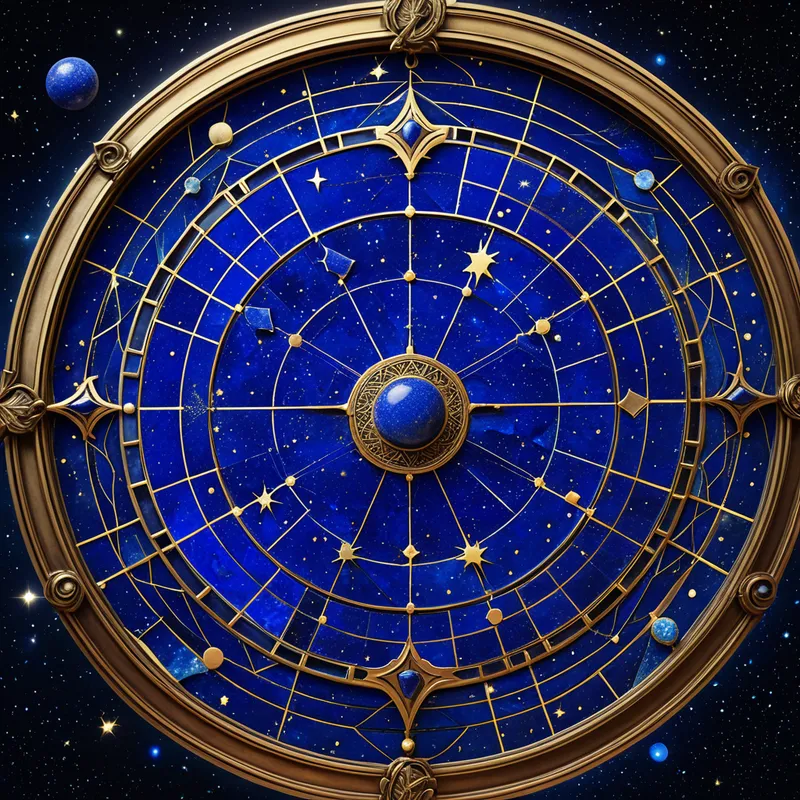
Then came the great making. He split her carcass like a clamshell. From one half, he hammered out the dome of the heavens, posting guards so her waters could not fall. From the other, he forged the earth, mountains rising from her bones, the Tigris and Euphrates flowing from her eyes. He set the moon and sun to mark time, and from the blood of Qingu, he fashioned humanity to serve the gods. The ordered world was built from the body of the vanquished dragon. The abyss was framed; chaos was given form.
Cultural Origins & Context
This epic, known as the Enûma Eliš, was the national myth of Babylon, recited during the Akitu festival to reaffirm the king's divine mandate and the cosmos's stability. It is a political theology in narrative form, justifying Marduk's (and by extension, Babylon's) supremacy over older Mesopotamian deities like Enlil. Passed down by priestly scribes on cuneiform tablets, it served a crucial societal function: it was a ritual weapon against existential anxiety. Each recitation was a symbolic re-enactment of Marduk's victory, assuring the community that the terrifying, formless chaos (Tiamat) was held at bay, and the fragile order of civilization—crops, laws, kingship—would endure for another year.
Symbolic Architecture
At its core, the myth maps the fundamental psychic drama of differentiation. Tiamat represents the undifferentiated, unconscious matrix from which consciousness emerges. She is the primal, all-encompassing Mother, the source of life that also threatens to engulf and dissolve individual identity back into her watery depths.
To create a self, one must first slay the devouring mother of undifferentiated existence. The ego is born from an act of necessary violence against the totality of the unconscious.
Marduk symbolizes the emerging conscious principle—the ego, will, and discerning intellect. His weapons (the winds, the net, the arrow) are the tools of consciousness: analysis, discrimination, and focused intent. The battle is not between good and evil, but between the state of potential (chaos) and the act of actualization (order). The creation of the world from Tiamat's body signifies that our ordered reality, our psyche's structure, is built entirely from the substance of the primal unconscious. We do not escape chaos; we fashion our world from its raw material.
The Dreamer's Resonance
When this myth stirs in modern dreams, it often manifests as encounters with immense, overwhelming feminine forces: tsunamis, vast oceans, labyrinthine caves, or immense, nurturing-yet-suffocating creatures. To dream of the Abyss of Tiamat is to stand at the threshold of a profound psychological process. The dreamer may be experiencing a "creative dissolution," where old structures of identity are being challenged by upwellings of raw emotion, instinct, or forgotten trauma—the "monsters" Tiamat births.
Somatically, this can feel like drowning, paralysis, or a heavy, depressive pressure—the weight of the abyssal waters. Psychologically, it is the struggle to hold form in the face of formlessness. The dream is not a call to annihilation, but a summons to a Marduk-like act: to face the chaos, name it, and begin the difficult work of constructing a new, more resilient order of the self from its very substance.
Alchemical Translation
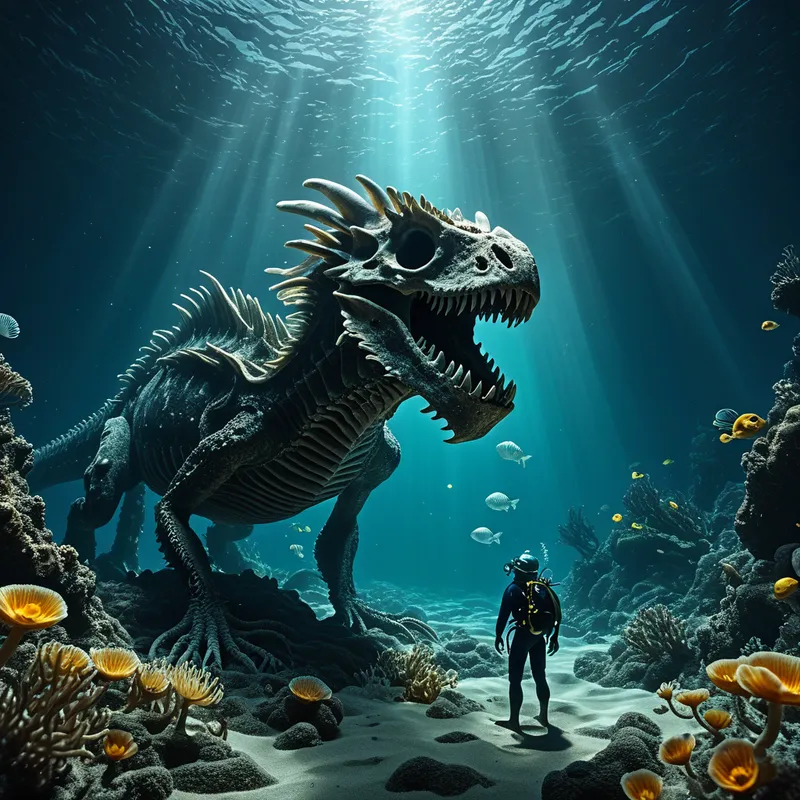
The individuation process modeled here is the opus contra naturam—the work against nature's original, undifferentiated state. The first alchemical stage, nigredo (blackening), is the encounter with Tiamat herself: the descent into the chaotic, shadowy depths of the psyche where all is confused and terrifying. The battle is the fierce introspection and conscious suffering required to not be swallowed.
The ultimate goal is not the death of the dragon, but its transmutation. The slain goddess becomes the world; the integrated shadow becomes the foundation of the Self.
Marduk's creative act mirrors the later alchemical stages: albedo (whitening), separating the heavens (lofty ideals, spirit) from the earth (grounded reality, body); and rubedo (reddening), the final integration where the "blood" of the conflict—the intense life force released—animates a new creation (the fashioned human). For the modern individual, this means consciously engaging with one's inner chaos—the rage, grief, and wild creativity—not to exterminate it, but to skillfully, reverently dismember it. We must split our own psychic "abyss" to build the stable ground of a mature identity and raise the vault of a personal cosmology, finding sacred order not in escaping our primal nature, but in architecting with its very bones.
Associated Symbols
Explore related symbols from the CaleaDream lexicon: