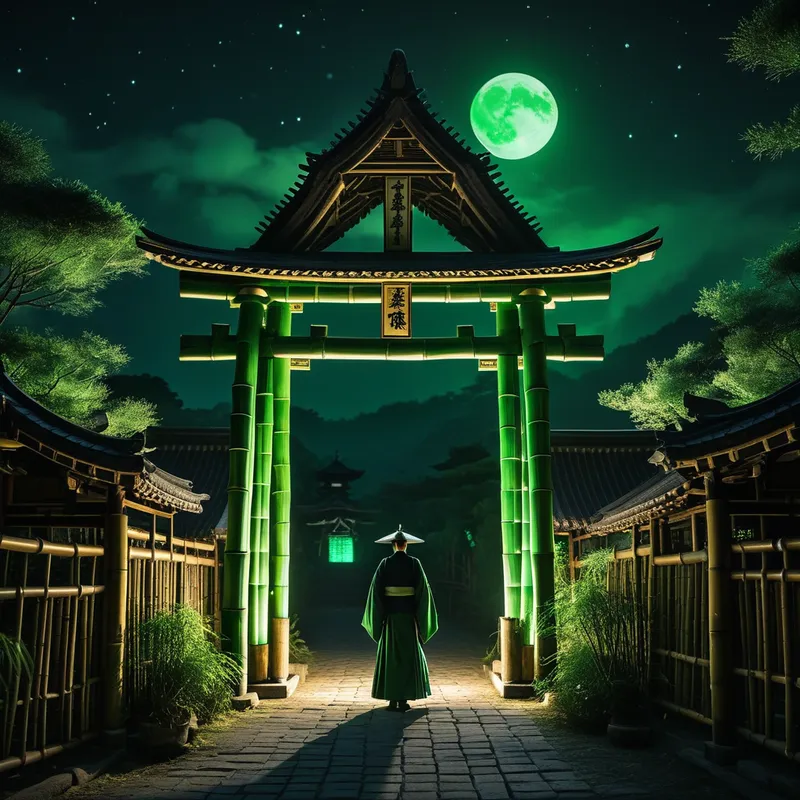
Takegaki Myth Meaning & Symbolism
A myth of a protective spirit born from a bamboo fence, guarding the threshold between the human village and the wild, untamed mountain.
The Tale of Takegaki
Listen, and hear the whisper of [the wind](/myths/the-wind “Myth from Various culture.”/) through the madake. In a time when [the world](/myths/the-world “Myth from Tarot culture.”/) was closer to the gods, there was a village nestled in a valley where the mountains pressed in like sleeping giants. The villagers were good people, tending their rice and listening to the songs of the stream. But the mountain, Yama, was old and wild. From its deep woods, things would sometimes descend—not always beasts, but shapeless hungers, cold mists that stole warmth from hearths, and whispers that unraveled peaceful sleep.
The village elder, a man whose hands were maps of his long labor, knew they could not fight the mountain’s breath. One night, under a moon thin as a sickle, he received a vision. Not from a kami of the bright heavens, but from the very earth. It spoke of a boundary, not of stone to crush, but of intention to define. “You must ask,” the vision murmured. “You must ask [the bamboo](/myths/the-bamboo “Myth from Taoist culture.”/) for its strength, and in the asking, give it purpose.”
So, at the new moon, the entire village walked to [the bamboo grove](/myths/the-bamboo-grove “Myth from Chinese culture.”/). They did not cut. They knelt and spoke to the tall, green pillars, explaining their fear, their love for their homes, their need for a line between the tended world and the wild. They asked permission. A breeze sighed through the grove, a sound like assent. Only then did they select the straightest, strongest culms.
For seven days and seven nights, they worked. Men, women, and children wove the bamboo into a fence, takegaki, around their village. This was no hasty barricade; each intersection was a knot of prayer, each vertical post a spine of shared resolve. As they placed the final pole at the eastern gate, the elder poured a libation of sake at its base.
That night, the mountain’s chill crept down again. The formless shadows pooled at the new fence, seeking a way through. But as they touched the woven bamboo, a soft, green light kindled along the fence line. The light pulsed, and from the fused prayers and the living spirit of the bamboo itself, a form coalesced. It was tall, its body the texture of polished cane, its eyes like gentle coals. It was the Takegaki-no-Kami. It did not roar. It simply stood, a silent, vigilant presence. The shadows pressed, but could not cross the line where the village’s collective will had been made manifest. At dawn, they retreated, and the spirit faded into the morning mist, leaving only the sturdy fence.
From then on, the fence was never just wood and vine. It was a guardian. On quiet nights, children would sometimes see a watchful silhouette within it. The village thrived, not by conquering the wild, but by defining a sacred space where life could flourish, protected by a guardian born of respect, need, and communal craft.
Cultural Origins & Context
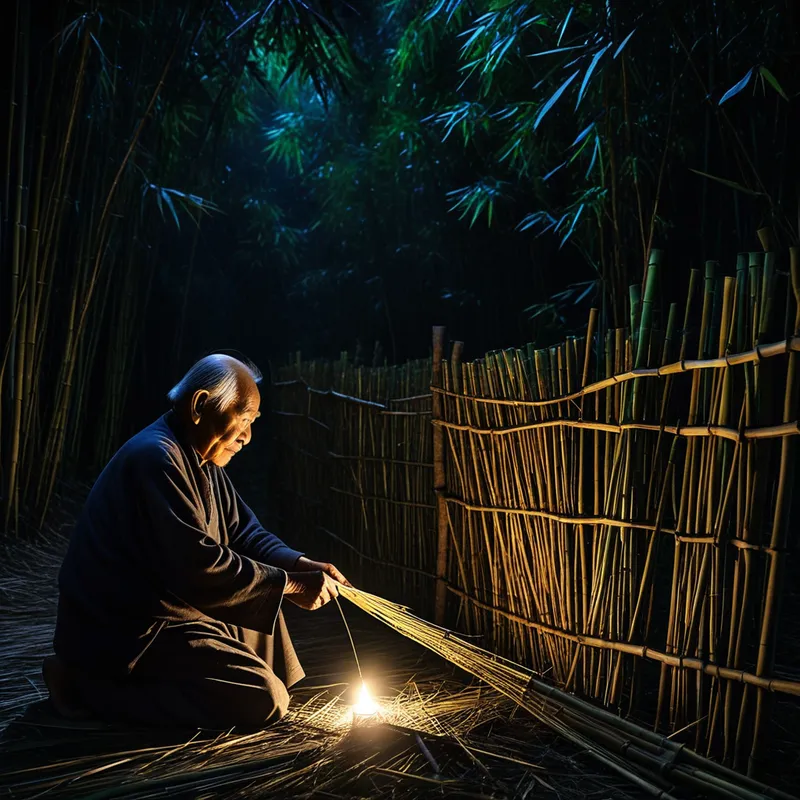
The myth of Takegaki finds its roots not in the grand Kojiki or Nihon Shoki, but in the rich soil of local folklore, mukashibanashi, and kami belief. It belongs to a class of narratives concerning sakai-no-kami, deities of thresholds, which were critically important in agrarian Japanese society. These stories were likely told by village elders and traveling storytellers, especially in regions where human settlements bordered deep, untamed forest or mountain.
Its societal function was multifaceted. Practically, it underscored the importance of community labor and infrastructure—a well-maintained fence was vital for keeping out real animals. Spiritually, it provided a model for interacting with the natural world. One does not simply take; one asks, honors, and collaborates. The myth ritualized the act of boundary-making, transforming a mundane chore into a sacred act of co-creation with the spirit world, thereby alleviating the existential anxiety of living on the edge of the unknown.
Symbolic Architecture
At its core, Takegaki is a profound [symbol](/symbols/symbol “Symbol: A symbol can represent an idea, concept, or belief, serving as a powerful tool for communication and understanding.”/) of the conscious [boundary](/symbols/boundary “Symbol: A conceptual or physical limit defining separation, protection, or identity between entities, spaces, or states of being.”/). It represents the necessary psychic [structure](/symbols/structure “Symbol: Structure in dreams often symbolizes stability, organization, and the framework of one’s life, reflecting how one perceives their environment and personal life.”/) that enables a healthy self and a healthy [community](/symbols/community “Symbol: Community in dreams symbolizes connection, support, and the need for belonging.”/) to exist.
The fence does not say “you are evil.” It says, “this is where I end, and you begin.”
The [Bamboo](/symbols/bamboo “Symbol: A symbol of resilience, flexibility, and spiritual growth, often representing strength through adaptability and connection to nature.”/) itself is the key symbol. It is hollow (kū), yet incredibly strong; it bends but does not break. Psychologically, it represents [resilience](/symbols/resilience “Symbol: The capacity to recover quickly from difficulties, adapt to change, and maintain strength through adversity.”/) rooted in humility and adaptability. The Weaving [action](/symbols/action “Symbol: Action in dreams represents the drive for agency, motivation, and the ability to take control of situations in waking life.”/) symbolizes the [integration](/symbols/integration “Symbol: The process of unifying disparate parts of the self or experience into a cohesive whole, often representing psychological wholeness or resolution of internal conflict.”/) of disparate parts of [the self](/myths/the-self “Myth from Jungian culture.”/) or community—thoughts, feelings, traditions, prayers—into a cohesive, functional whole. The Formless Shadows from the [mountain](/symbols/mountain “Symbol: Mountains often symbolize challenges, aspirations, and the journey toward self-discovery and enlightenment.”/) embody the undifferentiated, chaotic contents of the unconscious—raw instincts, fears, and unintegrated psychic [energy](/symbols/energy “Symbol: Energy symbolizes vitality, motivation, and the drive that fuels actions and ambitions.”/). They are not inherently monstrous, but they become destructive when allowed to flood into the ordered [space](/symbols/space “Symbol: Dreaming of ‘Space’ often symbolizes the vastness of potential, personal freedom, or feelings of isolation and exploration in one’s life.”/) of [consciousness](/symbols/consciousness “Symbol: Consciousness represents the state of awareness and perception, encompassing thoughts, feelings, and experiences.”/) (the [village](/symbols/village “Symbol: Symbolizes community, connection, and a reflection of one’s roots or origins.”/)) without a filter.
The true magic, the [birth](/symbols/birth “Symbol: Birth symbolizes new beginnings, transformation, and the potential for growth and development.”/) of the Takegaki-no-Kami, occurs at the [moment](/symbols/moment “Symbol: The symbol of a ‘moment’ embodies the significance of transient experiences that encapsulate emotional depth or pivotal transformations in life.”/) of Sacred [Intention](/symbols/intention “Symbol: Intention represents the clarity of purpose and direction in one’s life and can symbolize motivation and commitment within a dream context.”/). The [guardian](/symbols/guardian “Symbol: A protector figure representing safety, authority, and guidance, often embodying parental, societal, or spiritual oversight.”/) [spirit](/symbols/spirit “Symbol: Spirit symbolizes the essence of life, vitality, and the spiritual journey of the individual.”/) is not summoned from afar; it is evoked from the [material](/symbols/material “Symbol: Material signifies the tangible aspects of life, often representing physical resources, desires, and the physical world’s influence on our existence.”/) and the act itself, infused with collective [purpose](/symbols/purpose “Symbol: Purpose signifies direction, meaning, and intention in life, often reflecting personal ambitions and core values.”/). This teaches that true protection arises not from paranoia or aggression, but from [clarity](/symbols/clarity “Symbol: A state of mental transparency and sharp focus, often representing resolution of confusion or attainment of insight.”/) of purpose and respectful [relationship](/symbols/relationship “Symbol: A representation of connections we have with others in our lives, often reflecting our emotional state.”/) with the materials of one’s [life](/symbols/life “Symbol: The symbol of ‘Life’ represents a journey of growth, interconnectedness, and existential meaning, encompassing both the joys and challenges that define human experience.”/)—both physical and psychological.
The Dreamer’s Resonance
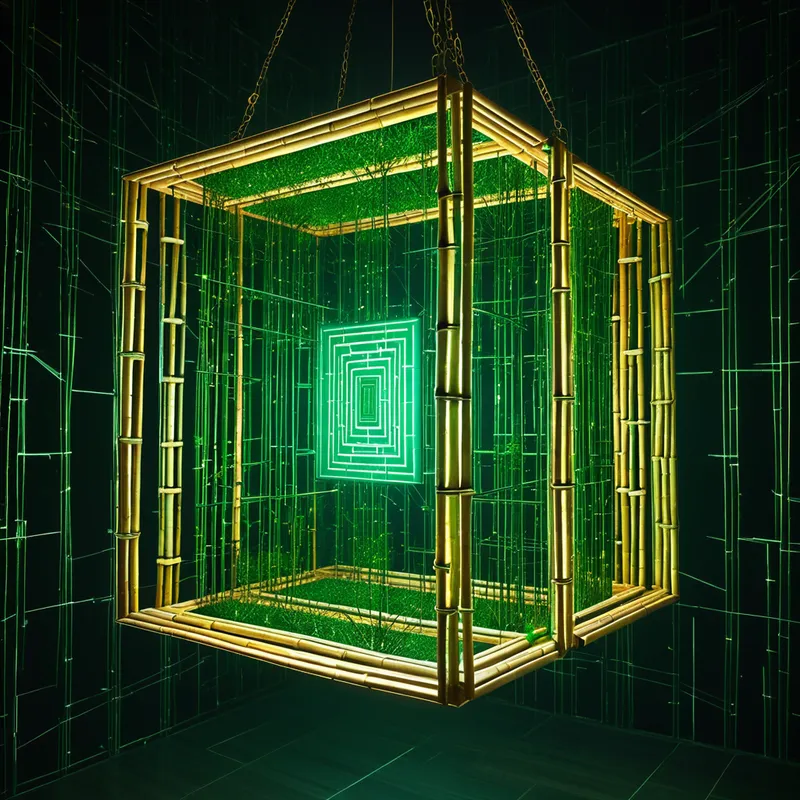
When this myth pattern stirs in the modern dreamer, it often signals a critical phase of psychic demarcation. To dream of building a fence, wall, or barrier—especially one made of natural, woven materials—suggests the unconscious is laboring to establish a needed boundary that the conscious ego has neglected.
The somatic experience might be one of relief, of finally feeling a “container” for one’s energy. Conversely, dreaming of a broken or breached Takegaki can manifest as anxiety, a feeling of being invaded, drained, or unable to say “no.” The shadowy figures pressing against the barrier may appear as demanding people, overwhelming responsibilities, or one’s own repressed emotions threatening to erupt.
The dream may be prompting an inquiry: Where in your life is your personal “village” undefended? What aspects of your wild, inner “mountain” have you not yet acknowledged or set a respectful limit with? The dream of Takegaki is the [psyche](/myths/psyche “Myth from Greek culture.”/)’s blueprint for building integrity.
Alchemical Translation
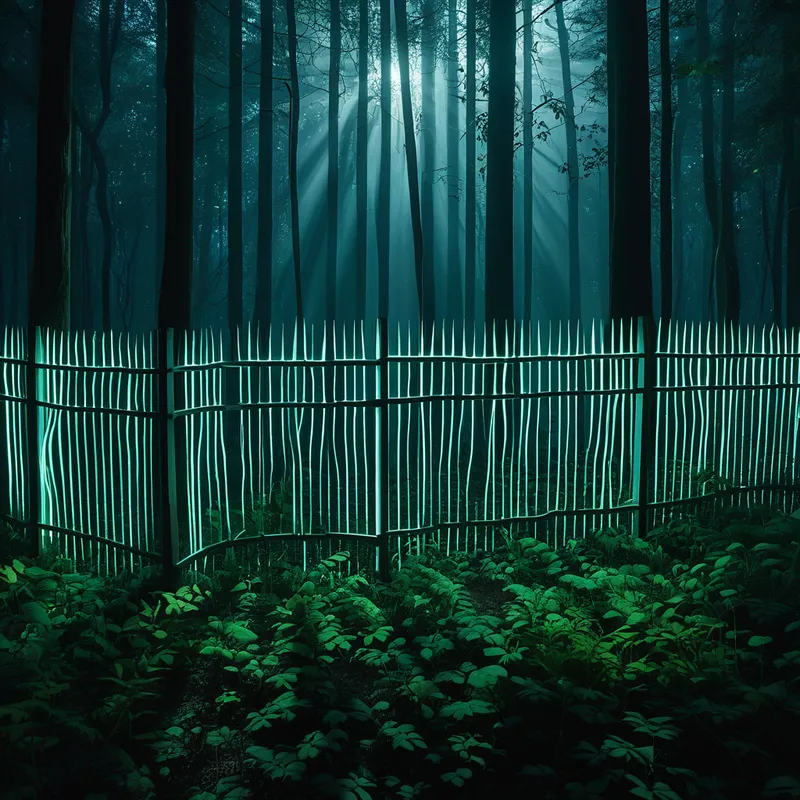
The individuation process modeled here is not one of heroic conquest, but of sacred definition. The “wild mountain” is the totality of the unconscious Self. The goal is not to clear-cut this inner wilderness, but to establish a conscious relationship with it.
The alchemical vessel is not a prison; it is the space where transformation is made possible.
The first step is The Asking (the village petitioning the bamboo). This is [the ego](/myths/the-ego “Myth from Jungian culture.”/) humbly acknowledging its need for structure and seeking cooperation from the deeper, instinctual layers of the psyche (the natural world). The second is The Weaving (the communal labor). This is the conscious, often effortful, work of building habits, values, and internal structures—the “fence” of the personality. The final, transcendent step is The Transmutation (the birth of the guardian). When the boundary is built with respect and clear intention, it ceases to be a dead wall. It becomes a living, intelligent function of the psyche itself—an autonomous complex that protects and maintains the integrity of the individual without constant ego surveillance.
This is the alchemy of Takegaki: the base materials of fear and need, through the fire of communal intention and the [water](/myths/water “Myth from Chinese culture.”/) of respect, are transmuted into the gold of a self-regulating, protective wisdom. The guardian spirit is the living symbol of a boundary that is not a barrier to life, but the very condition that allows inner and outer life to flourish in their proper realms.
Associated Symbols
Explore related symbols from the CaleaDream lexicon: