Rostam and Sohrab Myth Meaning & Symbolism
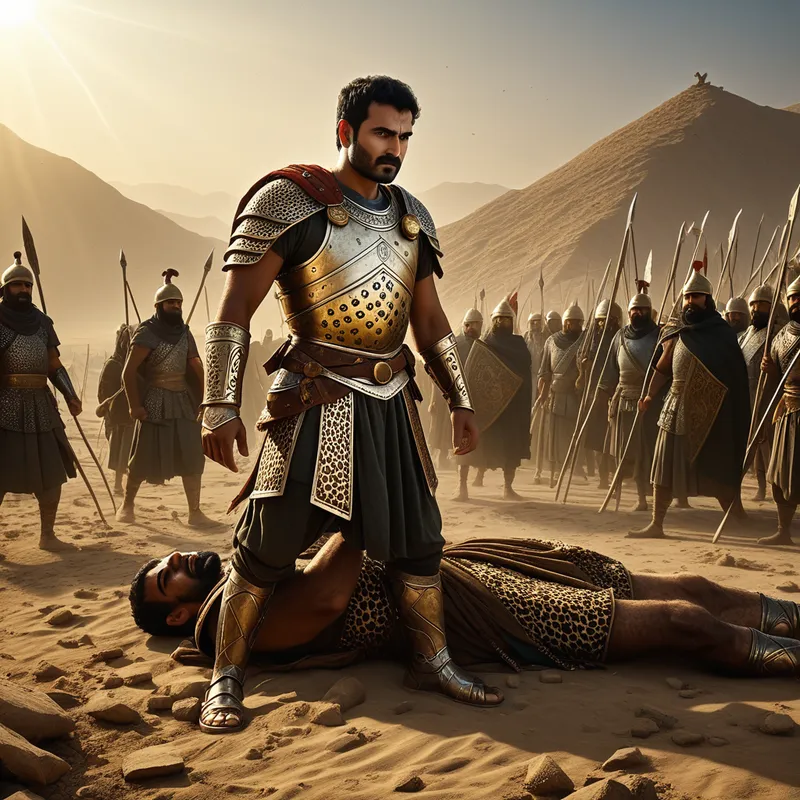
A legendary warrior, Rostam, slays a formidable champion in battle, only to discover the fallen foe is his own unknown son, Sohrab.
The Tale of Rostam and Sohrab
Hear now the tale that cracks the world’s spine, a story whispered by the wind across the Dasht-e Kavir. It begins not with a birth, but with a secret.
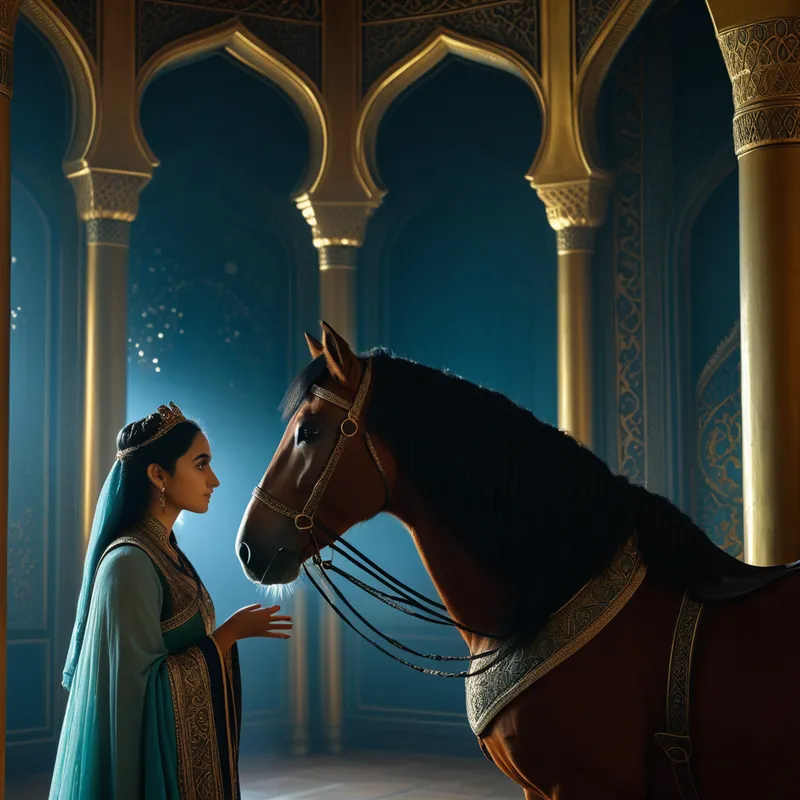
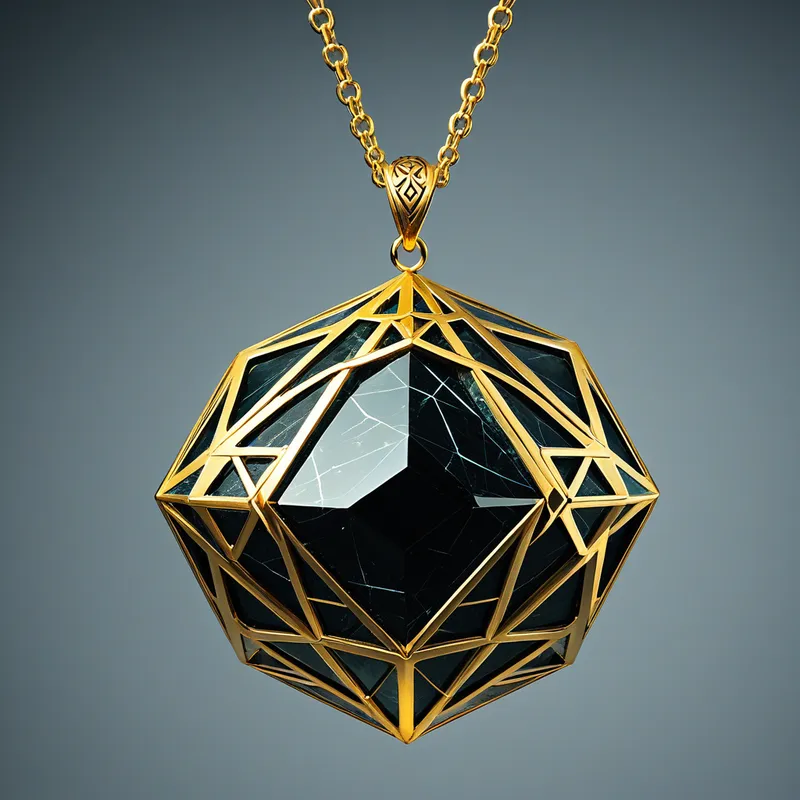
In the land of Turan, under a moon heavy as a pearl, the princess Tahmineh received a hero. He was Rostam, son of Zal, whose fame was a fire that burned in every kingdom. He came not as a conqueror, but as a man separated from his mighty steed, Rakhsh. Tahmineh, who had dreamed of this warrior since girlhood, offered him sanctuary, and love. For one night, the lion of Iran and the rose of Turan were entwined. At dawn, Rostam departed, leaving a token: an onyx seal from his arm, a promise. “If a daughter is born,” he said, “bind this in her hair as a dowry. If a son, bind it upon his arm, that he may know his father’s strength.”
And so Sohrab was born. He grew like a sapling in the sun, his limbs strong, his spirit a roaring river. He knew his lineage, fed on tales of Rostam’s glory, and yearned for one thing: to find his father, to unite with him, and to seat him upon the throne of Iran, casting down the unworthy Kay Kavus. He became the champion of Turan, a storm of youth and valor, his very name stirring dread in the Iranian host.
The armies gathered on the plain, two seas of men and steel clashing. Sohrab, a tower of might, challenged the Persians to send forth their greatest champion. He sought only one man. But fate, that weaver of cruel knots, had other threads. Rostam, the aging but undimmed hero, came to the field not in his famous banner, but disguised. He saw not a son, but the fierce pride of the enemy.
They met in the space between armies, a circle of dust and destiny. Three times they wrestled, a titanic struggle that shook the earth. The first bout, a test of raw power, ended in a draw, the ground torn beneath them. In the second, Rostam felt a tremor of awe at the youth’s prowess, a mirror of his own prime. He spoke of his own fame, hoping the name ‘Rostam’ would give the youth pause. But Sohrab, dreaming of his glorious reunion, dismissed it as a trick. In the final, fatal grapple, Rostam called upon a darker, cunning strength. He threw Sohrab down and, with the swiftness of a striking serpent, plunged his dagger into the youth’s side.
The light did not leave Sohrab’s eyes quickly. As Rostam stood victorious, the wounded youth spoke, his voice a fading wind. “This victory will bring you no joy, old warrior. For my father is Rostam, and he will avenge me. You have slain yourself.” And from his arm, loosened by the shock of the wound, fell the onyx seal.
Then the world stopped. The roar of battle faded to a silent scream. Rostam looked from the token to the face of the dying youth and saw his own eyes, his own brow, reflected in the pallor of death. The lion of Iran let out a cry that tore the sky, a sound of the universe breaking. He promised mountains of medicine, rivers of gold, his own life, to undo the blow. But Sohrab, in his final wisdom, offered not curses, but comfort to his slayer. “It was written. Do not grieve as a woman. It was my fate, and yours.” And with that, the sun of a glorious lineage set at its very dawn, slain by the hand that gave it life.
Cultural Origins & Context
This heart-rending narrative is the central tragedy of the Shahnameh (The Book of Kings), a monumental epic composed by the poet Ferdowsi over three decades. Completed circa 1010 CE, the Shahnameh is more than literature; it is the vessel of Persian language, identity, and history, crafted in the wake of the Arab conquest to preserve the pre-Islamic mythos and ethos of Iran.
Ferdowsi drew upon earlier dastan and written sources, weaving historical chronicle with mythological grandeur. The tale of Rostam and Sohrab sits within the “heroic age” of the epic, a time of legendary knights and tragic, personal conflicts that mirror larger national struggles. It was told in royal courts and public squares, performed by storytellers (naqqals) who would bring its visceral drama to life for centuries. Its societal function was profound: it explored the cost of heroism, the tension between personal loyalty and national duty, and the inescapable hand of farr and Zamān. It served as a cautionary tale about the perils of unchecked pride (ghorur) and the tragic misunderstandings that arise from concealed identities, reflecting a culture deeply concerned with honor, lineage, and the cruel whims of destiny.
Symbolic Architecture
At its core, this is a myth of the unrecognized self. Rostam, the established kingly [hero](/symbols/hero “Symbol: A hero embodies strength, courage, and the ability to overcome significant challenges.”/), confronts Sohrab, the emergent, future [aspect](/symbols/aspect “Symbol: A distinct feature, quality, or perspective of something, often representing a partial view of a larger whole.”/) of his own being—his vitality, his [legacy](/symbols/legacy “Symbol: What one leaves behind for future generations, encompassing values, achievements, possessions, and memory.”/), his potential for renewal. Their battle is not merely physical; it is the struggle between the conscious ego (the renowned [hero](/symbols/hero “Symbol: A hero embodies strength, courage, and the ability to overcome significant challenges.”/)) and the unconscious, burgeoning [spirit](/symbols/spirit “Symbol: Spirit symbolizes the essence of life, vitality, and the spiritual journey of the individual.”/) (the unknown son) that seeks to transform the established order.
The greatest tragedy is not death, but the murder of one’s own future by the rigid hand of the present.
Sohrab represents the [puer aeternus](/symbols/puer-aeternus “Symbol: The eternal youth archetype representing perpetual adolescence, divine child energy, and resistance to mature adulthood.”/) (eternal [youth](/symbols/youth “Symbol: Youth symbolizes vitality, potential, and the phase of life associated with growth and exploration.”/)) [energy](/symbols/energy “Symbol: Energy symbolizes vitality, motivation, and the drive that fuels actions and ambitions.”/)—pure potential, heroic idealism, and the desire to transcend the flawed [father](/symbols/father “Symbol: The father figure in dreams often symbolizes authority, protection, guidance, and the quest for approval or validation.”/)/[king](/symbols/king “Symbol: A symbol of ultimate authority, leadership, and societal order, often representing the dreamer’s inner power or external control figures.”/). His [quest](/symbols/quest “Symbol: A quest symbolizes a journey or search for purpose, fulfillment, or knowledge, often representing life’s challenges and adventures.”/) to find Rostam is the [soul](/symbols/soul “Symbol: The soul represents the essence of a person, encompassing their spirit, identity, and connection to the universe.”/)‘s quest for its [origin](/symbols/origin “Symbol: The starting point of a journey, often representing one’s roots, source, or initial state before transformation.”/) and [purpose](/symbols/purpose “Symbol: Purpose signifies direction, meaning, and intention in life, often reflecting personal ambitions and core values.”/). Rostam, the [senex](/symbols/senex “Symbol: The wise old man archetype representing spiritual authority, ancestral wisdom, and the integration of life experience into transcendent knowledge.”/) (the old man), represents established power, tradition, and the defensive ego that cannot recognize new [life](/symbols/life “Symbol: The symbol of ‘Life’ represents a journey of growth, interconnectedness, and existential meaning, encompassing both the joys and challenges that define human experience.”/) unless it bears the proper [insignia](/symbols/insignia “Symbol: An emblem representing authority, affiliation, or identity, often signifying membership, rank, or belonging within a group or institution.”/). The battlefield is the psyche itself, where new [consciousness](/symbols/consciousness “Symbol: Consciousness represents the state of awareness and perception, encompassing thoughts, feelings, and experiences.”/) struggles to be born, and the old guard, operating from habit and disguised [appearance](/symbols/appearance “Symbol: Appearance in dreams relates to self-image, perception, and how you present yourself to the world.”/), strikes it down. The onyx seal is the [symbol](/symbols/symbol “Symbol: A symbol can represent an idea, concept, or belief, serving as a powerful tool for communication and understanding.”/) of true [identity](/symbols/identity “Symbol: Identity represents the sense of self, encompassing personal beliefs, cultural background, and social roles.”/), the self that is only revealed in the [moment](/symbols/moment “Symbol: The symbol of a ‘moment’ embodies the significance of transient experiences that encapsulate emotional depth or pivotal transformations in life.”/) of catastrophic wounding.
The Dreamer’s Resonance
When this myth stirs in the modern unconscious, it often manifests as dreams of fatal competition or missed connection with a formidable, yet intimately familiar, stranger. One might dream of a thrilling rivalry with a colleague or a lover that turns devastating, or of delivering a brilliant argument that inadvertently destroys something precious. The somatic signature is often a feeling of a “punch to the gut” upon awakening—a deep, visceral shock of recognition.
Psychologically, the dreamer is navigating a critical point of transition where a new aspect of the self (a talent, a relationship, a creative project) is emerging with great force. The established, conscious personality (the Rostam complex), threatened by this powerful new energy, moves to suppress or “kill” it before it can reveal its true, transformative nature. The dream is a stark warning from the psyche: you are on the verge of destroying your own potential due to pride, fear, or a failure to recognize the unfamiliar face of your own growth. The process is one of confronting the tragic cost of living with a concealed or unintegrated identity.
Alchemical Translation
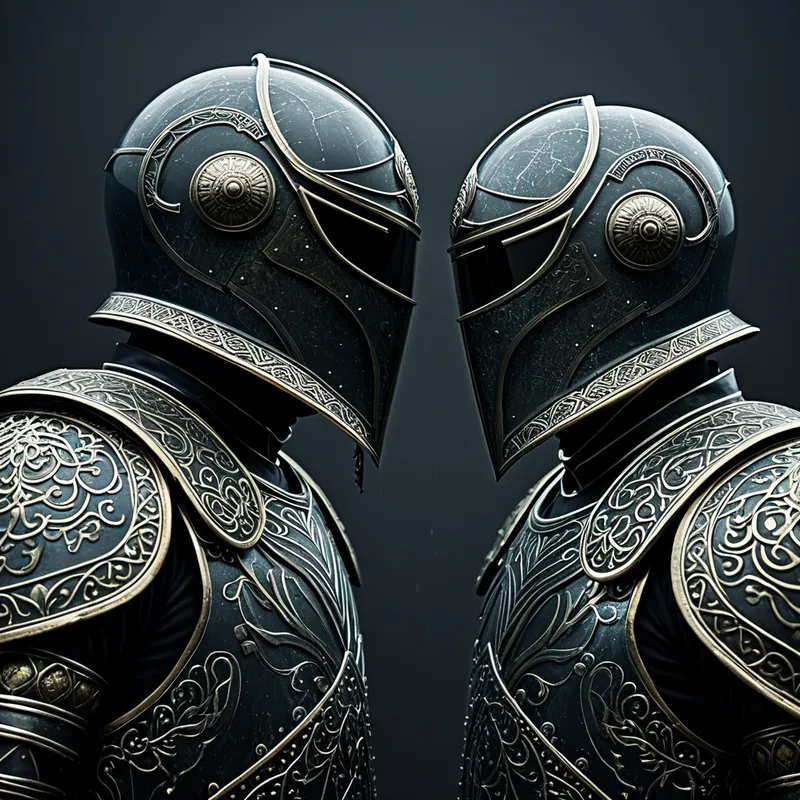
The alchemy of this myth is the nigredo—the blackening, the putrefaction, the profound despair that is the necessary precursor to transformation. Rostam’s moment of recognition is the shattering of the heroic ego. His invincibility, his pride, his very identity as a protector are incinerated in the fire of this truth. This is the descent into the shadow, where the greatest deed is revealed as the greatest crime.
The gold of the self is only forged in the furnace of unbearable remorse.
The individuation process modeled here is brutal but clear. First, the inflation of the conscious attitude (Rostam’s undisputed heroism) must be punctured by a fatal encounter with its blind spot. Second, the emergent Self (Sohrab) must be sacrificed, not literally, but in the sense that naive idealism and the desire for a glorious, uncomplicated union with the source must die. Third, the conscious ego must fully incorporate the grief, guilt, and responsibility. Rostam does not die physically, but the Rostam who was, is dead. He must now live bearing the unbearable knowledge, his future extinguished, his past poisoned. This is the alchemical dissolution. The potential “transmutation” lies in whether this grief can become wisdom, whether the hero can become a sage who carries the wound not as a curse, but as the source of a profound, humbled consciousness. The union of father and son is achieved not in life, but in the shared fate of irreversible, consciousness-bringing loss.
Associated Symbols
Explore related symbols from the CaleaDream lexicon:
- Hero — The central archetype, here fractured into two generations, representing both the established ego’s strength and the emerging self’s idealistic power, locked in fatal conflict.
- Fate — The inescapable cosmic script that orchestrates the tragic meeting and mutual destruction, representing the psyche’s deterministic patterns that override conscious intention.
- Father — The source and, tragically, the destroyer; represents the authoritative, traditional aspect of the psyche that fails to recognize its own progeny.
- Child — The potential, the future, and the unrecognized self; pure in purpose but doomed by its quest for acknowledgment from the very power that cannot see it.
- Wound — The fatal injury that is also the aperture of recognition; the necessary rupture in the ego’s armor through which transformative truth enters.
- Blood — The literal and symbolic lineage that is spilled, connecting and condemning father and son; the life force that proves their bond in the moment of its wasting.
- Mask — The disguised identity Rostam wears into battle, representing the ego’s defensive persona that prevents true recognition and leads to catastrophic error.
- Pride — The ghorur of both warriors—Rostam’s in his legendary status, Sohrab’s in his certainty of destiny—that blinds them to the truth before them.
- Grief — The transformative emotion that floods Rostam after the recognition; the alchemical solvent that dissolves the old heroic identity.
- Destiny — The grand, tragic narrative that both characters believe they are fulfilling, only to discover its cruel, personal irony at the ultimate cost.
- Shadow — Sohrab as Rostam’s unconscious shadow, embodying all the youthful vigor and idealistic ambition the aging hero has lost or suppressed.
- Recognition — The catastrophic moment of truth, symbolized by the falling seal; the instant the conscious mind sees the self in the destroyed other, which is the true beginning of consciousness.