Pharaoh's Burial Rituals Myth Meaning & Symbolism
A sacred journey of the soul through ritual, judgment, and transformation, ensuring the Pharaoh's eternal union with the divine cosmos.
The Tale of Pharaoh's Burial Rituals
The air in the palace is still as death, yet thick with the incense of life—myrrh, frankincense, kyphi. The great Pharaoh has sailed west on the solar barque, his ka slipping from its earthly shell. But this is not an end; it is the most critical beginning. For seventy days, the land holds its breath. In the pure tent, the Heri Seshta and his initiates perform the sacred science. They are not defilers, but surgeons of eternity. With obsidian blades, they remove the perishable, preserving the vessel. The organs, each under the protection of the Four Sons of Horus, are sealed in alabaster. The body, washed with natron from the desolate lakes, becomes a statue of itself—a perfect, enduring home.
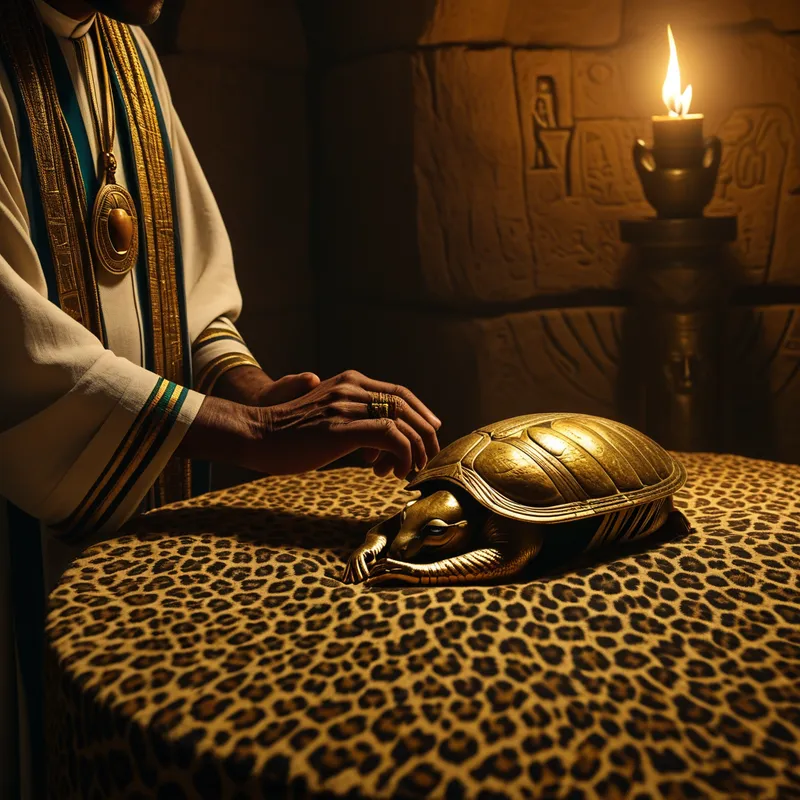
Then, the wrapping. A hundred rolls of the finest linen, a cocoon of white. Between each layer, amulets of power are placed: the Ankh of breath, the Djed of spine, the golden vulture spreading wings over the chest. But most crucial is the great scarab of green stone, carved and placed over the heart, inscribed with a plea to the silent organ: "Do not stand against me as a witness."
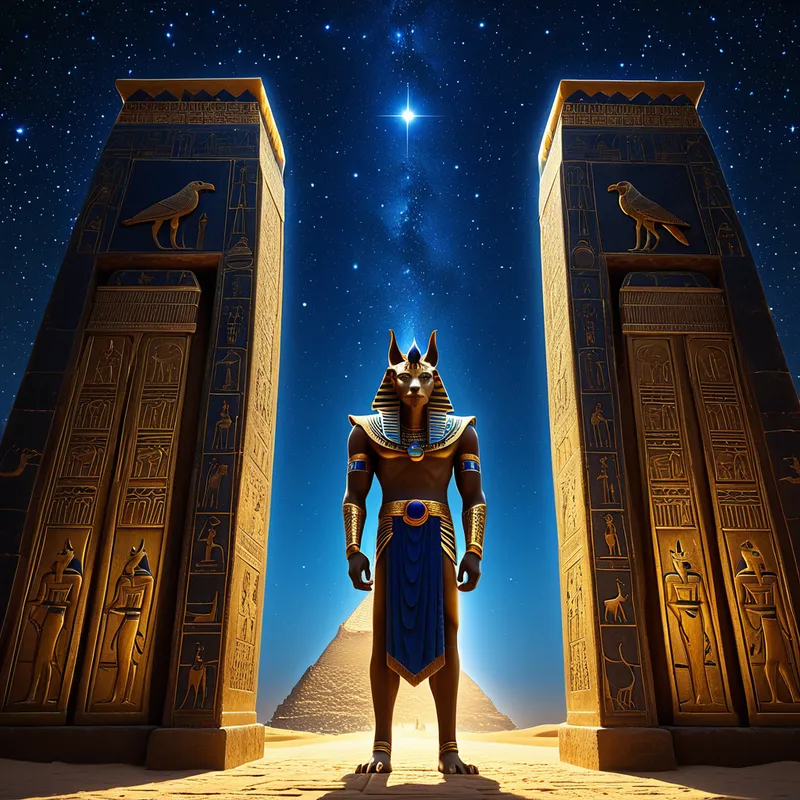
The procession begins at dawn. The sled bearing the gilded shrine is pulled by oxen and nobles through the dust to the necropolis. Professional mourners wail, their tears a libation. Priests chant the spells from the Book of Coming Forth by Day. At the tomb's mouth, the Opening of the Mouth ceremony is performed. A priest, wearing the mask of Anubis, touches the mummy's lips with an adze of meteoric iron. "You live again," the chant echoes. "You speak, you see, you eat." The senses are restored for the journey ahead.
The sarcophagus is lowered into the darkness, surrounded by ushabti servants, food, chariots, and jewels—all the world he knew, now translated for the world to come. The door is sealed. The world above turns. But below, in the silent dark, the true voyage commences. The ka and the ba of the Pharaoh awaken. Guided by the spells, he navigates the treacherous, star-lit waterways of the Duat. He faces serpent-demons and passes through gates guarded by fire. His heart, the seat of his being and memory, is his only compass.
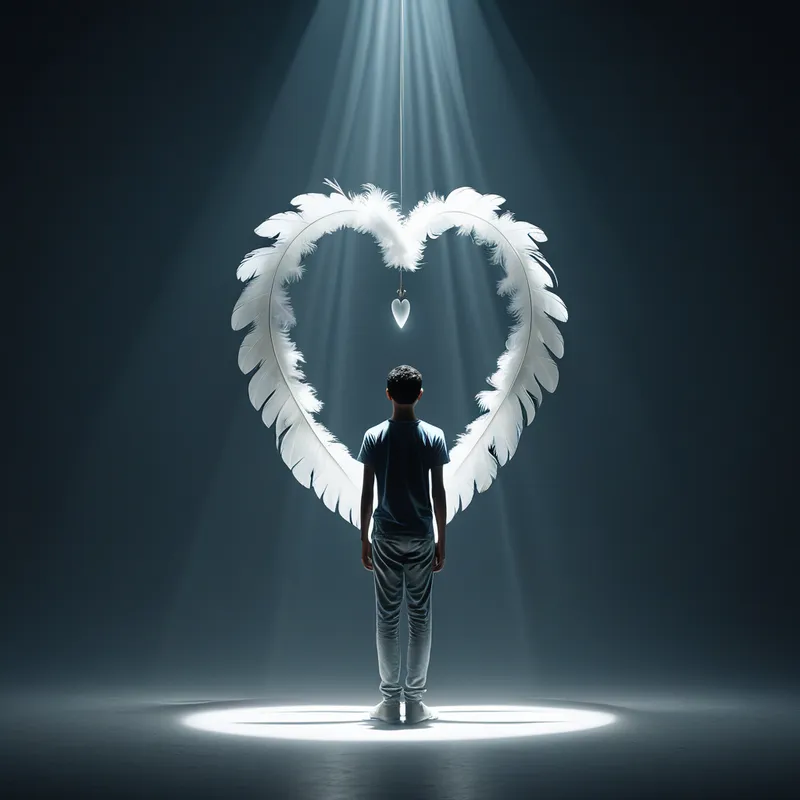
He arrives at the Hall of Two Truths. In the profound silence, he stands before Osiris, the Lord of the Silent Land, who is enthroned and crowned with the white feather of Maat. Thoth, scribe of the gods, stands ready with his palette. But it is Anubis who steps forward. With careful, divine hands, he places the Pharaoh's heart on one pan of a great scale. On the other, he places the feather of Maat—the weight of truth itself.
The entire cosmos holds its breath. The heart must not speak of betrayal, of cowardice, of greed. It must be light with truth. If it balances, Thoth records the verdict: "True of voice." The Pharaoh is led forward by Horus to unite with Osiris, to become an Akh, an effective spirit, shining among the imperishable stars. If the heart is heavy, it is consumed by the waiting beast, Ammit, and existence ceases forever. The ritual, from the first touch of natron to the final judgment, was the meticulously prepared journey to ensure the heart was light enough to meet the feather, and the Pharaoh, eternal.
Cultural Origins & Context
This was not a single "myth" told around a fire, but the central, lived doctrine of state and soul for over three millennia of Egyptian civilization. It was embedded in the very architecture of power and the personal hope of every individual, though magnified to cosmic proportions for the Pharaoh. The rituals and their accompanying narrative are synthesized from a vast corpus of texts: the early Pyramid Texts (c. 2400-2300 BCE), the later Coffin Texts, and the Book of the Dead.
The primary "tellers" were the priesthoods—of Osiris, of Anubis, of Amun—and the royal mortuary cults. Their function was utterly pragmatic in a spiritual sense: to ensure the continuity of the cosmos. The Pharaoh was the linchpin between the divine and human realms. His successful resurrection guaranteed the rising of the sun, the flooding of the Nile, and the stability of Maat against the forces of chaos (Set). For the common people, whose own burial texts were adaptations of the royal ones, the myth provided a template for personal salvation, democratizing the hope of eternal life. It was a collective psychological project of staggering scale, aimed at defeating death's finality through ritual precision and moral accounting.
Symbolic Architecture
The burial ritual is a grand symbolic map of consciousness confronting its own totality and its ultimate transition.
The mummification is not the preservation of death, but the intentional creation of a permanent vessel for consciousness—a deliberate sculpting of the eternal Self from the clay of the temporal self.
The khat is transformed into a sah, an idealized, incorruptible form. Psychologically, this represents the ego's necessary surrender and reformation. The persona (the living body) must "die" and be meticulously restructured to serve the journey of the deeper psyche. The amulets placed within the wrappings are symbolic implants of psychic faculties: courage (the vulture), stability (the Djed), vitality (the Ankh).
The heart scarab is the core of the drama. The heart (ib) was considered the seat of memory, conscience, and identity. The spell inscribed upon it is a profound act of psychological integration—a dialogue with one's own inner witness, urging it toward alignment with truth. The Hall of Judgment is the ultimate inner tribunal.
The feather of Maat is the weight of pure, unadorned reality. The scale measures not moral perfection, but the specific gravity of self-deception. The heart heavy with denial, repression, and unlived life cannot ascend.
The triumphant outcome—becoming an Akh, united with Osiris—symbolizes the achievement of psychic wholeness. The fragmented elements (ka, ba, shadow) are integrated into a radiant, effective unity. Osiris, the god who dies and is reborn, represents the archetype of the Self that can contain and transcend the cycle of death and renewal.
The Dreamer's Resonance
When this mythic pattern stirs in the modern dreamer, it signals a profound process of self-assessment and psychic reorganization. Dreaming of being prepared for burial (e.g., being wrapped, anointed) often coincides with a life transition so significant it feels like an ego-death: the end of a career, a relationship, or a long-held identity. The dream ego is being ritualistically dismantled to make way for something new.
Dreams of navigating dark, labyrinthine tunnels or waterways mirror the journey through the Duat, representing the often-confusing, fearful descent into the unconscious during periods of depression, grief, or deep introspection. Encountering animal-headed figures (like Anubis or Thoth) can personify specialized aspects of the psyche—the instinctual guide (Anubis) or the inner scribe/logician (Thoth)—emerging to assist in the process.
Most potent are dreams of being weighed or judged. The somatic feeling is often one of naked exposure and profound anxiety. This is the psyche's own Hall of Two Truths, where the dreamer's actions, motivations, and self-image are being held to account not by an external god, but by the inner principle of integrity—the feather of Maat within. It is a call to ruthless self-honesty, often preceding a necessary confession, apology, or life reorientation.
Alchemical Translation
The alchemical process mirrored in the Pharaoh's rituals is the opus magnum—the Great Work of transforming the base lead of the mortal personality into the spiritual gold of the individuated Self.
The Nigredo (the blackening) is the death of the Pharaoh and the embalming process—the dissolution of the old, conscious attitude in the "natron" of crisis, depression, or enforced stillness. It is a putrefaction that is also a purification. The Albedo (the whitening) is the wrapping in linen—the emergence of a new, purified vessel of consciousness from the decay, a state of lunar reflection and preparation.
The Citrinitas (the yellowing) is the perilous journey through the Duat and the judgment—the fiery trial of self-confrontation. Here, in the inner hall, the "heart" (the complex of emotion, desire, and memory) is subjected to the purifying fire of conscious awareness. The dross of resentment, inflated self-importance, and cowardice is burned away.
The moment the scale balances is the moment of the Rubedo (the reddening)—the triumphant integration. The heart, now light and true, is reunited with its divine source (Osiris/Self). The Pharaoh becomes the Akh: the fully realized, radiant individual who is both uniquely themselves and a conscious part of the cosmic order.
For us, this alchemy occurs not in a tomb but in the dark nights of the soul, in therapy, in meditation, in the courageous act of journaling. We perform our own "Opening of the Mouth" ritual when we find our voice after a long silence, speak a painful truth, or give form to a creative vision that was buried. We achieve our own "true of voice" verdict not by escaping judgment, but by willingly stepping onto the scale of our own conscience, again and again, until our inner life aligns with the feather-light touch of what is simply and undeniably true.
Associated Symbols
Explore related symbols from the CaleaDream lexicon: