Spiritus Myth Meaning & Symbolism
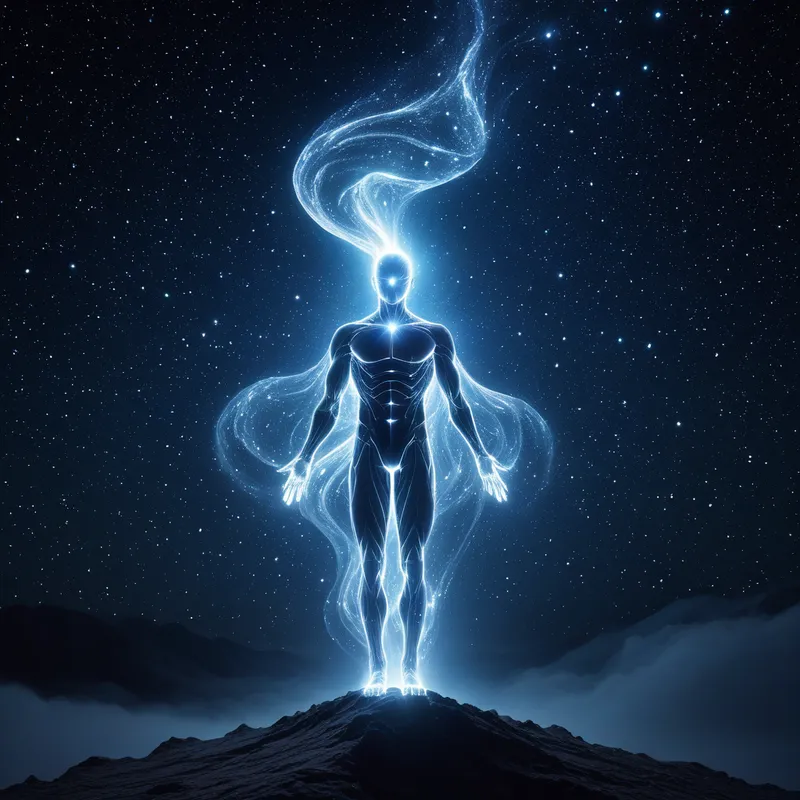
The volatile essence, Spiritus, descends into matter to awaken the slumbering soul, initiating a cosmic dance of dissolution and rebirth within the alchemical vessel.
The Tale of Spiritus
In the beginning, before the alembic was forged and the furnace lit, there was a great divide. Above, in the realm of Spiritus, all was a shimmering dance of potential—a breath that held every color, every note of music not yet played, every thought before it forms. Below, in the kingdom of Corpus, all was silent weight. Mountains dreamed of being mountains. Metals slept in deep, unmoving veins. The world was two lovers back-to-back, unable to turn and see each other’s face.
Spiritus gazed down upon the profound slumber of the earth. It saw not dead stone, but a soul in a coma of matter, a divine spark buried under eons of inertia. A longing, sharper than any crystal, pierced its luminous heart. To awaken the sleeper, it would have to cease being only itself. It would have to fall.
And so, Spiritus began its sacred descent. It did not plummet like a stone, but seeped like a sigh into the cracks of the world. It became the morning mist clinging to cold granite, the exhalation that fogs a winter window, the quickening tremor in the seed deep under frost. It entered the dark veins of the ore, the still water of the deep well, the heavy salt of the sea.
The marriage was not gentle. Corpus, startled from its ancient sleep, resisted. It contracted, hardened, sought to crush the invader. In the secret chambers of the earth, a great struggle commenced. Spiritus raged as a wind trapped in a cavern, screaming to be free. Corpus pressed in with the patience of continents. This was the Nigredo, the blackening—a chaos where both seemed lost.
But within that sealed darkness, in the pressure of that impossible embrace, a miracle of friction began. The relentless agitation of spirit against matter, matter against spirit, generated a strange warmth. This was not the fire of the sun, but the inner fire of conflict itself. It melted rigidity. It stirred memory. From the depths of Corpus, a forgotten moisture wept forth—the Anima, the soul, long buried. Now, three were in the vessel: Body, Soul, and Spirit.
Guided by this nascent soul, the chaos began to turn. The blackness softened to gray, then to the pearlescent hues of dawn. A new substance was being born in the crucible of their struggle—not spirit, not body, but the elusive Lapis Philosophorum, the child of their sacred contest. Spiritus did not win, nor did it lose. It fulfilled its purpose by ceasing to be purely volatile, by becoming the animating breath within a living, conscious whole. The great work had begun, not with a conquest, but with a willing descent into the dark.
Cultural Origins & Context
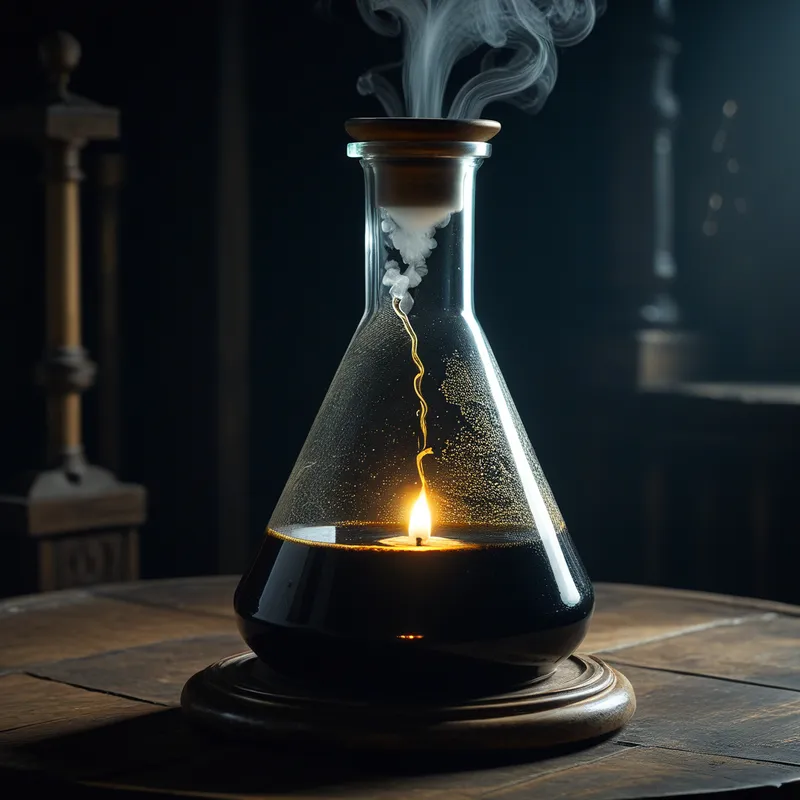
The myth of Spiritus is not a folktale told around hearths, but a secret narrative inscribed in the margins of cryptic manuscripts and enacted in the silent rituals of the laboratory. It emerged from the European alchemical tradition, spanning from the Hellenistic world through the Islamic Golden Age to the Renaissance. Its tellers were not bards, but adepts—figures like Hermes Trismegistus, Carl Jung would later argue, who were not merely trying to make gold, but to map the transformation of the human soul.
The myth was passed down through a "chain of revelation," from master to apprentice, encoded in dazzlingly complex symbolism. It functioned as a spiritual and psychological road map. For the culture that nurtured it, the laboratory was a sacred theater. The processes of dissolution, distillation, and coagulation performed on metals were understood as mirrors of the inner processes required for the individuation of the operator. The story of Spiritus provided the metaphysical justification for the entire art: spirit must engage with matter to redeem it, and in doing so, redeem itself from formless abstraction.
Symbolic Architecture
At its core, the myth of Spiritus is a profound blueprint for the birth of consciousness. Spiritus represents the intellect, the idea, the inspiring breath—but also the danger of remaining ungrounded, airy, and disconnected. Corpus is the body, the instinct, the unconscious, the raw and often resistant stuff of life.
The descent of spirit into matter is not a fall from grace, but the necessary impregnation of reality with meaning.
Their violent union in the Nigredo symbolizes the inevitable and painful conflict that arises when our highest ideals (Spiritus) crash into the limitations of our actual circumstances, our habits, and our shadow (Corpus). This is the "dark night of the soul," a crisis essential for growth. The emergence of Anima from this conflict is key. It represents the mediating function of feeling, of relatedness, of soulfulness that can reconcile the warring opposites. The vas Hermeticum, the sealed flask, is the total psyche—the container of our lived experience where this inner drama must safely play out.
The Dreamer's Resonance
When this myth stirs in the modern unconscious, it often manifests in dreams of profound tension between freedom and containment. You may dream of being a bird trapped in a vast, beautiful cathedral (spirit confined by structure), or of a dense, overgrown forest suddenly illuminated by a beam of impossible light (matter penetrated by spirit). There is a somatic quality to these dreams—a feeling of pressure in the chest, of being weighed down, or conversely, of dizzying, ungrounded elevation.
Psychologically, this signals the onset of a crucial individuation process. The dreamer is at a point where an aspect of their identity or a cherished ideal (the Spiritus) is being forced to engage with a neglected, "earthy" part of their life—perhaps a physical ailment, a financial reality, a relationship dynamic, or a buried trauma (the Corpus). The anxiety and chaos of the dream mirror the inner Nigredo. The process feels like a death because a old way of being—a purely mental or a purely instinctual one—is dissolving.
Alchemical Translation
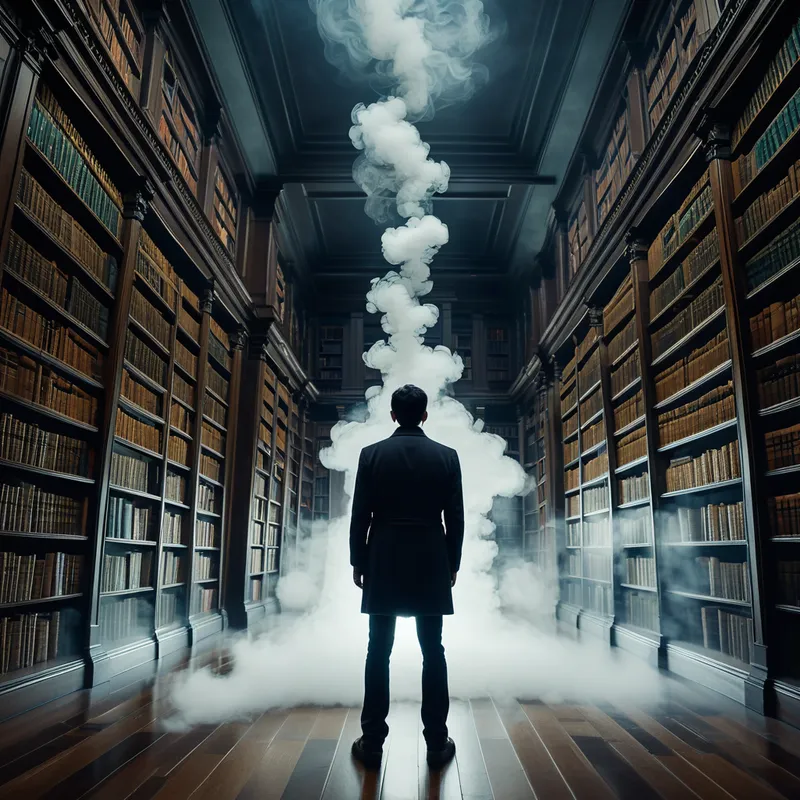
For the modern individual, the myth of Spiritus models the path of psychic transmutation by reframing our greatest struggles as the furnace of our becoming. We are not called to live as pure Spiritus—the detached intellectual, the spiritual bypasser, the idealist who cannot act. Nor can we remain as pure Corpus—the materialist, the cynic, the person ruled solely by impulse or inertia.
The work is to consciously become the vas Hermeticum and allow the descent. This means courageously applying our awareness (Spiritus) to the very parts of our lives we wish to ignore or transcend (Corpus). It is bringing the breath of inquiry to our stuck patterns, our bodily tensions, our emotional wounds.
The gold is not found in the spirit or the matter alone, but in the mercurial substance born from their sacred conflict.
The Anima that arises is our capacity for compassion—for ourselves and our process. It is the feeling-toned awareness that witnesses the struggle without fleeing into abstraction or collapsing into despair. This mediating soul is what eventually guides the black chaos toward the Rubedo, the reddening—a state of embodied wisdom, where spirit is incarnate and matter is ensouled. The transformed self is the Lapis: no longer divided, but a living testament to the unity that was forged in the dark.
Associated Symbols
Explore related symbols from the CaleaDream lexicon: